Attaining the Jinshi Degree
Passed the final imperial examination of the Southern Song, achieving the jinshi degree.
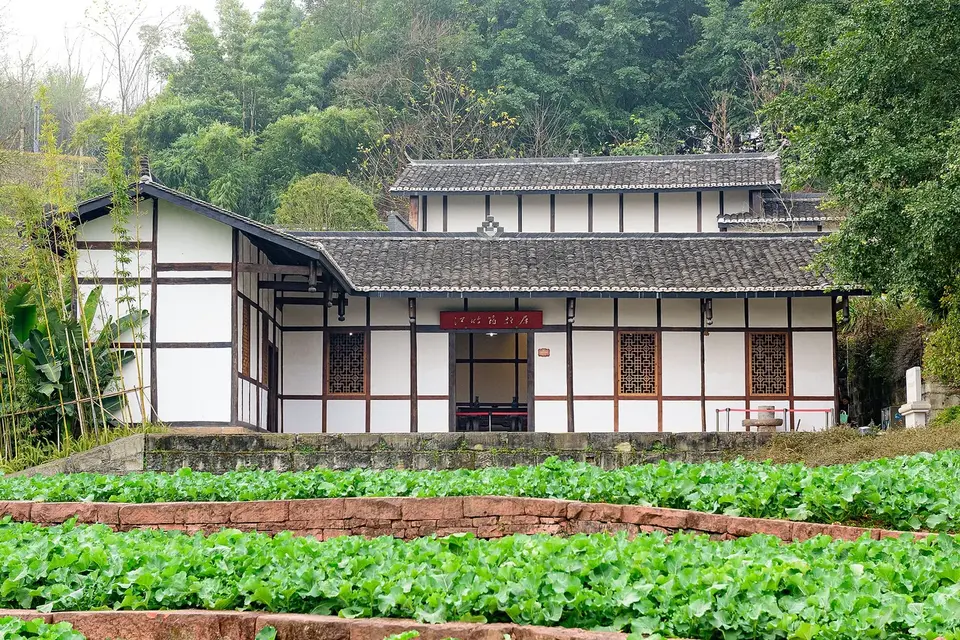
蒋捷
Jiang Jie (蒋捷), courtesy name Shengyu, art name Zhushan, known respectfully as Master Zhushan, was a native of Yixing in Changzhou (modern Yixing, Jiangsu Province) who later relocated to Jinling (modern Wujin, Changzhou). He was an illustrious lyricist of the late Song and early Yuan and is celebrated as one of the Four Great Masters of the Late Song. Born into a prominent aristocratic clan of Yixing, he was a descendant of…
Jiang Jie (蒋捷), courtesy name Shengyu, art name Zhushan, known respectfully as Master Zhushan, was a native of Yixing in Changzhou (modern Yixing, Jiangsu Province) who later relocated to Jinling (modern Wujin, Changzhou). He was an illustrious lyricist of the late Song and early Yuan and is celebrated as one of the Four Great Masters of the Late Song. Born into a prominent aristocratic clan of Yixing, he was a descendant of the distinguished Southern Song statesman Jiang Can. In 1274, he attained the jinshi examination degree. For his famous line "time easily casts people aside, reddening the cherries and greening the plantains" in his lyric to the tune Yi Jian Mei, he was affectionately known to posterity as the "Cherry Scholar." Following the collapse of the Southern Song, Jiang Jie endured profound national sorrow, resolutely refusing to serve the Mongol Yuan Dynasty and wandering as a loyalist exile across the Lake Tai and Wuyue regions. During the Dade era, investigation commissioners Zang Mengjie and Lu Hou repeatedly recommended him for imperial appointment, but Jiang Jie adamantly declined. His lyric style is characterized by poignant elegance, rigorous refinement, and exquisite prosodic harmony, capturing nostalgic yearning and historical melancholy. Together with Zhou Mi, Wang Yisun, and Zhang Yan, he formed the pinnacle of late Song ci poetry, leaving behind his acclaimed anthology Zhushan Lyrics (Zhushan Ci).
Passed the final imperial examination of the Southern Song, achieving the jinshi degree.
Following the capitulation of Lin'an and the fall of the Southern Song, Jiang Jie retreated into reclusion along the shores of Lake Tai.
Following the Battle of Yamen, Jiang Jie wandered in self-imposed exile across Wujiang, Wuxian, and Yixing.
Relocated his family to Qianyu, Wujin in Jinling, planting bamboo around his residence and adopting the art name Zhushan.
Jointly recommended for high office by Investigation commissioners Zang Mengjie and Lu Hou; Jiang Jie staunchly declined, preserving his loyalist integrity.
Jiang Jie was born into an illustrious ancestral house in Yixing, Changzhou. The Yixing Jiang lineage traced its lineage to Jiang Mo and Jiang Deng, who settled east of the lake in ancient Yangxian during the early Eastern Han dynasty. During the Shaoxing era of the Southern Song, Jiang Jie's ancestor Jiang Can served as Vice Minister of Revenue and Edict Attendant of the Hall for the Diffusion of Literature, administering Yangzhou and Lin'an Prefecture as an eminent statesman and calligrapher.
Immersed in classical scholarship from an early age, Jiang Jie studied under the scholar Chen Xiaomei, mastering the Book of Changes (Yijing) and Neo-Confucian philosophy. Through rigorous intellectual discipline and household tradition, he developed profound command over ancient history and moral philosophy, winning early literary renown among southern literati circles for his lyric poetry.
In 1274, during the tenth year of the Xianchun era under Emperor Duzong, Jiang Jie traveled to Lin'an to participate in the final jinshi examination held by the Southern Song Dynasty, successfully achieving the degree. While later local gazetteers sometimes misdated his examination to 1276, modern philological collation of the official dynastic rosters in the History of Song and Xianchun Biling Zhi confirmed his 1274 graduation.
However, Jiang Jie's entry into public life coincided with dynastic catastrophe. Mongol armies swept south across the Yangtze, capturing the capital Lin'an in 1276 and deporting the child emperor. Following the defeat at the Battle of Yamen in 1279, the Song imperial house was extinguished. Before Jiang Jie could implement his administrative ideals in the imperial court, the empire suffered total collapse.
In the wake of national ruin, Jiang Jie confronted a fundamental moral choice. Bound by classical Confucian loyalism, he vowed never to enter official service under the conquerors. Leaving his ancestral lands, he took to a life aboard boats, wandering through the river networks of the Lake Tai basin.
For decades, Jiang Jie traveled between Lake Tai, Wujiang, Wuxian, Jincun, Lanwan, Jiangyin, and Longyou. He witnessed the wartime devastation of Jiangnan and the privations of the displaced populace. Enduring snowbound delays and rainswept lodgings, he poured his grief, personal dislocation, and enduring loyalty to the fallen realm into melancholic lyric verse.
In 1296, after decades of wandering, Jiang Jie brought his sons Jiang Xianming and Jiang Weiming to settle in Qianyu, west of Jinling (modern Wujin, Changzhou). There he built a modest residence, surrounding his dwelling with a grove of a thousand bamboo stalks. Viewing the upright, hollow stems as symbols of unbending integrity and modesty, he took the art name Zhushan, leading contemporary scholars to address him as Master Zhushan.
In Qianyu, Jiang Jie lived in serene simplicity, dedicating his remaining years to classical exegesis. He composed Xiaoxue Xiangduan, elucidating foundational Confucian ethics for local youths, who gathered from across the region to study under his tutelage.
In 1302, seeking to conciliate southern scholars, the Yuan court initiated recruitment campaigns. Hearing of Jiang Jie's moral standing and erudition, Investigation commissioners Zang Mengjie and Lu Hou submitted a joint memorial urging his appointment to high administrative office. Despite the prospect of wealth and status, the aging scholar firmly declined the summons.
Jiang Jie persisted in his quiet retirement, never accepting a single post from the Yuan Dynasty. He died peacefully at his private residence in Jinling and was laid to rest at the Yongsi Cemetery in Qianyu. During the early Ming dynasty, local magistrates erected the Master Zhushan Shrine in Qianyu to honor his literary brilliance and unblemished moral conduct.
Jiang Jie's enduring literary reputation rests primarily upon his surviving anthology Zhushan Lyrics (Zhushan Ci), comprising ninety-four works. Within late Song and early Yuan literary history, he stands alongside Zhou Mi, Wang Yisun, and Zhang Yan as one of the Four Great Masters of the Late Song. Uniquely among this group, Jiang Jie lived apart from urban literary societies like the West Lake circle, cultivating a fiercely independent poetic voice.
His works encompass travel songs, seasonal observations, allegorical object poems, dream journeys, and personal reflections. Eschewing strident lamentation, he adopted an understated, reflective aesthetic that conveyed profound historical pathos through intimate domestic detail, avoiding both the coarseness of declining Xin Qiji imitators and the obscure sterility of late Jiang Kui followers.
Jiang Jie's most celebrated composition is Yu Mei Ren: Listening to the Rain (Yu Mei Ren: Ting Yu). The lyric structures the poet's life across three acoustic snapshots: youth listening to rain above pleasure quarters beneath scarlet candlelight; middle age listening to rain from a traveler's boat under desolate skies with lone geese crying in the west wind; and old age listening to rain beside a monk's hermitage with graying temples, detached from joy and sorrow.
This concise lyric condenses personal experience and dynastic ruin into a singular aesthetic monument, universally recognized as one of the supreme achievements of classical Chinese lyric poetry. Similarly, his line "time easily casts people aside, reddening the cherries and greening the plantains" in Yi Jian Mei remains a celebrated meditation on fleeting time and civilizational loss.
Beyond his somber loyalist lyrics, Jiang Jie explored diverse poetic domains. His seasonal compositions on festivals such as the Lantern Festival and Mid-Autumn reflect contrasting moods from festive memory to solitary grief. In allegorical object poems on peonies, fallen plums, red leaves, and autumn winds, he embedded metaphors of unyielding virtue.
Significantly, Jiang Jie broke with the prevailing gloom of late Song verse by composing vivid, lighthearted sketches of everyday life, such as Zhao Jun Yuan: The Flower Seller and Shuang Tian Xiao Jiao: Shadows on the Window Screen. These accessible, charming works expanded the expressive boundaries of the lyric genre, demonstrating his enduring appreciation for ordinary human vitality amid historical tragedy.
In addition to lyric poetry, Jiang Jie contributed to Confucian scholarship through his Xiaoxue Xiangduan, which promoted moral self-cultivation and family order among the Jiangnan populace.
Jiang Jie's aesthetic exercised a transformative influence on later literature. In the Qing Dynasty, anthologist Zhou Ji acclaimed his psychological depth, while the critic Liu Xizai praised his meticulous precision and purity of thought, comparing his mastery to a great wall of lyric verse. Early Qing poets such as Chen Weisong and Jiang Jingqi of the Yangxian School drew directly upon Jiang Jie's structural rigor and emotional resonance, fueling the great revival of ci poetry throughout the Qing era.
FIGURES ASSOCIATED WITH THIS DYNASTY