Birth in the Steppe
Born on December 22 in the northern steppe as the eldest son of Emperor Wuzong.
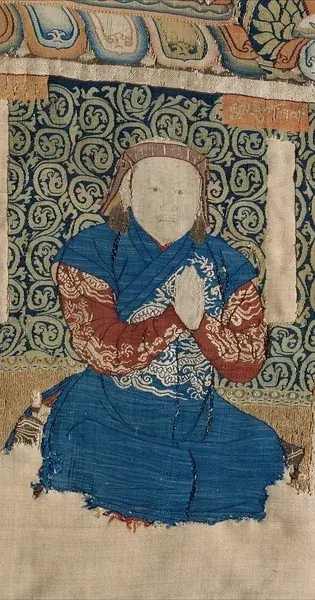
和世㻋
Borjigin Kusala (1300–1329), historically known as Emperor Mingzong of Yuan (元明宗) and Khutughtu Khan in Mongolian, was the ninth emperor of the Yuan Dynasty and the thirteenth Khagan of the Mongol Empire. He was the eldest son of Emperor Wuzong (Külüg Khan / Qayshan) and Empress Renxian Zhangsheng of the Ikires clan. Early in his youth, his uncle Emperor Renzong violated the solemn dynastic pact of alternating succession…
Borjigin Kusala (1300–1329), historically known as Emperor Mingzong of Yuan (元明宗) and Khutughtu Khan in Mongolian, was the ninth emperor of the Yuan Dynasty and the thirteenth Khagan of the Mongol Empire. He was the eldest son of Emperor Wuzong (Külüg Khan / Qayshan) and Empress Renxian Zhangsheng of the Ikires clan. Early in his youth, his uncle Emperor Renzong violated the solemn dynastic pact of alternating succession between brothers and nephews, disinheriting Kusala and demoting him to Prince of Zhou before ordering him into distant exile in Yunnan in 1316. While en route through Yan'an, loyalist generals staged an unsuccessful uprising on his behalf, forcing Kusala to flee westward across the Altai Mountains. He lived in exile under the protection of the Chagatai Khanate for thirteen years. Following the death of Emperor Taiding in 1328 and the subsequent War of the Two Capitals, ministerial commander El Temür installed Kusala's younger brother Tugh Temür (Emperor Wenzong) on the throne in Dadu. Tugh Temür publicly proclaimed that he would yield the imperial seal upon his brother's return. In early 1329, Kusala was enthroned as Khagan north of Karakorum with the backing of northern Mongol princes, appointed Tugh Temür as Crown Prince, and marched south with a powerful steppe army. In August 1329, Kusala met his brother at Wanghuchadu. Within days, Kusala died suddenly in his travel pavilion at the age of thirty in what is known as the Incident of Wanghuchadu, widely regarded as a poisoning orchestrated by El Temür. His son Toghon Temür later ascended the throne as Emperor Huizong and officially rehabilitated his legacy.
Born on December 22 in the northern steppe as the eldest son of Emperor Wuzong.
Uncle Ayurbarwada (Emperor Renzong) succeeded, later breaching the succession agreement.
Created Prince of Zhou and ordered to Yunnan; military uprising at Yan'an failed.
Crossed the desert and Altai Mountains into exile under the shelter of the Chagatai Khanate.
Emperor Taiding died; El Temür enthroned younger brother Tugh Temür in Dadu.
Acceded as Khagan north of Karakorum in the first month, adopting the title Khutughtu Khan.
Designated Tugh Temür as Crown Prince and advanced southward with Chagatai cavalry.
Arrived at Wanghuchadu on August 26 and banqueted with Crown Prince Tugh Temür on August 27.
Mysteriously passed away in his imperial pavilion on August 30 at age thirty; his son Toghon Temür later formally vindicated his legacy.
Kusala was born on December 22, 1300, during the reign of Emperor Chengzong. His father was Qayshan, a prominent prince who earned massive military distinction campaigning across the northern frontier. Following Chengzong's death in 1307, Qayshan and his younger brother Ayurbarwada jointly crushed rival palace factions. Qayshan assumed the throne as Emperor Wuzong and invested Ayurbarwada as Crown Prince under an express covenant stipulating that succession should alternate perpetually between their filial lines. When Emperor Wuzong passed away in 1311, Emperor Renzong inherited the throne. However, under the political pressure of Empress Dowager Dagi and senior courtiers, Renzong broke his oath.
Determined to transmit the crown exclusively to his own descendants, Emperor Renzong named his biological son Shidebala (later Emperor Yingzong) as Crown Prince, entirely sidelining Wuzong's eldest son Kusala. In March 1316, in order to remove Kusala from court politics, Renzong granted the seventeen-year-old prince the title of Prince of Zhou and dispatched him to the remote border province of Yunnan. Recognizing this appointment as a punitive exile, Kusala harbored profound indignation, an attitude shared by commanders loyal to the memory of Wuzong.
In November 1316, Kusala departed for Yunnan. Upon arriving at Yan'an in Shaanxi, seasoned northern officers Asqan and Abuqan, who refused to accept the banishment of Wuzong's rightful heir, launched a military rebellion. They planned to unite garrison troops throughout the northwest and march eastward to reclaim Dadu. However, their military preparations proved premature. The grand coordinator of Shaanxi reacted swiftly, assembling loyalist armies to suppress the revolt at Hezhong Prefecture. As the insurrection collapsed, Kusala was forced to flee for his life with only a handful of devoted retainers.
Realizing that the central plains and Shaanxi offered no sanctuary, Kusala determined that his sole hope lay beyond the borders of the central empire. Accompanied by loyal followers, he traversed the arid Gobi Desert and surmounted the snow-covered Altai Mountains (Jinshan), eventually arriving in the territories of the Chagatai Khanate. The princes of the Chagatai realm had historically revered Emperor Wuzong's military campaigns across Central Asia and welcomed Kusala with genuine hospitality and strategic backing.
During his thirteen-year exile in the northwest, Kusala established close familial and political ties with local steppe elites. He married Mailaiti, a noblewoman of the Karluk tribe, who gave birth to his eldest son Toghon Temür (later Emperor Huizong) in 1320. He later took Babusha of the Naiman tribe as his consort, who bore his second son Rinchinbal (later Emperor Ningzong) in 1326. Living among nomadic tribes, hunting along the pastures of the Altai and upper Irtysh, Kusala gained invaluable firsthand experience with frontier governance and won the steadfast loyalty of western Mongol nobility.
Throughout these arduous years of pastoral exile, Kusala forged an enduring military alliance with Chagatai rulers Esen Buqa and Kebek. The western princes acknowledged him as the legitimate head of the imperial line, transforming his steppe camp into an alternative center of political gravity. Kusala maintained extensive intelligence networks monitoring political developments in Dadu, awaiting an opportunity to reclaim the heritage of his father.
In July 1328, Emperor Taiding died at the summer capital of Shangdu, igniting the violent civil conflict known as the War of the Two Capitals. While northern conservative nobles enthroned Taiding's infant son Ragibagh at Shangdu, senior military general El Temür orchestrated a palace coup in Dadu, seizing control of the central administration and summoning Kusala's younger brother Tugh Temür from Jiangling. Tugh Temür assumed the imperial title in September as Emperor Wenzong, publicly pledging that he was merely keeping the throne warm until his elder brother returned. In October, Dadu forces captured Shangdu and liquidated the rival faction.
With the northern court crushed, Tugh Temür dispatched envoys carrying the imperial seals westward to summon Kusala to assume supreme leadership. Supported by an imposing coalition of Chagatai princes and northern nomadic cavalry, Kusala began his triumphant march east. On February 27, 1329, Kusala convened a kurultai north of Karakorum, formally acceding as the thirteenth Khagan of the Mongol Empire and ninth Emperor of the Yuan Dynasty under the title Khutughtu Khan.
Following his coronation, Kusala demonstrated unmistakable imperial authority. He issued proclamations instructing the Secretarial Council, Bureau of Military Affairs, and Censorate to enforce administrative discipline, eliminate bureaucratic corruption, and strictly adhere to traditional ancestral statutes. In May 1329, Kusala dispatched heralds to invest Tugh Temür as Crown Prince. He then advanced southward at the head of a formidable steppe army, his rapid progress and unyielding demeanor raising serious alarm within El Temür's faction in Dadu.
As Kusala's imperial host drew closer to the capital, acute political anxiety gripped Dadu. Minister El Temür had grown accustomed to unchallenged autocratic power and realized that Kusala was an experienced, assertive adult ruler backed by independent western armies who would never submit to ministerial tutelage. Tugh Temür likewise contemplated his return to subordinate princely status with deep reluctance. Consequently, El Temür initiated covert preparations to neutralize the incoming emperor before he could enter Dadu.
On August 26, 1329, Kusala arrived at Wanghuchadu (north of modern Zhangbei County, Hebei), a site where his father Emperor Wuzong had previously founded the Central Capital. The following day, Crown Prince Tugh Temür and El Temür arrived from Dadu to pay formal homage. Kusala received his brother with unreserved warmth and hosted a banquet for imperial relatives and high-ranking dignitaries in his mobile pavilion. Behind the celebratory atmosphere, however, a deadly conspiracy unfolded.
On August 30, 1329, only four days after the reunion, Kusala died suddenly and violently in his pavilion at the age of thirty, having reigned for merely 184 days. The official court history cryptically recorded that the emperor died abruptly in his travelling chambers. El Temür immediately seized command of the camp, suppressed all dissent, and escorted the shaken Tugh Temür back to Dadu to resume the throne. Contemporary observers and later historians unanimously concluded that Kusala was poisoned by El Temür with the implicit complicity of Tugh Temür.
Following Kusala's death, Tugh Temür awarded him the posthumous title Emperor Yixian Jingxiao and the temple name Mingzong. Tormented by guilt on his deathbed in 1332, Tugh Temür barred his own son El Tegüs from succession, commanding that the throne return to Kusala's sons. After the brief reign of Rinchinbal, Kusala's eldest son Toghon Temür mounted the throne as Emperor Huizong. In 1340, Emperor Huizong issued an imperial edict publicly exposing the regicide at Wanghuchadu, stripping Tugh Temür of ancestral honors and fully avenging his father's tragic demise.
Kusala's most remarkable achievement lay in his endurance during thirteen years of arduous exile across the Altai Mountains. Cast aside by Emperor Renzong and hunted by imperial authorities following the failed Yan'an rising, he preserved his life and imperial dignity among nomadic pastoralists. By maintaining personal integrity and winning the reverence of Chagatai khans, he kept the political lineage of Emperor Wuzong intact, ultimately enabling his branch of the family to regain and hold the imperial throne down to the conclusion of the Yuan Dynasty.
During his brief period of rule following the kurultai at Karakorum, Kusala displayed an energetic commitment to administrative reform. He issued rigorous instructions to the imperial Censorate and judicial bodies, demanding the eradication of administrative indolence and bribery that had accumulated during the reigns of Renzong and Taiding. His directives emphasized the restoration of the early statutes established by Genghis Khan and Kublai Khan, demonstrating the vision of an assertive steppe monarch intent on revitalizing imperial institutions.
Kusala's accession marked a rare moment of political rapprochement between the central Yuan court and the western Mongol uluses. By virtue of his prolonged residence in the Chagatai territories, he enjoyed universal respect among nomadic princes who had long been alienated from the Sinicized bureaucracy of Dadu. His coronation reunited the northern steppe and the agrarian south under a single recognized Khagan, temporarily healing decades of inter-Mongol hostility and reviving cross-continental communication along the northern Eurasian trade routes.
| Relationship Type | Name | Identity and Historical Interaction |
|---|---|---|
| Brother | Tugh Temür | Emperor Wenzong, younger brother who stepped down and subsequently regained the throne after Kusala's murder. |
| Uncle | Ayurbarwada | Emperor Renzong, violated the imperial succession pact and exiled Kusala to Yunnan. |
| Consort | Empress Babusha | Member of the Naiman clan, mother of Emperor Ningzong (Rinchinbal), later murdered by Empress Budashiri. |
| Consort | Empress Mailaiti | Member of the Karluk tribe, married Kusala in the Altai, mother of Emperor Huizong (Toghon Temür). |
| Powerful Minister | El Temür | Prince of Taiping and Grand Chancellor, mastermind behind the Wanghuchadu assassination. |
FIGURES ASSOCIATED WITH THIS DYNASTY