Birth in Chang'an
Born into the prominent Yang clan of Hongnong; displays gentle disposition and Buddhist piety from early childhood.
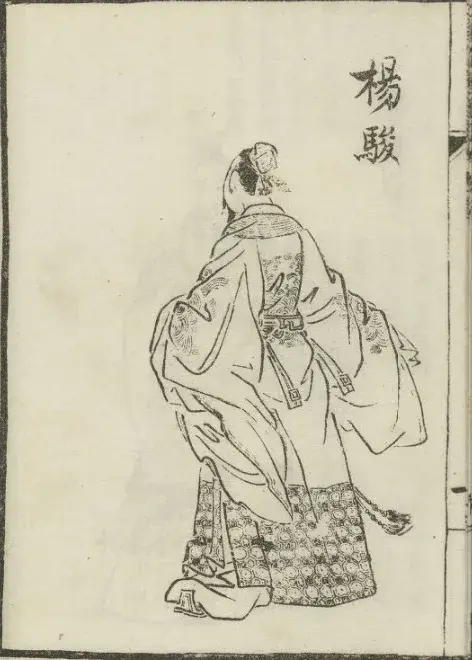
杨俊
Yang Jun (杨俊, 571–600), courtesy name A-zhi (阿祗), Prince of Qin (秦王), was an imperial prince, frontline military commander, and regional governor of the Sui dynasty. He was the third son of Emperor Wen of Sui (Yang Jian) and Empress Dugu Qieluo. Created Prince of Qin in 581 at the founding of the Sui dynasty, he was appointed to high administrative and military offices across Henan, Longyou, and Shannan while still in…
Yang Jun (杨俊, 571–600), courtesy name A-zhi (阿祗), Prince of Qin (秦王), was an imperial prince, frontline military commander, and regional governor of the Sui dynasty. He was the third son of Emperor Wen of Sui (Yang Jian) and Empress Dugu Qieluo. Created Prince of Qin in 581 at the founding of the Sui dynasty, he was appointed to high administrative and military offices across Henan, Longyou, and Shannan while still in his youth. Naturally compassionate, merciful, and devoted to Buddhist teachings, Yang Jun famously petitioned his father to resign his royal status and take monastic vows, a request denied due to dynastic obligations. During the grand campaign to conquer the Southern Chen dynasty in 588, Yang Jun served as Supreme Marshal of the Shannan Expeditionary Route, commanding thirty subordinate area commands and more than one hundred thousand naval and ground troops at Hankou. Facing entrenched Chen forces under veteran commanders Zhou Luohou and Zhou Fashang at Yingwu Island, Yang Jun prioritized bloodless persuasion over violent storming, successfully bringing about the surrender of the southern armada and securing the entire upper Yangtze. However, his later career was marred by growing extravagance, illicit usury, and opulent palace construction, including an extravagant Water Palace decorated with mirrors, jade, and perfumes. Poisoned by his jealous primary consort Lady Cui, he fell into chronic illness and was stripped of all public offices by Emperor Wen for violating imperial laws. He died in 600 at the age of thirty and was accorded an austere burial.
Born into the prominent Yang clan of Hongnong; displays gentle disposition and Buddhist piety from early childhood.
Created Prince of Qin at age eleven upon the founding of the Sui dynasty by his father Emperor Wen.
Appointed Supreme Pillar of State, Director of Henan Branch Department of State Affairs, and Prefect of Luozhou, commanding Guandong armies.
Appointed Area Commander-in-Chief of Qinzhou, governing the western frontier with benevolent administrative policies; requests to become a Buddhist monk.
Reassigned as Director of Shannan Branch Department of State Affairs at Xiangzhou; marries Lady Cui, sister of Duke Cui Hongdu.
Commissioned as Supreme Marshal of the Shannan Route, directing over one hundred thousand amphibious forces at Hankou.
Successfully accepts the peaceful capitulation of Chen generals Zhou Luohou and Zhou Fashang; promoted to Area Commander-in-Chief of Yangzhou, later transferred to Bingzhou.
Implicated in unauthorized money lending and excessive palace construction; more than one hundred provincial subordinates are prosecuted.
Falls gravely ill after consuming poisoned melon prepared by Lady Cui; recalled to Chang'an and stripped of all administrative posts.
Dies in his Chang'an residence at age thirty; Emperor Wen burns his luxurious possessions and orders an austere burial, granting the posthumous title Prince Xiao.
Yang Jun was born in 571 during the Northern Zhou dynasty as the third son of Yang Jian (later Emperor Wen of Sui) and his primary consort Dugu Qieluo. From his earliest years, Yang Jun was admired within the imperial household for his mild temperament, dutiful filial piety, and extraordinary compassion toward subordinates. Upon the founding of the Sui dynasty in February 581, Emperor Wen created him Prince of Qin.
In 582, at the age of twelve, Yang Jun was appointed Supreme Pillar of State, Director of the Henan Branch Department of State Affairs, and Prefect of Luozhou, followed shortly by his appointment as General of the Right Martial Guard commanding forces across the Guandong region. In late 583, Emperor Wen abolished the Henan branch administration and transferred Yang Jun to serve as Area Commander-in-Chief of Qinzhou, placing all military and civilian governance of the Longyou region under his authority. Throughout his early regional governance, Yang Jun lived simply, governed with restraint, and won widespread popularity among local tribal and Han populations.
Deeply moved by the impermanence of mortal life and thoroughly devoted to Buddhist philosophy, Yang Jun submitted a formal memorial to Emperor Wen requesting permission to renounce his princely rank, shave his head, and enter the Buddhist sangha as a monk. Viewing imperial princes as vital bulwarks of the newly founded dynasty, Emperor Wen firmly rejected the proposal. In 584, Yang Jun returned to Chang'an to attend court, where Emperor Wen arranged his marriage to Lady Cui, the younger sister of the distinguished general and Duke of Wuxiang, Cui Hongdu. In 586, the emperor established the Shannan Branch Department of State Affairs at Xiangzhou, placing Yang Jun in charge of the southern strategic corridor.
In the winter of 588, Emperor Wen launched a massive amphibious campaign to conquer the Southern Chen dynasty and unify China. The imperial court appointed three grand expeditionary marshals: Prince of Jin Yang Guang, Prince of Qin Yang Jun, and Duke of Qinghe Yang Su. Yang Jun was designated Supreme Marshal of the Shannan Route, with command over thirty regional generals and more than one hundred thousand infantry, cavalry, and riverine naval troops massed at Hankou, serving as the paramount operational command for the upper Yangtze River.
Downstream from Hankou, prominent Chen commanders Zhou Luohou and Zhou Fashang occupied Yingwu Island with tens of thousands of elite naval troops, barricading the riverways and resisting southern progress. General Cui Hongdu urged an immediate full-scale amphibious assault to wipe out the southern defenders. However, Yang Jun recognized that the total collapse of the Chen capital was imminent and refused to permit a costly assault, expressing deep reluctance to cause needless loss of human life. Shortly after southern capital Jiankang fell to Yang Guang's columns, Zhou Luohou and his entire officer corps surrendered voluntarily to Yang Jun's camp.
With the upper Yangtze secured without bloodshed, Yang Jun dispatched couriers to present the victory memorial to the imperial court. Upon handing the scroll to the messenger, Yang Jun wept openly, lamenting: "I was improperly elevated to this supreme command, yet I failed to achieve any personal battlefield triumph to repay the throne, which brings me profound shame." When Emperor Wen received the report, he praised Yang Jun's modesty and broad-minded benevolence, immediately promoting him to Area Commander-in-Chief of Yangzhou governing forty-four regional prefectures, and later transferring him to Bingzhou to oversee twenty-four northern frontier prefectures.
During his initial years in regional office, Yang Jun enjoyed an impeccable reputation for modesty and integrity, prompting Emperor Wen to issue multiple imperial commendations. However, as he matured in office and remained far from the central court, Yang Jun gradually succumbed to vanity, luxury, and material excess.
He began violating state regulations by lending government and private funds at exorbitant interest rates, imposing harsh financial distress upon the local officials and commoners of Bingzhou. When reports reached Chang'an, Emperor Wen dispatched imperial censors to conduct a secret investigation, resulting in the judicial penalization of over one hundred officials involved in usurious practices. Despite this stern warning, Yang Jun showed no remorse and turned his energies toward lavish architectural extravagance.
Possessing remarkable ingenuity and mechanical craftsmanship, Yang Jun often personally handled axes and woodworking tools to construct elaborate decorative items adorned with jade and pearls. He crafted an ostentatious seven-jeweled veil (mianli) for his consort Lady Cui, which was so heavily encrusted with gold and gems that it could not be worn on the human head and required a packhorse to carry it. Furthermore, he constructed an opulent Water Palace along the riverbanks, featuring astronomical instruments like the armillary sphere and gnomon. The interior walls of the palace were plastered with fragrant perfumes, the terraces and steps were paved with white jade and gold, and the ceilings and pillars were lined with polished bronze mirrors inlaid with pearls and coral. On this floating palace, Yang Jun routinely gathered courtesans, musicians, and guests to host nocturnal banquets of music and revelry.
Beyond his material extravagance, Yang Jun kept numerous concubines and courtesans in his private quarters, neglecting his primary wife. Lady Cui, born of the aristocratic Boling Cui lineage, was exceptionally proud, jealous, and vindictive. Resentful of her husband's neglect and infidelities, she laced a fresh melon with lethal poison in 597. After consuming the melon, Yang Jun fell violently ill with severe gastrointestinal hemorrhaging, permanently ruining his health.
In July 597, as news of his illness and administrative corruption reached the capital, Emperor Wen recalled Yang Jun to Chang'an. Deeply committed to Confucian frugality and statutory equality, the emperor was outraged by his son's defiance of imperial laws. He issued an edict stripping Yang Jun of all official titles and regional commands, confining him to his private princely residence. Several prominent ministers attempted to intercede. General Liu Sheng argued that the prince had committed no treasonous act and had merely expended state wealth on personal residences. Emperor Wen replied sternly that imperial laws were universal and could not be suspended for imperial kin.
Left Vice Director Yang Su also pleaded for leniency, pointing out that the prince's failings did not warrant complete cashiering. Emperor Wen delivered a celebrated rebuke: "I am the father of five sons, not the father of all humanity under Heaven! If I follow your advice, why should we not draft a separate legal code specifically exempting imperial sons? In antiquity, the Duke of Zhou executed his brothers Guan and Cai to preserve dynastic order. My virtue is far inferior to the Duke of Zhou; how dare I undermine the majesty of the law for private family affection?" The emperor remained unyielding in his sentence.
Confined to his residence in debilitating illness, Yang Jun suffered intense physical deterioration, with silver placed in his mouth turning black, confirming the presence of poison. Bedridden and realizing that his end was near, he sent an emissary to the palace to confess his faults. Emperor Wen offered no comforting words, warning the messenger that imperial princes were meant to establish moral examples for the empire, not break the law. Stricken with shame and fear, Yang Jun's condition deteriorated rapidly. Despite petitions from senior generals like Huangfu Tong requesting his reinstatement, Emperor Wen refused, only relenting to restore his Supreme Pillar of State rank when the prince was on his deathbed.
On August 4, 600, Yang Jun died in his Chang'an residence at the age of thirty. Emperor Wen wept briefly upon hearing the news and conferred upon him the posthumous title Prince Xiao. True to his austere philosophy, the emperor ordered all of Yang Jun's luxurious possessions, including his mechanical toys and jeweled decorations, burned publicly, commanding that his funeral rites be kept strictly modest. Lady Cui was sentenced to death by forced suicide for regicide, and her son Yang Hao was initially barred from inheriting the princely title.
Yang Jun's twelve-year-old eldest daughter, Princess Yongfeng, was so grief-stricken by her father's death that she adopted a lifelong vegetarian diet, weeping and fasting on every anniversary of his passing. Meanwhile, Yang Jun's faithful chief bodyguard Wang Yan attended his master throughout his final illness without changing his clothes; on the day of the prince's burial, Wang Yan wept until he expired beside the tomb. Deeply moved, Emperor Wen ordered Wang Yan buried beside Yang Jun.
Yang Jun's greatest historical accomplishment occurred during the grand campaign against Southern Chen in 588–589. As Supreme Marshal of the Shannan Route, he commanded over one hundred thousand amphibious troops at Hankou, holding the critical upper reaches of the Yangtze River. Faced with veteran southern defenders, he exercised extraordinary strategic patience and humane restraint, refusing to mount bloody assaults and ultimately securing the peaceful surrender of prominent Chen commanders Zhou Luohou and Zhou Fashang. His bloodless triumph ensured the rapid unification of China and saved thousands of lives.
Yang Jun possessed an exceptional talent for mechanical engineering, astronomy, and architectural design. He personally drafted blueprints, handled carpentry tools, and integrated scientific instruments like armillary spheres and sundials into palace architecture. His construction of the Water Palace demonstrated sophisticated hydraulic engineering, acoustic reflection through mirrors, and exquisite interior decorative craft, reflecting the zenith of Sui dynasty material culture.
Yang Jun's fall from grace served as a paramount legal and ideological precedent during Emperor Wen's reign. In refusing to grant clemency to his own beloved son, Emperor Wen established the principle that imperial relatives were equally subject to statutory law, immortalized in his declaration that he was "the father of all people, not merely the father of five sons." Yang Jun's punishment became an enduring historical benchmark for judicial impartiality in Chinese dynastic history.
FIGURES ASSOCIATED WITH THIS DYNASTY