Literary Formation
Born in northern China, acquired vast knowledge across the classics, and joined literati playwriting circles.
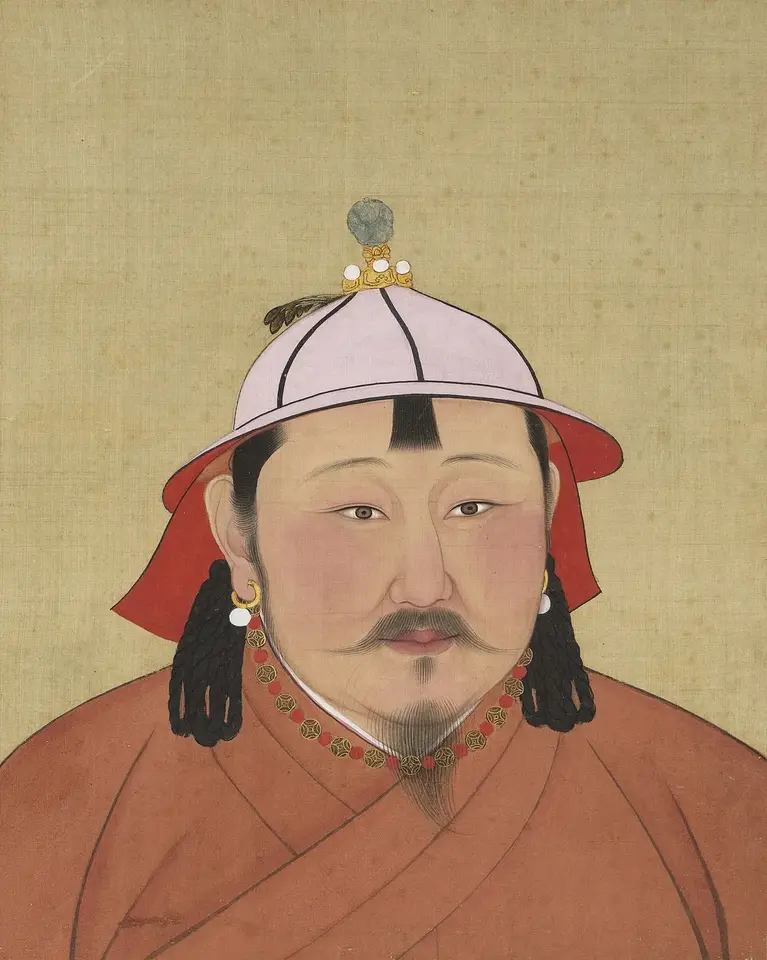
李好古
Li Haogu was an esteemed playwright of Yuan drama (Zaju) and a leading figure of the ornate literary style (Wencai Pai) during the Yuan dynasty. Biographical details regarding his native place vary across historical editions: the Caolianting edition of A Register of Ghosts (Lu Gui Bu) lists him as a native of Baoding in modern Hebei (with a note suggesting Xiping in Henan), while the Tianyige edition records him as a…
Li Haogu was an esteemed playwright of Yuan drama (Zaju) and a leading figure of the ornate literary style (Wencai Pai) during the Yuan dynasty. Biographical details regarding his native place vary across historical editions: the Caolianting edition of A Register of Ghosts (Lu Gui Bu) lists him as a native of Baoding in modern Hebei (with a note suggesting Xiping in Henan), while the Tianyige edition records him as a native of Dongping in Shandong; modern scholars predominantly support the Baoding attribution. Possessing deep classical erudition and imaginative creative power, he was ranked by the Yuan dramatic theorist Zhong Sicheng among the revered deceased talents of the older generation. Historical records ascribe three major Zaju plays to Li Haogu, all focusing on supernatural, Daoist, and mythical legends: Scholar Zhang Boils the Sea at Shamen Island (Shamandao Zhang Sheng Zhu Hai), Emperor Taizu of Song Quiets the Haunted Residence (Zhao Taizu Zhen Xiongzhai), and The Giant God Splits Mount Hua (Juling Shen Pi Huayue). While the latter two have been lost over time, his complete masterpiece Scholar Zhang Boils the Sea has survived intact. Adapted from Jin-dynasty theater scripts and popular maritime folklore, the drama recounts the romantic struggle between the mortal scholar Zhang Yu and the dragon princess Qionglian, who overcome the Dragon King's patriarchal opposition through steadfast love. This play and Shang Zhongxian's Tale of Liu Yi (Liu Yi Chuan Shu) are universally celebrated as the Twin Gems of Mythological Drama in Yuan Zaju. Li Haogu's poetic style is distinguished by elegant diction, vivid lyrical cadence, and profound emotional resonance, characterized by Zhu Quan in The Proper Sounds of an Era of Great Peace (Taihe Zhengyin Pu) as "solitary pines beneath the autumn moon." His portrayal of human agency confronting supernatural authority left a lasting imprint on Ming and Qing literature, inspiring Li Yu to adapt his motifs into the famous Kunqu opera Mirage Pavilion (Shenzhong Lou). Li Haogu occupies a paramount place in the history of Chinese romantic theater.
Born in northern China, acquired vast knowledge across the classics, and joined literati playwriting circles.
Drew inspiration from folkloric legends and marketplace theater, authoring mythological plays such as Quieting the Haunted Residence.
Penned the romantic mythological play Scholar Zhang Boils the Sea, which gained widespread acclaim across northern stages.
His works were widely performed in entertainment quarters, praised by contemporaries for their lyrical sophistication.
Included by Zhong Sicheng in A Register of Ghosts as an eminent master, commemorated with an elegiac verse by Jia Zhongming.
Li Haogu lived during the flourishing era of Yuan dramatic literature. Accounts of his geographic origin differ slightly across surviving playbooks. In the foundational biographical catalogue of playwrights, A Register of Ghosts (Lu Gui Bu), the Tianyige manuscript lists him as a native of Dongping (modern Shandong), whereas the Caolianting manuscript identifies him as a native of Baoding (modern Hebei), adding an alternative claim of Xiping. Theater historians widely view him as an essential representative of the Baoding playwriting circle, a regional cultural hub that nurtured leading dramatists during the Yuan period.
Endowed with sharp intellect and broad literary training, Li Haogu mastered classical poetry, historical annals, and philosophical treatises. During a period when traditional bureaucratic careers through civil service examinations were largely closed to northern Han intellectuals, he directed his creative energies toward the rising popular medium of Yuan Zaju. Immersing himself in urban entertainment quarters and literary guilds, he transformed scholastic refinement into accessible theater, developing a distinguished lyrical voice.
In choosing themes for his plays, Li Haogu established a unique artistic niche by focusing on immortal lore, celestial spirits, and popular romantic legends. While many contemporaries gravitated toward courtroom crime narratives, heroic outlaw cycles, or historical military epics, Li utilized mythological frameworks to voice human aspirations for personal freedom.
According to the elegiac verse composed by the early Ming playwright Jia Zhongming, Li Haogu authored three principal dramas: Emperor Taizu of Song Quiets the Haunted Residence, The Giant God Splits Mount Hua, and Scholar Zhang Boils the Sea at Shamen Island. The play concerning Emperor Taizu explored popular legends of dynastic heroism and supernatural confrontation, while the Mount Hua drama dramatized the myth of the primeval river deity carving mountain passes for the Yellow River. Although both scripts were lost in subsequent warfare, their titles reflect his enduring fascination with cosmic lore.
Li Haogu's sole surviving dramatic work is the four-act play Scholar Zhang Boils the Sea at Shamen Island (Shamandao Zhang Sheng Zhu Hai). Drawing upon earlier Tang tales and Jin entertainment skits, Li elevated the narrative into a sophisticated romantic drama. The plot follows the mortal scholar Zhang Yu, who lodges at a coastal temple and falls in love with Princess Qionglian, the daughter of the Dragon King of the Eastern Sea. The couple pledges mutual devotion, but the arrogant Dragon King adamantly refuses to permit the match, locking his daughter away within his subterranean palace.
Undeterred by the immense divide between human frailty and divine despotism, Zhang Yu acquires magical talismans—a silver cauldron, a gold coin, and an iron ladle—bestowed by the immortal Donghua Xiangu. Standing on Shamen Island, Zhang boils the ocean waters, creating cataclysmic heat that rocks the crystal palace and forces the obstinate Dragon King to yield. The final act culminates in a joyous wedding, triumphantly proclaiming: "May all parted lovers throughout the realm be spared obstruction, so that the sincere may achieve their heartfelt desire."
Li Haogu was an exemplary representative of the ornate literary school (Wencai Pai) in Yuan drama. His aria verses avoided vulgar colloquialisms, incorporating the expansive descriptive cadence of traditional Han and Chu rhapsodies (Fu). His lyrical depictions of tempestuous ocean tides in Zhang Boils the Sea were praised by connoisseurs as theatrical rhapsodies on the sea, evoking magnificent maritime imagery upon the stage.
Li Haogu passed away in the later decades of the Yuan dynasty. When Zhong Sicheng compiled A Register of Ghosts, he placed Li Haogu with great reverence in the category of "Predecessor Deceased Gentlemen and Talents." Jia Zhongming celebrated his profound scholarship in an elegy, observing that his verses captured immortal fame while ten thousand scrolls of wisdom resided within his heart, securing his enduring standing in Chinese theatrical history.
With Scholar Zhang Boils the Sea, Li Haogu transformed folklore into an intricate stage masterpiece. Alongside Shang Zhongxian's Tale of Liu Yi, his drama is universally acknowledged by theater historians as one of the Twin Gems of Mythological Drama in Yuan Zaju.
In Zhang Boils the Sea, Li subverted conventional stereotypes of passive scholar protagonists by depicting Zhang Yu as a determined hero willing to boil the ocean and confront divine despotism. This dynamic characterization gave voice to grassroots aspirations against authoritarian oppression and arranged marriage.
Li Haogu blended rigorous classical metrics with theatrical song suites, maintaining elegance without sacrificing dramatic dynamism. The Ming dynasty musical treatise The Proper Sounds of an Era of Great Peace (Taihe Zhengyin Pu) likened his verse to "solitary pines beneath the autumn moon," establishing a high aesthetic benchmark for dramatic lyricism.
Li Haogu's theatrical motifs provided fertile inspiration for subsequent playwrights. During the late Ming and early Qing transition, the dramatist Li Yu merged Zhang Boils the Sea and The Tale of Liu Yi into the renowned twenty-eight-scene Kunqu romance Mirage Pavilion (Shenzhong Lou), ensuring the continuous performance of his artistic vision down to the modern era.
FIGURES ASSOCIATED WITH THIS DYNASTY