Birth in Patan
Born into a prominent family in Patan, Kathmandu Valley, studying Sanskrit Buddhist texts and craft canons.
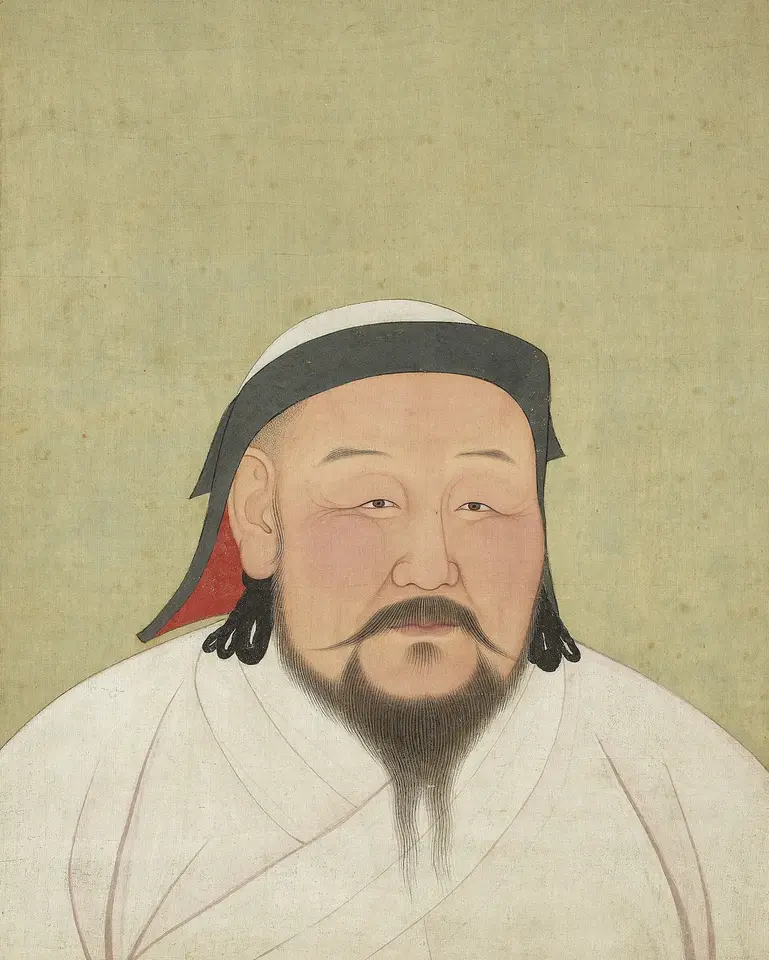
阿尼哥
Araniko (1244–1306), known in Chinese historical records as Anige (阿尼哥), was a renowned architect, sculptor, and master craftsman hailing from Patan in the Kathmandu Valley of the Kingdom of Nepal. Serving the Yuan dynasty for over four decades, he rose to the premier official rank of Grand Master for Glorious Happiness and Grand Minister of Works while directing the Directorate for Imperial Manufactures, posthumously…
Araniko (1244–1306), known in Chinese historical records as Anige (阿尼哥), was a renowned architect, sculptor, and master craftsman hailing from Patan in the Kathmandu Valley of the Kingdom of Nepal. Serving the Yuan dynasty for over four decades, he rose to the premier official rank of Grand Master for Glorious Happiness and Grand Minister of Works while directing the Directorate for Imperial Manufactures, posthumously enfeoffed as Duke of Liang with the posthumous title Minhui. Demonstrating early genius in Buddhist scriptures, metallurgy, and architectural canons, seventeen-year-old Araniko volunteered in 1260 to lead eighty artisans to Sakya Monastery in Tibet to construct a magnificent golden stupa under the direction of Imperial Preceptor Drogon Chogyal Phagpa. Impressed by his brilliance, Phagpa tonsured him as an initiated disciple and presented him to Kublai Khan (Emperor Shizu of Yuan). Araniko achieved immediate renown at the imperial court through his unmatched technical mastery. In 1265, he miraculously restored the damaged Northern Song bronze acupuncture figure, aligning every channel and meridian perfectly, and subsequently supervised the carving of the Dushan Jade Bowl. In 1271, Kublai commissioned him to design and construct the White Stupa of the Temple of Great Shengshou Wan'an in Khanbaliq (modern Miaoying Temple White Stupa in Beijing). Completed in 1279, this soaring fifty-meter brick-and-stone structure combined Nepalese, Tibetan, and Central Plains architectural traditions into a monument celebrating imperial authority, remaining the oldest and largest preserved Tibetan Buddhist stupa in China. Throughout his tenure overseeing royal manufactories, Araniko designed three stupas, nine major imperial temples, and numerous ancestral halls, introducing Nepalese iconographic methods that established the influential Western Indic style (Xitian Fanxiang) in Buddhist art and mentoring Chinese disciples such as the master sculptor Liu Yuan. Commemorated as a national hero in Nepal and honored as a giant of Eurasian civilizational exchange in China, monuments dedicated to his memory stand in both Beijing and Patan.
Born into a prominent family in Patan, Kathmandu Valley, studying Sanskrit Buddhist texts and craft canons.
Volunteered at age seventeen to lead eighty craftsmen to Tibet to construct a golden stupa at Sakya Monastery.
Presented by Phagpa to Kublai Khan in Khanbaliq, demonstrating broad knowledge of sculpture and architecture.
Miraculously repaired the Song acupuncture bronze statue and supervised the sculpting of the Dushan Jade Bowl.
Commissioned by imperial decree to survey and supervise the construction of the White Stupa at Wan'an Temple.
Appointed director of the Chief Management Bureau of Diverse Artisans, establishing the Western Indic style.
Ordered to return to lay status, elevated to Grand Master for Glorious Happiness and Grand Minister of Works.
The White Stupa was formally consecrated; Kublai Khan rewarded him with fifteen thousand mu of suburban farmland.
Directed the construction of Wansheng Youguo Temple on Mount Wutai and Daoist sanctuaries in Khanbaliq.
Died peacefully in his capital residence at the age of sixty-two; interred with royal honors at Xiangshan.
Emperor Wuzong posthumously granted him the rank of Grand Preceptor and enfeoffed him as Duke of Liang, posthumously titled Minhui.
Araniko was born in 1244 into an aristocratic family in Patan (Lalitpur) within the Kathmandu Valley of Nepal. Patan had long flourished as a celebrated center of Buddhist stone masonry, metal casting, and woodcarving. As a child, Araniko demonstrated an instinctive aptitude for architectural engineering; at the age of three, while visiting a local temple with his parents, he questioned the internal wooden core and parasol structures of the pagoda, astonishing seasoned craftsmen. He quickly mastered Sanskrit sutras and the canonical measurements codified in the Treatise on Iconometry.
In 1260, Kublai Khan ascended the throne as Great Khan and commissioned Imperial Preceptor Phagpa to erect a grand golden stupa at Sakya Monastery in Tibet. Because of the technical complexity required, Phagpa dispatched envoys to the Kingdom of Nepal to recruit experienced master builders. The King of Nepal selected eighty elite craftsmen, yet because the alpine route across the Himalayas was perilous, none dared step forward to lead. The seventeen-year-old Araniko boldly volunteered. When envoys questioned his youth, he replied: "Though young in physical body, my heart and purpose are mature." He then led the team across the snowbound mountains to Sakya Monastery.
At Sakya Monastery, Araniko completed the golden stupa within two years. Deeply moved by the young artisan's virtue and virtuosity, Phagpa initiated him into the monastic order as a close disciple, taught him esoteric doctrines, and took him north to the imperial capital.
In 1262, Phagpa introduced Araniko to Kublai Khan. Struck by his composed demeanor, Kublai asked: "Why have you traveled to my court?" Araniko bowed and replied: "I was born in the western lands and witnessed the suffering of people in Tibet during the wars. Knowing that the Son of Heaven pacifies all corners of the earth, I have come for the welfare of all living beings." Pleased by his reply, Kublai tested his skills by inquiring about his capabilities. Araniko responded: "Taking my own mind as my teacher, I have modest skill in drawing, clay modeling, metal casting, and carving."
To verify his ability, Kublai ordered the imperial attendants to retrieve the fractured Song-dynasty acupuncture bronze figure cast during the Xuanhe era. Centuries of warfare had battered the bronze relic, obscuring its meridians and breaking its joints. Leading court artisans had refused to attempt its repair, fearing failure. Araniko examined the anatomical paths and undertook the task. In 1265, employing lost-wax casting and precision chiseling, he restored the ancient relic so seamlessly that the seams were invisible and every meridian was accurate. Court artisans fell to their knees in awe, hailing his craftsmanship as divine.
Having earned imperial trust, Araniko was entrusted with monumental projects for the newly established capital Khanbaliq. In 1271, Kublai proclaimed the dynastic title Great Yuan and initiated the construction of the Temple of Great Shengshou Wan'an in the western sector of the metropolis. Araniko was named chief architect and tasked with designing a monumental stupa to anchor the city.
Araniko integrated the Nepalese hemispherical bowl-shaped mound and the ancient Indian stupa model with the multi-tiered Sumeru pedestal of Chinese stone architecture. Rising to a height of 50.9 meters, the stupa was plastered with refined white limestone, giving it a gleaming finish. Its summit was crowned with a bronze canopy featuring thirty-six pierced streaming tassels and bells that chimed in the wind, topped by a miniature gilded bronze reliquary. Completed in 1279, the monument was hailed by contemporaries alongside the walled capital as the "Golden City and Jade Stupa."
In 1273, Kublai Khan established the Chief Management Bureau of Diverse Artisans, appointing Araniko as director to oversee tens of thousands of craftsmen across eighteen bureaus, including image casting and textile weaving. In this capacity, Araniko systematically introduced Nepalese and Kashmiri stylistic canons into northern China, reforming Buddhist iconography.
His sculptures featured broad foreheads, arched brows, delicate features, balanced physical proportions, and diaphanous drapery clinging to the torso—a visual language known historically as the Western Indic style (Xitian Fanxiang). During this period, the renowned Han Chinese stone and clay sculptor Liu Yuan became his devoted student. Araniko instructed him without reservation in iconometric mathematics and metal gilding. Liu Yuan emerged as a premier Chinese master, disseminating the Western Indic aesthetic across both northern and southern China.
To retain Araniko permanently in imperial service, Kublai Khan issued a decree in 1278 granting him dispensation to return to secular life. He was appointed Grand Master for Glorious Happiness and Grand Minister of Works, while directing the Directorate for Imperial Manufactures, and was wedded to a granddaughter of Southern Song Prince Jingxian, receiving estates and mansions in the capital. Following the consecration of the White Stupa in 1279, Kublai rewarded him with fifteen thousand mu of agricultural land and one hundred tenant households.
During the subsequent Yuanzhen and Dade reign eras of Emperor Chengzong, Araniko designed Wansheng Youguo Temple on Mount Wutai, Chongzhen Wanshou Daoist Palace, and Datianshou Wanning Temple, while personally producing woven portraits of Kublai Khan and Empress Chabi. In the third month of 1306, the Nepalese master passed away at his official residence in Khanbaliq at the age of sixty-two. In 1311, Emperor Wuzong posthumously elevated him to Grand Preceptor, Senior Pillar of State, and Duke of Liang, bestowing the posthumous name Minhui.
Araniko directed the engineering of the White Stupa at Wan'an Temple (Miaoying Temple), standing 50.9 meters high. As the sole surviving complete landmark of the Yuan imperial capital, it represents an enduring monument of international architectural synthesis.
In 1265, Araniko repaired the damaged Song-dynasty acupuncture bronze statue using advanced metallurgical joinery and anatomical knowledge, preserving a national treasure and ensuring the continuity of clinical acupuncture pedagogy.
Araniko designed and supervised the carving of the 3,500-kilogram Dushan Jade Bowl during the early Zhiyuan era. Utilizing deep relief carving to depict mythical beasts emerging from swirling waves, it marked a pinnacle in Chinese monumental jade sculpting.
Araniko revolutionized Buddhist sculpture in China by introducing the Western Indic style (Xitian Fanxiang). By training prominent Chinese sculptors like Liu Yuan, his aesthetic principles dominated court and temple art across the Yuan, Ming, and Qing dynasties.
Over four decades heading the imperial workshops, Araniko planned and built major religious complexes, including the Sakya Golden Stupa in Tibet, temples on Mount Wutai, and central sanctuaries in Khanbaliq and Shangdu, enriching Eurasian cultural integration.
FIGURES ASSOCIATED WITH THIS DYNASTY