Birth
Born into the Zhang clan of Fangcheng, Fanyang; orphaned in childhood and herded sheep while pursuing scholarly studies.
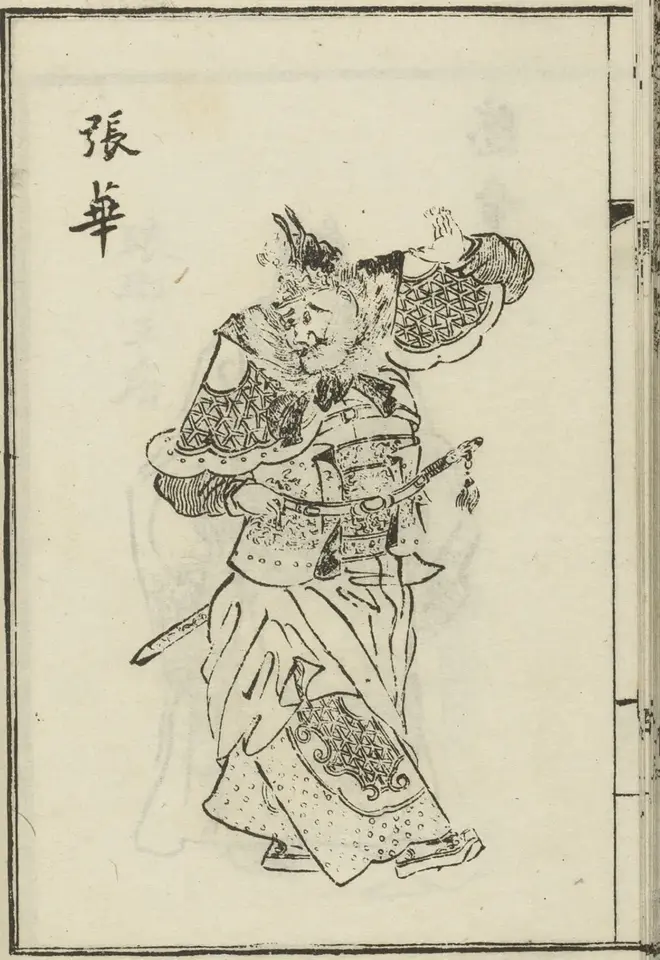
张华
Zhang Hua (张华, 232–300 CE), courtesy name Maoxian, was an illustrious statesman, polymath, literary scholar, and bibliophile of the Western Jin Dynasty from Fangcheng in Fanyang, tracing his lineage to Zhang Liang, the Marquis of Liu in the early Western Han. Born into poverty and orphaned at a young age, he herded sheep while mastering the classics, winning acclaim from the Bamboo Grove scholar Ruan Ji, who hailed him as a…
Zhang Hua (张华, 232–300 CE), courtesy name Maoxian, was an illustrious statesman, polymath, literary scholar, and bibliophile of the Western Jin Dynasty from Fangcheng in Fanyang, tracing his lineage to Zhang Liang, the Marquis of Liu in the early Western Han. Born into poverty and orphaned at a young age, he herded sheep while mastering the classics, winning acclaim from the Bamboo Grove scholar Ruan Ji, who hailed him as a talent fit to counsel kings. Entering officialdom under Cao Wei as an Erudite, he rose rapidly under Emperor Wu of Jin to become Prefect of the Masters of Writing. When the majority of courtiers opposed the conquest of Eastern Wu, Zhang Hua joined Yang Hu and Emperor Wu in formulating the offensive grand strategy. As Director of Expenditures, he directed logistics, riverine supply, and troop movements, bringing about the reunification of China in 280 CE and earning an enfeoffment as Marquis of Guangwu County. Exiled to the northern frontier as military commander of Youzhou due to factional jealousy from aristocratic clans, he pacified barbarian borderlands, receiving tribute from over twenty foreign tribes. Following the accession of Emperor Hui, Zhang Hua served as Minister of Works and director of the imperial secretariat. Navigating the treacherous regency of Empress Jia Nanfeng with profound wisdom and moral rectitude, he preserved domestic peace for nearly a decade, fostering the prosperous "Yuankang Governance." He composed The Admonitions of the Instructress to counsel court ladies and compiled Bowuzhi, China's earliest encyclopedic work on natural history and mythology. In 300 CE, refusing to participate in Prince Sima Lun's treasonous coup, he met a heroic death at the age of sixty-nine and was posthumously exonerated under Emperor Hui with the restoration of all honors.
Born into the Zhang clan of Fangcheng, Fanyang; orphaned in childhood and herded sheep while pursuing scholarly studies.
Composed The Wren Rhapsody (Jiaoliao Fu); acclaimed by Ruan Ji as an extraordinary talent and appointed Erudite of Imperial Sacrifices.
Elevated to Gentleman of the Yellow Gate and Marquis of Guannei upon Emperor Wu's accession; impressed the court with encyclopedic architectural knowledge.
Promoted to Prefect of the Masters of Writing and Regular Mounted Attendant; recalled from mourning rites by imperial decree to direct central affairs.
Visited the dying general Yang Hu on imperial orders; entrusted by Yang Hu with the mission of conquering the rival state of Eastern Wu.
Appointed Director of Expenditures to oversee nationwide logistics for the conquest of Wu; urged Emperor Wu to disregard calls for his execution and press the attack.
Celebrated the surrender of Sun Hao and the reunification of the realm; enfeoffed as Marquis of Guangwu County with an estate of ten thousand households.
Slandered by Xun Xu after advocating that Prince Sima You should assist the throne; transferred to Youzhou as Commander-in-Chief, pacifying more than twenty border tribes.
Denied the grand chancellorship through Feng Dan's slanderous comparison with Zhong Hui; briefly served as Minister of Imperial Sacrifices before being dismissed.
Appointed Junior Tutor to the Crown Prince upon Emperor Wu's demise; sidelined by Regent Yang Jun due to high moral standing.
Advised Emperor Hui to display the sacred imperial Zouyu banner, quelling Prince Sima Wei's mutiny without bloodshed; appointed Supervisor of the Masters of Writing.
Promoted to Minister of Works and Duke of Zhuangwu Commandery; maintained imperial order for nearly a decade, ushering in the "Yuankang Governance."
Bravely opposed Empress Jia's treasonous plot to depose Crown Prince Sima Yu during the heated Shiqian Hall imperial assembly.
Refused to join Prince Sima Lun's coup; executed at the southern path of the front palace at age sixty-nine, and posthumously exonerated with full honors restored in 303 CE.
Zhang Hua was born into the prestigious Zhang lineage of Fanyang, claiming descent from Zhang Liang, the celebrated founding strategist of the Western Han. His father, Zhang Ping, served as Grand Administrator of Yuyang during the Cao Wei Dynasty but died when Zhang Hua was still an infant. Plunged into extreme destitution, young Zhang Hua herded sheep for wealthy neighbors to earn coarse grain for his widowed mother.
Despite his impoverished circumstances, Zhang Hua possessed an extraordinary memory and a relentless passion for learning. Regardless of biting winter blizzards or sweltering summer heat, he was never seen without a book in his hand. He mastered the Confucian classics, imperial histories, astronomical calculations, divination, and philosophical treatises. His erudition extended beyond orthodox scholarship into ancient topography, architectural engineering, botany, zoology, and antiquarian connoisseurship, distinguishing him among all contemporary scholars.
During the Zhengyuan and Ganlu eras of the Cao Wei Dynasty, the political sphere was convulsed by the Sima clan's usurpation, with courtiers indulging in superficial sophistry and incurring political purges. Sensing the perilous climate, Zhang Hua composed The Wren Rhapsody (Jiaoliao Fu). In this masterwork, he utilized the fragile wren nesting in dense brambles as an allegory for the virtuous scholar who finds contentment in modesty and avoids factional ruin.
When the celebrated Bamboo Grove scholar Ruan Ji read the piece, he struck his table in admiration, declaring: "This youth is endowed with a talent fit to counsel kings!" Zhang Hua's fame swept through the capital of Luoyang. Grand Administrator Xianyu Si of Yuyang recommended him to the court, securing his initial appointment as an Erudite of Imperial Sacrifices. The Minister of Imperial Sacrifices, Lu Qin, was so impressed that he introduced Zhang Hua to General-in-Chief Sima Zhao, who assigned him as Assistant in the Bureau of History. Zhang Hua's memorials on institutional reforms and sacrificial protocols proved so pragmatic that he was promoted to Palace Attendant and Clerk of the Masters of Writing.
In the twelfth month of 265 CE, Prince of Jin Sima Yan accepted the abdication of the last Cao Wei emperor, establishing the Western Jin Dynasty as Emperor Wu. Recognizing Zhang Hua's encyclopedic intellect, Emperor Wu appointed him Gentleman of the Yellow Gate and enfeoffed him as Marquis of Guannei.
On one occasion, Emperor Wu inquired about the architectural layout of the Western Han Weiyang and Jianzhang Palaces with their thousands of interconnecting pavilions. Zhang Hua responded with fluent precision, outlining dimensions and structural elevations while sketching detailed architectural diagrams upon the floor. Courtiers and guards listened for hours without fatigue, prompting contemporaries to compare him to the venerable statesman Zichan of Zheng. Within a few years, he was promoted to Prefect of the Masters of Writing and Regular Mounted Attendant. When his mother passed away, Zhang Hua mourned with such grief that Emperor Wu issued a special edict forcing him to end his mourning period and return to state duties.
Throughout the Xianning era, the imperial court was polarized over launching an amphibious campaign against the southern state of Eastern Wu. Powerful ministers such as Jia Chong, Xun Xu, and Feng Dan vehemently opposed the expedition, citing the hazardous Yangtze River and the risk of overextending imperial armies. Only Grand General Yang Hu in Xiangyang and Zhang Hua in the central secretariat resolutely advocated an immediate campaign.
In 278 CE, a terminally ill Yang Hu arrived in Luoyang. Emperor Wu sent Zhang Hua to his bedside to discuss strategic planning. Grasping Zhang Hua's hands, Yang Hu urged: "His Majesty has received Heaven's mandate, yet national reunification remains incomplete. Sun Hao's tyranny in Wu has reached its zenith, presenting a once-in-a-century opportunity. If we delay and Sun Hao dies, allowing a capable sovereign to take power, even a million soldiers will fail to cross the Yangtze. The one who can fulfill my lifelong aspiration is you!"
In 279 CE, General Du Yu submitted an urgent memorial from Xiangyang urging the launch of the invasion. Emperor Wu was playing weiqi with Zhang Hua in the palace when the dispatch arrived. Observing the emperor's hesitation over the board, Zhang Hua pushed aside the chessboard, bowed respectfully, and declared: "Your Majesty's sage virtue and military might are unmatched; the tyrant Sun Hao slaughters his own ministers, and the southern people groan in agony. An expedition now will pacify Wu without exhausting our troops. Pray do not hesitate any longer!" Emperor Wu was stirred by his resolve and finalized the mobilization order.
Emperor Wu appointed Zhang Hua as Director of Expenditures, charging him with the gargantuan responsibility of coordinating nationwide troop levies, naval transport, grain supplies, and strategic coordination. When initial skirmishes at Xiling stalled, Jia Chong and other noble courtiers panicked, submitting memorials demanding that Zhang Hua be executed at the Luoyang marketplace to appease heaven. Emperor Wu firmly rejected the petition, proclaiming: "The campaign was Our decision; Zhang Hua merely shares Our resolve!" Standing his ground, Zhang Hua maintained uninterrupted supply lines to the front. In the third month of 280 CE, Wang Jun's naval fleet breached Jianye, forcing Sun Hao to surrender. Celebrating national reunification, Emperor Wu elevated Zhang Hua to Marquis of Guangwu County with an estate of ten thousand households.
Following the conquest of Wu, Zhang Hua's prestige reached its peak. He was entrusted with drafting imperial decrees, compiling the official History of Jin, and standardizing court protocols. High ministers and commoners alike looked upon him as the natural choice for Chancellor.
However, Director of the Imperial Secretariat Xun Xu, who hailed from an aristocratic lineage, resented Zhang Hua's rise from humble beginnings. When Emperor Wu privately asked Zhang Hua: "Upon whom should the governance of the empire be bestowed after Our passing?" Zhang Hua frankly replied: "In terms of both virtue and imperial kinship, no one equals Prince Sima You of Qi, who should remain in the capital to steady the realm." This honest appraisal ran counter to Emperor Wu's desire to pass the throne to his intellectually disabled son, Crown Prince Sima Zhong. Seizing the opportunity, Xun Xu urged the emperor to reassign Zhang Hua to the frontier. In 282 CE, Zhang Hua was dispatched as Commander-in-Chief of Youzhou Military Affairs and General of Pacifying the North.
Arriving at the northern frontier, Zhang Hua governed with exceptional benevolence and diligence. He promoted agriculture, established commandery academies, alleviated corvée burdens, and treated nomadic chieftains with integrity and respect. The Youzhou borderlands flourished with abundant harvests. Inspired by his fair administration, more than twenty distant overseas and border tribes, including the Mahan and Xinmi who had never submitted to Chinese dynasties, sent tribute missions to Luoyang.
Impressed by his northern administration, courtiers repeatedly petitioned Emperor Wu to recall Zhang Hua as prime minister. However, court favorite Feng Dan harbored a personal grievance against Zhang Hua for having criticized his brother Feng Hui. During an informal audience, Feng Dan poisoned Emperor Wu's mind by remarking: "Zhong Hui's rebellion long ago was caused by the late emperor Sima Zhao's excessive indulgence. A driver must gauge the strength of his horses, and a ruler must restrain his ministers. Zhong Hui turned traitor because he was granted overwhelming military command and nationwide acclaim. The wise sovereign must nip treason in the bud!"
When Emperor Wu asked if anyone presently resembled Zhong Hui, Feng Dan bowed low and whispered: "The minister who devised the grand strategies for Your Majesty and now wields absolute military command on the northern frontier is precisely the man Your Majesty should fear!" Deeply unsettled, Emperor Wu abandoned the plan to elevate Zhang Hua to the premiership, recalling him only to serve as Minister of Imperial Sacrifices. Shortly afterward, a main beam in the ancestral temple cracked, providing a pretext for officials to impeach Zhang Hua and strip him of his office. For the remainder of Emperor Wu's reign, Zhang Hua attended court merely as a private marquis.
In 290 CE, Emperor Wu died, and the dim-witted Emperor Hui ascended the throne. Zhang Hua was appointed Junior Tutor to the Crown Prince. However, Regent Yang Jun monopolized power, excluding veteran statesmen such as Zhang Hua, Wang Rong, and Pei Kai from state deliberations.
In the third month of 291 CE, Empress Jia Nanfeng instigated a palace coup, executing Yang Jun and moving to depose Empress Dowager Yang Zhi. While the majority of courtiers compliantly endorsed the empress's vengeance, Zhang Hua courageously stood alone, citing Han dynasty precedents to urge that the dowager retain her title while residing in an external palace. Although the empress rejected his plea, stripping the dowager of her rank, scholars throughout the realm admired Zhang Hua's steadfast integrity.
In the sixth month of that year, Prince Sima Wei of Chu forged an imperial edict, assassinating Grand Tutor Sima Liang and Grand Protector Wei Guan. When armed retainers clashed across the capital and panic paralyzed the court, Zhang Hua stepped forward and advised Emperor Hui: "Prince Sima Wei fabricated the decree to murder our foremost statesmen. The soldiers obeyed him only because they believed it was the sovereign's command. If Your Majesty dispatches an imperial messenger bearing the sacred Zouyu banner to proclaim the truth, the mutineers will disperse instantly!"
Emperor Hui followed his advice. When palace guards raised the Zouyu banner atop the battlements shouting that the prince had forged the edict, the rebel troops threw down their weapons and fled. Prince Sima Wei was arrested and executed, instantly quelling the dangerous crisis. For his decisive wisdom, Zhang Hua was appointed Right Senior Brilliant-as-Gold Gentleman, Supervisor of the Masters of Writing, and Palace Attendant, with imperial authority over state affairs. He prudently declined the rank of Senior Grandee with imperial opening of offices.
Recognizing that Zhang Hua hailed from a modest lineage without an entrenched military clan, Empress Jia and her nephew Jia Mi entrusted him with running the government, seeking his counsel on all major decisions. Working alongside Assistant Director of the Masters of Writing Pei Kai, Zhang Hua devoted himself to imperial administration for nearly a decade. Despite the brutality of Empress Jia and the cognitive limitations of Emperor Hui, Zhang Hua maintained domestic peace, selected virtuous officials, and enforced statutory laws, creating the prosperous "Yuankang Governance." To discreetly admonish the empress against tyranny, he penned The Admonitions of the Instructress, winning deep respect even from the volatile empress. He was promoted to Minister of Works and elevated to Duke of Zhuangwu Commandery.
In 299 CE, Empress Jia and Jia Mi conspired to eliminate Crown Prince Sima Yu to consolidate their perpetual dominion. The empress intoxicated the prince and compelled him to copy a treasonous draft letter cursing the sovereign. Gathering the high ministers in the Shiqian Hall, Empress Jia displayed the manuscript and demanded the prince's execution. Terrorized by the empress's wrath, the courtiers remained silent.
Only Zhang Hua stepped forth, raising his voice in impassioned opposition: "Deposing the legitimate heir strikes at the foundation of the empire! Since the reign of Emperor Wu of Han, tampering with imperial primogeniture has never failed to invite catastrophic ruin. The house of Jin has held the realm for only a few decades; I beseech Your Majesty to reconsider!" Pei Kai supported him, demanding an interrogation of the palace eunuchs to verify the handwriting. The assembly debated from dawn until sunset. Seeing Zhang Hua's unshakeable determination, Empress Jia relented, demoting the prince to commoner status and imprisoning him in Jinyong City.
Around this time, Prince Sima Lun of Zhao governed the Guanzhong region with such cruelty that the Qiang and Di tribes rose in open rebellion. When Sima Lun was recalled to Luoyang, his cunning advisor Sun Xiu sought to secure executive ministerial power. Zhang Hua and Pei Kai resolutely blocked these appointments, earning the murderous hatred of both Sima Lun and Sun Xiu.
In the spring of 300 CE, Empress Jia orchestrated the poisoning of the deposed crown prince, sparking widespread outrage. Seizing on public fury, Sima Lun plotted a military coup. Sun Xiu sent palace officer Sima Ya to Zhang Hua's residence late at night, urging him to join the plot to overthrow the empress. Discerning Sima Lun's treasonous ambitions, Zhang Hua flatly refused. Drawing his sword, Sima Ya warned: "When the blade is already at your throat, do you still dare speak so stubbornly?"
That very night, Sima Lun mobilized his forces, executed Empress Jia, and forged an imperial summons commanding Zhang Hua to enter the palace. Anticipating death, Zhang Hua entered the palace grounds with composure and was seized alongside Pei Kai. Facing execution, officer Zhang Lin interrogated him: "As prime minister of the empire, why did you not die for the deposed crown prince?" Zhang Hua replied with thunderous conviction: "My vehement protests in the Shiqian Hall were witnessed by all ministers! The world knows I exhausted my strength to shield the prince!" Zhang Lin was struck dumb. When the execution order was read, Zhang Hua looked toward the sky and sighed: "I am an old servant of the late emperor, faithful to the marrow! I do not fear death, but I dread the catastrophic doom that will soon engulf the royal house of Jin!"
Zhang Hua was executed at the southern path of the front palace, and his three clans were put to death, ending his life at sixty-nine. In 301 CE, after Sima Lun was destroyed, Chief of the Palace Library Zhi Yu recovered the secret draft of Zhang Hua's memorial urging the appointment of Prince Sima You, vindicating his lifelong loyalty. In 303 CE, Emperor Hui issued an imperial proclamation fully exonerating Zhang Hua, restoring his dukedom, titles, and confiscated estates with full posthumous rites.
The campaign to conquer Eastern Wu in 279–280 CE brought an end to nearly a century of division following the collapse of the Han Dynasty. Within the imperial court, powerful aristocratic factions led by Jia Chong and Xun Xu opposed the campaign due to geographical fears of the Yangtze River and entrenched military conservatism.
Recognizing the strategic window afforded by Sun Hao's tyranny, Zhang Hua formed an unbreakable triumvirate with Emperor Wu and the frontier general Yang Hu. Appointed Director of Expenditures, he shouldered the responsibility of organizing logistics, grain distributions, weapons manufacture, and waterborne transit across six converging army corps.
When early operations stalled and court nobles demanded his execution, Zhang Hua displayed extraordinary resolve, encouraging the emperor to press forward. His logistic mastery and strategic clarity ensured the victory of Wang Jun's naval forces, securing China's grand reunification under the Western Jin.
Zhang Hua's administration of Youzhou between 282 and 286 CE established a benchmark for benevolent border governance. Relegated to the northern frontier by jealous courtiers, he refused to succumb to resentment, focusing entirely on regional prosperity and defense.
Zhang Hua reformed the frontier civil service, promoted sericulture and farming, opened regional academies, and treated the nomadic Wuhuan, Xianbei, and border tribes with transparent justice. His enlightened governance transformed Youzhou into a sanctuary of peace, characterized by surplus granaries and robust cavalry forces.
Under his moral influence, more than twenty remote foreign tribes from the Korean Peninsula and the eastern coast, including the Mahan and Xinmi, crossed mountain passes and seas to offer formal tribute to Luoyang, constructing an enduring strategic buffer for the northern border.
During the reign of Emperor Hui, the Western Jin court was plagued by a mentally incapacitated sovereign and a ruthless empress. Operating within this volatile vacuum, Zhang Hua served as the principal stabilizing force of the empire for nearly a decade.
Working in concert with Pei Kai, Zhang Hua pursued pragmatic policies, appointing virtuous scholars from modest lineages, curtailing bureaucratic corruption, stabilizing grain prices, and upholding imperial statutes. His diplomatic dexterity placated Empress Jia while restraining her relatives, ushering in the peaceful "Yuankang Governance."
His courageous resistance during the Shiqian Hall assembly shielded the crown prince from instant execution and delayed the dynastic upheaval that ultimately erupted during the War of the Eight Princes.
Beyond his political and military achievements, Zhang Hua stands as one of the preeminent polymaths in Chinese intellectual history. His passion for learning was legendary; during residential moves, his personal book collection filled thirty transport carts, housing rare volumes that surpassed the imperial archives.
His landmark work, Bowuzhi (Records of Diverse Matters), comprised ten thematic volumes cataloging geography, zoology, mythology, historical biographies, and natural wonders. Following the ancient Classic of Mountains and Seas, it pioneered encyclopedic natural history and weird fiction (zhiguai) in China, profoundly influencing subsequent dynastic literature.
In literature, Zhang Hua's poetry was praised for its balance of emotional delicacy and martial heroism. Collaborating with Xun Xu, he standardized imperial library cataloging following the model of Liu Xiang's Bielu, establishing standard bibliographical protocols for subsequent dynasties.
Throughout his career, Zhang Hua eagerly recommended talented scholars from humble backgrounds and mentored younger literary figures such as the brothers Lu Ji and Lu Yun, earning universal esteem across the Western Jin literati.
Zhang Hua's unmatched grasp of natural phenomena and antiquarian objects gave rise to legendary anecdotes in Chinese historical memory. When a strange three-foot feather was presented to court, he identified it as the plumage of a sea diver bird, correctly predicting that national turmoil would soon follow. On another occasion, when a silent stone drum was unearthed in Wu Commandery, he instructed artisans to fashion drumsticks from Sichuan tung wood, instantly producing resonant notes audible for several li.
The most renowned legend involves the recovery of the legendary Longquan and Tai'a swords. Observing a purple celestial aura lingering between the constellations Dipper and Ox, Zhang Hua recognized the emanations of divine blade metal. He appointed celestial scholar Lei Huan as magistrate of Fengcheng, where excavation beneath a prison floor revealed a stone casket containing the twin swords. Zhang Hua recognized one blade as the legendary Ganjian, predicting that though separated, the divine pair would eventually reunite—a prophecy fulfilled when the sword leaped into the water at Yanping Ford, transforming into entwined dragons.
FIGURES ASSOCIATED WITH THIS DYNASTY