Birth in the Imperial Palace
Born in the imperial palace in Jiankang as the seventh son of Emperor Jianwen and full brother of Emperor Xiaowu.
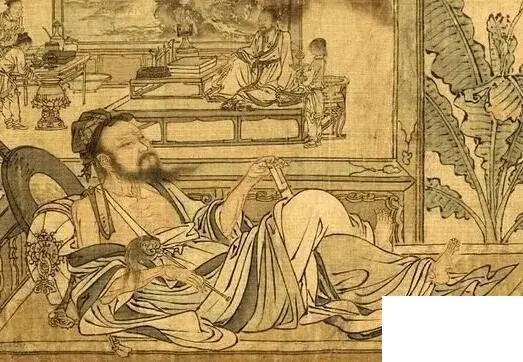
司马道子
Sima Daozi (司马道子, 364–403 AD), hailing from Wen County in Henai Commandery (modern Wenxian, Jiaozuo, Henan Province), was an imperial prince, chancellor, and regent of the Eastern Jin dynasty during its mid-to-late period. The seventh son of Emperor Jianwen (Sima Yu) and the full younger brother of Emperor Xiaowu (Sima Yao), born to Empress Dowager Li Lingrong, Sima Daozi was initially created Prince of Langye before being…
Sima Daozi (司马道子, 364–403 AD), hailing from Wen County in Henai Commandery (modern Wenxian, Jiaozuo, Henan Province), was an imperial prince, chancellor, and regent of the Eastern Jin dynasty during its mid-to-late period. The seventh son of Emperor Jianwen (Sima Yu) and the full younger brother of Emperor Xiaowu (Sima Yao), born to Empress Dowager Li Lingrong, Sima Daozi was initially created Prince of Langye before being transferred to Prince of Kuaiji, rising to the supreme posts of Grand Tutor, Supervisor of Secretariat Affairs, and Inspector of Yangzhou. As the closest imperial kinsman to the throne, he was entrusted with absolute executive power, spearheading the imperial clan's resurgence to displace the entrenched hegemony of the prestigious Xie clan of Chenjun. In his early youth, Sima Daozi was praised by Chancellor Xie An for his quiet composure and refined demeanor. He was created Prince of Langye at age nine, appointed Minister of Education at seventeen, and granted supervisory authority over Secretariat affairs in 383 AD. Aligning with his consort's cousin Wang Guobao, Sima Daozi orchestrated political intrigues that marginalized Xie An, forcing the venerable chancellor into regional retirement and eventually absorbing the elite forces of the Guard General's headquarters upon Xie An's death. However, both Sima Daozi and Emperor Xiaowu succumbed to chronic alcoholism and luxurious indolence. Sima Daozi squandered state revenues on lavish Buddhist temples and patronized corrupt sycophants such as Wang Guobao, Zhao Ya, and Ru Qianqiu, who brazenly sold administrative offices and subverted the legal code. Deeply troubled by this corruption, Emperor Xiaowu placed trusted maternal relatives such as Wang Gong and Yin Zhongkan in provincial commands to counter the chancellor's court faction, igniting the bitter "Feud between Sovereign and Chancellor." Following Emperor Xiaowu's sudden assassination in 396 AD, the mentally disabled Emperor An ascended the throne, leaving Sima Daozi as supreme regent. In 397 AD, Wang Gong and Yin Zhongkan mobilized their provincial armies to demand the execution of Wang Guobao. Paralyzed by fear, Sima Daozi capitulated and executed Wang Guobao to placate the warlords. The following year, when Wang Gong, Yu Kai, and Huan Xuan revolted again, Sima Daozi collapsed into drunken stupor, prompting his ambitious sixteen-year-old heir Sima Yuanxian to seize military command and execute Wang Gong after suborning general Liu Laozhi. Thereafter, Sima Yuanxian monopolized administrative power, establishing the rival Western Secretariat while his father presided over the hollow Eastern Secretariat. In 402 AD, warlord Huan Xuan sailed east and captured Jiankang, executing Sima Yuanxian and banishing Sima Daozi to Ancheng Commandery. In December of that year, Huan Xuan ordered Censor Du Zhulin to poison Sima Daozi with lethal wine at age thirty-nine. Following Huan Xuan's downfall, the imperial court posthumously bestowed upon him the title of Chancellor and the posthumous name Prince Wenxiao.
Born in the imperial palace in Jiankang as the seventh son of Emperor Jianwen and full brother of Emperor Xiaowu.
Created Prince of Langye at age nine with an estate of over seventeen thousand households; admired by Xie An.
Appointed Minister of Education at age seventeen; granted supervision over Secretariat affairs in 383 AD.
Allied with Wang Guobao to force Xie An out of the capital; assumed the governorship of Yangzhou upon Xie An's death.
Emperor Xiaowu was assassinated; Emperor An ascended the throne, and Sima Daozi assumed absolute regency.
Wang Gong marched against the capital; Sima Daozi executed favorite Wang Guobao to beg for peace.
Sima Yuanxian stripped him of Yangzhou and Secretariat authority; court power shifted from Eastern to Western Secretariat.
Huan Xuan captured Jiankang, slaughtered Sima Yuanxian and his heirs, and banished Sima Daozi to Ancheng.
Poisoned on Huan Xuan's orders by Censor Du Zhulin in Ancheng at age thirty-nine; posthumously honored as Chancellor.
Sima Daozi belonged to the central core of the Eastern Jin imperial house, being the seventh son of Emperor Jianwen (Sima Yu) and the full younger brother of Emperor Xiaowu (Sima Yao), born to Lady Li Lingrong. In the seventh month of 372 AD, when Emperor Jianwen lay dying, young Sima Yao succeeded to the throne, and the nine-year-old Sima Daozi was created Prince of Langye with an impressive estate of 17,651 households, concurrently administering the Kuaiji principality and Kuaiji commandery.
During his formative years, Sima Daozi displayed handsome poise, graceful conversation, and an unhurried, dispassionate demeanor that aligned closely with the aesthetic ideals of the Southern Dynasties aristocracy, earning warm praise from the chief minister, Xie An. In 380 AD, at the age of seventeen, Sima Daozi was granted the right to open his own administrative headquarters and appointed Minister of Education, joining the imperial cabinet. On the eve of the Battle of Fei River in 383 AD, the throne appointed him Supervisor of the Six Articles of the Secretariat, formally elevating him into the supreme policy-making echelon.
At this time, dynastic affairs were monopolized by the Chenjun Xie clan. Xie An's moral prestige was unexcelled, and his nephew Xie Xuan had just crushed Fu Jian's massive vanguard at Fei River, saving the Eastern Jin state from annihilation. However, imperial clan members resented their long-standing political marginalization under aristocratic gentry dominance. Sima Daozi formed an alliance with Wang Guobao, a cousin of his consort and son of former minister Wang Tanzhi. Although married to Xie An's daughter, Wang Guobao was a degenerate, grasping courtier whom Xie An despised and excluded from key administrative positions.
Resenting his exclusion despite his prestigious Langye Wang pedigree, Wang Guobao attached himself to Sima Daozi, flattering the young prince and whispering slanderous rumors into the ears of both Sima Daozi and Emperor Xiaowu, alleging that Xie An harbored treasonous ambitions. To avoid a catastrophic civil conflict between the court and the gentry, Xie An voluntarily departed the capital in 385 AD to take up a frontier post at Xinshi. Following Xie An's death in the eighth month of that year, Sima Daozi assumed concurrent posts as Inspector of Yangzhou, Supervisor of Secretariat Affairs, and Commander of Internal and External Military Forces, absorbing the military contingents and staff of the former Guard General's headquarters. For the first time since the founding of Eastern Jin, the imperial clan asserted direct dominance over the aristocratic lineages.
In 386 AD, Sima Daozi ordered northern expeditionary forces under Xie Xuan to abandon their offensive positions in the central plains and withdraw to Huaiyin, ending Eastern Jin's northern campaigns. In 387 AD, he was appointed Inspector of Xuzhou and Grand Tutor to the Crown Prince, reaching the summit of power.
However, neither Sima Daozi nor Emperor Xiaowu possessed the discipline or statecraft required to sustain dynastic revival. The brothers shared an uncontrollable addiction to alcohol and nocturnal feasts, frequently drinking together for days inside the forbidden palace while neglecting all affairs of state. Sima Daozi delegated executive responsibilities entirely to venal favorites. Simultaneously, Sima Daozi developed an obsessive devotion to Buddhism, welcoming monks and nuns into his private chambers and allowing female clerics to influence judicial verdicts and official appointments. To finance luxurious Buddhist pagodas and extravagant personal retreats, Sima Daozi bled the imperial treasury white.
His favorite, Attendant Wang Guobao, allied with corrupt officials Zhao Ya and Ru Qianqiu to create a predatory patronage ring. Zhao Ya excavated artificial lakes and piled stone grottos inside Sima Daozi's private residence at immense public expense, while Ru Qianqiu transformed the prince's estate into a marketplace for selling public offices, amassing illicit fortunes exceeding one hundred million coins. Judicial fairness evaporated, and provincial administration fell into complete disarray.
Palace Drafter Fan Ning submitted impassioned memorials to Emperor Xiaowu, urging the dismissal of Wang Guobao to preserve dynastic integrity. While Emperor Xiaowu recognized Sima Daozi's decadence, Wang Guobao counter-accused Fan Ning of slander, forcing the Emperor to exile Fan Ning as Grand Administrator of Yuzhang. Encouraged by his mother Empress Dowager Li's uncritical affection, Sima Daozi repeatedly insulted Emperor Xiaowu during drunken feasts. Realizing his brother's unfitness, Emperor Xiaowu positioned maternal relatives Wang Gong in Qing-Yan and Yin Zhongkan in Jingzhou as provincial counterweights to the chancellor's faction. In 392 AD, the Emperor transferred Sima Daozi's title to Prince of Kuaiji, granting Langye to his own young son, bringing the rift between sovereign and chancellor into the open.
In the ninth month of 396 AD, Emperor Xiaowu was suffocated under bed quilts in the Qingshu Palace by his consort Lady Zhang, whom the drunken emperor had insulted. Because the death was sudden, no testamentary edict had been prepared. The mentally disabled Crown Prince Sima Dezong was enthroned as Emperor An.
Loyal statesmen like Wang Xun and Wang Ya held titles without military backing, leaving Sima Daozi as sole regent in complete control of the empire. Sima Daozi immediately elevated Wang Guobao to Director of the Secretariat and General of the Central Army, while appointing Wang Guobao's cousin Wang Xu as Left Guard General, creating an autocratic cabal that terrorized the capital.
Stationed at Jingkou, Inspector Wang Gong despised Wang Guobao's corruption. In the spring of 397 AD, Wang Gong allied with Jingzhou Inspector Yin Zhongkan, mobilizing northern and western provincial forces to march on Jiankang under the banner of purging corrupt courtiers. As rebel armies closed in, Sima Daozi was paralyzed by terror. Seeking solely to preserve his own life and office, he resolved to sacrifice his long-time confidant. He ordered Prince of Qiao Sima Shangzhi to arrest Wang Guobao, sentenced Wang Guobao to commit suicide in prison, executed Wang Xu in the public marketplace, and dispatched envoys carrying their severed heads to Jingkou to beg Wang Gong for forgiveness. Satisfied, Wang Gong withdrew his forces, yet Sima Daozi's craven surrender destroyed the prestige of the imperial regency.
Terrified by provincial military coercion, Sima Daozi recruited clan relatives Sima Shangzhi and Sima Xiuzhi as military confidants, adopting their strategy of creating regional counterweights to the warlords.
He appointed his assistant Wang Yu as Inspector of Jiangzhou, transferring four rich commanderies from Yuzhou Inspector Yu Kai to Wang Yu's command. Enraged by the dismemberment of his province, Yu Kai instigated Wang Gong, Yin Zhongkan, and southern commander Huan Xuan to launch a second general insurrection against the court in 398 AD. Confronted by armies converging from all directions, Sima Daozi collapsed into despair, spending his days in a drunken daze.
Witnessing his father's incompetence, Sima Daozi's sixteen-year-old heir, Sima Yuanxian, took control of military operations. Granted imperial battle-axes, Sima Yuanxian assumed command of defensive operations while Sima Daozi retreated into alcoholic oblivion. When Sima Shangzhi was defeated and Huan Xuan approached the Shitou fortress, Sima Daozi commanded reserve lines at the central hall, but panic broke out among his troops, causing hundreds of terrified soldiers to drown in the Yangtze River.
Sima Yuanxian secretly bribed Northern Garrison commander Liu Laozhi with vast titles, inducing Liu Laozhi to betray and execute Wang Gong. With the northern threat extinguished, Sima Yuanxian exploited divisions among Huan Xuan, Yang Quanqi, and Yin Zhongkan to neutralize the western armies.
In 399 AD, recognizing that Sima Daozi's chronic alcoholism had alienated all public respect, Sima Yuanxian orchestrated an imperial edict stripping his father of the chancellorship and the governorship of Yangzhou, assuming the regional office himself. When Sima Daozi sobered up and discovered that his son had usurped his authority, he flew into a rage but was powerless to resist. Sima Yuanxian then assumed supervision of the Secretariat, dividing administrative governance into the "Eastern Secretariat" under Sima Daozi and the "Western Secretariat" under Sima Yuanxian. Courtiers deserted the Eastern Secretariat, crowding the gates of the son's palace. When religious rebel Sun En launched maritime assaults on the capital in 401 AD, Sima Daozi could do nothing but kneel daily at the shrine of deity Jiang Ziwen, weeping and praying for supernatural intervention.
In the spring of 402 AD, Sima Yuanxian launched an impetuous offensive against Huan Xuan in the middle Yangtze. Sima Daozi was nominally elevated to Grand Tutor, with his former military staff transferred to the tutor's office.
The campaign resulted in catastrophic disaster. Huan Xuan advanced rapidly down the Yangtze, crushing Sima Shangzhi at Liyang while Liu Laozhi defected to the warlord once again. When rebel armies breached the defenses of Jiankang, Sima Yuanxian's forces collapsed. Fleeing in panic to his father's residence in the Eastern Secretariat, Sima Yuanxian wept and begged his father for a scheme to survive. Looking upon the son who had stripped him of power and led their lineage to destruction, Sima Daozi could only weep bitterly alongside him.
Huan Xuan occupied Jiankang, executed Sima Yuanxian, his brothers, and his six young sons in the capital marketplace, exterminating their lineage. Wary of Sima Daozi's status as an imperial uncle, Huan Xuan spared his life temporarily, banishing him to remote Ancheng Commandery (modern Jiangxi Province).
In the twelfth month of 402 AD, fearful that Sima Daozi might serve as a rallying figure for imperial loyalists, Huan Xuan dispatched imperial censor Du Zhulin to Ancheng carrying poisoned wine. Sima Daozi was forced to drink the venom, dying in agony at the age of thirty-nine. Upon hearing of his death, the mentally disabled Emperor An wept for three days in the western hall of the palace.
In 404 AD, general Liu Yu led a righteous uprising that defeated and killed Huan Xuan, restoring Eastern Jin authority. Grand General Sima Zun posthumously honored Sima Daozi as Chancellor and sent Sima Xunzhi to Ancheng to recover his remains. In 405 AD, the throne conferred upon him the posthumous title Prince Wenxiao, interring him alongside his consort in the imperial tombs, concluding the tragic career of Eastern Jin's most controversial imperial regent.
In 385 AD, Sima Daozi leveraged political intrigues with Wang Guobao to force venerable chancellor Xie An into regional retirement at Xinshi.
Following Xie An's death, Sima Daozi assumed control of Yangzhou, the Secretariat, and the Guard General's units, establishing direct imperial dominance over aristocratic gentry clans for the first time since the founding of Eastern Jin.
Exercising supreme authority, Sima Daozi indulged in chronic alcoholism alongside Emperor Xiaowu, squandering state finances on personal Buddhist temples and clerical patronage.
He shielded rapacious favorites including Wang Guobao, Zhao Ya, and Ru Qianqiu, who commercialized official appointments, destabilized legal statutes, and ignited fierce conflicts between court and provincial garrisons.
When Wang Gong and Yin Zhongkan mobilized provincial forces against the capital in 397 AD, Sima Daozi capitulated in terror to preserve his position.
He summarily executed Wang Xu and forced his long-time confidant Wang Guobao to commit suicide, delivering their severed heads to placate the rebelling warlords.
Following the suppression of the 398 AD revolt, Sima Daozi's son Sima Yuanxian stripped him of military and administrative authority, establishing the Western Secretariat.
Sima Daozi was reduced to a ceremonial figurehead in the Eastern Secretariat, spending his remaining years in drunken despondency and praying futilely at ancestral shrines during the Sun En rebellion.
Banished to Ancheng following Huan Xuan's capture of Jiankang in 402 AD, Sima Daozi was poisoned on Huan Xuan's orders by Censor Du Zhulin at age thirty-nine.
Following the restoration of the Jin dynasty by Liu Yu, he was rehabilitated, posthumously elevated to Chancellor, and granted the noble title Prince Wenxiao.
FIGURES ASSOCIATED WITH THIS DYNASTY