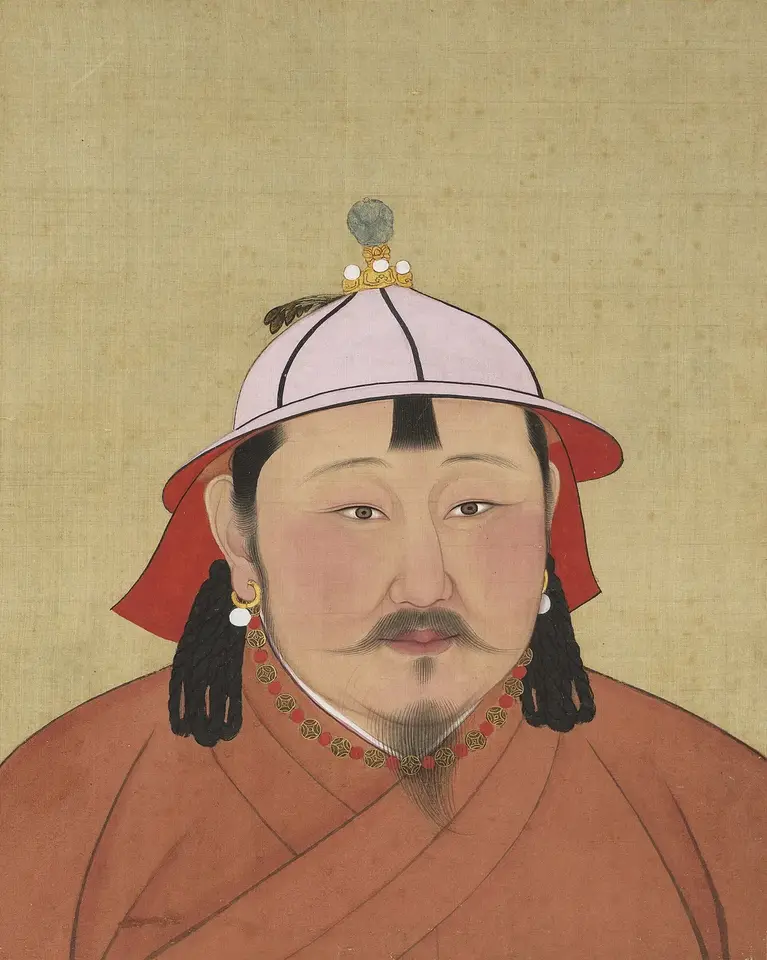
PROFILE
Duan Chengji (段成己, 1199–1279), courtesy name Jidao, art name Juxuan, was a prominent poet, literary master, and hermit loyalist during the transition between the Jin and Yuan dynasties, hailing from Jishan, Jiangzhou. He lived from 1199 to 1279, passing away at the advanced age of eighty-one.
Duan belonged to an illustrious scholar-gentry lineage in Hedong, celebrated alongside his elder brother Duan Keji as the Two Duan Masters of Hedong or the Two Wonders (Er Miao). He earned his jinshi degree during the Zhengda reign of the Jin dynasty and was appointed Master of Records of Yiyang. Following the fall of the Jin capital Caizhou to Mongol forces in 1234, Duan and his brother renounced public careers, retreating into the rugged Yellow River gorges of Mount Longmen to live as agrarian recluses, composing poetry and playing the zither. Following his brother's demise, Duan relocated to the northern suburbs of Jinning, shutting his doors to study for nearly four decades. When Kublai Khan (Emperor Shizu of Yuan) issued an imperial summons appointing him Supervisor of Confucian Studies for Pingyang Prefecture, Duan resolutely declined, preserving his moral integrity as a Jin dynasty loyalist. His poetry combined the rustic tranquility of Tao Yuanming with the tragic historical depth of Du Fu, capturing the tribulations of northern Chinese society. His grandson Duan Fu published their collective works as Er Miao Ji, prefaced by Neo-Confucian master Wu Cheng.
- Courtesy Name
- Jidao
- Art Name
- Juxuan
- Dynasty
- Jin, Yuan
- Ancestral Home
- Jishan, Jiangzhou (modern Jishan, Shanxi Province)
- Date of Birth
- 1199 (Cheng'an 4, Jin Zhangzong)
- Date of Death
- 1279 (Zhiyuan 16, Yuan Shizu)
- Age at Death
- 81
- Primary Identity
- Literary scholar, poet, hermit loyalist
- Highest Office
- Jin: Master of Records of Yiyang; Yuan: Nominated Supervisor of Confucian Studies for Pingyang Prefecture (declined)
BIOGRAPHY
Chronology
- 1199 (Cheng'an 4) | Birth in Jishan | Born into a prominent scholarly clan in Jishan, Shanxi, studying classics alongside his elder brother Keji.
- 1224 (Zhengda 1) | Jinshi Degree | Passed the Jin imperial palace examination, appointed Master of Records of Yiyang.
- 1234 (Tianxing 3) | Retreat to Mount Longmen | Fled with his brother to Mount Longmen following the collapse of the Jin dynasty, farming and writing in seclusion.
- 1254 (Xianzong 4) | Relocation to Jinning | Moved to a thatched cottage outside Jinning following his brother's death, closing his doors to study for forty years.
- 1275 (Zhiyuan 12) | Defiance of Mongol Summons | Refused imperial appointment by Kublai Khan as Supervisor of Confucian Studies, maintaining his status as a loyalist recluse.
- 1279 (Zhiyuan 16) | Death in Integrity | Passed away peacefully at his Jinning cottage at age eighty-one, honored by literati as Master Juxuan.
Biography
Literary Partnership of the Hedong Brothers
Duan Chengji was born into an illustrious scholarly family in Jishan County, Jiangzhou. From early childhood, he was inseparable from his elder brother Duan Keji. The two brothers possessed exceptional intellect, studying the Confucian classics and composing poetry in close companionship. Their verse was recognized across the Hedong region for its structural power and lyrical refinement, earning them the collective designation the Two Duan Masters of Hedong.
During the late Jin dynasty, as Mongol military pressure intensified, the brothers traveled to Bianjing to take the examinations. Although Duan Keji achieved high honors in the departmental tests, he foresaw dynastic collapse and refused to pursue office, spending his days drinking wine. Duan Chengji passed the palace examination, receiving an appointment as Master of Records of Yiyang, managing local tax archives and judicial records with benevolent fairness toward war-weary refugees.
Hermitage in Mount Longmen
In 1234, the southern Jin fortress of Caizhou fell, marking the complete destruction of the Jin dynasty. Facing severe wartime destruction across northern China, Duan Chengji immediately resigned his post, joining his brother to lead their family into the remote Yellow River cliffs of Mount Longmen (modern Hejin, Shanxi).
Within the secluded mountain gorges, the brothers erected thatched huts and cleared rocky slopes to farm their daily bread. Completely isolated from the Mongol administration, they studied the poetry of Tao Yuanming and Du Fu beneath the thatch. During this prolonged seclusion, Duan composed numerous poignant verses recording the sorrow, isolation, and moral resolve of displaced northern scholars.
Solitary Study in Jinning
In 1254, his elder brother Duan Keji passed away in their mountain retreat. Grieved by the loss of his lifelong companion, Duan buried his brother and relocated to the northern suburbs of Jinning (modern Linfen).
In Jinning, Duan closed his doors to the outside world, living in austere poverty for nearly forty years. He collated ancient manuscripts and nurtured regional youths who journeyed to his humble home for instruction, preserving classical Confucian scholarship across the Yellow River basin during decades of military devastation.
Defiance of Imperial Summons and Legacy
During the Zhiyuan era, having established the Yuan dynasty, Kublai Khan sought to legitimize his rule by recruiting surviving scholar-loyalists from the former Jin dynasty. An imperial edict was issued summoning Duan to serve as Supervisor of Confucian Studies for Pingyang Prefecture. Despite the promise of high office, the aging poet steadfastly refused the imperial edict, pleading old age and illness to preserve his status as a loyalist of his fallen dynasty.
In 1279, Duan passed away peacefully at his cottage in Jinning at the age of eighty-one. His grandson Duan Fu, who later served as Minister of Personnel in the Yuan administration, gathered the brothers' surviving poems and published them as the celebrated eight-volume Er Miao Ji. Renowned Neo-Confucian philosopher Wu Cheng authored the preface, praising their poetry as embodying the dual virtues of Tao Yuanming and Du Fu, ensuring their moral and literary immortality.
Major Achievements
Preserving Loyalist Moral Integrity Against Mongol Rule
Duan Chengji's most celebrated achievement was his steadfast preservation of literati integrity during an era of traumatic dynastic transition.
When many northern scholars sought advancement under the Mongol conquerors, Duan endured decades of rural poverty and mountain seclusion. His refusal of Kublai Khan's summons demonstrated his unwavering fidelity to Confucian moral principles, preserving the spiritual dignity of northern Chinese literati.
Fusing Tao Yuanming and Du Fu in Late Jin Poetics
In poetic craft, Duan stood as an indispensable bridge in the transition from Jin to Yuan literature. His verse reacted against the ornate, artificial conventions of late Jin court poetry.
His classical verse fused the natural, unadorned serenity of Tao Yuanming with the profound historical realism of Du Fu. His celebrated poems, such as Reply to Wood Hermit and Waters Before the Steps, depicted the isolation of surviving catastrophic warfare with crystalline diction and deep emotional weight, creating an enduring testimony to the suffering of his generation.
Compilation of Er Miao Ji Preserving Northern Literary Heritage
The collective writings of Duan Chengji and his brother, preserved in Er Miao Ji, represent one of the most vital literary archives of the thirteenth-century northern transition.
Compiled by his grandson Duan Fu, the eight-volume collection includes detailed biographical chronologies and uncollected essays. The work provides irreplaceable firsthand historical evidence on the fall of the Jin, the horrors of the Mongol conquests, and the inner life of displaced northern recluses, treasured by bibliophiles across the Yuan, Ming, and Qing dynasties.
Personal Relationships
- Elder Brother: Duan Keji, poet and recluse, with whom Duan was celebrated as the Two Duan Masters of Hedong.
- Grandson: Duan Fu, Yuan Minister of Personnel who compiled and published Er Miao Ji.
- Prefatory Scholar: Wu Cheng, prominent Yuan Neo-Confucian master who authored the preface to Er Miao Ji.
Historical Evaluations
- Er Miao Ji Xu (Wu Cheng): The two Duan masters of Hedong possessed vast minds, transcendent insight, robust vital spirit, and heroic talent; their poetry truly harmonized the genius of Tao Yuanming and Du Fu.
- Zhongzhou Ji (Yuan Haowen): The writings of the two Duan brothers were sublime and their conduct strictly disciplined; amidst a chaotic age, they were truly rare gentlemen.
- Siku Quanshu Zongmu Tiyao: Duan Chengji's poetic style was structurally robust and his tone deeply sorrowful; his reflections on dynastic collapse carried profound meaning without a trace of vulgarity.
Related Entries
- Er Miao Ji
- Duan Keji
- Yuan Haowen
- Zhongzhou Ji
- Wu Cheng
Bibliography
Bibliographic information is not yet available for this entry.