Northern Birth
Born into the distinguished Du lineage of Zhongshan; mastered ancient classics and metaphysics in youth.
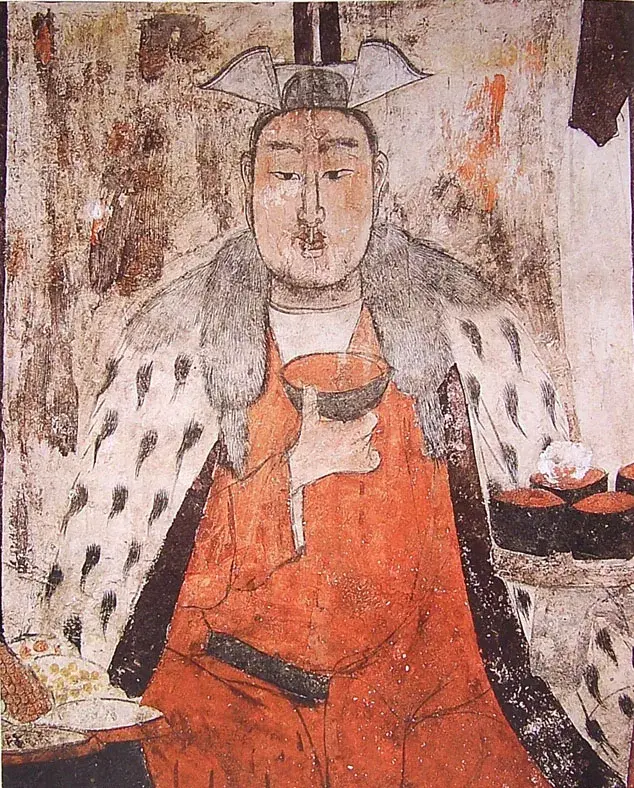
杜弼
Du Bi, courtesy name Fubao, native to Quyang in Zhongshan (modern Quyang County, Hebei Province), was an eminent strategist, statesman, master prose stylist, and philosophical scholar during the Eastern Wei and Northern Qi dynasties, widely celebrated as the foremost intellectual confidant in Gao Huan's regency headquarters. Exhibiting acute intelligence and broad erudition from youth, Du Bi mastered classical Confucian…
Du Bi, courtesy name Fubao, native to Quyang in Zhongshan (modern Quyang County, Hebei Province), was an eminent strategist, statesman, master prose stylist, and philosophical scholar during the Eastern Wei and Northern Qi dynasties, widely celebrated as the foremost intellectual confidant in Gao Huan's regency headquarters. Exhibiting acute intelligence and broad erudition from youth, Du Bi mastered classical Confucian texts and Neo-Daoist metaphysics, renowned across northern China for literary eloquence and strategic acuity. During the chaotic fall of Northern Wei, he served in minor provincial posts. When warlord Gao Huan raised an army in Xindu in 531 to overthrow the Erzhu faction, Du Bi joined his headquarters as Administrator and Consulting Adjutant, drafting nearly all supreme military proclamations, diplomatic correspondence, and dynastic manifestos. Renowned for unyielding moral integrity, Du Bi boldly confronted Gao Huan, demanding an end to the tyrannical corruption of Xianbei military magnates and advocating Confucian humane governance. Following the founding of Northern Qi, Du Bi served as Cavalier Attendant, Director of the Secretariat, and Inspector of Jiaozhou, ennobled as Marquis of Pingshu. When Emperor Wenxuan (Gao Yang) degenerated into paranoid alcoholism and arbitrary slaughter, Du Bi repeatedly delivered outspoken moral remonstrances; in 559, an enraged Gao Yang executed him in Jinyang at the age of sixty-nine. Du Bi authored extensive political essays and philosophical commentaries on Zhuangzi, remembered as a peerless scholar-minister.
Born into the distinguished Du lineage of Zhongshan; mastered ancient classics and metaphysics in youth.
Lived in rural reclusion to shelter his mother during the Six Garrisons rebellions; refused recruitment by rebel Ge Rong.
Joined Gao Huan's headquarters in Xindu as Staff Administrator, drafting imperial manifestos.
Boldly denounced the unchecked corruption of Xianbei military commanders in an open debate with Gao Huan.
Continued senior service under heirs Gao Cheng and Gao Yang, promoted to Cavalier Attendant.
Appointed Director of the Secretariat and Inspector of Jiaozhou upon the founding of Northern Qi; ennobled as Marquis.
Executed on Gao Yang's orders in Jinyang following unyielding moral admonitions against imperial tyranny at sixty-nine.
Du Bi belonged to the prestigious Du clan of Zhongshan in Hebei. His lineage was deeply grounded in Confucian canonical studies and civic administration. Precociously intelligent, Du Bi mastered the five classics, statecraft texts, and the metaphysical philosophies of the Classic of Changes, Laozi, and Zhuangzi. He was austere in personal conduct, eloquent in debate, and admired across northern scholarly salons for his lightning-quick compositional mastery.
Following the outbreak of the Six Garrisons rebellions, rebel armies under Ge Rong devastated the Central Plains. Du Bi retired with his mother to rural seclusion, continuing to instruct local disciples amid the devastation. When Ge Rong sought to compel him into rebel service, Du Bi skillfully evaded capture, preserving his familial honor until imperial forces pacified the region.
In 531, Gao Huan launched an insurrection from Xindu to crush the tyrannical Erzhu regime. Cognizant of Du Bi's literary reputation, Gao Huan immediately recruited him into his central headquarters as Staff Administrator and Consulting Adjutant, placing him in exclusive charge of imperial memorials, strategic military dispatches, and public manifestos.
During pivotal engagements including the Battle of Hanling and subsequent campaigns against Western Wei, Du Bi accompanied Gao Huan on the campaign trail. Whenever military emergencies arose, Gao Huan outlined his strategic intent from the saddle, and Du Bi drafted comprehensive, commanding dispatches immediately against his horse's pommel without making a single deletion. Gao Huan marveled at his speed and rhetorical brilliance, frequently exclaiming that Du Bi was his Zhang Liang and Sima Xiangru combined.
Beyond managing confidential statecraft, Du Bi frequently represented the Eastern Wei regency in receiving diplomatic embassies from the southern Liang dynasty. Southern scholar-officials took immense pride in Jiangnan literary refinement, often adopting a condescending tone in diplomatic banquets by alleging northern cultural decay. When Southern Liang sent embassies to normalize relations, Gao Huan appointed Du Bi as chief host. In diplomatic banquets, Du Bi cited the Five Classics with flawless philological precision, engaging in sparkling rhetoric that left southern emissaries humbled, upholding the diplomatic dignity and cultural prestige of Eastern Wei.
When Heir Apparent Gao Cheng directed governance, Du Bi concurrently served as Secretariat Drafter. Collaborating with northern cultural luminaries such as Yang Yin, Cui Xian, and Xing Shao, he directed the revision of legal statutes and codified ancestral temple sacrifices and court ritual music. By integrating classical Han and Cao Wei institutions while purging archaic nomadic practices, Du Bi established systematic ritual protocols from Eastern Wei through the early Northern Qi, laying an enduring foundation for late Northern Dynasties state building.
Beyond his literary brilliance, Du Bi was distinguished by heroic courage in confronting absolute authority. In Eastern Wei, military power was concentrated in the hands of Xianbei garrison commanders, who frequently annexed farmlands, extracted immense bribes, and abused Han civilian officials. Fearing violent reprisal, contemporary ministers remained silent.
During a private audience, Gao Huan inquired why the empire remained plagued by rebellion and administrative decay. Du Bi boldly responded: "The realm cannot find peace because your Xianbei commanders are boundless in their avarice and cruelty, bleeding the populace dry; commoners do not revolt out of natural malice, but because official extortion leaves them no alternative to survive!" Gao Huan's countenance darkened in fury; drawing his sword and striking the desk, he roared: "My Xianbei generals risk life and limb on battlefields for me every day; is it not just that they enjoy wealth and land? How dare a mere scholar slander my heroic captains!" Du Bi stood ground without retreating an inch, arguing: "An empire may be conquered on horseback, but it must be governed through benevolence and ritual propriety. If you allow rapacious commanders to devour your subjects, popular allegiance will dissolve, and your grand enterprise will crumble!" Recognizing the profound truth of his counsel, Gao Huan sheathed his sword, rewarded Du Bi with silks, and praised his unbending fidelity.
On another occasion, Gao Huan personally guided Du Bi into the state treasury, gesturing toward mounds of silk and silver, offering: "Sir Du has lived in modest frugality; I wish to bestow a wagon of precious brocade upon you—take whatever you desire." Du Bi bowed deeply and declined: "I was raised from humble obscurity by Your Excellency, and my official stipend suffices for sustenance. When state discipline remains fragile and official corruption runs rife, high ministers must serve as moral models of incorruptibility. I dare not accept private treasures, praying only that Your Excellency practice thrift and love the commoners as a permanent constitutional standard." Deeply moved, Gao Huan respected his incorruptible integrity all the more.
Following Gao Huan's death in 547, his sons Gao Cheng and Gao Yang successively directed the government, retaining Du Bi as their senior ideological advisor. In 550, Gao Yang established the Northern Qi dynasty, appointing Du Bi Director of the Secretariat and ennobling him as Marquis of Pingshu. Subsequently, Du Bi was assigned as Inspector of Jiaozhou along the eastern coast, where he reformed local administration, curtailed corruption, and fostered regional academies.
However, during his later reign, Emperor Wenxuan (Gao Yang) succumbed to severe alcohol-induced paranoia, indulging in sadistic violence and murdering loyal ministers. While the entire court trembled in terror, Du Bi refused to capitulate.
In 559, when Gao Yang visited Jinyang, Du Bi requested an imperial audience, resolutely advising the emperor to halt his chronic intoxication, curtail brutal punishments, and restore constitutional governance. Enraged by this candid censure, Gao Yang ordered guards to drag Du Bi down the marble terrace and execute him by decapitation. Du Bi met his death with sublime serenity at sixty-nine. His martyrdom sent waves of sorrow throughout the empire, marking the tragic extinction of one of the finest moral voices of the Northern Dynasties.
Du Bi authored the comprehensive corpus of military dispatches and diplomatic decrees for Gao Huan's administration, establishing the legal and ideological authority of the Eastern Wei against Western Wei.
On the eve of the momentous Battle of Mount Mang in 543, Du Bi composed the celebrated manifesto denouncing Yuwen Tai. Completed swiftly under battlefield conditions, the document marshaled irresistible moral indignation, systematically exposing Yuwen Tai's usurpation in the western marches. Gao Huan praised the text for possessing the power to shatter enemy morale, establishing a classic monument in medieval Chinese military prose.
He stood as the foremost civil minister of the northern courts to openly challenge Xianbei military arrogance, risking his life to plead for ethnic moderation and Confucian humane governance.
As Inspector of Jiaozhou, Du Bi eliminated predatory levies, promoted educational institutions, and established a celebrated standard of incorruptible provincial administration in coastal Shandong.
An erudite philosopher, Du Bi composed commentaries on the Hui Shi chapter of Zhuangzi and left extensive prose anthologies, securing a distinguished place in early medieval intellectual history.
FIGURES ASSOCIATED WITH THIS DYNASTY