Medical Training
Mastered classical diagnostic texts and meridian pharmacology, practicing across Jiangnan.
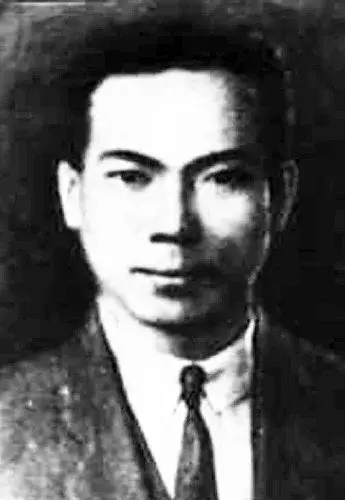
陈延之
Chen Yanzhi (陈延之), active during the late 4th and early 5th centuries across the late Eastern Jin and Liu Song dynasties, was an eminent Chinese physician and clinical pharmacologist, celebrated as the author of the classical medical formulary Formulary of Minor Prescriptions (Xiaopin Fang, also known as Jingfang Xiaopin). Chen Yanzhi possessed profound command over ancient classical medical doctrines, thoroughly…
Chen Yanzhi (陈延之), active during the late 4th and early 5th centuries across the late Eastern Jin and Liu Song dynasties, was an eminent Chinese physician and clinical pharmacologist, celebrated as the author of the classical medical formulary Formulary of Minor Prescriptions (Xiaopin Fang, also known as Jingfang Xiaopin). Chen Yanzhi possessed profound command over ancient classical medical doctrines, thoroughly analyzing Zhang Zhongjing's Treatise on Cold Damage and Miscellaneous Diseases alongside Han-Wei classical prescriptions, adapting them to the humid maritime climate of southern China and the Lingnan region. Observing frequent epidemics during the civil wars of late Eastern Jin—where traditional northern prescriptions were too complex, costly, and reliant on scarce ingredients for impoverished peasants to obtain—Chen resolved to eliminate redundancies, compiling twelve volumes of Xiaopin Fang. Championing the doctrine that "medicinal herbs must be potent and formulas simple," he specialized in treating acute epidemic febrile diseases, internal disharmonies, obstetrics, and southern malarial disorders, establishing an influential southern clinical school. From the Northern and Southern Dynasties through the Sui and Tang, Xiaopin Fang was designated by imperial medical bureaus (Taiyi Shu) as a compulsory textbook and statutory examination subject. Masters like Tao Hongjing in Collected Commentaries on the Divine Farmer's Materia Medica, Chao Yuanfang in General Treatise on the Cause and Symptoms of Diseases, and Sun Simiao in Essential Prescriptions Worth a Thousand Pieces of Gold cited his formulas extensively, establishing Chen as a founding father of early medieval clinical pharmacology.
Mastered classical diagnostic texts and meridian pharmacology, practicing across Jiangnan.
Synthesized clinical remedies into the twelve-volume formulary, gaining widespread acclaim.
Traveled southern coastal regions to investigate miasmatic fevers, creating compact herbal formulas.
Under the Liu Song dynasty, the imperial medical bureau adopted his work as a standard examination text.
Trained medical disciples in his late years, remembered as the patriarch of southern classical formulas.
Chen Yanzhi lived amid the chaotic final decades of Eastern Jin in southern China, an era marked by aristocratic feuds, peasant rebellions, mass displacements, and rampant epidemics.
Witnessing displaced refugees and common families perish from infectious diseases, Chen was distressed that prevailing classical pharmacopeias dated back to the dry plains of northern Han-Wei China, requiring dozens of expensive, exotic herbs unobtainable in southern villages. Moved by deep humanitarian compassion, Chen resolved to dismantle complex, speculative prescriptions, dedicating himself to authoring an accessible clinical manual composed of accessible, potent herbs suitable for commoners and elite alike.
Traveling through southern commanderies, Chen Yanzhi collected classical remedies from ancient masters like Zhang Zhongjing, Hua Tuo, and Fan Wang, integrating them with his own clinical experience treating fevers and infections in the southern marshlands to author the landmark twelve-volume Xiaopin Fang.
The manual introduced rigorous systematic categorization, structuring clinical chapters around cold damage, seasonal fevers, pestilential miasmas, apoplexy, cholera, gynecology, and pediatrics. Chen insisted that effective formulas should achieve maximum therapeutic impact through compact formulations, often combining merely three to five common herbs to purge pathogens and balance vital energy. Due to its clarity and high clinical success, Xiaopin Fang was widely copied by physicians across the Yangtze and Lingnan regions, becoming the most popular emergency medical handbook of early medieval China.
During the Northern and Southern Dynasties, Xiaopin Fang ascended from a popular clinical handbook to statutory state medical canon. The imperial medical academies of Liu Song, Southern Qi, and Liang designated Chen's text alongside Zhang Zhongjing's Treatise on Cold Damage as compulsory examination subjects for all imperial medical candidates.
In the Tang Dynasty, the imperial court codified Xiaopin Fang as a core textual reference in the official pharmacopeia Newly Revised Materia Medica (Xinxiu Bencao). King of Medicine Sun Simiao revered Chen Yanzhi, incorporating over two hundred formulas from Xiaopin Fang into his Essential Prescriptions Worth a Thousand Pieces of Gold, praising it as a life-saving compass for the medical profession. Although original Song printings were lost in dynastic wars, its core formulas were preserved in the Japanese medical compendium Ishinpo and Dunhuang manuscripts, verifying Chen Yanzhi's enduring contribution to traditional East Asian medicine.
Chen Yanzhi authored Xiaopin Fang, pioneering an accessible, compact medical formulary system adapted to southern Chinese topography, serving as the standard textbook from the Six Dynasties through the Sui and Tang.
Synthesizing herbal treatments for tropical fevers, pestilences, and dampness disorders, Chen laid the empirical foundations for southern regional medicine and later warm disease (wenbing) theories.
His work was enacted by central imperial medical academies across successive dynasties as statutory curriculum, representing one of the few private medical compendia formally canonized by imperial administrations.
FIGURES ASSOCIATED WITH THIS DYNASTY