Birth
Born in Qiao into the prestigious martial Cao lineage.
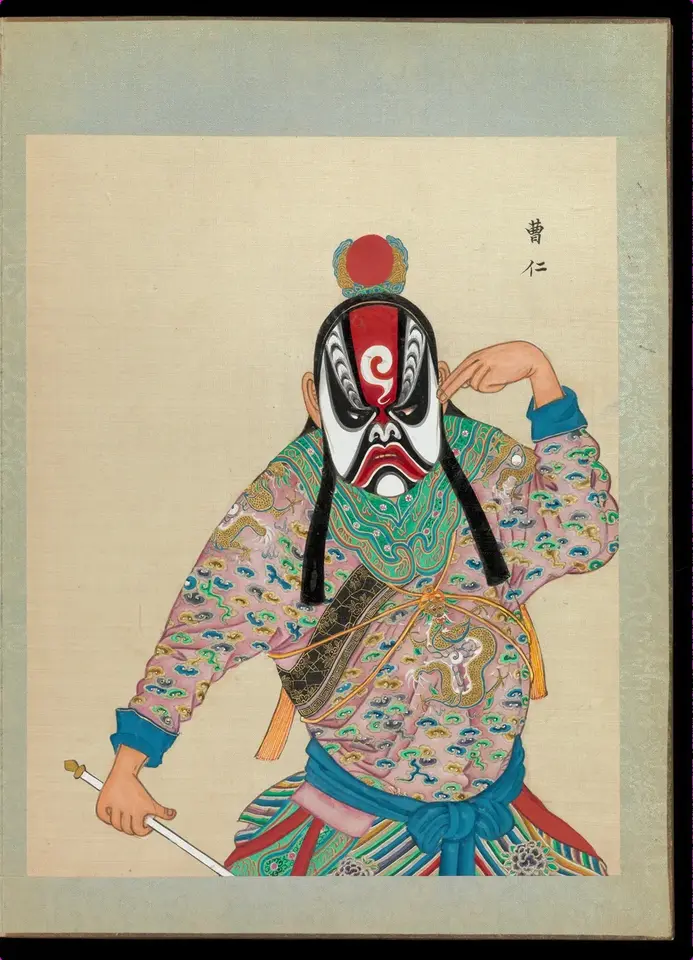
168 CE–223 CE
曹仁
Cao Ren (曹仁, 168–223), courtesy name Zixiao (子孝), a native of Qiao in Pei State (modern Bozhou, Anhui), was the foremost martial commander, grand strategist, and Grand Marshal (Da Sima) of the Cao Wei state during the Three Kingdoms period. A younger cousin of Cao Cao, Cao Ren was renowned for reckless bravery in his youth, but matured into an iron-disciplined, scrupulous military master. Joining Cao Cao's initial uprising…
Cao Ren (曹仁, 168–223), courtesy name Zixiao (子孝), a native of Qiao in Pei State (modern Bozhou, Anhui), was the foremost martial commander, grand strategist, and Grand Marshal (Da Sima) of the Cao Wei state during the Three Kingdoms period. A younger cousin of Cao Cao, Cao Ren was renowned for reckless bravery in his youth, but matured into an iron-disciplined, scrupulous military master. Joining Cao Cao's initial uprising against Dong Zhuo, Cao Ren spearheaded breakthrough assaults against Yuan Shu, Tao Qian, and Lu Bu. At the Battle of Guandu (200 CE), his cavalry intercepted and routed Liu Bei in Runan, severing Yuan Shao's southern flanking maneuver. Following the Battle of Red Cliffs, Cao Ren held Jiangling for over a year against the joint host of Zhou Yu and Liu Bei, orchestrating a daring single-handed cavalry charge to rescue his trapped officer Niu Jin. Most famously, during Guan Yu's siege of Fancheng in 219 CE, when catastrophic autumn floods submerged the fortress walls, Cao Ren stood atop the ramparts with drowned horses and sworn warriors, enduring relentless assaults and tying down Guan Yu's army until relief arrived, turning the strategic tide of the Three Kingdoms. Under Cao Pi, Cao Ren rose to Grand Marshal and Marquis of Chen, honored posthumously as Marquis Zhong (Zhong Hou).
Born in Qiao into the prestigious martial Cao lineage.
Recruited over one thousand warriors to join Cao Cao's anti-Dong Zhuo army.
Routed Liu Bei at Runan; destroyed Yuan Shao's southern logistics.
Held Jiangling against Zhou Yu's elite armies; executed the legendary rescue of Niu Jin.
Commanded defensive lines against Ma Chao and Han Sui; secured Guanzhong.
Defended submerged Fancheng against Guan Yu, breaking the Shu offensive.
Elevated to Grand General and later Grand Marshal by Emperor Wen (Cao Pi).
Passed away at age fifty-six; posthumously honored as Marquis Zhong.
Commanded cavalry in Cao Cao's expedition against Tao Qian, defeating general Lü You and capturing Pengcheng.
Led a detached force to storm Juyang, capturing Lü Bu's general Liu He.
Appointed Governor of Guangyang Commandery after escorting Emperor Xian to Xuchang, remaining at Cao Cao's side to command elite cavalry.
Accompanied Cao Cao against Zhang Xiu and routed Zhang Xiu's pursuing forces at Anzhong.
Advised Cao Cao during the siege of Huguan to leave an avenue of survival rather than threaten total slaughter, prompting the city's rapid surrender.
Charged into the Wu encirclement to rescue Niu Jin before executing an orderly withdrawal north after a year-long defense of Jiangling.
Appointed Acting General of Agile Cavalry to crush rebel leader Su Bo and Tian Yin in Jizhou.
Accompanied Cao Cao on the southern expedition against Sun Quan and subsequently garrisoned Juchao.
Stationed at Fancheng as Acting General Who Conquers the South to guard Jingzhou; mobilized troops when Hou Yin rebelled at Wancheng.
Stormed Wancheng alongside Pang De in January 219 CE, beheading rebel commander Hou Yin before returning to defend Fancheng.
Elevated from General of Chariots and Cavalry to Grand General (Da Jiangjun) by Emperor Wen of Wei.
Promoted to Grand Marshal (Da Sima), commanding the eastern offensive against Eastern Wu at Ruxu.
In his youth, Cao Ren enjoyed equestrian archery and hunting, occasionally consorting with rough companions. When Cao Cao raised troops to challenge Dong Zhuo in 190 CE, Cao Ren recruited over one thousand elite horsemen from the Huai River basin and placed himself under his cousin's command. Cao Ren proved to be an indispensable frontline commander, leading vanguard divisions that crushed Yuan Shu's cavalry at Fengqiu and assaulted Tao Qian's fortresses in Xuzhou.
During the fateful Guandu campaign in 200 CE, Yuan Shao sent Liu Bei to incite rebellions in Cao Cao's southern rear. Cao Cao was anxious, but Cao Ren observed: "Liu Bei's newly recruited southern troops are uncoordinated; strike them swiftly with cavalry, and they will scatter." Cao Cao granted him light cavalry. Cao Ren struck Liu Bei at Runan, destroying his forces and securing Cao Cao's supply lines, enabling the decisive victory at Wuchao.
Following Cao Cao's defeat at the Battle of Red Cliffs in late 208 CE, Cao Cao retreated north, leaving Cao Ren with a small garrison to defend the strategic hub of Jiangling against the victorious allied hosts of Zhou Yu and Liu Bei.
Zhou Yu marched on Jiangling with tens of thousands of elite naval infantry. When Zhou Yu's vanguard of several thousand troops arrived, Cao Ren dispatched officer Niu Jin with three hundred warriors to test the enemy. Niu Jin was immediately encircled. Watching from the ramparts, Cao Ren's staff blanched, but Cao Ren shouted for his horse. Accompanied by only dozens of elite riders, Cao Ren galloped into the enemy encirclement, slashing through ranks of Wu warriors to rescue Niu Jin. When an officer pointed out that several men were still trapped, Cao Ren wheeled his horse and charged back into the melee, cutting down dozens more and bringing every soldier back safely. Zhou Yu's troops withdrew in awe, and Cao Cao's soldiers cheered: "General Cao Ren is truly a heavenly god!" For over a year, Cao Ren held Jiangling against overwhelming numbers, allowing Cao Cao to consolidate the northern plains.
In the autumn of 219 CE, Shu Han general Guan Yu launched his northern offensive from Jingzhou, encircling Cao Ren at Fancheng. When torrential rains flooded the Han River, Yu Jin's seven relief armies were submerged and surrendered to Guan Yu. Fancheng's earthen ramparts softened and began collapsing, with floodwaters rising to within a few feet of the parapets. With fewer than four thousand defenders and food supplies nearly exhausted, many officers urged Cao Ren to take boats and abandon the city.
Adviser Man Chong stepped forward and said: "The floods will recede; if you abandon Fancheng, the entire territory south of the Yellow River will be lost to Guan Yu." Cao Ren firmly agreed. He drowned his favorite warhorse in a solemn sacrificial rite before his troops, declaring that he would die with the city. Inspired by his resolution, every soldier fought with desperate valor, repairing ramparts with mud and sandbags under continuous arrow fire. Cao Ren held Fancheng for over two months until Xu Huang's relief forces arrived and Sun Quan struck Guan Yu's rear, completely destroying Guan Yu's army.
Under Emperor Wen (Cao Pi), Cao Ren was appointed Grand Marshal (Da Sima). He died in 223 CE at age fifty-six, leaving a reputation as the greatest defensive commander of the Three Kingdoms era.
Growing up in the martial Cao clan of Qiao, Cao Ren gathered over a thousand young horsemen across the Huai and Si rivers before joining Cao Cao in 190 CE.
In 211 CE, Cao Ren served as Acting General Who Pacifies the West at Tongguan against Ma Chao and Han Sui, before returning south to garrison Fancheng and Xiangyang.
In late 218 and early 219 CE, when Hou Yin rebelled in Wancheng in coordination with Guan Yu, Cao Ren marched north, stormed Wancheng, and executed Hou Yin, stabilizing the Nanyang rear prior to the Battle of Fancheng.
After Cao Pi established Cao Wei in 220 CE, Cao Ren was successively appointed General of Chariots and Cavalry, Grand General, and Grand Marshal, commanding forces along the Huai and Yangtze fronts until his death in May 223 CE.
From Xuzhou, Guandu, and Yinping to Huguan, Cao Ren commanded Cao Cao's mobile cavalry, repeatedly breaking enemy flanking maneuvers.
Cao Ren combined personal valor with sound operational judgment, advising against threatening total massacre at Huguan in 205 CE so the defenders would surrender without fighting to the death.
His year-long defense of Jiangling (208–209 CE) and his heroic stand at flooded Fancheng (219 CE) preserved Cao Wei's strategic control over the Han and Huai river basins.
By swiftly crushing the rebellions of Su Bo and Tian Yin in 212 CE and Hou Yin at Wancheng in 219 CE, Cao Ren prevented internal uprisings from linking up with external rivals.
Chen Shou in the Records of the Three Kingdoms evaluated Cao Ren's transformation with profound praise: "Cao Ren was reckless in youth, but once he held command, he was scrupulous, law-abiding, and strict, becoming the model general for the entire state." Sima Biao recorded that among all the generals of Cao Wei, Cao Ren's military discipline was unmatched. Military historians consider Cao Ren's defensive stands at Jiangling and Fancheng as immortal masterclasses in fort defensive warfare and psychological endurance under catastrophic operational crises.
Chen Shou in the Records of the Three Kingdoms and Sima Biao in the Book of Wei (Weishu) ranked Cao Ren and Xiahou Dun at the forefront of the imperial clan generals, praising Cao Ren's strict adherence to law and unmatched bravery.
In 782 CE under Emperor Dezong of Tang and in 1123 CE under Emperor Huizong of Song, Cao Ren was enshrined among the sixty-four and seventy-two ancient celebrated generals in the Temple of Martial King Wucheng.
Traditional commentators contrasted the historical Cao Ren—celebrated for strategic discipline and personal heroism at Jiangling—with his fictionalized portrayal in the Romance of the Three Kingdoms.
Modern military historians recognize Cao Ren as Cao Cao's most versatile theater commander, equally adept at mobile cavalry strikes and protracted fortress defense.
FIGURES ASSOCIATED WITH THIS DYNASTY