Birth in Xianyou
Born into a distinguished literati family in Xianyou, displaying brilliant intellect and calligraphic mastery from youth.
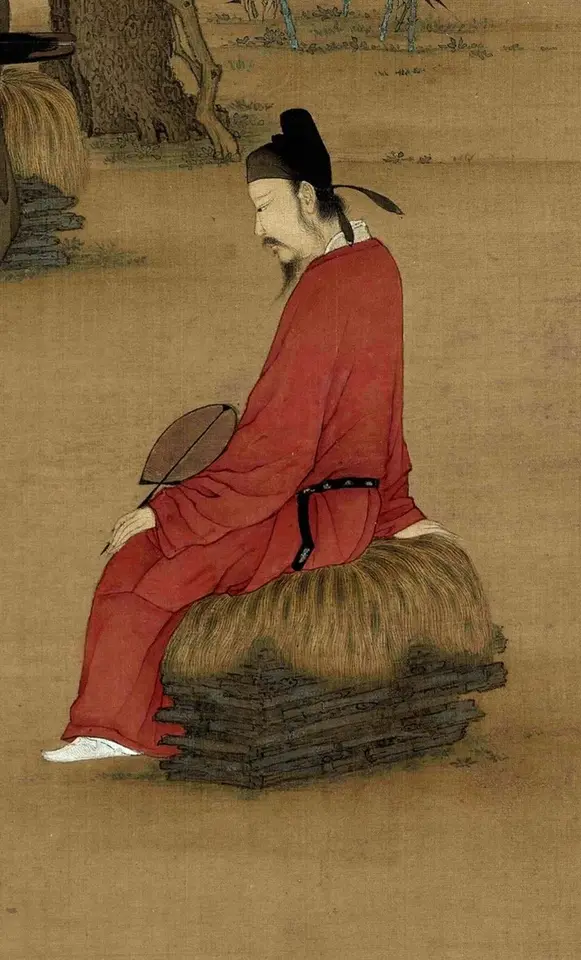
蔡京
Cai Jing, February 14, 1047–August 11, 1126 (蔡京), courtesy name Yuanchang, was a native of Fengting in Xianyou, Xinghua Military Prefecture. He was a dominant chancellor, powerful political figure, and master calligrapher during the late Northern Song dynasty. Passing the metropolitan examinations with high honors in 1070 during the Xining era, he early on championed Wang Anshi's New Policies, raising funds to construct the…
Cai Jing, February 14, 1047–August 11, 1126 (蔡京), courtesy name Yuanchang, was a native of Fengting in Xianyou, Xinghua Military Prefecture. He was a dominant chancellor, powerful political figure, and master calligrapher during the late Northern Song dynasty. Passing the metropolitan examinations with high honors in 1070 during the Xining era, he early on championed Wang Anshi's New Policies, raising funds to construct the massive Mulanpi irrigation barrage in Fujian. He served successively as County Sheriff of Qiantang, Judge of Shuzhou, Imperial Diarist, Secretariat Drafter, and Administrator of Kaifeng, where he dredged the renowned "Cai Public Canal." Navigating adroitly between the Old Faction under Sima Guang and the New Faction under Zhang Dun, he rose to Minister of Revenue and Hanlin Academician Recipient of Edicts. Following Emperor Huizong's accession, Cai Jing was briefly dismissed to Hangzhou, where he allied with powerful palace eunuch Tong Guan, submitting exquisite calligraphy and paintings that enchanted the young sovereign. Strongly recommended by Deng Xunwu's Chart of Irreplaceable Support, Cai Jing was elevated to Right Chancellor in 1102 and subsequently Left Chancellor, initiating an extraordinary political tenure spanning eighteen years marked by five terms as chancellor. Claiming to continue the reform legacy of Emperor Shenzong, he established the Planning and Deliberation Bureau (Jiangyi Si) to monopolize state revenues, instituted equal land taxation, monopolized the tea and salt trades, and issued devalued large-denomination currency. Concurrently, he standardized nationwide public welfare institutions including the Jiyang Yuan (almshouses), Anji Fang (charitable clinics), and Louze Yuan (public cemeteries), and directed the "Chongning Educational Reform" which expanded local schooling and created specialized academies for medicine, mathematics, calligraphy, and painting. However, his doctrine of "Abundant Prosperity and Grandeur" stoked rampant royal luxury, financing the extravagant Flower and Stone Network (Huashi Gang) and lavish palace parks that exhausted the population. In politics, he erected the "Yuanyou Partisan Stele", blacklisting over three hundred upright officials. As Jurchen Jin armies invaded Kaifeng, he was branded the foremost of the "Six Traitors" by Emperor Qinzong and exiled to Lingnan, succumbing to starvation and illness at Tanzhou in 1126 at the age of eighty. Celebrated as one of the four great calligraphers of the Song alongside Su, Huang, and Mi, his art was widely emulated, and he supervised the compilation of the imperial catalogs Xuanhe Shupu and Xuanhe Huapu.
Born into a distinguished literati family in Xianyou, displaying brilliant intellect and calligraphic mastery from youth.
Placed ninth in the imperial palace examinations under Emperor Shenzong, assigned as Sheriff of Qiantang.
Collaborated with his brother Cai Bian to raise funds for constructing the coastal Mulanpi reservoir in Fujian.
Served as Provisional Administrator of Kaifeng, digging the irrigation canal known as the Cai Public Canal.
Converted employment services to labor corvee within five days to satisfy Chancellor Sima Guang, yet was impeached by censors.
Recalled to court under Zhang Dun as Minister of Revenue and Hanlin Academician, assisting in the prosecution of Yuanyou partisans.
Stripped of official ranks upon Huizong's accession; resided in Hangzhou and cultivated eunuch commissioner Tong Guan.
Endorsed by Deng Xunwu, appointed Right Vice Director and later Left Vice Director to lead the Chongning New Policies.
Erected the Yuanyou Partisan Stele; dismissed following celestial omens and created Duke of Wei.
Restored as Chancellor, expanded frontier commanderies, promoted to Grand Preceptor, and dismissed again in 1109.
Recalled as Grand Preceptor directing the Three Departments (Public Chancellor); dismissed in 1116 over opposition to the Jin alliance.
Endorsed by Daoist Lin Lingsu as a celestial immortal; reinstated as Public Chancellor until resigning due to illness in 1120.
Reappointed Chancellor amidst factional crisis, delegating duties to his son Cai Tiao; officially retired in 1125.
Denounced as chief of the Six Traitors; stripped of all honors and died of illness in Tanzhou at the age of eighty.
Cai Jing was born on February 14, 1047, in Fengting, Xianyou County, Xinghua Military Prefecture. His father Cai Zhun served as Vice Director in the Ministry of Public Works. Endowed with penetrating intellect, Cai Jing mastered classical canons and perfected his calligraphy, early on modeling his hand after Cai Xiang before integrating the robust structural disciplines of Xu Hao, Ouyang Xun, and the Two Wangs. In 1070, at twenty-four, Cai Jing placed ninth in the metropolitan examinations, embarking on his bureaucratic career as Sheriff of Qiantang and later Judge of Shuzhou.
During his early provincial service, Cai Jing vigorously supported Wang Anshi's New Policies. Alongside his younger brother Cai Bian, he repeatedly memorialized Emperor Shenzong to authorize the construction of the Mulanpi reservoir, personally mobilizing eighty thousand strings of cash from fourteen wealthy lineages to construct one of the greatest water-conservancy achievements in southeastern China. Recognized by Wang Anshi, Cai Jing was summoned to the capital, serving as Personnel Evaluator, Collator in the Palace Library, and Imperial Diarist. In 1083, he was dispatched as envoy to the Khitan court for Emperor Daozong's birthday, returning to become Secretariat Drafter. When Cai Bian was also named Secretariat Drafter, Bian voluntarily requested to stand behind his elder brother in protocol, an arrangement celebrated by contemporaries as an extraordinary familial honor.
In 1084, Cai Jing was appointed Provisional Administrator of Kaifeng, dredging an extensive bypass waterway outside the capital that irrigated thousands of acres, locally christened the "Cai Public Canal." Following Shenzong's death in 1085, Cai Jing allied with Chancellor Cai Que to seize merit in dynastic succession. When conservative leader Sima Guang took power and decreed the nationwide conversion of hired labor services back to traditional corvee within five days, all court ministers balked at the deadline, yet Cai Jing alone completed the transition on time across Kaifeng. Sima Guang commended his discipline, but censors denounced his opportunistic deceit, leading to his successive reassignments as administrator of Chengde, Yingzhou, Chengdu, and Yangzhou.
In 1094, Emperor Zhezong assumed direct personal rule and appointed reform leader Zhang Dun as Chancellor to restore Shenzong's policies. Exiled for eight years, Cai Jing was recalled to court as Minister of Revenue. When Zhang Dun debated the reinstatement of labor service legislation, Cai Jing decisively stated: "Simply enact the verified Xining regulations; there is no need for protracted debate." Zhang Dun implemented his advice, marveling at his efficiency. Observers noted Cai Jing's swift transitions between Sima Guang's and Zhang Dun's policies, discerning his cunning opportunism.
In 1095, Cai Jing was elevated to Hanlin Academician and Reader-in-Waiting, tasked with rewriting the official dynastic records of Shenzong's reign. Entrusted with investigating the Wen Jifu treason conspiracy, Cai Jing arrested palace eunuch Zhang Shiliang, torturing witnesses to fabricate treason charges against former prime ministers Liu Zhi and Liang Tao. Chen Yan was executed, while dozens of prominent literati including Fan Zuyu, Wang Yansou, and Liu Anshi were exiled to distant frontiers. Coveting a seat on the Council of State, he was checked by Bureau of Military Affairs Director Zeng Bu, who warned Zhezong against promoting two brothers to concurrent ministerial posts, resulting in Cai Jing's appointment as Hanlin Academician Recipient of Edicts.
Following Zhezong's death in 1100, Emperor Huizong ascended the throne under the regency of Empress Dowager Xiang. Under censorial attack for his past factional persecutions, Cai Jing was stripped of rank and ordered to reside in Hangzhou as supervisor of the Dongxiao Daoist Abbey. At that time, palace eunuch Tong Guan arrived in the south to procure precious artwork and antiques for the palace. Cai Jing cultivated Tong Guan's favor, entertaining him day and night while producing exquisite calligraphy, painted screens, and folding fans for Tong Guan to present to Huizong. Fascinated by the magnificent brushwork, Huizong became deeply curious about Cai Jing.
In late 1101, Huizong resolved to adopt the reign title "Chongning" to revive Shenzong's legacy. Diarist Deng Xunwu submitted the famous Chart of Irreplaceable Support, categorizing courtiers into reformist and conservative factions, explicitly asserting to Huizong: "If Your Majesty desires to complete Emperor Shenzong's grand work, it is impossible without employing Cai Jing!" Convinced by these appeals and claiming to have dreamed of Cai Jing as chancellor, Huizong recalled Cai Jing in 1102 as Hanlin Academician. Moving swiftly to oust his rival Zeng Bu, Cai Jing was officially appointed Right Vice Director (Right Chancellor) in July 1102 and promoted to Left Vice Director (Left Chancellor) early the following year.
Upon securing the chancellorship, Cai Jing established the Planning and Deliberation Bureau (Jiangyi Si) within the Department of State Affairs, appointing himself director alongside loyal partisans such as Wu Juhou and Wang Hanzhi. Every key department of state revenue, taxation, salt, tea, and local administration fell under its centralized control, reducing the traditional Three Departments to rubber-stamp organs. Economically, he overhauled the salt certificate trade, bankrupting thousands of merchant families, established state tea monopolies, and minted devalued "worth-ten" copper coins to extract wealth for the court.
To consolidate political control, Cai Jing launched an unprecedented purge of political opponents. He drew up a list of 309 officials led by Sima Guang, Su Shi, Su Zhe, Huang Tingjian, and Cheng Yi, designating them the "Yuanyou Treasonous Faction." Cai Jing personally brushed the calligraphy for the "Yuanyou Partisan Stele", ordering replicas erected outside all provincial administrative offices nationwide. Listed scholars were banished, their literary works burned, their descendants barred from office, and former Empress Meng was stripped of her imperial title. Concurrently, he abolished the imperial civil examinations, requiring all candidates to enter bureaucracy via the Three Hall system centered on the newly constructed imperial Biyong academy south of Kaifeng.
To secure Huizong's permanent favor, Cai Jing articulated the doctrine of "Abundant Prosperity and Grandeur" (Feng Heng Yu Da), assuring the emperor that imperial vaults contained over fifty million strings of cash, fully sufficient to fund grand ritual spectacles. Under his guidance, Huizong initiated massive architectural projects, casting the Nine Cauldrons, erecting the Mingtang ritual hall, and constructing the lavish Yanfu Palace and Genyue pleasure gardens. Over four hundred thousand laborers were mobilized to excavate mountaintops and construct grand stone bridges across the Yellow River.
Simultaneously, Cai Jing endorsed the creation of the Flower and Stone Network (Huashi Gang), directed by his protege Zhu Mian and eunuch Tong Guan. Flotillas commandeered shipping across southern waterways, extracting colossal boulders, ancient trees, and rare flora from private homes. Corrupt commissioners demolished private residences, terrorizing the southern population. In reward, Huizong showered Cai Jing with extraordinary honors, promoting him to Grand Preceptor, Duke of Wei, Duke of Chu, and Duke of Lu, visiting his residence seven times for private banquets and marrying his daughter, Princess Maode, to Cai Jing's fifth son Cai You. Cai Jing's sons and grandsons held imperial academician titles, establishing an all-encompassing family oligarchy.
Despite his immense authority, Cai Jing faced relentless attacks from principled courtiers. In 1106, terrified by the appearance of a celestial comet, Huizong dismissed Cai Jing and destroyed the partisan stelae, yet recalled him ten months later; in 1109, he was dismissed again following student leader Chen Chaolao's fourteen-point indictment, only to be reinstated as Public Chancellor in 1112; in 1116, he was ousted over his opposition to the northern alliance with the Jurchen Jin, but was swiftly reinstated when Daoist Lin Lingsu proclaimed him a celestial immortal.
In 1120, the catastrophic Fang La rebellion erupted in Zhejiang under the banner of slaying corrupt commissioner Zhu Mian, followed by Song Jiang's rebellion in Shandong. By 1124, after rival Wang Fu was dismissed, Cai Jing was summoned for an unprecedented fifth term as chancellor. Nearly eighty years old, blind, and unable to bow, he governed from his private mansion, allowing his fourth son Cai Tiao to handle all state papers. Cai Tiao's overbearing arrogance sparked bitter conflicts with his elder brother Cai You and ministers Bai Shizhong and Li Bangyan. In April 1125, Huizong removed Cai Tiao and dispatched Tong Guan to demand Cai Jing's resignation. Weeping profusely, Cai Jing submitted his final retirement memorial.
In late 1125, the Jurchen Jin launched a massive invasion, besieging Kaifeng. Huizong abdicated to his son Emperor Qinzong. Capital students led by Chen Dong besieged the palace gates, demanding the immediate execution of the "Six Traitors" headed by Cai Jing. Stripped of all ranks, Cai Jing was banished successively from Luoyang to Hengzhou, Shaoghou, and ultimately Danzhou in Hainan. Along his southward journey, universal hatred denied him food and shelter; shopkeepers refused to sell provisions even for silver. On August 11, 1126, while stranded at the Chongjiao Temple in Tanzhou (modern Changsha), eighty-year-old Cai Jing died of illness and starvation. Before dying, he composed his famous final lyric to Xijiang Yue: "Eighty-one years of earthly life, / Four thousand miles from home with no roof over my head. / Stranded at the far edges of the sky, / Dreaming of the imperial courtyards. / Five times appointed chancellor in the jade hall, / Ten times receiving imperial proclamations. / All because of craving transient glory, / I face this bitter end."
Cai Jing's domestic governance in the Chongning and Daguan eras represented a significant institutional peak in Chinese administrative history. Reviving Wang Anshi's fiscal vision, he enforced the Equal Field and Equal Tax System, established centralized state monopolies on tea and salt, and streamlined maritime trade bureaus to boost foreign customs revenues, expanding annual imperial income beyond fifty million strings of cash.
Most significantly, Cai Jing established an unprecedented state-sponsored charity network across the empire. He mandated the establishment of Jiyang Yuan (almshouses) in every commandery to feed and house the destitute, elderly, and disabled; founded Anji Fang (charitable clinics) to deploy medical officials providing free healthcare to the poor; and opened Louze Yuan (public cemeteries) to provide burial grounds for the landless. This state-directed, publicly financed social assistance system stood as the most comprehensive welfare apparatus in Chinese imperial history, creating the blueprint adopted by subsequent dynasties.
During his first term as chancellor in 1102, Cai Jing directed the "Chongning Educational Reform", the most comprehensive educational restructuring of the Northern Song. He sought to replace the traditional civil examination system with an integrated, three-tier state academy system linking county, prefectural, and imperial academies.
Under the Three Hall System, candidates advanced through lower and intermediate halls based on examinations, with top-tier graduates receiving direct official commissions without civil service testing. South of Kaifeng, he constructed the Biyong academy, accommodating over three thousand external imperial scholars. Crucially, Cai Jing pioneered the establishment of specialized professional schools, revitalizing the Imperial Medical Academy while establishing dedicated academies for Mathematics, Calligraphy, and Painting. By placing technical, artistic, and scientific disciplines on an equal footing with classical degrees, he provided substantial bureaucratic prestige for professional scholars, fostering a golden age of Song technological and aesthetic achievement.
To flatter Emperor Huizong's imperial pride with territorial expansion, Cai Jing pursued aggressive frontier colonization. In the south, following uprisings by Yao tribes in Chenxi, he deployed troops under Shu Dan to suppress tribal resistance, establishing Qianzhong territory as Jingzhou.
In the northwest, he backed Tong Guan's westward offensives, recovering Huangchuan, Shanzhou, and Guozhou, and annexing Yelang and Zangke territories in the southwest. In 1107, Chieftain Mo Wengui of Nandan surrendered his territory, adding thousands of square miles to the Song empire. Cai Jing organized this territory as the Qiannan Circuit governing nine prefectures, converting Nandan into Guanzhou. These border expansions earned him highest honors including Grand Preceptor and the Eight-Treasure Gold-Fish Girdle, cementing his authority over the court.
Financially, Cai Jing deployed monopolistic policies to extract revenue. He abolished the traditional salt voucher system, canceling decades of circulating private vouchers and bankrupting coastal merchant cartels. Simultaneously, he imposed an absolute state monopoly on tea across seven circuits in the Huai and Yangtze valleys.
To finance imperial luxuries and palace construction, he executed an aggressive debasement of the currency, establishing provincial mints to produce large "worth-five" and "worth-ten" bronze and iron coins. While generating vast bullion reserves for the imperial Xuanhe vaults, this predatory monetary policy catalyzed hyperinflation across northern China, driving merchant bankruptcies and severing the economic vitality of the Northern Song.
Politically, Cai Jing introduced an unprecedented model of institutionalized factional proscription. In September 1102, to permanently crush conservative opposition, he inscribed the names of 309 scholars—including Sima Guang, Su Shi, Huang Tingjian, and Cheng Yi—upon the "Yuanyou Partisan Stele" erected outside the palace gates, commanding all provincial offices to erect identical monuments.
The listed scholars were stripped of office and exiled, their books burned, and their descendants permanently disqualified from civil service. This institutionalized purge terminated the benevolent Northern Song tradition of literati-emperor co-governance, cultivating an atmosphere of terror where sycophants held absolute sway and all dissenting voices were silenced.
Despite his political infamy, Cai Jing's artistic genius as a calligrapher was undisputed across imperial China. Historical connoisseurs recognize that the traditional "Four Song Masters" (Su, Huang, Mi, and Cai) originally included Cai Jing, whose name was later replaced by his relative Cai Xiang due to moral condemnation. His script combined stately structural discipline with fluid, dramatic momentum, leading even the haughty master Mi Fei to acknowledge that his own brushwork lagged behind Cai Jing's.
Yuan dynasty scholar Tao Zongyi cited classical critics who described his regular script as resembling dignified ministers debating at court, while his running script displayed radiant aristocratic vitality. Surviving works such as Caotang Shiti Ji, Jiefu Tie, and Gongshi Tie attest to his extraordinary technical mastery. Furthermore, during the Zhenghe and Xuanhe eras, Cai Jing supervised the imperial compilation of Xuanhe Shupu (Calligraphy Catalog of the Xuanhe Era) and Xuanhe Huapu (Painting Catalog of the Xuanhe Era) in twenty volumes each, establishing the canonical foundation for the historical connoisseurship of Chinese calligraphy and painting.
FIGURES ASSOCIATED WITH THIS DYNASTY