Birth
Born into a family of Baarin chiliarchs and raised in Western Asia with his father Hukutai.
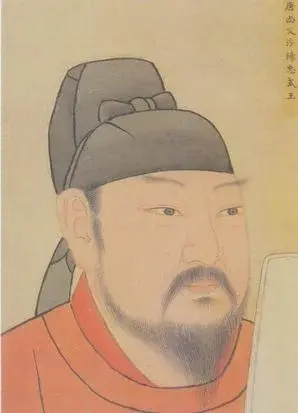
伯颜
Bayan (伯颜; 1236–1295), of the Baarin tribe of the Mongols, was a general and statesman of the Yuan Dynasty (元朝) who rose to be Right Chancellor of the Central Secretariat and Director of the Bureau of Military Affairs; he was posthumously created Prince of Huai'an with the posthumous name Zhongwu and later elevated to Prince of Huai. Born into a family of Baarin chiliarchs, he grew up in the Ilkhanate because his father…
Bayan (伯颜; 1236–1295), of the Baarin tribe of the Mongols, was a general and statesman of the Yuan Dynasty (元朝) who rose to be Right Chancellor of the Central Secretariat and Director of the Bureau of Military Affairs; he was posthumously created Prince of Huai'an with the posthumous name Zhongwu and later elevated to Prince of Huai. Born into a family of Baarin chiliarchs, he grew up in the Ilkhanate because his father Hukutai had followed Prince Hulagu on his western campaign. Sent by Hulagu to report to the Yuan court in the early Zhiyuan era, he so impressed Kublai Khan that he was kept at court, serving as Left Chancellor, Right Chancellor and Associate Director of the Bureau of Military Affairs. When Kublai launched the conquest of the Southern Song in 1274, Bayan directed the Jinghu and Henan front, advanced down the Han River while bypassing Yingzhou, took Yangluo Fort and crossed the Yangtze, and crushed the main Song army under Jia Sidao at Dingjiazhou. In 1276 three Yuan columns converged on Lin'an, and Empress Dowager Xie and Emperor Gong of Song surrendered. Bayan then fought on the northern steppe, defeating the rebel Shiregi, taking part in suppressing Nayan and long defending Karakorum against Qaidu. After Kublai's death in 1294 he directed the government and enthroned Emperor Chengzong, dying at the end of that year at the age of fifty-nine.
Born into a family of Baarin chiliarchs and raised in Western Asia with his father Hukutai.
Sent by Hulagu to report to the court, he was kept by Kublai Khan as an attendant and in the seventh month appointed Grand Master for Glorious Happiness and Left Chancellor.
Promoted to Right Chancellor of the Central Secretariat.
Transferred to Associate Director of the Bureau of Military Affairs.
In spring, bearing the jade patent, he invested Zhenjin, Prince of Yan, as heir apparent.
Placed in charge of the Branch Secretariat of Henan; marched from Xiangyang in the ninth month and took Yangluo Fort and crossed the Yangtze in the twelfth.
Routed Jia Sidao in the second month, became Right Chancellor in the seventh, and advanced on Lin'an in three columns in the eleventh.
Reached Gaoting Mountain in the first month; Emperor Gong surrendered with his officials in the second; Bayan escorted the Song court to Shangdu in the fifth.
Marched north, defeated Shiregi and rescued Nomoghan, Prince of Beiping.
Accompanied Kublai Khan in crushing the rebellion of Prince Nayan.
Promoted to Grand Master of the Golden Seal and Purple Ribbon and Director of the Bureau of Military Affairs, garrisoned Karakorum and repeatedly defeated Qaidu.
After Kublai's death he directed the government for three months, enthroned Emperor Chengzong, and died at year's end aged fifty-nine.
Bayan was of the Baarin tribe of the Mongols. His great-grandfather Shulugtu served Genghis Khan as left chiliarch of the Baarin; his grandfather Alaq inherited the post, served also as a judge and enlarged the family's lands after subduing the Huchan; and his father Hukutai, inheriting the command, followed Hulagu, younger brother of Möngke Khan, on his western campaign and took part in founding the Ilkhanate. Bayan thus grew up in Western Asia, known for his far-sighted planning and decisiveness, and was a follower of the Christian faith then called Erkeün.
Around 1265 Hulagu sent Bayan to report to the Yuan court. Kublai Khan, greatly impressed, kept him as an attendant to help plan state affairs, and no one at court could match him. Valuing him ever more, Kublai gave him in marriage the sister of the Right Chancellor Antong, saying that being Bayan's wife would not shame her family. In the seventh month of 1265 Bayan was appointed Grand Master for Glorious Happiness and Left Chancellor of the Central Secretariat. Difficult matters at court were often settled by a few words from him, and all praised him as a true chancellor. In 1267 he became Right Chancellor, in 1270 Associate Director of the Bureau of Military Affairs, and in the spring of 1273, bearing the imperial tally and jade patent, he invested Zhenjin, Prince of Yan, as heir apparent.
In 1274 Kublai ordered a full-scale campaign against the Song and appointed Bayan and Shi Tianze joint Left Chancellors in charge of the Jinghu Branch Secretariat. Shi Tianze pointed out that separate branch secretariats for Jinghu and Huaixi would issue conflicting orders, so the Huaixi office was converted into a branch Bureau of Military Affairs; when Shi fell ill and asked that Bayan take sole command, Kublai placed Bayan in charge of the Branch Secretariat of Henan. As Bayan set out in the seventh month, Kublai reminded him that Cao Bin had pacified the south in the early Song by refraining from needless killing, and urged him to be the Cao Bin of the Yuan.
On the first day of the ninth month the armies assembled at Xiangyang and advanced in three columns. On the thirteenth Bayan and the Manager of Governmental Affairs Aju led the central column down the Han River toward Yingzhou. When heavy rain flooded the road, Bayan steadied his men by declaring that an army about to leap the Yangtze could not fear puddles, and sent a strong soldier ahead on horseback with armor and weapons to lead the way. On the twentieth they reached Yanshan, twenty li from Yingzhou. Yingzhou was a stone city on the north bank, and the Song had built New Yingzhou on the south bank, stretching iron chains across the river and planting stakes in the water so that no warship could pass. Bayan sent Li Ting and Liu Guojie to take Huangjiawan Fort downstream, laid bamboo on the ground to drag the boats overland, and entered the Han River through Teng Lake.
When his generals urged him to take Yingzhou as a choke point, he refused, saying that besieging cities was the worst strategy and that the great army had not come south merely to take one city, and he bypassed it. He and Aju brought up the rear with fewer than a hundred horsemen. On the sixteenth day of the tenth month the Yingzhou commanders Zhao Wenyi and Fan Xing attacked with two thousand cavalry; without time to put on armor, Bayan and Aju counterattacked, Bayan killing Zhao Wenyi with his own hand and Fan Xing being captured and killed, with five hundred Song soldiers slain. On the twenty-second, after repeated summons to surrender failed, Bayan took Shayang by attacking downwind at dusk in a strong gale; on the twenty-fourth at Xincheng, where the commander Bian Juyi refused to yield, Li Ting stormed the outer works, three thousand defenders died fighting and Bian burned himself with his family.
On the fourteenth day of the eleventh month the prefect of Fuzhou, Zhai Gui, surrendered. Bayan refused his generals' request to enter the city to inspect its granaries and military registers and forbade anyone to enter on pain of martial law. When Aju sent the Right Assistant Ariq Qaya to ask the date for crossing the river, Bayan gave no answer two days running; only when Aju came in person did Bayan explain that so great a matter, entrusted by the emperor to the two of them alone, must not be known to others, and they fixed the date in secret. On the twenty-fifth Bayan inspected Hankou. The Song commander Xia Gui held key points with ten thousand warships, Wang Da guarded Yangluo Fort and Zhu Sisun's mobile force controlled midstream. When the chiliarch Ma Fu reported that the Lun River mouth led through Shawu into the Yangtze, Bayan found Shawu guarded by Xia Gui's best troops, so he besieged Hanyang and announced he would cross at Hankou; Xia Gui duly moved troops to Hanyang.
On the ninth day of the twelfth month the generals breached the dam at Hankou, led the boats into the Lun River and sent the myriarch Araqan to block the Song forces at Shawu, entering the Yangtze there. On the tenth Bayan's vast fleet entered the river and his Mongol and Han main force deployed on the north bank to attack Yangluo Fort. After two summonses to surrender and three days of failed assaults, he and Aju agreed on a feint: since the Song believed the fort must fall before any crossing, Aju would take three thousand armored cavalry by boat upstream that night and land on the south bank at dawn.
On the thirteenth Bayan sent Ariq Qaya with Zhang Hongfan and others to attack the fort, and Xia Gui came to its relief. Aju, unexpectedly, went forty li upstream and anchored opposite Qingshan Rock; in heavy snow that night he spotted a sandbar on the south bank, attacked, defeated the Song commander Cheng Pengfei after bloody fighting, captured over a thousand boats and seized the south bank, while Ariq Qaya's units routed Xia Gui and pursued him to the east gate of Ezhou. When Aju's victory report arrived on the fourteenth, Bayan stormed Yangluo Fort, killing Wang Da; the Song army collapsed and Xia Gui fled alone. Adopting Aju's advice to take Ezhou and Hanyang first, Bayan reached Ezhou on the seventeenth and burned three thousand Song warships, after which both cities surrendered. He sent envoys to Shangdu to report the crossing, ordered four hundred thousand hu of grain to supply the army, and left Ariq Qaya with forty thousand men at Ezhou to advance into Jinghu.
In the first month of 1275 the Yuan army moved downstream; Chen Yi at Huangzhou, Guan Jingmo at Qizhou and Lü Shikui at Jiangzhou surrendered in turn. When Lü Shikui entertained Bayan at the Yugong Tower and offered him two women of the Song imperial clan, Bayan rebuked him. Nankang, Anqing and other places also submitted. On the seventh day of the second month the vice prefect of Chizhou, Zhao Angfa, and his wife hanged themselves rather than surrender, and Bayan ordered clothing and coffins for their burial. The Song chancellor Jia Sidao sent Song Jing to propose peace, offering annual tribute in return for the surrendered prefectures. Bayan detained the envoy, sent to the court for instructions, and told Jia that tribute might have been discussed before the Yuan crossed the river, but now that the riverine prefectures had submitted Jia must come in person.
On the twenty-first day of the second month the Yuan reached Dingjiazhou. Jia Sidao commanded one hundred and thirty thousand men, claimed as a million, and Xia Gui lined two thousand five hundred warships across the river. Bayan sent cavalry along both banks while his artillery thundered for a hundred li. Xia Gui fled first, Jia Sidao in panic sounded the retreat, and the Song army disintegrated. The Yuan pursued for more than a hundred and fifty li; countless Song soldiers drowned, and ships, weapons, maps and seals were all captured. Taiping, Wuwei, Hezhou and other places then surrendered, and on the twenty-ninth Bayan reached Longwan at Jiankang (modern Nanjing) and rewarded his troops. In the third month the prefectures of Jiangdong and Chuzhou in Huaixi also submitted.
On the fifth day of the third month the envoy Lian Xixian arrived at Jiankang with orders that the generals hold their camps and refrain from plunder. About to go on an embassy to the Song, Lian asked for an armed escort; Bayan warned that a large escort would invite trouble, but Lian insisted, and on the fifteenth he was killed by the Song at Dusong Ridge. Bayan sent an officer to report the campaign and his plans, which Kublai fully approved, ordering Bayan to stay at Jiankang as chancellor of the branch secretariat, Atagai and Dong Wenbing to hold Zhenjiang, and Aju to attack Yangzhou. When famine and epidemic struck Jiangdong, Bayan worked hard at relief and the people were settled. A Song letter claiming that the envoys had been killed by frontier officers and offering tribute was judged by Bayan to be a ruse to spy on his strength; he sent Zhang Yu and others to proclaim the emperor's authority and demand surrender, but they too were killed at Pingjiang.
On the twenty-fourth day of the fourth month an edict ordered a halt until autumn because midsummer was unfavorable for war. Bayan replied that the Song held the rivers and the sea, and that if pressure were relaxed now they would escape. Kublai told his envoy that according to the art of war a general in the field is not controlled from the court, and the chancellor's view should be followed. Summoned to court in the fifth month, Bayan was promoted Right Chancellor on the thirteenth day of the seventh month; he credited Aju with the pacification of the south, and Aju became Left Chancellor. Returning in the eighth month with an imperial letter for the Song ruler, Bayan inspected the defenses of Yizhou and other places on the way and sent Bolqan and Alibai up the Huai River. In the ninth month the Yuan took Huai'an; in the tenth they besieged Yangzhou without success and moved south to Zhenjiang.
On the ninth day of the eleventh month Bayan divided his army into three columns to meet at Lin'an: Araqan led the right through Si'an to Dusong Ridge, Dong Wenbing led the fleet along the coast from Jiangyin to Ganpu and Huating, and Bayan with Atagai led the central column by land and water. The central column reached Changzhou on the sixteenth; after the city refused to surrender it was attacked, and the relief force sent by Wen Tianxiang under Yin Yu and Ma Shilong was destroyed. On the eighteenth Changzhou fell and the Yuan massacred its people; the defenders Yao Yin and Chen Zhao died fighting. On the fifth day of the twelfth month, at Wuxi, Liu Yue arrived with letters from the Song emperor and the grand empress dowager seeking peace. Bayan denounced the Song for detaining a Yuan envoy for sixteen years and killing Lian Xixian, and remarked that the Song had taken the empire from a child and was now losing it to a child, which was the will of Heaven; he then reported the request to the court. On the eighth the columns joined at Pingjiang, whose defender Wang Bangjie surrendered. On the twenty-fourth Lu Xiufu and other Song envoys brought a state letter offering to honor Kublai as an uncle, with the Song emperors acting as nephews and paying annual tribute of two hundred and fifty thousand taels of silver and as many bolts of silk; Bayan ignored it and pressed on, and Huzhou surrendered on the thirtieth.
In the first month of 1276 the Yuan reached Jiaxing, and the Song chancellor Chen Yizhong sent envoys to sue for peace three times. On the eighteenth, at Gaoting Mountain north of Lin'an, Emperor Gong's envoys brought the imperial seal and a letter of surrender, which Bayan accepted, summoning the Song chancellors to arrange the capitulation. Meanwhile Chen Yizhong fled south with the Princes of Yi and Guang, and Araqan's pursuit failed. On the twentieth Bayan forbade his troops to enter Lin'an and sent Lü Wenhuan with yellow proclamations to reassure the people. When Grand Empress Dowager Xie sent the chancellors Wu Jian and Wen Tianxiang on the twenty-second, Bayan sent the others back but detained Wen Tianxiang, hoping to win him over. He then dispatched officers to disband volunteer forces, reassure the population, guard the Song palace and summon the remaining prefectures to surrender.
On the fifth day of the second month Emperor Gong surrendered with all his officials. Bayan set up a chief military command for Liangzhe at Lin'an, had the Song treasury and grain inventoried, collected the officials' patents, seals and registers, sent surrendered Song officials to summon Hunan, Hubei, Guangdong, Guangxi and Sichuan, and forbade the plundering of the Song imperial tombs. On the second day of the third month he entered Lin'an and ordered the secretary Meng Qi to inventory the ritual vessels, patents, regalia and books of the Song palace. When Emperor Gong privately asked to see him, Bayan declined on the grounds that there could be no meeting before the former emperor had been received by the Yuan sovereign. On the first day of the fifth month he brought Emperor Gong to Shangdu, where Kublai made him Duke of Ying. The Yuan had taken thirty-seven prefectures, one hundred and twenty-eight departments and seven hundred and thirty-three counties from the Song. Kublai rewarded Bayan with appointment as Associate Director of the Bureau of Military Affairs. In 1279 the Yuan destroyed the last Song forces at Yamen, completing the unification of China.
In 1277 Prince Shiregi and others rebelled, seized Nomoghan, Prince of Beiping, and the Right Chancellor Antong, and advanced east from Almaliq toward Karakorum. Bayan marched north, aware that he had both to defeat the enemy and to rescue the captives. He faced the rebels across the Orkhon River in strict battle order through a whole day; when they grew weary and their ranks fell into disorder, he struck from two directions, routed them, sent picked men straight into their camp to rescue Nomoghan and Antong, and then both received surrenders and pursued Shiregi. In 1281 he accompanied the heir apparent Zhenjin to pacify the steppe and received an additional fief of four thousand nine hundred households in Tengzhou. In 1285 he succeeded Prince Ajiqi in command of the northwest.
In 1287, when rumors spread that Prince Nayan would join the northwestern princes in revolt, Bayan proposed sending an envoy to soothe him and observe his intentions before he acted, and volunteered to go himself. Finding Nayan beyond persuasion, he slipped away by night to report to Kublai, who immediately took the field. Bayan accompanied the expedition and recommended Han Chinese commanders employing Han tactics, and Nayan was captured and his followers absorbed before the northwestern princes could respond.
In 1289 Bayan was promoted Grand Master of the Golden Seal and Purple Ribbon and Director of the Bureau of Military Affairs and sent to garrison Karakorum, the first to hold that post there. Qaidu, knowing he could not beat Bayan, long held back, and the attacks he later instigated against Karakorum were all repulsed. In 1292 Bayan won over the rebel prince Melik Temür and repeatedly defeated Qaidu, but slander at court cost him his command and he lived in retirement at Datong. When Kublai died in 1294, Bayan directed the government for three months and the court remained as orderly as ever. Acting on the late emperor's instructions, he enthroned Kublai's grandson Temür, newly returned from Karakorum, as Emperor Chengzong, and was restored as Director of the Bureau of Military Affairs. He died in the twelfth month of that year (early 1295) at the age of fifty-nine. In 1304 he was posthumously made Grand Preceptor and Prince of Huai'an with the posthumous name Zhongwu, and in 1344 he was elevated to Prince of Huai. In 1388 the Hongwu Emperor of the Ming included him among thirty-seven famous ministers honored in the Temple of Emperors of Successive Dynasties, a practice the Qing continued.
Bayan led two hundred thousand men against the Song, directing his generals as though they were one man and commanding their deep respect. Bypassing the strongpoint of Yingzhou and advancing down the Han River, taking Yangluo Fort by a feint and crossing the Yangtze, destroying Jia Sidao's main army at Dingjiazhou and converging on Lin'an in three columns, he forced the Southern Song to surrender and laid the foundation for the Yuan unification of China.
On the southern campaign Bayan kept in mind Kublai's injunction to be the Cao Bin of the Yuan. He barred his generals from entering surrendered Fuzhou, rejected the women offered by a defecting commander, ordered the burial of Song officials who died for their dynasty, forbade his troops to enter Lin'an before issuing proclamations to reassure its people, and prohibited damage to the Song imperial tombs. While holding Jiankang he relieved the famine- and plague-stricken people of Jiangdong. Yet the massacres at Shayang and Changzhou remain a stain on his military career.
Bayan defeated the rebel Shiregi and rescued Nomoghan and Antong, took part in crushing the rebellion of Nayan, and long defended Karakorum against Qaidu, preserving the stability of the Yuan north.
After Kublai's death Bayan directed the government for three months, keeping the court in order, and on the late emperor's instructions enthroned Emperor Chengzong, ensuring a peaceful transfer of power.
FIGURES ASSOCIATED WITH THIS DYNASTY