Birth in Yangdi
Born in Yangdi, Xuzhou (modern Yuzhou, Henan Province), upright and diligent in study from youth
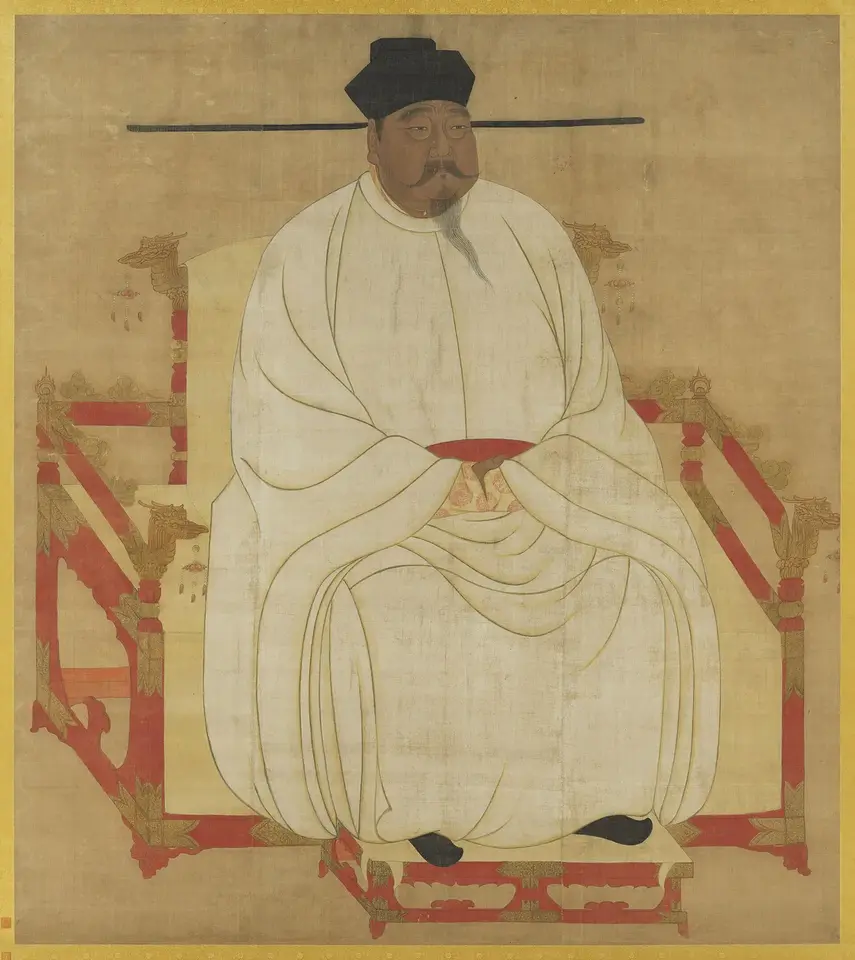
张昪
Zhang Bian (张昪, 992–1077), courtesy name Gaoqing, a native of Yangdi in Xuzhou (later elevated to Yingchang Prefecture, modern Yuzhou City, Henan Province), was a prominent censorial and executive statesman and lyric poet of the mid-Northern Song dynasty. Passing the imperial examination in the eighth year of the Dazhong Xiangfu era (1015) under Emperor Zhenzong of Song, Zhang Bian initially served as Assistant Magistrate of…
Zhang Bian (张昪, 992–1077), courtesy name Gaoqing, a native of Yangdi in Xuzhou (later elevated to Yingchang Prefecture, modern Yuzhou City, Henan Province), was a prominent censorial and executive statesman and lyric poet of the mid-Northern Song dynasty. Passing the imperial examination in the eighth year of the Dazhong Xiangfu era (1015) under Emperor Zhenzong of Song, Zhang Bian initially served as Assistant Magistrate of Chuqiu, winning the admiration and recommendation of the Southern Capital Regent Wang Zeng, and subsequently served as Vice Director of the Bureau of Public Revenue and Associate Censor; after impeaching the consort-clan relative Zhang Yaozuo and the eunuch Yang Huaimin, he served in the provinces as Prefect of Haozhou, Fiscal Commissioner of Jingxi Circuit, and Prefect of Dengzhou. From the Huangyou through the Zhihe eras, holding the titles Academician-in-Waiting of the Tianzhang Pavilion and Direct Academician of the Longtu Pavilion, he governed the strategic northwestern frontier prefectures of Qingzhou and Qinzhou, stabilizing the border and resolving conflicts involving the Qingtang Tibetans and Qiang tribes around Guweizhou. Recalled at the start of the Jiayou era as Reader-in-Waiting, Right Policy Critic-Advisor, and Acting Vice Censor-in-Chief, he denounced Chief Councilor Liu Hang for partisan abuses, joining Tang Jie and others in securing Liu Hang's dismissal; when relatives of Consort Zhang (Empress Wencheng), inner-palace eunuchs, and palace ladies interfered in outer-court affairs, Zhang Bian remonstrated forthrightly, earning Emperor Renzong's praise—"Only because you stand alone and independent can you be like this!"—and renown on par with Bao Zheng. Promoted to Vice Military Affairs Commissioner in 1058, Vice Grand Councilor in 1060, and Military Affairs Commissioner in 1061, he worked in harmony with Han Qi, Fu Bi, Zeng Gongliang, and Ouyang Xiu to usher in the prosperous Jiayou Administration, and urged Emperor Renzong to designate the future Emperor Yingzong as imperial heir. Following Emperor Yingzong's accession, Zhang Bian received the title Minister of Revenue and Jointly Manager of Affairs with the Secretariat-Chancellery, soon retiring upon repeated petitions as Military Commissioner of the Zhangxin Army governing Xuzhou and Heyang before returning to his hometown of Yangdi as Grand Preceptor of the Crown Prince, where he composed his celebrated Manjianghong ("Without profit or fame") lyric. He died in the tenth year of the Xining era (1077) at the age of eighty-six sui, receiving the posthumous title Minister of Instruction and Director of the Chancellery and the posthumous name "Kangjie."
Born in Yangdi, Xuzhou (modern Yuzhou, Henan Province), upright and diligent in study from youth
Passed the imperial examination and was appointed Assistant Magistrate of Chuqiu County in Yingtian Prefecture, where Regent Wang Zeng recognized his talent as fit for a grand councilor
Rose to Vice Director of the Bureau of Public Revenue and was recommended by Xia Song as Associate Censor; impeached imperial relative Zhang Yaozuo and eunuch Yang Huaimin before serving as Prefect of Haozhou
Served as Fiscal Commissioner of Jingxi and Prefect of Dengzhou, then governed Qingzhou and Qinzhou as Academician-in-Waiting of the Tianzhang Pavilion and Direct Academician of the Longtu Pavilion, stabilizing Guweizhou
Recalled as Reader-in-Waiting, Right Policy Critic-Advisor, and Acting Vice Censor-in-Chief; submitted seventeen memorials impeaching Chief Councilor Liu Hang and remonstrated against inner-palace interference
Promoted to Supervising Secretary and Vice Military Affairs Commissioner, reorganizing military training and dischargingtens of thousands of unfit soldiers
Advanced to Vice Grand Councilor, assisting Han Qi, Zeng Gongliang, and Ouyang Xiu in central governance
Promoted to Vice Minister of Rites and Military Affairs Commissioner; in 1062 joined Han Qi and Bao Zheng in urging Emperor Renzong to designate Zhao Shu (Emperor Yingzong) as imperial heir
Honored under Emperor Yingzong as Jointly Manager of Affairs with the Secretariat-Chancellery, governed Xuzhou and Heyang as Military Commissioner of the Zhangxin Army, and retired to Yangdi as Grand Preceptor of the Crown Prince
Died peacefully at his home in Yangdi at age eighty-six sui; posthumously titled Minister of Instruction and Director of the Chancellery and named "Kangjie"
Zhang Bian, courtesy name Gaoqing, was a native of Yangdi in Xuzhou (modern Yuzhou City, Xuchang City, Henan Province). In the eighth year of the Dazhong Xiangfu era (1015) under Emperor Zhenzong of Song, Zhang Bian passed the civil service examination and received his initial appointment as Assistant Magistrate of Chuqiu County in Yingtian Prefecture (southeast of modern Cao County, Shandong Province). At that time, the renowned statesman Wang Zeng was serving as Vice Grand Councilor and Regent of the Southern Capital (Yingtian Prefecture); upon inspecting his subordinate officials, Wang Zeng immediately recognized Zhang Bian's administrative capacity, praised him as a man of ministerial caliber, and recommended him to the throne.
Over the ensuing decades, Zhang Bian held a series of local and central posts, advancing to Vice Director of the Bureau of Public Revenue. During the Qingli era under Emperor Renzong, Military Affairs Commissioner Xia Song recommended Zhang Bian for the post of Associate Censor (Shiyushi Zhi Zashi), the second-highest position in the Censorate. Although recommended by Xia Song, Zhang Bian enforced the law with strict impartiality once in office, submitting successive memorials impeaching Zhang Yaozuo—uncle of Emperor Renzong's favorite Consort Zhang (posthumously Empress Wencheng)—for his rapid, unmerited promotions, as well as the palace eunuch Yang Huaimin for dereliction of duty during the Baozhou mutiny and palace guard disturbances. Because his forthright impeachments offended powerful court figures, Zhang Bian was sent out to serve as Prefect of Haozhou, and subsequently served as Fiscal Commissioner of Jingxi Circuit and Prefect of Dengzhou.
During the Huangyou era, as the court sought capable administrators for the northwestern borderlands, Zhang Bian was appointed Director of the Ministry of Revenue, Academician-in-Waiting of the Tianzhang Pavilion, and Prefect of Qingzhou (modern Qingyang City, Gansu Province), soon advancing to Direct Academician of the Longtu Pavilion and Prefect of Qinzhou (modern Tianshui City, Gansu Province). At that time, Guweizhou (modern Longxi County, Gansu Province), which lay at a considerable distance west of Qinzhou, had become a flashpoint of frontier conflict after previous frontier commanders such as Liu Huan rashly fortified the outpost to court military merit, provoking joint attacks by Qingtang Tibetan forces and local Qiang tribes that besieged Guwei City and unsettled the entire Longyou region.
Upon arriving in Qinzhou, Zhang Bian dispatched elite troops to lift the siege of Guwei City while conducting a thorough investigation of frontier conditions. He submitted a memorial pointing out that Guweizhou lay isolated beyond the passes along a precarious supply line and warning against provoking unnecessary border wars; at the same time, he pacified the Tibetan and Qiang tribal leaders and enforced strict regulations governing border markets, restoring peace and stability across Qinzhou and Qingzhou. In the second year of the Zhihe era (1055), in recognition of his frontier service, Emperor Renzong recalled him to court as Reader-in-Waiting Academician.
In the first year of the Jiayou era (1056), Zhang Bian was promoted to Right Policy Critic-Advisor and Acting Vice Censor-in-Chief (Quan Yushi Zhongcheng). Resentful of remonstrance officials who challenged his authority, Chief Councilor Liu Hang had repeatedly attempted to suppress the Censorate. Zhang Bian submitted seventeen memorials accusing Liu Hang of forming partisan cliques and abusing his office, joining censors Tang Jie and Fan Shidao in a sustained campaign that resulted in Liu Hang's dismissal from the councilorship.
During the later years of Emperor Renzong's reign, while the imperial succession remained unsettled, numerous inner-palace pavilions and favored palace ladies frequently used private inner-court decrees (neijiang) to seek official promotions for their relatives and associates. In court audiences before Emperor Renzong, Zhang Bian spoke out fearlessly against inner-palace interference and eunuch abuses, sparing no one in his criticisms. Rather than taking offense, Emperor Renzong remarked gently to him: "Only because you stand alone and independent can you speak like this!" Zhang Bian bowed and replied: "Your subject relies solely upon Your Majesty's enlightened understanding and therefore dares to speak frankly; had Your subject the slightest private interest or partisan attachment, how would I dare offend imperial majesty!" Contemporaries paired Zhang Bian with Bao Zheng as the two most upright Vice Censors-in-Chief of the Jiayou era.
In the third year of the Jiayou era (1058), Zhang Bian was promoted to Supervising Secretary and Vice Military Affairs Commissioner (Shumi Fushi). Working closely with Han Qi in the Bureau of Military Affairs, he overhauled the training and inspection of imperial and prefectural armies across Hebei, Hedong, and Shaanxi, strictly testing officers' martial skills and discharging tens of thousands of aged and unfit soldiers to reduce military expenditures. In the fifth year of the Jiayou era (1060), he advanced to Vice Grand Councilor (Canzhi Zhengshi), and in the intercalary eighth month of the sixth year of the Jiayou era (1061), he was appointed Vice Minister of Rites and Military Affairs Commissioner (Shumishi), collaborating harmoniously with Chief Councilors Han Qi and Zeng Gongliang and Vice Grand Councilor Ouyang Xiu during the celebrated "Administration of the Jiayou Era."
Because Emperor Renzong was advancing in age without a surviving son, the prolonged vacancy of the heir apparent's position caused deep anxiety throughout the empire. Alongside Chief Councilor Han Qi and Vice Censor-in-Chief Bao Zheng, Zhang Bian repeatedly pleaded with Emperor Renzong to place the security of the dynasty first and settle the imperial succession. In the seventh year of the Jiayou era (1062), Emperor Renzong formally designated Zhao Shu (the future Emperor Yingzong), son of Prince Anyi of Pu, as Imperial Son. When Emperor Yingzong ascended the throne in 1063, Zhang Bian was granted the titles Minister of Revenue and Jointly Manager of Affairs with the Secretariat-Chancellery (Tong Zhongshu Menxia Pingzhangshi).
At the start of the Zhiping era under Emperor Yingzong, having passed the age of seventy, Zhang Bian repeatedly petitioned to step down from the pivot of state affairs. Although Empress Dowager Cisheng Guangxian (Empress Cao) and Emperor Yingzong sought to retain him and granted him special permission to attend the Bureau of Military Affairs only once every five days, Zhang Bian persisted in requesting retirement. In the second year of the Zhiping era (1065), he was appointed Military Commissioner of the Zhangxin Army and Jointly Manager of Affairs with the Secretariat-Chancellery (Honorary Grand Councilor) governing Xuzhou, and soon transferred to govern Heyang.
Shortly thereafter, upon his renewed petition to retire on account of age, he was granted retirement as Grand Preceptor of the Crown Prince (Taizi Taishi) and returned to his native Yangdi. Living a simple, frugal life like a humble scholar, he enjoyed tranquil retirement among the hills and streams of his hometown, composing his famous Manjianghong lyric: "Without profit or fame, without glory or disgrace, without worry or vexation. Before the night lamp, singing alone, pouring wine alone, chanting alone, smiling alone. All the more when early snow fills the surrounding mountains, and the bright moon shines pure and fair. Even if granted a hundred years, what would one do with them? Let old age come as it may." In the tenth year of the Xining era (1077) under Emperor Shenzong, Zhang Bian died peacefully at his home in Yangdi at the age of eighty-six sui, receiving the posthumous title Minister of Instruction and Director of the Chancellery and the posthumous name "Kangjie."
FIGURES ASSOCIATED WITH THIS DYNASTY