阿沙
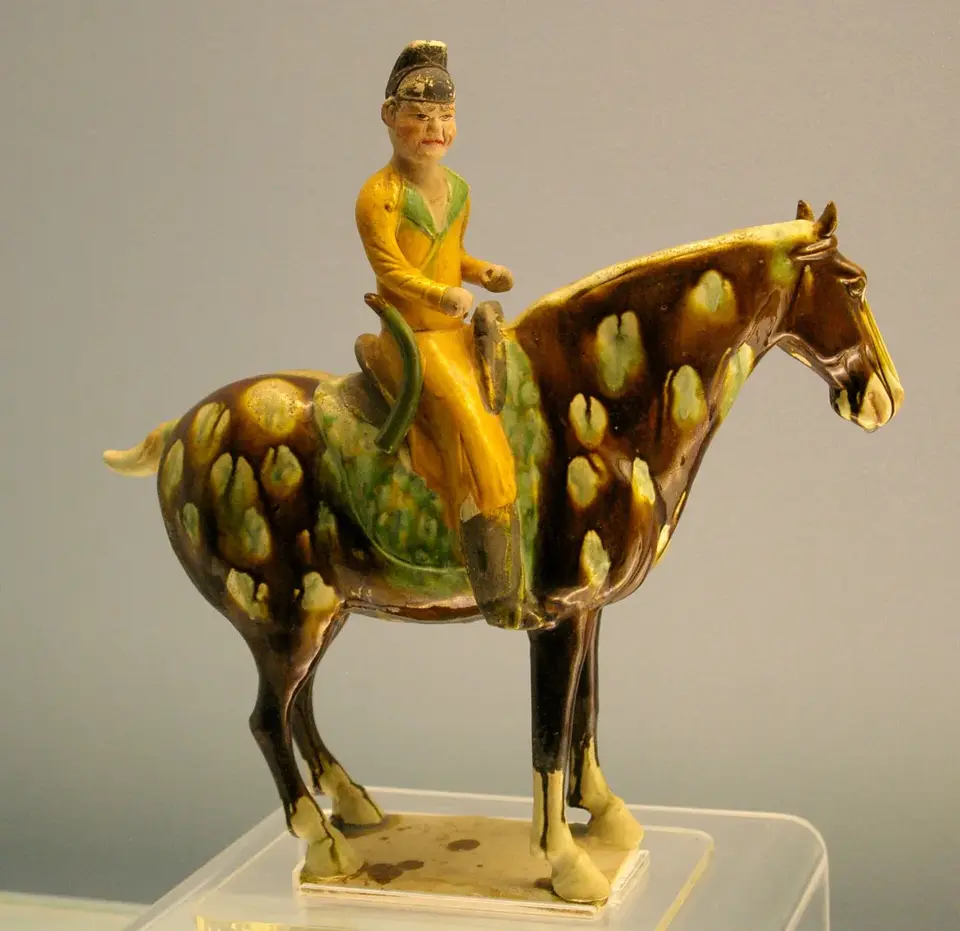
Historical sculpture of Tang dynasty
Image creditsJakub Hałun · CC BY-SA 4.0Image source

?–1227 CE

Historical figure

A Sha (阿沙)

阿沙

A Sha (阿沙, ?–1227), historically known as Asha Ganbu (阿沙敢不) and recorded in Chinese annals as Asha Ganbian or Asha Ganzhu, was an eminent military general, supreme field commander, and paramount leader of the anti-Mongol faction during the twilight years of the Western Xia (Tangut) dynasty. Operating in an era of catastrophic geopolitical upheavals triggered by the rise of the Mongol Empire across the northern steppes, Asha…

?–1227 CENorthern Song Dynasty (北宋)

PROFILE

A Sha (阿沙, ?–1227), historically known as Asha Ganbu (阿沙敢不) and recorded in Chinese annals as Asha Ganbian or Asha Ganzhu, was an eminent military general, supreme field commander, and paramount leader of the anti-Mongol faction during the twilight years of the Western Xia (Tangut) dynasty. Operating in an era of catastrophic geopolitical upheavals triggered by the rise of the Mongol Empire across the northern steppes, Asha Ganbu staunchly championed Tangut dynastic sovereignty, fiercely resisting subservience and the extortionate military demands imposed by Genghis Khan. Prior to Genghis Khan's grand western expedition against the Khwarazmian Empire, the Mongol ruler dispatched envoys to Western Xia demanding a substantial contingent of auxiliary cavalry to serve as his right-wing advance guard. While Emperor Shenzong (Li Zunxu) wavered in trepidation, Asha Ganbu stepped forward and boldly rejected the imperial ultimatum, openly castigating the Mongol envoys and declaring that if Genghis Khan doubted his own strength, he had no business claiming the title of Khagan. He further challenged the Mongols to meet him in mortal combat across the Helan Mountains. Deeply humiliated and enraged by this defiance, Genghis Khan swore an unyielding oath to eradicate Western Xia. In 1226, Genghis Khan unleashed his grand army against the Tangut realm. Refusing to yield even after suffering injuries from a hunting accident, the Mongol Khan marched on the Tangut heartland. Asha Ganbu mobilized over a hundred thousand troops to make a climactic stand along the frozen Yellow River and the peaks of the Helan Mountains. Following days of brutal combat, the Tangut forces were overwhelmed, and Asha Ganbu died heroically in battle in 1227, immediately preceding the complete fall of the Western Xia Empire.

Alias
Asha Ganbu (阿沙敢不), Asha Ganbian (阿沙敢辩), Asha Ganzhu (阿沙敢铢)
Date of Death
1227 (Second year of Baoyi, Western Xia / Twenty-second year of Genghis Khan, Mongol Empire)
Highest Office
Supreme Military Commander (Tongjun Dajiang, 统军大将), Defense Commander of Helan Mountains (Helanshan Fangwei Tongshuai, 贺兰山防卫统帅)
Major Offices
Senior Field Commander of Western Xia, Commander-in-Chief of Anti-Mongol Defense
Accurate Identity Positioning
Celebrated Military Commander, War-Faction Leader, and Anti-Mongol Marshal of Late Western Xia

LIFE TIMELINE

Relationship graph

BIOGRAPHY

Chronology

  • 1218 (Eighth year of Guangding, Western Xia) | Defiance Against Mongol Demands | Rebuffed Genghis Khan's demand for auxiliary troops and openly mocked the Mongol envoys.
  • 1219 (Ninth year of Guangding, Western Xia) | Vow of Retaliation | Genghis Khan received reports of Asha Ganbu's defiance and vowed a war of total destruction.
  • 1225 (Third year of Qianding, Western Xia) | Frontier Fortification | Oversaw the reorganization and defensive arming of the Hexi Corridor against impending Mongol invasion.
  • 1226 (First year of Baoyi, Western Xia) | Supreme Command at Helan Mountains | Appointed supreme commander of the Tangut defense force to halt Genghis Khan's invasion columns.
  • 1226 (First year of Baoyi, Western Xia) | Climactic Battle on Ice | Clashed with the Mongol vanguard across the frozen Yellow River at the base of the Helan range.
  • 1227 (Second year of Baoyi, Western Xia) | Heroic Martyrdom | Perished in combat defending the imperial approaches; the Tangut capital fell, ending Western Xia.

Life and Career

Rise in the Tangut Military Hierarchy

Asha Ganbu was born into a prominent Tangut aristocratic clan in the Western Xia Empire. In the Tangut tongue, the epithet ganbu denoted an exalted military officer or champion warrior. Renowned for towering physical strength, exceptional horsemanship, and martial audacity, he mastered both native Tangut and Chinese treatises on military strategy. Rising through the imperial officer corps during the reign of Emperor Shenzong (Li Zunxu), he earned the profound trust of the imperial court as a reliable commander capable of maintaining order across the fragile desert frontiers.

During the early thirteenth century, the rapid consolidation of the nomadic tribes under Genghis Khan transformed northern East Asia into a cauldron of violence. The emergent Mongol Empire exerted relentless military coercion upon Western Xia, demanding heavy tributes, hostage princes, and military cooperation in punitive campaigns against the Jin dynasty. While conservative court factions advocated complete capitulation to preserve short-term peace, Asha Ganbu emerged as the resolute voice of the sovereign war faction. He maintained that continual concessions would inevitably erode Tangut independence and result in total subjugation, advocating instead for the rigorous fortifying of mountain passes and the revitalization of the elite Tangut cavalry.

Defiance of Genghis Khan and the Diplomatic Rupture

Around 1218, following the execution of Mongol merchants and envoys by the Khwarazmian governor at Otrar, Genghis Khan resolved to launch a massive punitive expedition into Central Asia. In order to expand his operational columns, the Mongol Khan dispatched special ambassadors to the Western Xia capital of Zhongxing Prefecture (modern Yinchuan, Ningxia), demanding that Western Xia dispatch a major army corps to serve as the right flank of the Mongol host.

Having suffered decades of ruinous warfare against the Jin dynasty, Western Xia was economically depleted and desperately short of manpower, entirely incapable of embarking upon a transcontinental military campaign across Central Asia. Emperor Shenzong was paralyzed by fear, dreading Mongol retribution yet recognizing the impossibility of complying with the directive. At this critical juncture, Asha Ganbu stepped forward in the imperial audience hall and addressed the Mongol emissaries with unyielding defiance: "If your master considers his own military strength insufficient, why does he presume to call himself Khagan?" He proceeded to issue a direct military challenge: "If you desire mortal combat with us, march to the Helan Mountains; if you covet gold, silver, and satin, come seize them at Xiliang!"

When the humiliated envoys returned to the steppe and relayed Asha Ganbu's scornful declarations, Genghis Khan flew into a towering rage. Viewing the Tangut general's words as an unprecedented personal affront to his imperial dignity, Genghis Khan struck his council table and proclaimed: "After he has spoken such arrogant words, how can I let this pass? Even if I should die in the attempt, I will march in person to hold him to account!" Although the imminent invasion of Khwarazm forced Genghis Khan to postpone immediate retribution, Asha Ganbu's defiance permanently sealed Western Xia's fate as the target of total imperial annihilation.

The Last Stand at the Helan Mountains and Martyrdom

In 1225, having conquered the Khwarazmian Empire, Genghis Khan returned victorious to Mongolia and turned his wrath toward Western Xia to settle accounts for Asha Ganbu's insult and alleged treaty violations. In the spring of 1226, Genghis Khan led a vast host of hundreds of thousands of elite Mongol cavalry south across the Gobi Desert. During the initial stage of the march, Genghis Khan was thrown from his horse during a winter hunt at Arbuka, sustaining severe bodily injuries that induced violent fever. His empress and senior generals urgently implored him to suspend the campaign and return to the steppe to convalesce. Genghis Khan bitterly refused, declaring: "The Tangut general Asha Ganbu insulted me with arrogant boasts. If I withdraw now, they will laugh at my cowardice. Even if I perish upon the field, I shall never turn back!"

The Mongol army swept through the Tangut borderlands, capturing Khara-Khoto, Shazhou, Suzhou, Ganzhou, and Liangzhou in rapid succession. Facing total destruction, the last Tangut ruler, Emperor Modan (Li Xian), placed supreme military command in Asha Ganbu's hands, tasking him with mobilizing the entire remaining military strength of the empire—over a hundred thousand veteran troops—to fortify the strategic passes of the Helan Mountains and defend the capital.

In the bitter winter of late 1226, as the Yellow River froze solid, Genghis Khan directed his heavy cavalry to charge across the ice toward the Tangut lines. Donning armor and leading from the vanguard, Asha Ganbu directed furious counterattacks against the Mongol vanguard. For several days, the two armies clashed in catastrophic close-quarters combat beneath the frozen peaks of the Helan range. Despite desperate valor, the Tangut infantry and cavalry lines were shattered by the relentless Mongol shock assaults, and the defending army was largely wiped out. Asha Ganbu made a final suicidal stand within the mountain defiles, fighting until overwhelmed and killed in action. In the summer of 1227, starved into capitulation after months of siege, the Tangut capital surrendered. In accordance with Genghis Khan's dying instructions, the royal family was executed and the city razed, bringing an end to the one-hundred-and-ninety-year history of the Western Xia Empire.
Major Achievements

Defending Tangut Dignity and National Sovereignty

Confronted with the overbearing military demands of Genghis Khan, Asha Ganbu displayed peerless moral courage by publicly rebuking the Mongol envoys in the imperial court. His resolute refusal to surrender Tangut soldiers to serve as foreign auxiliaries stood as a monument to national self-respect in the face of overwhelming nomadic aggression.

Commanding the Tangut Final Defense at Mount Helan

During the climactic Mongol conquest of Western Xia, Asha Ganbu organized and commanded the last grand defense of the Tangut state. Marshalling over a hundred thousand warriors along the Helan Mountains, he engaged Genghis Khan's elite regiments in desperate, bloody combat, demonstrating supreme loyalty and martial dedication to his dying fatherland.

Relationships

  • Li Zunxu: Sovereign. Emperor Shenzong of Western Xia, who hesitated when Genghis Khan demanded troops, prompting Asha Ganbu's defiance.
  • Li Dewang: Sovereign. Emperor Xianzong of Western Xia, who attempted to form an anti-Mongol alliance with the Jin dynasty.
  • Li Xian: Final sovereign. Emperor Modi of Western Xia, who entrusted Asha Ganbu with the defense of the capital before surrendering to the Mongols.
  • Genghis Khan: Mortal adversary. Supreme founder of the Mongol Empire, who launched a war of total destruction against Western Xia to avenge Asha Ganbu's insult.

Historical Evaluation

  • The Secret History of the Mongols, Chapter 12: "When Genghis Khan marched westward, he sent envoys to demand troops from the Tanguts. Asha Ganbu spoke boastful words, saying: 'If your strength is insufficient, why do you act as Khagan?' Enraged, Genghis Khan declared: 'Since he has uttered such grand words, even if I die, I shall go demand an answer!' He then marched in person against the Tanguts and routed Asha Ganbu at the Helan Mountains."
  • Yuanshi (History of Yuan), Annals of Taizu: "When the Emperor campaigned in the west, the Tangut Asha Ganbu uttered insulting and insolent words. Upon returning with his armies to punish him, the Emperor fell from his horse during a hunt. Though afflicted with fever, he refused to withdraw, forcefully pressing the attack and shattering his army at the Helan Mountains; the Xia state was consequently extinguished."
  • Wu Guangcheng (Xixia Shushi): "Asha Ganbu was indignant at the boundless extortions of the Mongols and uttered fierce words to confound their envoys, displaying the true honor of a warrior who refused humiliation. Yet Xia had long decayed; unable to consolidate its own strength, it provoked the wrath of a mighty neighbor, reducing the dynastic capital to ruins—a truly tragic fate!"
  • Ke Shaomin (Xin Yuanshi): "Because of a single grudge over Asha Ganbu's words, Emperor Taizu wiped out a kingdom and massacred its people. While framed as punishing insolence, it stemmed from his naturally ruthless disposition. As for Asha Ganbu, he fought to the death and perished for his country, standing as a true martyr of the Tangut realm."

Related Entries

  • [[Mongol Conquest of Western Xia]]
  • [[Battle of Helan Mountains]]
  • [[Li Zunxu]]
  • [[Li Xian]]
  • [[Genghis Khan]]

FIGURES ASSOCIATED WITH THIS DYNASTY

Bibliography

  • Yuanshi (History of Yuan), Volume 1, Basic Annals 1: Taizu.
  • Xin Yuanshi (New History of Yuan), Volume 2, Basic Annals 2: Taizu Part 2.
  • The Secret History of the Mongols, Chapter 12.