Born in Xianyou
Born into a military lineage in Fengting, Xianyou; excelled in classical literature and military strategy.
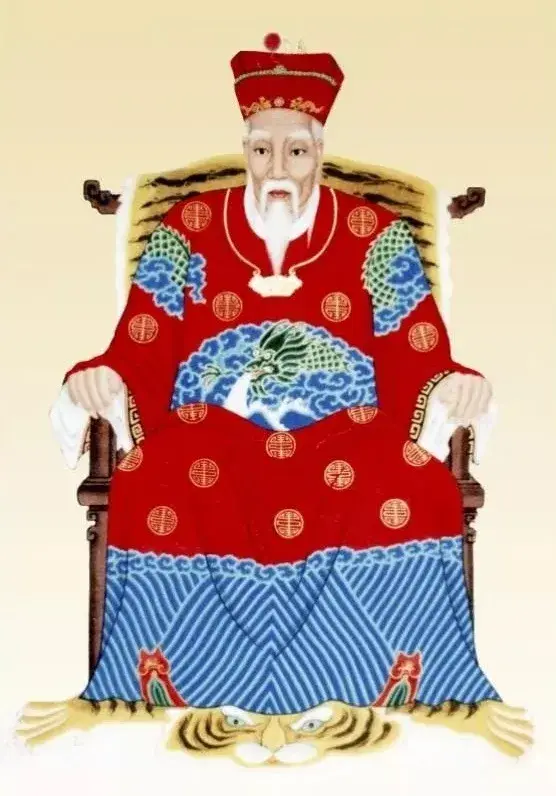
陈洪进
Chen Hongjin (陈洪进, 915–May 3, 986), courtesy name Jichuan, was a native of Fengting in Xianyou, Quanzhou (modern Xianyou, Fujian Province). He was a prominent military commander and warlord ruler of southern Fujian during the Five Dynasties and Ten Kingdoms period, serving as the final independent ruler of the Qingyuan Circuit (later renamed the Pinghai Army) and a founding meritorious statesman of the Northern Song Dynasty.…
Chen Hongjin (陈洪进, 915–May 3, 986), courtesy name Jichuan, was a native of Fengting in Xianyou, Quanzhou (modern Xianyou, Fujian Province). He was a prominent military commander and warlord ruler of southern Fujian during the Five Dynasties and Ten Kingdoms period, serving as the final independent ruler of the Qingyuan Circuit (later renamed the Pinghai Army) and a founding meritorious statesman of the Northern Song Dynasty. Rising from the provincial ranks through sheer tactical audacity and mastery of warfare, Chen gained widespread renown during the civil war of the Min Kingdom in 944. Following the regicide of King Wang Yanxi by rebel commander Zhu Wenjin, Chen was one of fifty-two elite commandos under Liu Congxiao who scaled the battlements of Quanzhou by night to execute the usurpative governor. He subsequently rode alone through enemy lines carrying the rebel's severed head to submit to Min Emperor Wang Yanzheng at Jianzhou. Throughout Liu Congxiao's fifteen-year independent rule over Quanzhou and Zhangzhou, Chen served as supreme military commander. Following Liu's death in 962, Chen swiftly deposed the vacillating heir Liu Shaozi, outmaneuvered co-regent Zhang Hansi, and assumed formal control of the Qingyuan Circuit in 963, governing southern Fujian autonomously for sixteen years. Recognizing the inexorable momentum of Song dynastic unification under Emperor Taizu, Chen bypassed his nominal suzerain Southern Tang to submit directly to the Song court, which reconstituted his domain as the Pinghai Army and confirmed him as military commissioner. Locally, Chen spearheaded vital land reclamation projects, constructing a twenty-league stone seawall (celebrated in history as the "Chen Dike") to convert coastal tidal mudflats into fertile paddy fields, renovating the Jiedu Canal for irrigation, and vigorously fostering maritime foreign trade through Quanzhou's Zaiton port. Following the destruction of Southern Tang, Chen traveled to Bianjing to pay personal homage to Emperor Taizong, formally presenting the land registers, fourteen counties, and eighteen thousand troops of Quanzhou and Zhangzhou to the Song in April 978. His bloodless surrender preserved civilian livelihoods and secured the southeastern seaboard for the empire. Rewarded with chancellor rank as Military Commissioner of Wuning and created Duke of Qi, he passed away in Bianjing in 986 at age seventy-two, receiving the posthumous title of Director of the Secretariat and the honorific "Zhongshun."
Born into a military lineage in Fengting, Xianyou; excelled in classical literature and military strategy.
Joined Liu Congxiao's fifty-two commandos to scale the walls and execute usurpative governor Huang Shaopo.
Carried the rebel's head through thousands of enemy ambushers at Youxi; appointed Jianzhou Infantry and Cavalry Commander.
Returned to Quanzhou following the fall of Min; assisted Liu Congxiao in expelling Southern Tang troops, rising to Supreme Commander.
Liu Congxiao died; Chen deposed Liu Shaozi for secret ties with Wuyue, installing Zhang Hansi while holding executive command.
Foiled Zhang Hansi's banquet assassination plot through an earthquake omen; peacefully seized the seal to become Military Commissioner.
Bypassed Southern Tang to pledge tributary vassalage to Song; Emperor Taizu renamed the domain the Pinghai Army.
Built the twenty-league seawall (Chen Dike) to reclaim coastal land; renovated the Jiedu Canal and expanded maritime trade.
Following the fall of Southern Tang, traveled to the Song imperial capital to pay homage to Emperor Taizong, receiving lavish gifts.
Formally submitted the land registers of Quanzhou and Zhangzhou with fourteen counties and eighteen thousand troops; appointed Chancellor.
Accompanied Emperor Taizong on the Taiyuan campaign to crush Northern Han; ennobled as Duke of Qi as his clan relocated to the capital.
Advanced to Duke of Qi; granted exemption from routine daily dawn court audiences in honor of his advanced age.
Passed away peacefully at his Bianjing mansion on May 3 at age seventy-two; posthumously honored as Director of the Secretariat and titled "Zhongshun."
Chen Hongjin was born in 915 (Zhenming 1, Later Liang dynasty), receiving the courtesy name Jichuan. His ancestral roots lay in Linhuai (near modern Sihong, Jiangsu). During the late Tang dynasty, his great-grandfather entered Fujian as an imperial civil official, subsequently establishing the clan in Fengting within Xianyou County, Quanzhou. Reared in a family combining martial discipline and classical learning, young Chen demonstrated early vigor, reading classical histories and mastering ancient military treatises. Gifted with towering physical stature and exceptional tactical audacity, he was recruited as an elite provincial guard in Quanzhou. During the campaign to subdue Tingzhou, he displayed extraordinary valor by being the first warrior to scale the battlements, earning appointment as Vice Military Commissioner of Quanzhou.
In the mid-tenth century, the ruling Wang clan of the Min Kingdom disintegrated in fratricidal strife. In February 944 (Tiande 2), rebel commander Zhu Wenjin assassinated King Wang Yanxi in Fuzhou, usurping the throne and appointing his henchman Huang Shaopo as Prefect of Quanzhou. In Jianzhou, Wang Yanxi's brother Wang Yanzheng declared himself emperor, initiating full-scale war. Unwilling to submit to regicides, Quanzhou commander Liu Congxiao, alongside Wang Zhongshun and Dong Si'an, covertly organized a counter-rebellion to restore legitimate dynastic rule.
Recruiting fifty-two fearless warriors, including Chen Hongjin, Liu Congxiao launched a midnight assault. Under heavy rainfall, the commandos scaled the city ramparts with scaling hooks, infiltrated the headquarters, and executed Huang Shaopo. The insurgents installed Wang Yanzheng's nephew Wang Jixun as nominal prefect, with Liu Congxiao assuming military control and elevating Chen Hongjin to battalion commander for his valor.
Following the execution of Huang Shaopo, the Quanzhou leadership faced a perilous dilemma: Huang's severed head had to be delivered across hundreds of leagues of mountainous wilderness to Wang Yanzheng in Jianzhou to secure imperial recognition and reinforcements. However, the overland mountain passes through Youxi were fortified by thousands of Fuzhou garrison troops loyal to the usurper Zhu Wenjin. While others hesitated, Chen Hongjin volunteered to ride alone through hostile territory.
Reaching the narrow defiles of Youxi, Chen was encircled by thousands of fortified troops. Unflinching, he raised the severed head on his spear and shouted: "The usurper Zhu Wenjin has been executed by righteous soldiers! For whom are you offering your lives? I am delivering this traitor's head to Jianzhou to welcome our rightful sovereign! If you do not disperse immediately, imperial armies will crush you to dust!" Stunned by the sight of their commander's head and Chen's fierce resolve, the troops panicked and dispersed, while several junior officers defected to escort Chen to Jianzhou. An overjoyed Emperor Wang Yanzheng immediately promoted Chen to Infantry and Cavalry Commander of Jianzhou.
In 945, Southern Tang armies invaded Fujian, capturing Jianzhou and ending the Min Kingdom. Though Southern Tang claimed sovereignty, Wuyue captured Fuzhou, while Liu Congxiao seized Quanzhou and Zhangzhou, expelling Southern Tang garrisons following Tang defeats at Fuzhou. In 949 (Baoda 7), Southern Tang recognized reality, creating the Qingyuan Circuit and appointing Liu Congxiao as military commissioner. Throughout Liu's fifteen-year reign, Chen served as his primary field commander, directing operations against bandits and regional rivals, rising to Supreme Military Commander alongside Vice Commissioner Zhang Hansi.
In July 962 (Jianlong 3), Liu Congxiao died without biological sons, leaving his adoptive nephew Liu Shaozi as acting commissioner. Inexperienced and anxious, Liu Shaozi opened secret negotiations with Southern Tang's arch-rival, Wuyue. Recognizing that inviting Wuyue troops would trigger a devastating invasion from Southern Tang, Chen acted decisively, arresting Liu Shaozi on charges of treason and deporting him in a cage to Jinling.
To prevent civil strife, Chen declined immediate personal rule, promoting the veteran officer Zhang Hansi as titular commissioner while assuming executive control as vice commissioner. However, the aging Zhang Hansi grew deeply resentful of Chen's monopolization of civil and military affairs, plotting a palace coup with his sons to assassinate Chen.
In early 963, Zhang hosted a lavish banquet for senior commanders, stationing concealed halberdiers behind wall screens to murder Chen at a designated signal. Midway through the feast, an earthquake struck Quanzhou, causing roof beams to sway violently and masonry to collapse. A terrified co-conspirator, viewing the natural tremor as divine intervention protecting Chen, whispered the plot to him amidst the chaos. Feigning illness, Chen scaled the rear garden wall and escaped. His sons Chen Wenxian and Chen Wenhao, commanding the household guard, demanded permission to storm the palace, but Chen forbade bloodshed.
In April 963, Chen resolved the crisis bloodlessly. Wearing civilian robes and accompanied by only a few aides, he strode into Zhang's private chambers, ordered the guards to withdraw, and locked Zhang inside his room with a heavy padlock from his sleeve. Speaking through the door, Chen declared: "The entire military and citizenry demand that I assume command! It is time for you to hand over the seal and retire in peace!" Left without recourse, Zhang passed the golden seal through the window. Chen established Zhang in a suburban estate with lavish pensions, and Southern Tang monarch Li Yu formally recognized Chen as Military Commissioner of Qingyuan.
Ascending to supreme authority in southern Fujian, Chen perceived that the newly established Northern Song Dynasty under Emperor Taizu had already conquered Jingnan and Hunan, signaling the inevitable reunification of China. Demonstrating strategic prescience, Chen bypassed his nominal suzerain Southern Tang in late 963, dispatching his officer Wei Renji to Bianjing to pledge tributary vassalage to the Song throne.
Delighted by this spontaneous submission from the far southeastern coast, Emperor Taizu issued an imperial edict in 964 renaming the domain the "Pinghai Army," appointing Chen as Military Commissioner of Pinghai and Surveillance Commissioner of Quanzhou and Zhangzhou, granting him the honorific title "Meritorious Minister of Devoted Obedience." Southern Tang ruler Li Yu protested furiously, petitioning Taizu to punish Chen's betrayal, but Taizu shielded his new vassal, securing Chen's autonomous rule over southern Fujian for sixteen years.
Throughout his reign, Chen transformed the regional economy. Along the tidal mudflats southeast of Quanzhou, he directed the construction of a twenty-league stone seawall fitted with seven sluice gates to drain salt water and retain fresh river runoff, reclaiming thousands of fertile acres that became famous as the "Chen Dike" (Chen Dai). He donated private funds to renovate the Tang-dynasty Jiedu Canal, washing alkaline soils and converting barren coasts into productive rice paddies. Furthermore, he encouraged international maritime commerce, welcoming merchant fleets from Persia, Arabia, and Southeast Asia to Quanzhou's Zaiton harbor, laying the economic foundation for its emergence as medieval Asia's premier emporium.
However, to maintain tributary diplomacy and appease the Song court, Chen dispatched lavish annual tributes of camphor, ivory, pearls, and gold to Bianjing, imposing heavy land taxes and requiring wealthy families to purchase official exemptions, creating significant fiscal burdens for the local populace.
In November 975 (Kaibao 8), Song imperial armies captured Jinling, extinguishing Southern Tang. Independent territory south of the Yangtze was reduced to Wuyue in Zhejiang and Chen's Pinghai Army in southern Fujian. When King Qian Chu of Wuyue traveled to Bianjing to pay homage in 976, Chen recognized that autonomous warlordism had reached its historical conclusion. In July 976, he requested permission to travel to court, but paused at Nanjianzhou upon receiving news of Emperor Taizu's sudden demise, returning to Quanzhou to hold funeral rites.
Emperor Taizong ascended the throne, promoting Chen to Grand Preceptor and summoning him to court. In 977 (Taiping Xingguo 2), Chen embarked from Quanzhou with his eldest son, arriving in Bianjing where Taizong received him with magnificent pageantry, presenting him with ten million cash, ten thousand ounces of silver, and ten thousand bolts of silk.
Realizing that dynastic unification was irreversible, Chen acted decisively ahead of Wuyue. In April 978, he submitted his famous Memorial Presenting the Two Commanderies of Zhang and Quan, surrendering the entire territory of Quanzhou and Zhangzhou, covering fourteen counties, 151,978 registered households, and 18,727 regular soldiers to the Song empire. Taizong lauded his foresight, appointing him Military Commissioner of Wuning with concurrent chancellor rank, allowing him to reside in the capital as a grand dignitary. Chen's bloodless surrender unified southern Fujian without warfare, integrating the southeastern coast directly into the centralized Song administration.
In 979, Chen accompanied Emperor Taizong on the imperial campaign against Taiyuan, witnessing the conquest of Northern Han. To dismantle regional military factions, the Song court relocated Chen's sons and clan members from Quanzhou to metropolitan assignments, pacifying an agrarian uprising led by Lin Jiyi in southern Fujian.
In 981, Chen was ennobled as Duke of Qi, and in 984 advanced to Duke of Qi. Living in wealth and comfort in Bianjing, he repeatedly submitted memorials requesting retirement due to advanced age. Seeking to honor an exemplary former ruler who had surrendered his realm peacefully, Emperor Taizong refused his resignation, granting him special exemption from routine dawn audiences while preserving his full honors.
On May 3, 986 (Yongxi 3), Chen Hongjin passed away peacefully at his Bianjing residence at the age of seventy-two. Emperor Taizong suspended court audiences for two days in mourning, posthumously promoting him to Director of the Secretariat and conferring the posthumous title "Zhongshun" (Loyal and Compliant), dispatching palace eunuchs to oversee the imperial funeral. His sons Chen Wenxian, Chen Wenhao, and Chen Wenyi served as imperial prefects and palace guard generals, establishing the Chen clan as a prominent Song gentry lineage.
Chen Hongjin achieved early historical fame through his decisive role in overthrowing the usurper Zhu Wenjin in 944. Joining Liu Congxiao's daring group of fifty-two commandos, he scaled the battlements of Quanzhou at night to execute the rebel governor.
Subsequently, when regional commanders were paralyzed by fear, Chen rode alone through enemy mountain garrisons at Youxi with the severed head, using psychological intimidation to disperse thousands of hostile troops and deliver the victory to Emperor Wang Yanzheng, exemplifying extraordinary courage and audacity.
From his bloodless acquisition of the commissioner's seal in 963 until his surrender in 978, Chen governed Quanzhou and Zhangzhou autonomously for sixteen years. During a period of widespread military devastation across the Five Dynasties, southern Fujian remained free from major invasions under his leadership.
Through adroit diplomatic maneuvering between Southern Tang and the rising Song Dynasty, he maintained local peace, safeguarding civilian livelihoods and fostering societal stability.
Chen's tenure was characterized by transformative public works that permanently shaped Fujian's agrarian and commercial topography. Along the Jin River estuary, he constructed the twenty-league stone seawall equipped with seven sluice gates, pioneering large-scale tidal land reclamation. The resulting thousands of fertile acres, commemorated as the "Chen Dike" (Chen Dai), became a major grain basket for southern Fujian.
He renovated the Jiedu Canal to flush saline soils, converting coastal mudflats into productive fields. Furthermore, he vigorously protected foreign merchant shipping, welcoming merchant vessels from across the Indian Ocean to Quanzhou's Zaiton harbor, laying the essential maritime foundation for its subsequent golden age as the starting point of the Maritime Silk Road.
Chen's greatest historical contribution was his voluntary surrender of southern Fujian to the Song Dynasty in 978. Recognizing the historical trend toward dynastic unity, he surrendered two prefectures, fourteen counties, and nearly twenty thousand troops without a single casualty.
His selfless submission spared the people of southern Fujian the horrors of war and enabled the Song Dynasty to secure its southeastern maritime frontier peacefully, representing a milestone in the consolidation of the unified Chinese state.
FIGURES ASSOCIATED WITH THIS DYNASTY