Birth and Early Study
Born in Boping, Bozhou, and studied the Five Classics from childhood under the local Confucian scholar Wang Che
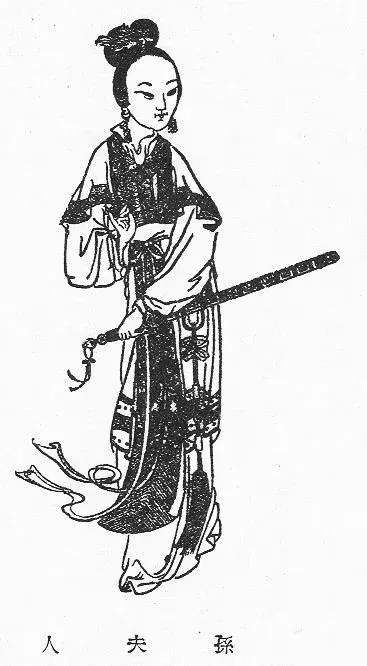
孙奭
Sun Shi (孙奭, 962–1033), courtesy name Zonggu, a native of Boping in Bozhou (modern Boping Town, Chiping District, Liaocheng City, Shandong Province) who later settled in Xucheng, Yunzhou (modern Dongping County, Tai'an City, Shandong Province), was a prominent early Northern Song Confucian statesman, classical scholar, and educator. In his youth, Sun Shi studied the Five Classics under the local scholar Wang Che; following…
Sun Shi (孙奭, 962–1033), courtesy name Zonggu, a native of Boping in Bozhou (modern Boping Town, Chiping District, Liaocheng City, Shandong Province) who later settled in Xucheng, Yunzhou (modern Dongping County, Tai'an City, Shandong Province), was a prominent early Northern Song Confucian statesman, classical scholar, and educator. In his youth, Sun Shi studied the Five Classics under the local scholar Wang Che; following Wang Che's death, he succeeded to the instruction of several hundred of his master's disciples, opening a private academy in his hometown at the age of eighteen. In the second year of the Duangong era (989) under Emperor Taizong of Song, he passed the imperial examination in the Nine Classics category and was initially appointed Assistant Magistrate of Ju County, soon rising upon his own petition to Judicial Investigator of the Court of Judicial Review and Lecturer of the Directorate of Education, where Emperor Taizong personally attended his lecture on the Book of Documents (Shangshu) and rewarded him with crimson robes. Under Emperor Zhenzong, he served as Administrator of the Court of Imperial Sacrifices, the Directorate of Education, and the Court of Agricultural Supervision, advancing to Director of the Ministry of Works and Academician-in-Waiting of the Longtu Pavilion. From the Dazhong Xiangfu through the Tianxi eras, when Emperor Zhenzong and courtiers such as Wang Qinruo and Ding Wei staged the fabrication of "Heavenly Texts," the Feng and Shan sacrifices at Mount Tai, the western sacrifice at Fenyin, and the reception of Zhu Neng's forged "Qianyou Heavenly Text," Sun Shi repeatedly submitted forthright memorials regardless of personal danger, citing Confucius's dictum "Does Heaven speak?" and the precedent of Emperor Wu of Han executing General Wencheng to denounce these extravagant superstitions. After Emperor Renzong ascended the throne, Sun Shi was appointed Hanlin Reader-in-Waiting Academician and Academician of the Longtu Pavilion, lecturing at the imperial classics mat for nearly ten years, presenting an illustrated screen of the "Against Luxurious Ease" (Wuyi Tu) chapter to the young emperor, and rising to Minister of Works and Minister of Rites before retiring as Junior Mentor of the Crown Prince. He died in the second year of the Mingdao era (1033) at the age of seventy-two sui, receiving the posthumous title Left Vice Director of the Department of State Affairs and the posthumous name "Xuan." A master of classical exegesis, he supervised the compilation of the Pronunciation and Meaning of the Mencius (Mengzi Yinyi), is traditionally credited with the subcommentary in the Commentaries and Subcommentaries on the Mencius (Mengzi Zhushu) of the Thirteen Classics, and authored the fifty-scroll Subtle Words of the Classics (Jingdian Weiyan).
Born in Boping, Bozhou, and studied the Five Classics from childhood under the local Confucian scholar Wang Che
Following his teacher Wang Che's death, the eighteen-year-old Sun Shi opened a private school in his hometown, instructing hundreds of Wang's former students
Passed the imperial exam in the Nine Classics, appointed Assistant Magistrate of Ju County, petitioned to teach at the capital, and became Lecturer of the Directorate of Education, lecturing before Emperor Taizong
Served in the Ritual Academy of the Court of Imperial Sacrifices, Directorate of Education, and Court of Agricultural Supervision; promoted to Director of the Ministry of Works, Academician-in-Waiting of the Longtu Pavilion, and Reader to the Imperial Princes
When Emperor Zhenzong prepared to welcome the "Heavenly Text" at the Left Chengtian Gate and perform the Fengshan sacrifices at Mount Tai, Sun Shi objected by citing Confucius's words "Does Heaven speak? How could there be a written text?"
Amid severe drought around the capital, submitted multiple memorials opposing Zhenzong's journey to sacrifice at Fenyin, criticizing ceaseless construction and the pursuit of empty fame
Appointed Prefect of Mizhou after requesting leave to care for his aged father; recalled two years later as Left Policy Critic-Advisor and co-compiler of the Veritable Records of Emperor Zhenzong
When patrol inspector Zhu Neng forged the "Qianyou Heavenly Text," Sun Shi cited Emperor Wu of Han's execution of General Wencheng to denounce the fraud and submitted four policy proposals on heeding remonstrance and lightening corvée
Summoned by Emperor Renzong as Hanlin Reader-in-Waiting Academician, presented the Illustrations of Against Luxurious Ease (Wuyi Tu) for the lecture hall, and advanced to Vice Minister of War and Academician of the Longtu Pavilion
Rose to Minister of Rites and retired as Junior Mentor of the Crown Prince; died the same year at age seventy-two sui, honored with a one-day suspension of court, the posthumous title Left Vice Director, and the posthumous name "Xuan"
Sun Shi, courtesy name Zonggu, was originally from Boping County in Bozhou (modern Boping Town, Chiping District, Liaocheng City, Shandong Province) and later moved with his family to Xucheng in Yunzhou (modern Dongping County, Tai'an City, Shandong Province). Gifted and studious from youth, he apprenticed himself to the noted local Confucian scholar Wang Che, systematically mastering the principles of the Five Classics and surpassing all of his peers. In the fourth year of the Taiping Xingguo era (979) under Emperor Taizong of Song, when Wang Che passed away, several hundred students who had studied under Wang Che admired Sun Shi's classical erudition and turned to the eighteen-year-old Sun Shi as their new teacher. Opening a private academy in his hometown, Sun Shi provided thorough, lucid answers to every textual question posed by his students, earning widespread renown across the Confucian circles of Shandong.
In the second year of the Duangong era (989), Sun Shi traveled to the capital for the civil service examination, passing in the "Nine Classics" (Jiujing) category and receiving an initial appointment as Assistant Magistrate of Ju County (modern Ju County, Rizhao City, Shandong Province). Before taking up his local post, Sun Shi submitted a memorial to Emperor Taizong requesting an academic teaching position at the Directorate of Education, and was promptly promoted to Judicial Investigator of the Court of Judicial Review and Lecturer of the Directorate of Education. In the fifth year of the Chunhua era (994), Emperor Taizong personally visited the Directorate of Education to hear Sun Shi lecture on the "Charge to Yue" (Shuoming) chapter of the Book of Documents (Shangshu). When lecturing on the passage "To govern without modeling oneself on antiquity and yet perpetuate one's rule is something Yue has never heard of," Sun Shi expounded its political lessons with resonant delivery and incisive reasoning; deeply impressed, Emperor Taizong praised his exposition and bestowed upon him fifth-rank crimson robes, a silver fish tally bag, and bundles of silk on the spot.
During the Xianping era of Emperor Zhenzong's reign, Sun Shi served as Reader-in-Waiting to the Imperial Princes while concurrently administering the Ritual Academy of the Court of Imperial Sacrifices, the Directorate of Education, and the Court of Agricultural Supervision, subsequently advancing to Director of the Ministry of Works and Academician-in-Waiting of the Longtu Pavilion. Upright and uncompromising by nature, he refused to flatter those in power. In the first year of the Dazhong Xiangfu era (1008), when Wang Qinruo and others fabricated the so-called "Heavenly Text" descending upon the Left Chengtian Gate, Emperor Zhenzong intended to go in person to welcome it and consulted Chief Councilor Wang Dan, who obsequiously hailed it as an auspicious response to imperial virtue. When Zhenzong asked Sun Shi, however, Sun Shi replied forthrightly: "Your foolish subject has only heard Confucius say, 'Does Heaven speak?' How could Heaven possibly send down a written letter?" Although Emperor Zhenzong did not heed his advice, he did not punish him. Later that year, when another "Heavenly Text" was reported on Mount Tai and Wang Qinruo, Ding Wei, and Du Hao urged the emperor to perform the Feng and Shan sacrifices, Sun Shi steadfastly upheld Confucian rationalism against the manipulation of fabricated omens.
In the fourth year of the Dazhong Xiangfu era (1011; some popular accounts give 1012), Emperor Zhenzong resolved to journey west to Hezhong Prefecture to sacrifice to Sovereign Earth at Fenyin. At that time, the capital and surrounding commanderies were suffering from a severe drought, grain prices had soared, and the populace was in distress. Sun Shi submitted an impassioned memorial raising sixteen pointed questions, warning that state construction projects had continued unabated for years while floods and droughts left the people struggling to survive; for the emperor to disregard the security of the state and exhaust the treasury on a distant journey to Fenyin was merely to imitate Emperor Wu of Han and Emperor Xuanzong of Tang in carving stone inscriptions for empty posthumous fame. When Zhenzong still refused to cancel the journey, Sun Shi requested leave to return home to care for his aged father in protest. Declining to let him retire, Zhenzong appointed him Prefect of Mizhou; after governing Mizhou for two years, Sun Shi was recalled to court and promoted to Left Policy Critic-Advisor.
In the third year of the Tianxi era (1019), Zhu Neng, a patrol inspector in Yongxing Army, colluded with the eunuch Zhou Huaizheng to forge a so-called "Qianyou Heavenly Text" and present it to the throne, prompting Emperor Zhenzong to order court officials to go outside the capital gates to welcome and bow to it. Disregarding his own safety, Sun Shi stepped forward once again with a sharp memorial: "Zhu Neng is nothing more than a treacherous petty schemer who fabricates auspicious omens to deceive the court, yet Your Majesty credulously trusts his words and humbles imperial majesty to welcome and bow to it, causing grief from the ministers at court down to the common people! In the Han dynasty, General Wencheng (Shaoweng) fed a silk scroll into an ox's belly and claimed there was a miraculous book inside; when Emperor Wu of Han recognized his handwriting, he immediately executed General Wencheng to set the record straight. Today Zhu Neng's fraud is identical to that of General Wencheng, and I beg Your Majesty to enforce the law!" Soon afterward, when Zhenzong instructed Minister of Personnel Xiang Minzhong to solicit officials' views on current governance, Sun Shi submitted a memorial proposing four measures—heeding remonstrance, pardoning straightforward speech, lightening corvée labor, and reducing taxes—most of which the emperor adopted; several months later, Zhu Neng indeed rebelled and perished in defeat, vindicating Sun Shi's foresight.
In the first year of the Tiansheng era (1023) under Emperor Renzong, Sun Shi and Feng Yuan were summoned together as Hanlin Reader-in-Waiting Academicians to serve at the imperial classics mat (jingyan), instructing the young emperor in the Confucian classics. Whenever a lecture touched upon past rulers and ministers whose misrule and indulgence led to the ruin of their states, Sun Shi repeatedly drew analogies to offer earnest admonition; he also commissioned a handwritten screen of the Book of Documents chapter "Against Luxurious Ease" (Wuyi Tu) and presented it to Emperor Renzong, who had it hung in the lecture pavilion for daily reflection. Whenever the young emperor's attention wandered during a lecture, Sun Shi would immediately pause his reading and stand in respectful silence until Renzong regained focus and apologized. Over the following years, Sun Shi advanced successively to Vice Minister of War, Academician of the Longtu Pavilion, Minister of Works, and Minister of Rites.
In his final years, Sun Shi repeatedly petitioned to retire on account of old age; after three earnest memorials, Emperor Renzong reluctantly permitted him to retire as Junior Mentor of the Crown Prince and appointed his son Sun Yu as Acting Collator in the Palace Library so that he could attend his father at home. In the second year of the Mingdao era (1033), Sun Shi died of illness at his residence in Yunzhou at the age of seventy-two sui. Deeply grieved by the news, Emperor Renzong suspended court for one day, posthumously conferred upon him the office of Left Vice Director of the Department of State Affairs, and granted him the posthumous name "Xuan."
Serving across the reigns of Emperors Taizong, Zhenzong, and Renzong, Sun Shi devoted more than fifty years to Confucian education and textual scholarship. Selecting passages from the Five Classics most relevant to governance and statecraft, he compiled and presented the fifty-scroll Subtle Words of the Classics (Jingdian Weiyan), and also authored the Record of Reverent Sacrifices (Chongsi Lu), Illustrations to the Record of Music (Yueji Tu), Sectional Explanations of the Five Classics (Wujing Jiejie), and System of the Five Mourning Grades (Wufu Zhidu). By imperial command, he participated alongside Xing Bing and Du Hao in collating the Correct Meaning (Zhengyi) commentaries of the classics, emending textual errors in the Book of Documents, Analects, Classic of Filial Piety, and Erya as well as phonological glosses to the legal code, co-compiling the Veritable Records of Emperor Zhenzong, and directing the compilation of the two-scroll Pronunciation and Meaning of the Mencius (Mengzi Yinyi); the standard subcommentary to the Mencius (Mengzi Zhushu, annotated by Zhao Qi of Han and traditionally attributed to Sun Shi of Song) in the Commentaries and Subcommentaries on the Thirteen Classics (Shisanjing Zhushu) was transmitted under his name.
FIGURES ASSOCIATED WITH THIS DYNASTY