Birth in Sichuan
Born at Mount Ruiyun in Renshou County, Xianjing Directorate, Sichuan
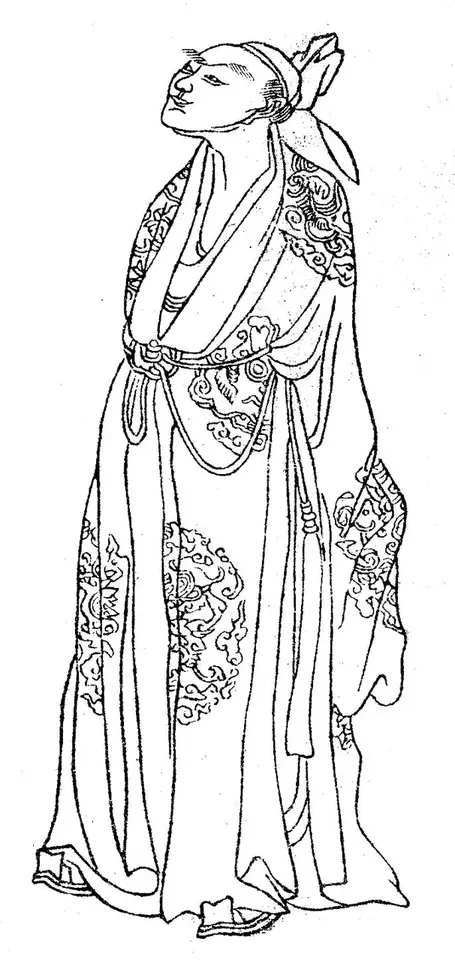
何栗
He Li (何栗, 1089–1127), courtesy name Wenzhen, recorded as He Zhuo in the History of Song, was a native of Renshou, Xianjing Directorate (modern Renshou County, Meishan, Sichuan Province) who served as a Principal Graduate and Chief Minister at the end of the Northern Song dynasty. In 1115 (Zhenghe 5), He Li passed the imperial examination in first place alongside his brothers He Tang and He Ju, subsequently serving as…
He Li (何栗, 1089–1127), courtesy name Wenzhen, recorded as He Zhuo in the History of Song, was a native of Renshou, Xianjing Directorate (modern Renshou County, Meishan, Sichuan Province) who served as a Principal Graduate and Chief Minister at the end of the Northern Song dynasty. In 1115 (Zhenghe 5), He Li passed the imperial examination in first place alongside his brothers He Tang and He Ju, subsequently serving as Collator in the Palace Library, Drafting Official of the Secretariat and Lecturer-in-Waiting, and Palace Censor-in-Chief. As Censor-in-Chief, he submitted seven consecutive memorials enumerating fifteen major crimes of the corrupt chief minister Wang Fu, bringing about the dismissal of Wang Fu and his partisans and winning nationwide renown for his uprightness. Following the accession of Emperor Qinzong, He Li rose through the posts of Right Assistant Director of the Department of State Affairs, Vice Director of the Secretariat, and Vice Director of the Chancellery, staunchly opposing the cession of the Three Garrisons (Taiyuan, Zhongshan, and Hejian) to the Jin Empire and proposing the creation of Four Circuit Commanders-in-Chief to rally relief armies. During the second Jin siege of Kaifeng in the eleventh month of 1126 (Jingkang 1), he was appointed Prefect of Kaifeng Prefecture and then replaced the peace-faction chancellor Tang Ke as Right Grand Councilor and Vice Director of the Secretariat, advising the emperor to commission Prince Kang Zhao Gou as Grand Marshal of Hebei. However, his fatal gullibility in entrusting the defense of the capital to the charlatan soldier Guo Jing and his "Six Jia Divine Soldiers" led to the fall of the outer city. Twice accompanying Emperor Qinzong into the Jin camp at Qingcheng, He Li fiercely opposed the Jin demand to depose the Zhao imperial house in the second month of 1127, was imprisoned in a pit, and starved himself to death while being taken north in captivity at the age of thirty-nine, receiving the posthumous honors of Commander Unequaled in Honor and Grand Academician under the Southern Song court.
Born at Mount Ruiyun in Renshou County, Xianjing Directorate, Sichuan
Ranked first in the palace examination (Zhuangyuan) alongside his brothers He Tang and He Ju, and was appointed Collator in the Palace Library
Rose to Intendant of Education in the Capital Circuit and Drafting Official of the Secretariat; sent out as Prefect of Suining after being accused of favoring Su Shi's teachings
Recalled as Palace Censor-in-Chief, submitted seven memorials listing fifteen crimes of Chief Minister Wang Fu to secure his dismissal, and was then sent out as Prefect of Taizhou
Recalled by Emperor Qinzong as Hanlin Academician, Right Assistant Director of State Affairs, and Vice Director of the Secretariat; opposed ceding the Three Garrisons and proposed the Four Circuit Commanders-in-Chief
Appointed Prefect of Kaifeng Prefecture in the eleventh month and Right Grand Councilor in the intercalary eleventh month, proposing Prince Kang Zhao Gou as Grand Marshal
Trusted the charlatan Guo Jing to sally out of Chenzhou Gate, resulting in the fall of the outer city; fought street battles at Nanxun Gate with Zhang Shuye and went to the Jin camp at Qingcheng
Accompanied Emperor Qinzong to Qingcheng in the first month, protested the deposition of the Song imperial house in the second month, and starved himself to death while being taken north in the fourth month
He Li was born in 1089 (Yuanyou 4 of Emperor Zhezong) at Mount Ruiyun in Renshou County, Xianjing Directorate. Gifted with a remarkable memory and broad literary learning from youth, he traveled to the capital Kaifeng in 1115 (Zhenghe 5 of Emperor Huizong) at the age of twenty-seven to sit for the imperial examinations together with his elder brother He Tang and younger brother He Ju. All three brothers passed on the same list, and He Li captured first place overall as Principal Graduate (Zhuangyuan). He was initially appointed Collator in the Palace Library, advanced the following year to Intendant of Education in the Capital Circuit, and subsequently served as Vice Director of the Bureau of Receptions, Imperial Diarist, and Drafting Official of the Secretariat concurrently Serving as Lecturer-in-Waiting. Impressed by his erudition and outspoken candor, Emperor Huizong intended to promote him to a remonstrance post, but detractors at court slandered him as a fellow Sichuan native and intellectual follower of Su Shi. He Li was consequently sent out to serve as Prefect of Suining Prefecture, where his capable administration soon earned his recall to the capital as Palace Censor-in-Chief, head of the Censorate.
As Palace Censor-in-Chief, He Li discharged his duties with fearless integrity. At that time, Grand Councilor Wang Fu had succeeded Cai Jing at the helm of government, deceiving the emperor above while forming corrupt cliques and plundering the populace below, earning universal revulsion as one of the notorious "Six Traitors" of late Northern Song. In 1124 (Xuanhe 6), He Li boldly submitted an impeachment memorial enumerating fifteen major offenses committed by Wang Fu, following up with seven consecutive memorials that relentlessly exposed his malfeasance. Emperor Huizong was ultimately compelled to strip Wang Fu of the chancellorship and dismiss his core partisans Hu Songnian and Hu Yi. Because his campaign offended powerful court factions, He Li was again sent out of the capital as Academician-in-Waiting of the Huiyou Pavilion and Prefect of Taizhou in Shandong, yet his reputation for unyielding rectitude spread throughout the empire.
In the twelfth month of 1125 (Xuanhe 7), as Jin armies invaded southward in two columns toward Kaifeng, a panicked Emperor Huizong abdicated in favor of Crown Prince Zhao Huan (Emperor Qinzong), who inaugurated the Jingkang era and immediately recalled He Li to serve as Palace Censor-in-Chief. In the first month of 1126 (Jingkang 1), He Li was rapidly promoted to Hanlin Academician, Right Assistant Director of the Department of State Affairs concurrently Serving as Vice Director of the Secretariat, and then Vice Director of the Chancellery, entering the inner council of state. When the eastern Jin army approached Kaifeng, Emperor Qinzong dispatched He Li to the Jin camp for negotiations. Confronting the Jin demand for the cession of the Three Garrisons—Taiyuan, Zhongshan (modern Dingzhou, Hebei), and Hejian—comprising over twenty prefectures and counties alongside massive indemnities of gold, silver, cattle, horses, and silk, He Li staunchly refused.
Returning to court, He Li argued forcefully against ceding the Three Garrisons, declaring: "The Three Garrisons are the very foundation of the state; how can they be given away? Moreover, the Jin are treacherous and unpredictable—what guarantee is there that they will keep their word? Whether we cede the land or not, they will come all the same." He further petitioned for the establishment of Four Circuit Commands—north, south, east, and west—headed respectively by Hu Zhiru, Wang Xiang, Zhao Ye, and Zhang Shuye, each vested with autonomous authority to report directly to the throne, appoint and dismiss officials, reward and punish troops, and requisition funds so as to lead relief armies to defend the capital. Although Emperor Qinzong approved the plan in principle, obstruction by peace-faction ministers and the rapid deterioration of the military situation prevented its full implementation, and He Li briefly left the council over policy disputes.
On the seventeenth day of the eleventh month of 1126 (Jingkang 1), as the combined Jin armies of Wanyan Zonghan and Wanyan Zongwang besieged Kaifeng for a second time, Emperor Qinzong recalled He Li as Grand Academician of the Zizheng Hall and Prefect of Kaifeng Prefecture—the eighth official to hold the capital prefecture since the start of the year. On the twenty-fifth day of the eleventh month, when the peace-faction chancellor Tang Ke urged the emperor to abandon Kaifeng and flee west to Chang'an, He Li vehemently objected. On the first day of the intercalary eleventh month, Emperor Qinzong dismissed Tang Ke and appointed He Li as Right Grand Councilor and Vice Director of the Secretariat (Chief Minister). On the tenth day of the intercalary eleventh month, acting on the joint advice of Palace Censor Hu Tanglao and Chief Minister He Li, Emperor Qinzong appointed his younger brother Prince Kang Zhao Gou as Grand Marshal of Troops and Horses in Hebei, with Wang Boyan and Zong Ze as Deputy Marshals, ordering them to rally northern forces to relieve the capital—a commission that subsequently provided the legal foundation for the establishment of the Southern Song dynasty.
In conducting the military defense of Kaifeng, however, He Li lacked practical command experience. Together with Co-Administrator of the Bureau of Military Affairs Sun Fu, he placed blind faith in Guo Jing, a veteran palace guard soldier who claimed mastery of Daoist "Six Jia" sorcery and boasted that he could capture the two Jin commanders alive using 7,777 street recruits selected by their birth dates as "Six Jia Divine Soldiers." On the twenty-fifth day of the intercalary eleventh month of 1126, at dawn, He Li ordered Chenzhou Gate opened for Guo Jing, who sent away the regular wall defenders and led his seven thousand untrained recruits out to battle. Routed instantly by the Jin cavalry, Guo Jing fled southward under the pretext of descending the wall to perform rituals, while the Jin troops swarmed over theundefended ramparts. As the outer city fell by midday and Jin soldiers set fires, He Li and Signatory Official of the Bureau of Military Affairs Zhang Shuye rallied capital residents to fight fierce street battles around Nanxun Gate until the Jin commanders agreed to halt the assault and open truce talks.
At dawn on the twenty-sixth day of the intercalary eleventh month, Emperor Qinzong ordered He Li to proceed to the Jin headquarters at Qingcheng south of the capital to negotiate peace. Terrified by his responsibility for the failed defense, He Li hesitated until Vice Minister of Personnel Li Ruoshui angrily rebuked him; trembling as he mounted his horse, He Li dropped his whip three times after exiting Zhuque Gate. Brought before the Jin Left Vice Marshal Wanyan Zonghan (Nianhan) after being searched three times, He Li prostrated himself and acknowledged that he had advised the Song emperor to resist, declaring: "I possess no military craft, yet for the sake of my country and people I could do no less." When Wanyan Zonghan threatened to massacre the city, He Li calmly replied: "Leading troops to massacre a city displays a marshal's momentary might; cherishing the people and bestowing virtue establishes a marshal's eternal grace." Wanyan Zonghan relented from sacking the city and demanded that the Retired Emperor Huizong or Emperor Qinzong come in person to the Jin camp. Returning to the palace on the twenty-seventh day, He Li suppressed a disturbance at Xiangxi Hall where imperial guard officers Jiang Xuan and Li Fu attempted to force Emperor Qinzong to break out of the city, ordering Commander Zuo Yan to execute the ringleaders lest the mutiny provoke a Jin massacre. He then accompanied Emperor Qinzong to Qingcheng to submit the instrument of surrender and returned to the city mistakenly convinced that peace had been secured.
On the eighth day of the first month of 1127 (Jingkang 2), He Li went to the Jin camp to request a reduction in the demandedrequisitions of gold and silver, only to be rebuffed. When Jin envoys demanded that Emperor Qinzong return to the Jin camp for further deliberations, He Li urged the reluctant emperor to go out, and on the tenth day of the first month accompanied Qinzong back to Qingcheng, where both sovereign and minister were detained. Filled with remorse during his captivity at Qingcheng, He Li composed a quatrain expressing his grief: "Thought after thought reaches back to past kalpas; lingering spirits return to old souls. In human life death must come at last, leaving boundless regret across heaven and earth." On the sixth day of the second month, when Wanyan Zonghan summoned Song officials to announce the deposition of Emperors Huizong and Qinzong and the installation of a ruler of a different surname, Li Ruoshui died cursing the enemy, while He Li prostrated himself to protest vehemently against abolishing the Zhao imperial house. Enraged, Wanyan Zonghan had He Li's head shaved and threw him into an earthen pit for several days before installing Zhang Bangchang as ruler of the puppet state of Chu. On the first day of the fourth month of 1127, as the Jin army withdrew northward with the two emperors and over three thousand imperial kinsmen and officials, He Li refused all food and starved himself to death on the journey north at the age of thirty-nine. When Qin Hui returned to the south in 1130 (Jianyan 4) and reported the full account of He Li's defiance and martyrdom, Emperor Gaozong posthumously conferred upon him the titles of Commander Unequaled in Honor and Grand Academician.
FIGURES ASSOCIATED WITH THIS DYNASTY