Birth into Jiangxi Official Household
Born in Hongzhou, his father Song Cheng serving as vice military commissioner; devoted his youth to classical prose and statecraft treatises.
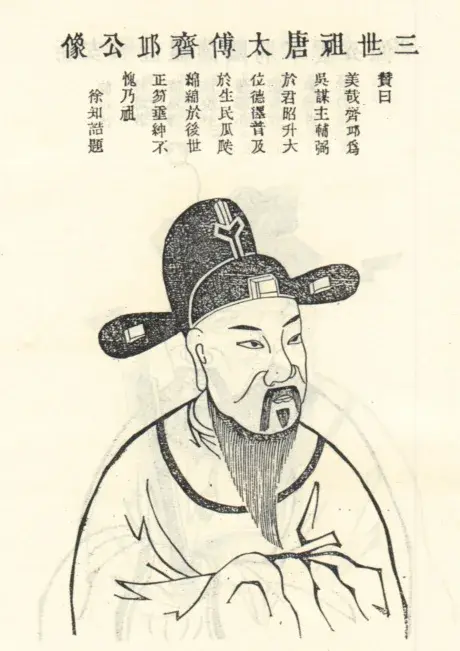
宋齐丘
Song Qiqiu (宋齐丘, 887–959), courtesy names Zhaohui (昭回) and Zisong (子嵩), styled Master Jiuhua (九华先生), was a native of Yuzhang (豫章, present-day Nanchang, Jiangxi Province) with ancestral roots in Luling, and was a prominent statesman, high minister of the Wu Kingdom, and the founding chief strategist and chancellor of the Southern Tang Dynasty during the Five Dynasties and Ten Kingdoms period. Born into an official household…
Song Qiqiu (宋齐丘, 887–959), courtesy names Zhaohui (昭回) and Zisong (子嵩), styled Master Jiuhua (九华先生), was a native of Yuzhang (豫章, present-day Nanchang, Jiangxi Province) with ancestral roots in Luling, and was a prominent statesman, high minister of the Wu Kingdom, and the founding chief strategist and chancellor of the Southern Tang Dynasty during the Five Dynasties and Ten Kingdoms period. Born into an official household that fell into poverty during the turbulent late Tang, Song wandered to Jianghuai and sought patronage under Xu Zhigao, then the prefectural governor of Shengzhou and later Emperor Liezu of Southern Tang. Becoming Xu's principal confidential advisor, Song devised strategic policies to recruit scholar-officials, promote agriculture, and drill elite troops, laying the foundational strength for Xu's hegemony in the south. Throughout the intense political struggles within the Wu Kingdom, Song repeatedly provided pivotal stratagems that enabled Xu Zhigao to replace Xu Zhixun as supreme regent at Guangling. During the transition from the Wu Kingdom to the Southern Tang, Song experienced temporary estrangement due to tactical differences over the timing of dynastic abdication and enthronement rituals. Nevertheless, his extraordinary administrative abilities ensured his swift restoration to paramount power, serving successively as Vice Director of the Right, Chief Councilor, and Left Grand Councilor in charge of the Department of State Affairs. In the economic realm, he instituted pioneering tax reforms by artificially elevating state evaluation prices for textile tributes in lieu of cash taxes, abolished head taxes on adults, and rewarded land reclamation, which spurred extensive agrarian recovery and established Southern Tang as the wealthiest realm of its era. Under Emperor Zhongzu, Song Qiqiu was elevated to Grand Protector, Grand Tutor, Grand Preceptor, and Director of the Secretariat, receiving the titles Duke of Wei and Duke of Chu, honored as the Elder of the State. However, in his later years, his stubborn arrogance and involvement in virulent factionalism caused widespread administrative turmoil. Aligning with Chen Jue, Li Zhenggu, and Feng Yanji, his faction ousted upright officials and suffered severe military catastrophes, most notably in the disastrous Fuzhou campaign. When Emperor Shizong of Later Zhou invaded Huai River territories, Song's defensive advice proved flawed, and his partisans exploited imperial desperation to demand Song's regency. Infuriated by this usurpation attempt, Emperor Zhongzu stripped him of all offices and banished him to Mount Jiuhua under wall-enclosed imprisonment, where he hanged himself in 959, receiving the posthumous title Choumou.
Born in Hongzhou, his father Song Cheng serving as vice military commissioner; devoted his youth to classical prose and statecraft treatises.
After Zhong Chuan died and Wu annexed Hongzhou, he relocated to Guangling in extreme destitution, eventually joining the retinue of cavalry commander Yao Kezhan.
Recommended to Xu Zhigao at Shengzhou, presenting a poem at Phoenix Terrace that deeply impressed Xu, who appointed him judicial investigator and chief advisor.
Advised Xu Zhigao to willingly relocate his garrison to Runzhou while awaiting turmoil in Guangling; Xu Zhixun was assassinated the following year, enabling Xu Zhigao to assume power.
Persuaded Xu Zhigao to delay his petition to retire; following Xu Wen's sudden death, Xu Zhigao consolidated supreme power, and Song was promoted to vice minister of war.
Retired temporarily to Mount Jiuhua to cultivate prestigious detachment, returning after repeated imperial summons to become Vice Director of the Right and Chief Councilor.
Opposed Zhou Zong's premature abdication schemes and refused to sign the enthronement petition; appointed Left Grand Councilor of Qi and Minister of Works upon dynastic founding.
Advised the transfer of the former Wu monarch Yang Pu to Runzhou to quell loyalist sentiments, regaining imperial favor to become Chief Councilor.
Headed the Department of State Affairs but fell into disgrace after pardoning his corrupt clerk Xia Changtu; resigned and was dispatched as Military Commissioner of Zhennan.
Appointed Grand Protector and Director of the Secretariat; banished to Runzhou after his faction smeared Zhou Zong, subsequently retiring to Mount Jiuhua as Duke of Qingyang.
Summoned back to Jinling through Prince Li Jingda's intervention, serving as Grand Tutor and Director of the Secretariat, receiving the noble title Duke of Wei.
Appointed Grand Preceptor and Duke of Chu to confront Later Zhou armies under Chai Rong, advocating strategic defense along the Huai River and rejecting territorial cession.
Chen Jue and partisans attempted to force Emperor Zhongzu into seclusion to make Song regent; exposed by returning envoy Zhong Mo, Song was stripped of rank and exiled to Qingyang.
Committed suicide by hanging within his walled enclosure at Qingyang at age seventy-three; granted the derogatory posthumous title Choumou, with his descendants pardoned under Li Yu.
Song Qiqiu was born in 887 during the reign of Emperor Xizong of Tang into an official household residing in Hongzhou, tracing his ancestral lineage to Luling. His father, Song Cheng, had joined Zhong Chuan in carving out regional autonomy in Jiangxi during the chaotic late Tang, rising to the post of vice military commissioner of the Zhennan Army. Following his father's premature death, the family fortune disintegrated, plunging the young Song Qiqiu into severe poverty. Endowed with acute intellect and towering ambition, he immersed himself in classical literature, statecraft, and the strategies of the ancient School of Diplomacy.
In 906, Military Commissioner Zhong Chuan passed away, and his son Zhong Kuangshi assumed control amid internal turmoil. The Wu Kingdom in Huai'nan exploited the crisis to annex Hongzhou, capturing Zhong Kuangshi and thousands of followers, who were escorted eastward to the Wu capital of Guangling. Song Qiqiu joined this displaced throng, arriving in Yangzhou without financial resources and relying on the charity of a courtesan household surnamed Wei. Seeking advancement, he composed an impassioned petition to Yao Kezhan, an influential cavalry commander in Huai'nan. Moved by Song's earnestness and literary talent, Yao took him into his household as a private guest.
In 912, Xu Zhigao, the adopted son of Wu regent Xu Wen, was appointed prefectural governor of Shengzhou. Knowing Xu Zhigao's eagerness to assemble talented men, Yao Kezhan recommended Song Qiqiu to his service. During an excursion to the scenic Phoenix Terrace outside Shengzhou, Song composed and presented a poem articulating his lofty political ideals. Deeply astonished by Song's vision, Xu Zhigao treated him with the highest courtesies accorded to an eminent scholar of state, commissioning him as a judicial investigator in his military staff alongside Wang Lingmou and Wang Hong.
Song Qiqiu submitted a comprehensive blueprint to govern Shengzhou. He urged Xu Zhigao to recruit displaced scholars from the north, establish prefecture-level academies to revitalize Confucian rites, enforce rigorous military discipline, and implement generous agricultural policies to reduce peasant labor burdens. Xu Zhigao embraced Song's recommendations entirely. Within a few years, granaries in Shengzhou overflowed with reserves, city fortifications were reinforced, and the garrison became a formidable fighting force, transforming Shengzhou into the most prosperous stronghold in southern China.
In 917, Supreme Regent Xu Wen toured Shengzhou, admiring its unparalleled affluence, and decided to move his regional headquarters to Jinling while ordering Xu Zhigao to assume the command of Runzhou. Disappointed by this transfer, Xu Zhigao sought assignment to Xuanzhou instead. Song Qiqiu privately intervened, advising Xu Zhigao that Xu Wen's arrogant eldest son, Xu Zhixun, who held court in Guangling, was bound to provoke his own ruin soon. Runzhou lay directly across the Yangtze from Guangling; should a crisis erupt, Xu Zhigao could cross the river immediately and seize control of the capital.
Persuaded by Song's foresight, Xu Zhigao took up his post in Runzhou. In the summer of 918, Xu Zhixun was assassinated in Guangling by Vice Commander Zhu Jin. Seeing the flames across the river, Xu Zhigao mobilized his forces, crossed the Yangtze overnight, suppressed the disorder, and then prudently yielded military command upon Xu Wen's arrival. Lacking capable elder sons, Xu Wen formally appointed Xu Zhigao to assume the supreme regency in Guangling. Song Qiqiu followed Xu Zhigao into the central court, assisting him in reforming harsh decrees, moderating taxes, and winning widespread popular acclaim.
To conduct secret deliberations, Xu Zhigao constructed a solitary pavilion in a lotus pond behind his headquarters, connected only by a removable drawbridge. Whenever they met, Xu and Song crossed into the pavilion, dismantled the bridge, and conferred into the deep night. During cold winters, they sat in an open hall without curtains around a single charcoal brazier, writing characters in the ashes with iron chopsticks and immediately erasing them. However, Xu Wen deeply distrusted Song's secretive nature and prevented his promotion, keeping him in the low post of military administrative assistant for a full decade.
In 927, when Xu Wen fell gravely ill, military advisor Xu Jie urged him to transfer supreme regency to his biological son Xu Zhixun. Alarmed, Xu Zhigao drafted a resignation petition requesting retirement to Jiangxi. Song Qiqiu urged him to delay submitting the memorial. That very night, news arrived that Xu Wen had died, allowing Xu Zhigao to solidify his hold over the Wu realm. Song was rapidly promoted to vice director of the right bureau, right censor, and vice minister of war, dominating central policymaking.
In 932, Xu Zhigao sought to elevate Song Qiqiu to chief councilor. Feigning modesty to build public acclaim, Song departed the capital under the pretext of burying his father in Hongzhou and secluded himself at Mount Jiuhua, repeatedly rebuffing imperial summons. Only after Xu Zhigao dispatched his eldest son, Xu Jingtong, to plead in person did Song return to Guangling, receiving appointment as Vice Director of the Right and Joint Manager of Affairs with the Secretariat-Chancellery.
As Xu Zhigao's authority peaked, dynastic transition became inevitable. Song Qiqiu, however, argued that Xu should await the death of the reigning Wu monarch Yang Pu before accepting the throne. In 934, court attendant Zhou Zong anticipated Xu's desire for the throne and approached Yang Pu to suggest abdication, informing Song afterward. Enraged that Zhou had usurped the honor of initiating the transition, Song detained Zhou with wine while sending an urgent midnight memorial opposing the abdication, and even rode to Jinling demanding Zhou's execution. Though Zhou was merely demoted, Xu Zhigao grew suspicious of Song's motives, relocating him to Jinling with ceremonial titles while barring him from state decisions.
In 937, Xu Zhigao established the Principality of Qi, appointing Song as Left Grand Councilor without executive authority. When Yang Pu abdicated and court officials signed the enthronement petition, Song feigned illness and refused to sign. Upon ascending the throne as Emperor Liezu of Southern Tang, Xu granted Song the empty honor of Minister of Works. Hearing the emperor mention their commoner friendship during the ceremony, Song insolently remarked that the emperor had merely been a prefect when they were commoners, storming out in anger. Seeking reconciliation, Song subsequently urged the emperor to demote Yang Pu to a marquis and confine him to Runzhou. In 938, Emperor Liezu reappointed Song as Chancellor and Chief Councilor.
In 942, Song requested charge of the Department of State Affairs, which Emperor Liezu granted while stipulating that Prince Li Jing join in all decisions. Soon after, Song's confidential clerk Xia Changtu embezzled six million coins. Song abused his authority to grant Xia a pardon, provoking Emperor Liezu to execute Xia immediately. Shamed by the reprimand, Song pleaded illness and withdrew from court. The emperor pacified him by granting him appointment as Military Commissioner of Zhennan, presenting him with an imperial brocade robe.
Arriving in Hongzhou, Song wore his brocade robe daily, renamed his ancestral neighborhood the Brocade Quarter, constructed lavish mansions, and forced local households to renovate their homes to match his grandeur, driving many families into flight. When Emperor Liezu died in 943, Emperor Zhongzu ascended the throne and recalled Song as Grand Protector and Director of the Secretariat. However, Song's partisans, including Chen Jue and Feng Yanji, known disparagingly as the Five Evils, waged ruthless factional attacks against upright elder statesman Zhou Zong. Disgusted by this factionalism, Emperor Zhongzu reassigned Song to Runzhou, whereupon Song petulantly requested permission to retire to Mount Jiuhua. The emperor granted his request, ennobling him as Duke of Qingyang.
In 946, through the lobbying of Prince Li Jingda, Emperor Zhongzu recalled Song Qiqiu to court, elevating him to Grand Tutor, Director of the Secretariat, and Duke of Wei, addressing him as the Elder of the State. Back in power, Song cultivated an extensive personal following.
When Southern Tang extinguished the Min Kingdom, the fortress of Fuzhou remained in the hands of warlord Li Renda. Song Qiqiu aggressively recommended his protégé Chen Jue to travel to Fuzhou, boasting that the city could be incorporated without shedding blood. Facing Li Renda's defiance, Chen retreated in humiliation, then forged an imperial decree mobilizing provincial armies to assault Fuzhou. The neighboring Wuyue Kingdom dispatched maritime reinforcements, resulting in a crushing rout of the Southern Tang forces, with tens of thousands slaughtered and imperial armories depleted.
Emperor Zhongzu sought to execute Chen Jue, but Song Qiqiu and Feng Yanji vehemently interceded, securing a minor demotion for Chen. When imperial historian Han Xizai submitted an indictment demanding Chen's execution and denouncing Song's faction for ruining the realm, Song retaliated by framing Han for drunken insolence and banishing him from the capital. Disgusted by Song's entrenched factional monopoly, Emperor Zhongzu dismissed him from central governance in 947, dispatching him to his third tenure at Hongzhou.
In the winter of 955, Emperor Shizong of Later Zhou launched a massive invasion of the Huai River region. Facing imminent collapse along the northern frontier, Emperor Zhongzu hastily recalled Song Qiqiu, appointing him Grand Preceptor and Duke of Chu. Song proposed mobilizing provincial garrisons along the Huai waterways under capable subordinate commanders, arguing that the northern troops would retreat once spring floods severed their supply lines. However, Emperor Zhongzu hesitated to implement this strategy systematically.
In 956, Later Zhou armies besieged the vital citadel of Shouzhou. Southern Tang peace envoy Li Deming returned from the northern camp, urging the complete cession of territories north of the Yangtze to save the southern realm. Song Qiqiu adamantly opposed territorial concessions and conspired with Chen Jue to accuse Li Deming of treason, prompting the emperor to execute Li. Later, when Emperor Shizong temporarily withdrew his main force due to torrential summer rains, Southern Tang commanders pleaded to ambush the retreating columns. Song intervened, arguing that attacking would deepen northern hostility, and ordered garrisons to let them pass, allowing the Zhou armies to consolidate at Zhengyang and seal the doom of Shouzhou.
By 958, Southern Tang was forced to surrender all fourteen prefectures north of the Yangtze, renounce the imperial title, and accept vassalage under Later Zhou. Exploiting the monarch's despair, Chen Jue and Li Zhenggu urged Emperor Zhongzu to retreat into palace seclusion and transfer full sovereign regency to Song Qiqiu. Aware that this proposal was orchestrated by Song, the emperor harbored intense resentment. When envoy Zhong Mo returned from Later Zhou, he sought vengeance for Li Deming by formally indicting Song Qiqiu and his partisans for conspiracy and treason, fabricating an imperial message from Emperor Shizong that peace required Song's death.
Emperor Zhongzu acted decisively, issuing an imperial proclamation denouncing Song for treason, executing Chen Jue and Li Zhenggu, and banishing Song to his estate in Qingyang. Imperial guards locked his gates and bored a single aperture through the wall to pass meager food rations. In the spring of 959, humiliated, starved, and desperate, Song Qiqiu hanged himself within his enclosure at the age of seventy-three. Before his death, he lamented that his suffering was karmic retribution for having once advised the starvation and confinement of the family of Yang Pu. The court bestowed the disparaging posthumous title Choumou upon him, though his surviving family received imperial pardons and sustenance under Emperor Li Yu in 961.
Throughout his early career as chief advisor to Xu Zhigao, Song Qiqiu exhibited profound grand strategic acumen. His governance in Shengzhou integrated the recruitment of northern scholars, educational revitalization, agricultural incentives, and rigorous military preparations, transforming the prefecture into the economic and military foundation of Xu's regime. Furthermore, his decisive advice prompting Xu Zhigao to garrison Runzhou positioned him perfectly to seize control of Guangling upon Xu Zhixun's fall, creating the structural framework for the eventual founding of the Southern Tang Dynasty.
Song Qiqiu displayed remarkable innovation in economic statecraft. In response to currency shortages and peasant exploitation caused by rigid cash taxes, Song instituted a comprehensive overhaul of rural taxation. He abolished head taxes on adult males, provided three years of state pensions to families of soldiers killed in action, and mandated the collection of land taxes in grain and silk fabrics. Most significantly, he instituted the practice of artificially valuing official tribute textiles at three to four times the prevailing market price, providing enormous incentives for rural farming and sericulture. Coupled with land grants and five-year tax exemptions for reclaiming wasteland, his policies revitalized the Jianghuai region, generating vast agrarian wealth celebrated by later Song dynasty historians.
During his tenure at the helm of administration, Song Qiqiu established the Guest Reception Pavilion in Guangling to recruit distinguished scholars who had fled chaotic warfare in northern China. Eminent figures such as Sun Sheng, Han Xizai, and Jiang Wenwei entered government service through his patronization. This substantial influx of administrative and literary talent elevated the cultural and institutional sophistication of Southern Tang, allowing it to preserve the refined traditions of High Tang civilization while the northern Central Plains endured destructive dynastic turnover.
Song Qiqiu's life presents a classic historical case study of the perils of arrogance and partisan factionalism. While possessing immense intellect and visionary policy capabilities, his intolerance of dissent, jealousy toward rivals, and protection of corrupt retainers like Chen Jue and Li Zhenggu severely eroded imperial governance. His faction's military misadventures and ultimate attempt to seize sovereign regency during national peril destroyed his legacy, ending his life in disgrace as a cautionary archetype of an eminent founding statesman corrupted by political factionalism.
FIGURES ASSOCIATED WITH THIS DYNASTY