Early Education in Dongwu
Born into a respected scholarly household in Mizhou, receiving classical education in Confucian canons.
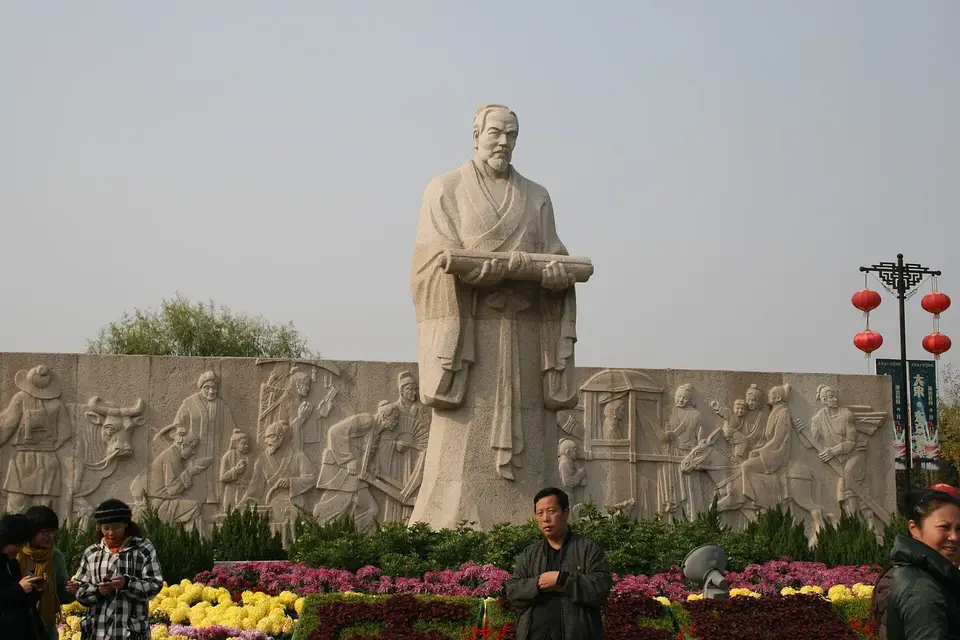
张择端
Zhang Zeduan (张择端), courtesy name Zhengdao (正道), was a native of Dongwu, Mizhou (present-day Zhucheng City, Shandong Province). He stands as one of the greatest masters of architectural ruled-line painting (jiehua) and realist genre painting in the history of classical Chinese visual art, serving as Painter-in-Attendance in the Hanlin Painting Academy during the reign of Emperor Huizong of the Northern Song Dynasty.…
Zhang Zeduan (张择端), courtesy name Zhengdao (正道), was a native of Dongwu, Mizhou (present-day Zhucheng City, Shandong Province). He stands as one of the greatest masters of architectural ruled-line painting (jiehua) and realist genre painting in the history of classical Chinese visual art, serving as Painter-in-Attendance in the Hanlin Painting Academy during the reign of Emperor Huizong of the Northern Song Dynasty. Born into a scholarly Confucian family in Dongwu, he received classical schooling in his youth before journeying to the bustling imperial capital of Bianjing (modern Kaifeng, Henan Province) to pursue bureaucratic examination credentials. Following setbacks in the civil service examinations, he redirected his creative energies toward professional painting, specializing in architectural drafting, watercraft, bridges, market streets, and urban landscapes. During the Xuanhe era, Zhang Zeduan's consummate draftsmanship earned him selection into the prestigious Hanlin Painting Academy. Serving in the inner court, he devoted years of meticulous observation to the bustling waterways and commercial avenues of the imperial metropolis, completing his monumental handscroll masterpiece Along the River During the Qingming Festival (Qingming Shanghe Tu). Measuring over five meters in length, the silk scroll captures with unprecedented panoramic realism the economic vigor, civil engineering achievements, transport networks, and diverse social classes of Bianjing during the spring festival, while embedding subtle warnings regarding defensive neglect and administrative laxity. Emperor Huizong inscribed the title in his signature Slender Gold calligraphic script and stamped it with the imperial twin dragon seal. Following the catastrophic Jingkang Incident of 1127, the Northern Song collapsed and the scroll was looted northward into the Jin state. In 1186, Jin Dynasty scholar Zhang Zhu recorded a historic colophon upon the mounting, which remains the sole definitive biographical record of Zhang Zeduan's life, native place, and court office. His works represent the zenith of pre-modern Chinese urban realism, securing his immortal legacy in global cultural history.
Born into a respected scholarly household in Mizhou, receiving classical education in Confucian canons.
Journeyed to the Northern Song capital of Bianjing to study for the metropolitan examinations.
Abandoned bureaucratic examinations to pursue professional painting, mastering ruled-line drafting and genre sketches.
Perfected his architectural realism and street life compositions, achieving fame among capital connoisseurs.
Selected into the imperial Hanlin Painting Academy as Painter-in-Attendance under Emperor Huizong.
Completed the monumental silk handscroll Along the River During the Qingming Festival, presented to the emperor.
Painted Xihu Zhengbiao Tu, capturing the grand dragon boat races on the Jinming Pool.
Jurchen Jin armies captured the capital; painting academy disbanded and imperial art treasures were looted northward.
Hanlin scholar Zhang Zhu composed the definitive commemorative colophon upon the scroll in Yanjing, preserving Zhang's biography.
Zhang Zeduan was born in Dongwu, Mizhou (modern Zhucheng City, Shandong Province), a coastal cultural center celebrated for classical scholarship since antiquity. His household represented an established lineage of Confucian scholars. From early childhood, Zhang was schooled in the Confucian canons, including the Analects, Mencius, and the Classic of Poetry, with the expectation that he would enter the civil bureaucracy through metropolitan examination honors.
Upon reaching young adulthood, Zhang departed his Shandong homeland to pursue higher education in the Northern Song capital of Bianjing (Kaifeng). In the late eleventh and early twelfth centuries, Bianjing was the most populated and commercially sophisticated metropolis in the world, boasting over one million inhabitants. Intersected by the bustling Bian River grain canal, the capital featured vibrant markets, thriving entertainment quarters, multi-story wine taverns, and merchants from across Asia. The urban dynamism and architectural complexity of the capital expanded young Zhang's horizons, introducing him to subjects far removed from rustic provincial life.
However, in the fiercely competitive imperial examinations, Zhang encountered repeated failures. Rather than remaining mired in conventional bureaucratic frustration, he made the bold decision to abandon examination studies and dedicate his life entirely to visual art.
In Song dynasty academic theory, painting was formally divided into specialized disciplines, with ruled-line painting (jiehua) holding an essential position. Utilizing straightedges, ruling pens, and fine bristle brushes, ruled-line painters rendered buildings, bridges, watermills, and mechanical vehicles with mathematical precision. While literati theorists often dismissed ruled-line painting as mere artisan craft, Zhang Zeduan recognized its potential to chronicle the immense architectural and commercial vitality of his era.
Zhang studied the classical lineages of Six Dynasties and Tang masters such as Guo Zhongshu, while rooting his practice in firsthand observation. For years, he walked the quays, arched bridges, and market stalls of the Bian River, sketching grain barges, horse carts, timber frameworks, and dockworkers. He merged the mathematical rigor of architectural drafting with the atmospheric brushwork of landscape and genre painting.
According to historical records preserved in Jin dynasty colophons: "In his youth he studied books and traveled to the capital; later he practiced painting. He was originally skilled in ruled-line painting, taking special delight in boats, carts, bridges, and streets, establishing his own distinct school." His architectural renderings followed the precise structural mortise-and-tenon standards of contemporary Song carpentry, while his figures moved with spontaneous lifelike energy, elevating urban realism to unprecedented aesthetic heights.
During the reign of Emperor Huizong (reigned 1100–1126), the Northern Song court established an institutional golden age for visual arts. An accomplished painter and calligrapher himself, Huizong reorganized the Hanlin Painting Academy, instituting competitive examinations that tested both brushwork proficiency and poetic erudition. Recognizing Zhang Zeduan's draftsmanship, the court recruited him as Painter-in-Attendance in the Hanlin Painting Academy.
Within the imperial palace, Zhang gained access to the imperial collections, examining masterworks from the Sui, Tang, and Five Dynasties. Surrounded by palace patronage, Zhang conceived a monumental project: an encyclopedic handscroll that would capture the full panoramic spectacle of Bianjing at the zenith of the Northern Song Dynasty.
Working over several years, Zhang composed the celebrated silk handscroll Along the River During the Qingming Festival (Qingming Shanghe Tu). When presented to the inner court, Emperor Huizong was astonished by its compositional mastery and realistic precision. The monarch inscribed the title Qingming Shanghe Tu in his Slender Gold calligraphic script upon the mounting silk and applied his personal twin dragon imperial seal, entering the scroll into the imperial catalog. Subsequently, Zhang painted another masterpiece, Xihu Zhengbiao Tu, depicting the imperial dragon boat regatta on the Jinming Pool.
In the spring of 1127, Jurchen armies of the Jin state breached the walls of Bianjing, capturing Emperor Huizong and Emperor Qinzong and plundering the Northern Song treasury in the Jingkang Incident. The Hanlin Painting Academy was dissolved, its artists scattered amid warfare, and all reliable documentation regarding Zhang Zeduan's final years was lost to history.
During the sack of the capital, Along the River During the Qingming Festival was packed into imperial war booty and transported northward to Yanjing (modern Beijing). The scroll entered the Jurchen royal collection before passing into the hands of northern connoisseurs. In the third month of 1186, sixty years after the fall of Northern Song, scholar Zhang Zhu, a compiler in the Jin Hanlin Academy, examined the pristine scroll in Yanjing.
Deeply moved by the artistic brilliance of the Song masterpiece, Zhang Zhu composed a historic colophon upon the trailing mounting silk: "Hanlin official Zhang Zeduan, courtesy name Zhengdao, was a native of Dongwu. In his youth he read books and traveled to study in the capital; later he practiced painting. He was skilled in ruled-line drafting, especially fond of boats, carts, markets, bridges, and city streets, establishing his own distinct tradition. According to the Critique of Paintings by the Xiang Clan, The Lake Regatta Scroll and Along the River During the Qingming Festival were ranked as Divine Grade; collectors should treasure them. Inscribed on the day after Qingming, bingwu year of the Dading era, by Zhang Zhu of Yanshan."
Comprising just eighty-five Chinese characters, this solitary inscription provides the sole historical record documenting Zhang Zeduan's name, courtesy name, native prefecture, court office, and masterworks. Without Zhang Zhu's colophon, the identity of the artist behind China's most celebrated handscroll would have remained permanently lost.
Along the River During the Qingming Festival (Qingming Shanghe Tu), preserved in the Palace Museum in Beijing, is universally celebrated as the supreme masterpiece of Chinese realist painting. Executed in ink and light color on a silk handscroll measuring 528.7 centimeters in length and 24.8 centimeters in height, it employs continuous flat perspective to capture life along the Bian River during the spring festival.
The composition progresses across three thematic movements: the rural outskirts, where farmers tend crops, donkey caravans advance, and gentry return from tomb-sweeping; the central Bian River transport artery, culminating in the timber Rainbow Bridge where crewmen lower a vessel's mast to shoot the arch amid spectator shouts; and the urban interior inside the gate tower, packed with inns, apothecary shops, taverns, and crowded avenues. The scroll contains 814 human figures, 28 water vessels, 60 domestic animals, 30 architectural structures, and 20 vehicles, functioning as an encyclopedic document of twelfth-century urban civilization.
Zhang Zeduan's draftsmanship established the pinnacle of ancient Chinese architectural representation. His structures comply with the official Song building manual Yingzao Fashi, rendering complex bracket systems, tiled roofs, and wooden gates with structural integrity.
The Rainbow Bridge represents an engineering triumph: a woven-timber beam arch constructed without central support piers. Zhang illustrated the interlocking longitudinal and transverse beams with such accuracy that modern architectural historians have used his painting to reconstruct full-scale historical models. His rendering of grain barges depicts hull bulkheads, deck planks, capstans, and steerable rudders with maritime precision, combining artistic elegance with technical accuracy.
While traditionally viewed as an encomium celebrating imperial peace, modern art historians have revealed profound political critiques embedded within the scroll. Painted in the twilight of the Northern Song, the scroll illustrates systemic vulnerabilities threatening the dynasty.
Under the grand city gate, defensive guards are entirely absent, with commercial stalls encroaching upon military thoroughfares. The wooden fire watchtower stands abandoned without lookouts, its barracks converted into a wine shop. Grain transports along the canal are intermingled with luxury vessels carrying ornamental stones for the emperor's garden projects. Through these realistic details, Zhang delivered a silent remonstrance to Emperor Huizong, warning against military decay and administrative vanity on the eve of the Jurchen invasion.
Zhang's other recorded masterpiece, The Lake Regatta Scroll (Xihu Zhengbiao Tu), preserved in the Tianjin Museum, portrays the annual dragon boat festival on the Jinming Pool outside Bianjing's western walls. Open to the public on the third day of the third lunar month, the lake hosted aquatic races and acrobatics before the imperial viewing pavilions.
The scroll depicts multi-decked dragon boats cutting through foaming waves, rowers moving in unison to drumbeats, and spectators cheering along balustrades. In contrast to the commercial realism of Qingming Shanghe Tu, this work captures the festive leisure of imperial court culture, demonstrating Zhang's versatility in orchestrating complex dynamic scenes.
The historical trajectory of Along the River During the Qingming Festival mirrors the vicissitudes of Chinese civilization. From the Xuanhe palace collection, through its northern looting to Jin and Yuan courts, to its theft by court mounters and acquisition by Ming Grand Secretary Yan Song, the scroll survived centuries of dynastic collapse.
In the twentieth century, the scroll was smuggled out of the Forbidden City by the deposed emperor Puyi to Changchun, disappearing into Manchuria at the end of World War II. In the early 1950s, renowned connoisseur Yang Renkai rediscovered the battered original in a museum warehouse in Liaoning, confirming it as Zhang Zeduan's authentic Northern Song handscroll. Spanning nine centuries of war and revolution, its survival stands as a tribute to the enduring vitality of Chinese cultural heritage.
FIGURES ASSOCIATED WITH THIS DYNASTY
Bibliographic information is not yet available for this entry.