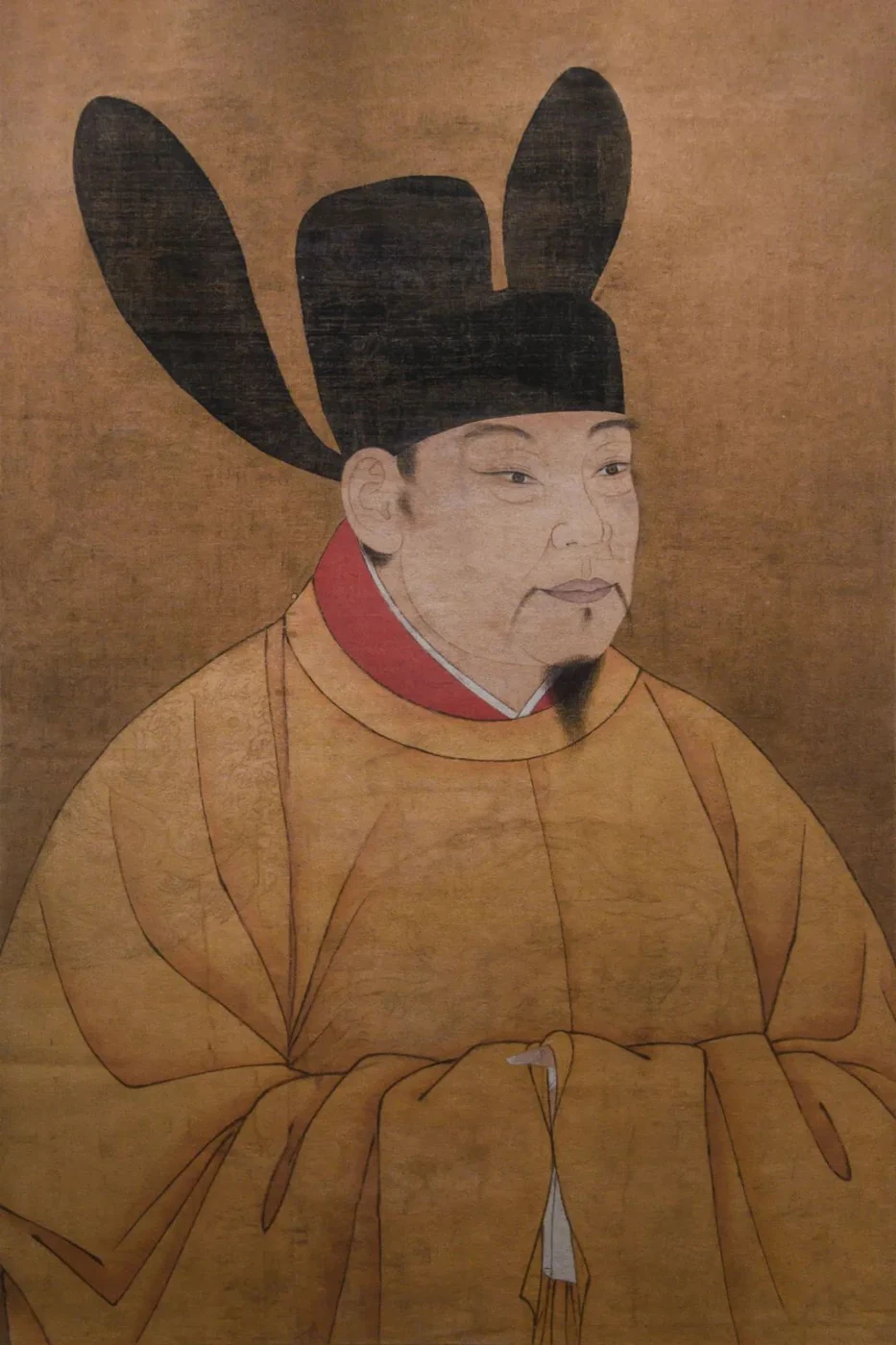
(first year of the Kaiping era of
907 (first year of the Kaiping era of Later Liang): Later Liang enfeoffed Qian Liu as Prince of Wuyue, formally establishing the polity.
907 CE–978 CE
吴越
Wuyue was a regional polity founded by the Qian family in the Liangzhe region, covering present-day Zhejiang, Shanghai, and part of southern Jiangsu, during the Five Dynasties and Ten Kingdoms period. It began when Qian Liu was enfeoffed as Prince of Wuyue in 907, the first year of the Kaiping era of Later Liang, and ended in 978, the third year of Taiping Xingguo under the Northern Song, when the last ruler, Qian Chu, submitted his territory to Song. Five rulers from the Lin'an Qian lineage…
Wuyue was a regional polity founded by the Qian family in the Liangzhe region, covering present-day Zhejiang, Shanghai, and part of southern Jiangsu, during the Five Dynasties and Ten Kingdoms period. It began when Qian Liu was enfeoffed as Prince of Wuyue in 907, the first year of the Kaiping era of Later Liang, and ended in 978, the third year of Taiping Xingguo under the Northern Song, when the last ruler, Qian Chu, submitted his territory to Song. Five rulers from the Lin'an Qian lineage governed for more than seventy years. The founder, King Wusu Qian Liu, had originally served as Military Commissioner of Zhenhai under the late Tang and controlled Hangzhou, which he made the western capital, while Yuezhou served as the eastern capital. Wuyue followed a policy of “protecting the territory and pacifying the people while serving the legitimate Central Plains dynasty.” Separated by waterways from its northern neighbor Wu, later Southern Tang, it concentrated on governing the southeast. The Liangzhe region remained relatively stable during a time of widespread warfare, and water-control works, commerce, Buddhist temples, and pagodas all developed substantially, contributing to the southward shift of China's economic and cultural center. Because land routes were blocked by Wu and Southern Tang, Wuyue relied heavily on sea routes for communication with the Central Plains and overseas, and maritime trade flourished.
907 (first year of the Kaiping era of Later Liang): Later Liang enfeoffed Qian Liu as Prince of Wuyue, formally establishing the polity.
923 (first year of the Tongguang era of Later Tang): Qian Liu was invested as King of Wuyue, further confirming the status of the state.
932 (third year of the Changxing era of Later Tang): Qian Liu died and Qian Yuanguan succeeded to the throne.
941 (sixth year of the Tianfu era of Later Jin): Qian Yuanguan died and Qian Hongzuo succeeded.
948 (first year of the Qianyou era of Later Han): Qian Hongchu succeeded and continued the policy of honoring the Central Plains dynasties while protecting Wuyue's territory and people.
978 (third year of the Taiping Xingguo era of the Northern Song): Qian Hongchu submitted his territory to Song; Wuyue was incorporated into the Northern Song and ceased to exist as an independent polity.
Wuyue was a regional polity founded by the Qian family in the Liangzhe region, covering present-day Zhejiang, Shanghai, and part of southern Jiangsu, during the Five Dynasties and Ten Kingdoms period. It began when Qian Liu was enfeoffed as Prince of Wuyue in 907, the first year of the Kaiping era of Later Liang, and ended in 978, the third year of Taiping Xingguo under the Northern Song, when the last ruler, Qian Chu, submitted his territory to Song. Five rulers from the Lin'an Qian lineage governed for more than seventy years. The founder, King Wusu Qian Liu, had originally served as Military Commissioner of Zhenhai under the late Tang and controlled Hangzhou, which he made the western capital, while Yuezhou served as the eastern capital. Wuyue followed a policy of “protecting the territory and pacifying the people while serving the legitimate Central Plains dynasty.” Separated by waterways from its northern neighbor Wu, later Southern Tang, it concentrated on governing the southeast. The Liangzhe region remained relatively stable during a time of widespread warfare, and water-control works, commerce, Buddhist temples, and pagodas all developed substantially, contributing to the southward shift of China's economic and cultural center. Because land routes were blocked by Wu and Southern Tang, Wuyue relied heavily on sea routes for communication with the Central Plains and overseas, and maritime trade flourished.
Establishment: Qian Liu began his career among the “Eight Corps of Hangzhou,” a late-Tang local militia organization, and later rose under Dong Chang. In 886, the second year of the Guangqi era, he captured Yuezhou and was appointed acting administrator of Hangzhou. In 893, the second year of the Jingfu era, the Tang court appointed him Military Commissioner of Zhenhai. In 895 Dong Chang proclaimed himself emperor in Yuezhou; Qian Liu defeated him on imperial orders and took Yuezhou, eventually controlling Hangzhou, Yuezhou, Suzhou, Huzhou, Quzhou, Wuzhou, Taizhou, Wenzhou, Mingzhou, Chuzhou, Muzhou, Xiuzhou, and areas including Fuzhou. In 907, the first year of Kaiping, Zhu Wen founded Later Liang and enfeoffed Qian Liu as Prince of Wuyue. In 923, the third year of Longde, Qian Liu was further invested as King of Wuyue and established a court bureaucracy, after which the Wuyue state was fully formed. During his reign he accepted investiture successively from Later Liang, Later Tang, and other Central Plains regimes, maintaining nominal vassalage.
Height: Under Qian Yuanguan (King Wenmu), Qian Hongzuo (King Zhongxian), and other successors, Wuyue continued to recognize the legitimate Central Plains dynasties and to pursue a policy of protecting its territory and population. Qian Yuanguan's decade of rule was politically stable and relatively free from major warfare, allowing the economy to develop further. Although Qian Hongzuo's reign was short, in 945, the second year of the Kaiyun era of Later Jin, he sent Zhang Yun and Zhao Chengtai with 30,000 troops to aid Min; together they defeated Southern Tang forces and brought Fuzhou into Wuyue's territory. Wuyue alternated between war and peace with Wu, later Southern Tang, Min, and Ma Chu, while internally emphasizing rest from warfare, water-control works, and the construction of Buddhist temples and palaces. The Liangzhe region remained orderly, its population and production expanded, and it became one of the comparatively prosperous regional states of the period.
Turning point: With the rise of Later Zhou and the Northern Song, the tendency toward political reunification strengthened. As a southeastern coastal polity facing the increasingly powerful Northern Song and Southern Tang, Wuyue's room for independent action steadily narrowed. In 975, the eighth year of Kaibao, when the Northern Song attacked Southern Tang, Qian Chu personally led 50,000 troops to assist Song, helping destroy Southern Tang. At the same time, Wuyue itself became increasingly dependent on Song and lost much of its capacity for independent policy.
Decline and fall: In 978, the third year of Taiping Xingguo, with Southern Tang already destroyed and political unification close at hand, Qian Chu entered the Song court and voluntarily submitted his territory, surrendering one military command and thirteen prefectures, or fourteen according to another account. Wuyue thereby ended. Qian Chu received generous treatment from the Song court, and members of the Qian family continued to hold prominent positions under Song. Wuyue was among the relatively few regional regimes absorbed by the Northern Song without a large-scale conquest.
> Note: The specific details above, including the number of rulers, prefectures, and exact chronological boundaries, are broadly consistent across sources, although some numerical details vary; such cases are marked as alternative accounts where appropriate.
Wuyue nominally recognized the legitimate Central Plains dynasties, and its ruler received investiture from them, while retaining a complete regional political system within his territory. The central government maintained a royal court and offices modeled on Tang institutions, with Grand Councilors and various commissioners serving under the ruler; in the reigns of King Wenmu and King Zhongxian, officials such as Grand Councilor Cao Zhongda assisted in government. Local administration followed a prefecture–county structure, with prefects governing prefectures and Military Commissioners or Defense Commissioners overseeing important strategic areas. Recruitment broadly combined Tang-style imperial examinations with appointment by recommendation and patronage, though the scale was limited by the polity's regional character. Law generally followed Tang codes, supplemented by local regulations. Because Wuyue developed from a military governorship, its institutions retained a strong regional military character, with military and supervisory commissioners holding considerable power; details are treated in the relevant entries.
Wuyue's armed forces were centered on naval units and regional garrisons. It used the water networks of Lake Tai, the Qiantang River, and Jianhu Lake to defend against threats from Wu and Southern Tang. Generals such as Gu Quanwu, Du Jianhui, and Bao Junfu were valued by Qian Liu and later rulers, while Zhang Yun, Zhao Chengtai, and others also led forces in the later period. Wuyue's military strategy was principally defensive and rarely involved major offensive campaigns to the north. Diplomatically it followed a policy of serving stronger powers, paying homage to Later Liang, Later Tang, Later Jin, Later Han, Later Zhou, and the Northern Song. Because land routes were blocked by Wu and Southern Tang, tribute missions often traveled by sea through Dengzhou and Laizhou, while maritime connections also supported trade and cultural exchange with Japan, Silla, Later Baekje, and Min. Its late assistance to the Northern Song against Southern Tang continued this policy of preserving the state through deference to the dominant Central Plains power.
Wuyue placed great emphasis on water control. Qian Liu established lake-dredging troops to clear Qiantang Lake and channel its waters into Yongjin Pool and the canal system. In 910, the fourth year of Kaiping, labor was mobilized to build the stone sea wall, using timber piles and stone cages to stabilize the riverbank, protect farmland from tides, and support irrigation. He also organized water-dredging troops in four divisions numbering seven or eight thousand men to clear lakes, repair dikes, and dredge rivers and channels, improving irrigation in areas including Wu, Changzhou, and Jiaxing. Agriculture became more developed than in many contemporary war-torn regions. Textile production, ceramics, tea, salt, metallurgy, and other industries also flourished. With access to the Qiantang River, the Grand Canal, and maritime trade, Hangzhou and other cities became major southeastern commercial centers. The Supplement to the History of the Five Dynasties records dense concentrations of boats and shipping. These economic foundations contributed to the later southward shift of China's economic center.
Wuyue strongly patronized Buddhism, building many temples and pagodas. Structures such as Baochu Pagoda and Leifeng Pagoda originated in this period, while Liuhe Pagoda was first built near the end of Wuyue in 970 under Qian Chu, although the surviving structure was rebuilt under the Southern Song. Buddhist learning and woodblock printing were highly developed, and scriptures discovered in Leifeng Pagoda are important early printing remains. The Qian royal family was also known for literary culture, and Qian Chu and others left collections of poetry and prose; writers and advisers such as Luo Yin and Pi Guangye gathered at the court. Relative stability encouraged population growth and the rise of market towns, while regional language and customs contributed to the formation of a distinctive Wuyue culture with a lasting influence on later Jiangnan literary traditions and popular religion.
Qian Liu, Qian Yuanguan, Qian Hongzuo, Qian Hongzong, Qian Hongchu.
> This section explains the place of rulers in the evolution of the polity; complete biographies are carried by the corresponding person entities.
Contemporary assessment: Contemporary and Central Plains observers often praised Wuyue for “protecting the territory and pacifying the people” and for avoiding unnecessary warfare, giving particular credit to its preservation of stability in the southeast and its recognition of Central Plains legitimacy. Early Northern Song writers also praised its rulers for caring for the population and keeping the region out of major wars.
Later assessment: Later historians generally regard Wuyue as having maintained long-term stability in Liangzhe, promoted water control and education, and helped prepare the economic and cultural rise of Jiangnan. Qian Chu's submission of territory to Song avoided a major war and has often been viewed as a choice consistent with the wider trend toward reunification. Other assessments note the polity's dependence on stronger states and its comparatively cautious military posture. Overall, its legacy is usually assessed positively, especially for regional development and peaceful incorporation into Song. These are later historical generalizations rather than quotations from contemporary primary sources.
Qian Liu, Qian Yuanguan, Qian Hongzuo, Qian Hongzong, Qian Hongchu.
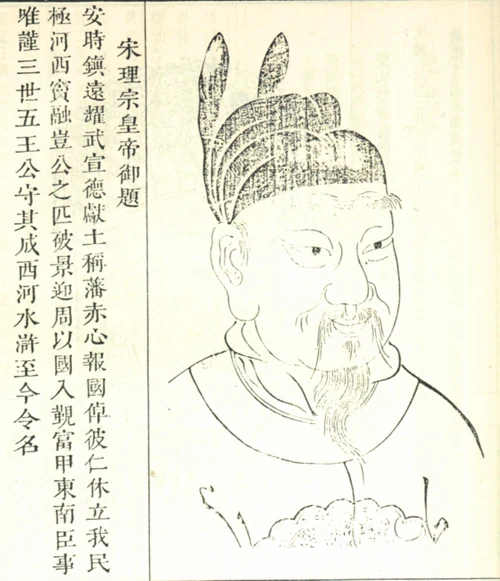 Wuyue
WuyueRuler
Qian Chu (September 29, 929–October 7, 988), courtesy name Wende, was originally named Qian Hongchu. After entering Song service, he dropped the character Hong to avoid the taboo on the name of Emperor Taizu of Song's father, Zhao Hongyin. His childhood name was Huzi. A native of Lin'an in Hangzhou, he was a grandson of Qian Liu, King Wusu of Wuyue, and the ninth son of Qian Yuanguan, King Wenmu. He was the last ru
Foremost General of Wuyue
Gu Quanwu (866–930), widely known by his popular moniker Gu the Monk (Gu the Monk), a native of Yuyao, Yuezhou (modern Yuyao, Zhejiang Province), was the paramount founding military commander of the Wuyue Kingdom during the late Tang and Five Dynasties period. He rose to become Commander-in-Chief of the elite Wuyong Corps (Wuyongdu) and Military Governor of the Yisheng Circuit, enfeoffed as the Marquis of Wuxing. O
Prime Minister of Wuyue
Pi Guangye, courtesy name Wentong, was a prominent prime minister and literatus of the Wuyue Kingdom during the Five Dynasties and Ten Kingdoms period. Born in Suzhou into the family of celebrated late Tang poet Pi Rixiu, he showed precocious talent and composed prose by age ten. He became one of the "Eight Friends" alongside Luo Yin before entering the service of Qian Liu, founder of Wuyue. In 916, he served as dipl
Wuyue Chancellor
Lin Ding (891–940 CE), courtesy name Huanbao, was a native of Fuqing in Fuzhou (modern Fujian) who later resettled in Xiaoshan (modern Hangzhou, Zhejiang). He was a distinguished Chancellor and celebrated calligrapher of the Wuyue Kingdom during the Five Dynasties and Ten Kingdoms period, and son of the eminent Tang scholar Lin Shensi. Fleeing regional disorder into Zhejiang during youth, he mastered classical histor