Zhu Wen accepted the abdication of Emperor Ai of Tang, proclaimed himself emperor, and established the Later Liang; the Tang Dynasty ended.
907 CE–923 CE
Later Liang
Concurrent polity后梁
The Later Liang (907–923) was a Central Plains regime founded when Zhu Wen (Zhu Quanzhong), the late-Tang Military Commissioner of Xuanwu, usurped the Tang throne. It was the first of the Five Dynasties and the first Chinese dynasty to make Kaifeng its capital. Because its imperial house bore the surname Zhu, it was also called “Zhu Liang” to distinguish it from the Liang dynasty of the Northern and Southern Dynasties. The Later Tang and regional powers that did not recognize its legitimacy…
907 CE–923 CECapital · See entry
ERA OVERVIEW
The Later Liang (907–923) was a Central Plains regime founded when Zhu Wen (Zhu Quanzhong), the late-Tang Military Commissioner of Xuanwu, usurped the Tang throne. It was the first of the Five Dynasties and the first Chinese dynasty to make Kaifeng its capital. Because its imperial house bore the surname Zhu, it was also called “Zhu Liang” to distinguish it from the Liang dynasty of the Northern and Southern Dynasties. The Later Tang and regional powers that did not recognize its legitimacy often called it the “illegitimate Liang.” In the fourth year of Tianyou (907), Zhu Wen forced Emperor Ai of Tang to abdicate, adopted Liang as the state name, inaugurated the Kaiping era, and founded the regime later known as the Later Liang. It first made Bianzhou, designated Kaifeng Prefecture, its capital. In the third year of Kaiping (909) the capital was temporarily moved to Luoyang, and after the last emperor succeeded in the third year of Qianhua (913), it was returned to Kaifeng. The Later Liang controlled the Central Plains, especially Henan and Shandong, and is described here as having the smallest territory but the longest duration among the competing regimes. From its founding, however, it was locked in prolonged warfare with the Shatuo Li clan of Hedong under Li Keyong and Li Cunxu, while also facing internal conflict and shifting loyalties among regional commands. In the first year of Tongguang (923), the Later Tang founded by Prince of Jin Li Cunxu destroyed the Later Liang. The last emperor, Zhu Youzhen, committed suicide, and its territory was absorbed by the Later Tang.
Time span907 CE–923 CE
CapitalSee entry
ERA TIMELINE
At the Battle of Baixiang, the main Later Liang army suffered a major defeat at the hands of Jin.
Zhu Wen was killed by Zhu Yougui.
The last emperor took the throne and returned the capital to Kaifeng.
The Later Liang suffered a major defeat at the Battle of Huliu Slope.
Later Tang forces entered Kaifeng; the last Later Liang emperor Zhu Youzhen committed suicide, and the regime was destroyed.
FULL ENTRY
Overview
The Later Liang (907–923) was a Central Plains regime founded when Zhu Wen (Zhu Quanzhong), the late-Tang Military Commissioner of Xuanwu, usurped the Tang throne. It was the first of the Five Dynasties and the first Chinese dynasty to make Kaifeng its capital. Because its imperial house bore the surname Zhu, it was also called “Zhu Liang” to distinguish it from the Liang dynasty of the Northern and Southern Dynasties. The Later Tang and regional powers that did not recognize its legitimacy often called it the “illegitimate Liang.” In the fourth year of Tianyou (907), Zhu Wen forced Emperor Ai of Tang to abdicate, adopted Liang as the state name, inaugurated the Kaiping era, and founded the regime later known as the Later Liang. It first made Bianzhou, designated Kaifeng Prefecture, its capital. In the third year of Kaiping (909) the capital was temporarily moved to Luoyang, and after the last emperor succeeded in the third year of Qianhua (913), it was returned to Kaifeng. The Later Liang controlled the Central Plains, especially Henan and Shandong, and is described here as having the smallest territory but the longest duration among the competing regimes. From its founding, however, it was locked in prolonged warfare with the Shatuo Li clan of Hedong under Li Keyong and Li Cunxu, while also facing internal conflict and shifting loyalties among regional commands. In the first year of Tongguang (923), the Later Tang founded by Prince of Jin Li Cunxu destroyed the Later Liang. The last emperor, Zhu Youzhen, committed suicide, and its territory was absorbed by the Later Tang.
Historical Development
Establishment: Zhu Wen had originally been a general under Huang Chao at the end of the Tang. In the second year of Zhonghe (882), he surrendered to the Tang and was granted the name Quanzhong. He successively served as deputy commissioner of the Hedong expeditionary forces and Military Commissioner of Xuanwu, using Bianzhou (present-day Kaifeng, Henan) as a base to become the strongest regional military governor of the late Tang. From the first year of Jingfu (892) to the fourth year of Qianning (897), he defeated the brothers Zhu Xuan of Yunzhou and Zhu Jin of Yanzhou. In the first year of Tianfu (901), he was enfeoffed as Prince of Liang. In the first year of Tianyou (904), Zhu Wen forced Emperor Zhaozong of Tang to move to Luoyang and later had him killed, installing his son Li Chu as Emperor Ai of Tang. He also initiated the White Horse Massacre, purging officials and members of the imperial house. In June 907, the fourth year of Tianyou, Zhu Wen forced Emperor Ai to abdicate. He took Liang, derived from his princely title, as the state name, adopted Metal as the dynastic virtue in the Five Phases succession after the Tang's Earth virtue, and inaugurated the Kaiping era. The regime became known historically as the Later Liang, and Zhu Wen became Emperor Taizu of Liang.
Height: At its founding, the Later Liang controlled all of Henan and Shandong and large parts of Shaanxi and Hubei, together with portions of Hebei, Ningxia, Shanxi, Jiangsu, and Anhui. Although described as the smallest of the Five Dynasties in territory, it benefited from the strategic position and fiscal resources of the Central Plains and was comparatively strong. It also received formal recognition from the Khitans and some regional military governors. Around the time he became emperor, Zhu Wen removed some abuses left from the late Tang, encouraged agriculture, and reduced certain taxes, achieving broad control over the middle and lower Yellow River region. During the Kaiping era he also granted or confirmed princely titles for Ma Yin of Chu, Qian Liu of Wuyue, Wang Shenzhi of Min, and Liu Yin, Military Commissioner of Jinghai, maintaining nominal relationships with these regional powers while his struggle against the Hedong Jin forces remained unresolved.
Turning Point: In his later years, Emperor Taizu became increasingly suspicious of meritorious officials and relied on severe punishments. This helped drive Wang Rong of Zhenzhou and Wang Chuzhi of Dingzhou to rebel against the Later Liang and seek aid from Jin beginning in the fourth year of Kaiping (910). Early in the first year of Qianhua (911), Li Cunxu led Jin forces to a major victory over Later Liang at the Battle of Baixiang and pursued them toward Xingzhou, also capturing or attacking places such as Chanzhou and Xinxiang. The defeat damaged the Later Liang's main forces and pushed the regime into a strategic disadvantage. In the fifth month of the second year of Qianhua (912), Zhu Wen returned to Luoyang from Hebei. In the sixth month he was killed by his second son Zhu Yougui, who seized the throne. The next year Zhu Youzhen used a mutiny of the Luoyang palace army to overthrow Zhu Yougui, who committed suicide. Zhu Youzhen then took the throne at Kaifeng as the last emperor. Repeated conflict within the imperial house severely weakened the regime.
Decline: During Zhu Youzhen's reign, distrust of regional commanders continued and the central government deteriorated. After Yang Shihou died in the first year of Zhenming (915), the court secretly planned to divide Weizhou into two commands. The Weizhou army rebelled and defected to Jin. Prince of Jin Li Cunxu personally advanced over the Taihang region through Huangze Ridge and attacked Dezhou and Chanzhou, while Later Liang forces suffered repeated defeats. In the fourth year of Zhenming (918), Jin forces moved south to Huliupo and fought a major battle with the Later Liang. The Later Liang suffered a severe defeat with nearly 30,000 casualties, after which the Liang-Jin struggle entered a quieter phase. Jin consolidated its control of Hebei and stabilized its own territory, while Later Liang regional commanders continued to defect, stripping away the capital's defensive screen.
Fall: In the third year of Longde (923), Li Cunxu proclaimed himself emperor and adopted Tang as the state name, founding the Later Tang. In the intercalary fourth month, Later Tang forces seized Yunzhou. The Later Liang appointed Wang Yanzhang commander and Duan Ning deputy commander and mobilized 100,000 elite troops to fight the northern campaign, with hard fighting around Yangliu. Wang Yanzhang was later defeated at Zhongdu County, captured, and executed. In November 923, the Later Tang army approached Kaifeng. The city surrendered, Zhu Youzhen committed suicide, and the Later Liang came to an end. Its territory was absorbed by the Later Tang after about seventeen years of rule.
Politics and Institutions
The Later Liang inherited Tang institutions with some adjustments. The central government retained the Three Departments and Six Ministries and offices such as the military-affairs apparatus, but imperial centralization was stronger than in the late Tang. Palace intimates and commanders of the imperial armies gained greater influence, and powerful ministers often controlled sensitive military and political affairs. Local administration continued to use the prefecture-county system and relied heavily on Military Commissioners. The persistent autonomy of regional military commands remained a major obstacle to central control. The imperial examination system and regular selection procedures continued, but personal favor and military merit also played major roles in officeholding. The legal system broadly followed Tang law, while Emperor Taizu was known for severe punishments after founding the dynasty. Supervisory institutions continued Tang precedents but were weakened. The Later Liang claimed Metal as its dynastic virtue, presenting itself as the legitimate successor to the Tang's Earth virtue. Overall, its institutions were largely inherited from the Tang and remained disordered in ways characteristic of the Five Dynasties.
Military and Foreign Relations
The Later Liang relied on central armies in the Central Plains and the troops of subordinate military commands. Its forces were capable but politically unstable. The Liang-Jin rivalry against the Hedong forces of Li Keyong and Li Cunxu dominated the entire period and became the most important military struggle of the early Five Dynasties. Major engagements included fighting at Luzhou, Baixiang, Xiabo, Tiao County, and Yangliu. The Later Liang also fought at times with Wu in Huainan and with Li Maozhen in Fengxiang. Diplomatically it failed to dominate neighboring powers. Although it recognized or granted titles to Ma Yin, Qian Liu, Wang Shenzhi, Liu Yin, and other regional rulers, many southern states did not acknowledge Later Liang legitimacy and continued to use Tang era names. In the final years, repeated defections of military commanders to Jin became a major cause of military collapse.
Economy and Commerce
The Later Liang controlled the core regions of the Central Plains and benefited from grain transport, salt revenues, and established commercial networks. Zhu Wen had long developed Bianzhou before founding the dynasty, limiting some local magnates and encouraging population recovery and production. The Bian River connected northern and southern markets, helping Kaifeng become increasingly prosperous and laying foundations for its later status as the capital of a unified dynasty. Continued warfare and heavy taxation, however, exhausted the population, and the Yellow River region was severely damaged by fighting between Liang and Jin. The economy never returned to earlier prosperity. Currency and salt-monopoly arrangements largely continued late-Tang practices but were difficult to restore effectively.
Culture and Society
Education and cultural life had been badly weakened by the disorders at the end of the Tang. The Later Liang was short-lived and strongly military in character, so its cultural life largely continued late-Tang traditions without major new developments. Han Chinese formed the main population, while older lineage and aristocratic traditions survived but continued to decline and military elites grew in importance. Writers in the Bian-Luo region still carried forward late-Tang literary styles. Ritual and the imperial examination system continued in broadly Tang forms with little major innovation. The movement of the political center from Chang'an toward Bianzhou and Luoyang also reflected a broader eastward shift in the cultural and political center of gravity.
Rulers and Political Leadership
Zhu Wen, Zhu Yougui, Zhu Youzhen.
> This section explains the rulers' positions in the evolution of the regime; full biographies are provided in the corresponding person entries.
Historical Assessments and Legacy
Many contemporaries regarded Emperor Taizu of Later Liang as a powerful usurper. Traditional histories and former Tang officials condemned his seizure of the throne as illegitimate and often referred to the regime as the “illegitimate Liang,” especially criticizing the killing of emperors and the White Horse Massacre. Later historians likewise often denied its claim to legitimate succession. At the same time, later scholarship has noted that the Later Liang, as the first of the Five Dynasties, opened the sequence of rapid dynastic change after the Tang. It controlled the Central Plains and claimed to succeed the Tang within a Five Phases framework, giving it major transitional significance despite its short duration and repeated internal conflict. Its establishment of Kaifeng as a capital and its development of the Central Plains contributed to the eastward movement of the political center and to Kaifeng's later prominence. Its rise and fall vividly reflected the transformation of late-Tang regional militarization into Five Dynasties conflict and the continuing search for political reunification.
Rulers
 Later Liang
Emperor
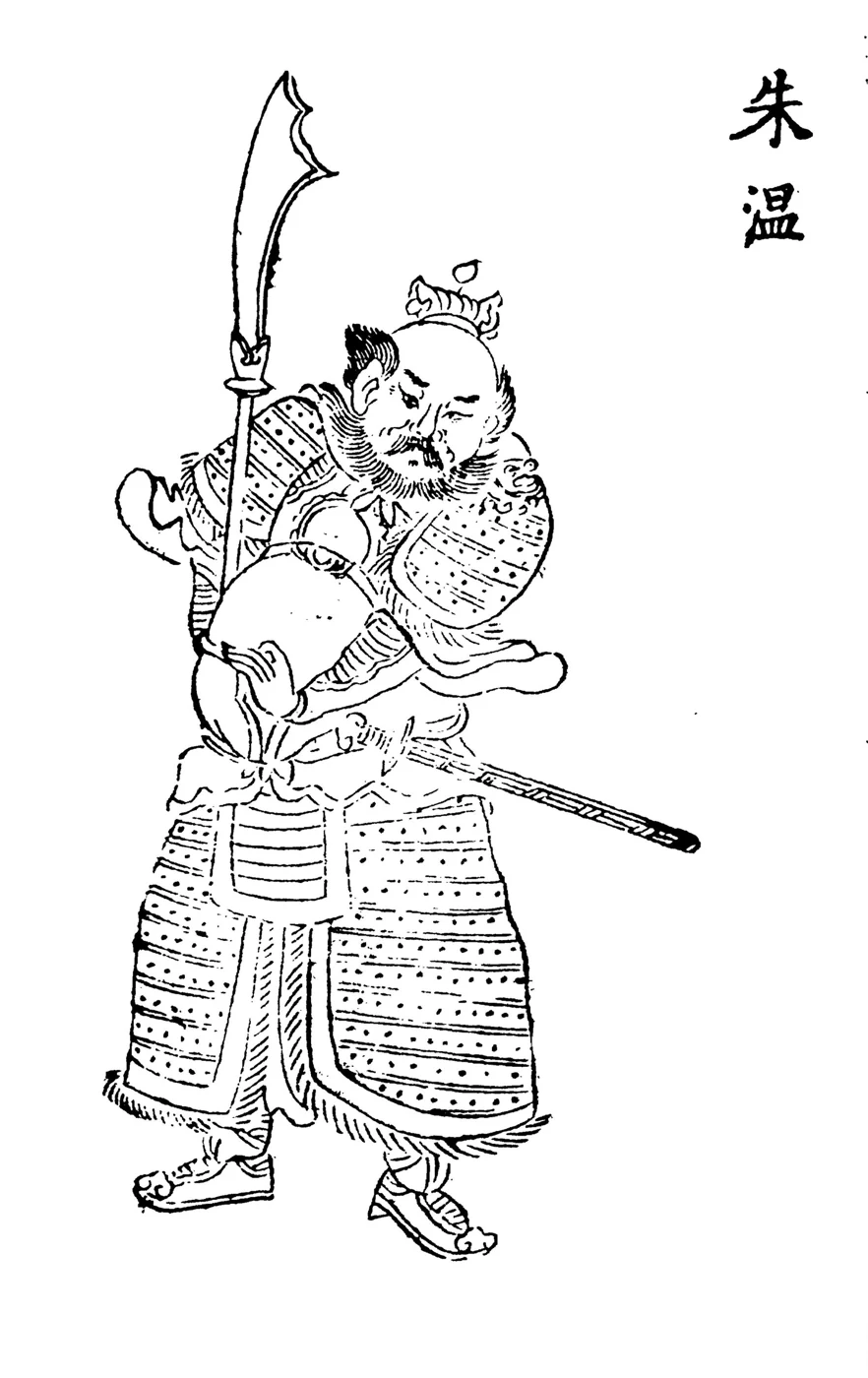
Zhu Wen
Zhu Wen (December 5, 852 – July 18, 912) was the founding emperor of Later Liang during the Five Dynasties, with the temple name Taizu. He was from Dangshan in Song Prefecture (present-day Dangshan County, Suzhou, Anhui). Emperor Xizong of Tang bestowed on him the name Quanzhong, and after proclaiming himself emperor he changed his name to Zhu Huang. Zhu Wen joined Huang Chao's rebel army in his early years. In 882,
Later Liang
Emperor
Zhu Yougui
Zhu Yougui (885–March 27, 913), also known as Zhu Youqiu and by the childhood name Yaoxi, was a native of Dangshan in Songzhou (present-day Dangshan, Anhui). He was the second emperor of Later Liang during the Five Dynasties period. He was the second son of Zhu Wen, founder of Later Liang, according to one account, though another makes him the third son, and he was an elder brother of Zhu Youzhen, the dynasty's last
Later Liang
Emperor
Zhu Youzhen
Zhu Youzhen (October 24, 888–November 18, 923), later renamed Zhu Zhen and Zhu Huang, was the final emperor of Later Liang during the Five Dynasties period. He was a legitimate son of Zhu Wen, founder of Later Liang, and Lady Zhang. In the tenth lunar month of 923, the third year of the Longde era, Li Cunxu, Emperor Zhuangzong of Later Tang, launched a surprise attack on Bianzhou. Facing desertion and political colla
KEY PEOPLE
Later Liang
Historical figure
Liu Yan
Liu Yan (889–942), also written in a variant form and originally named Liu Yan, founded Southern Han. After his brother Liu Yin died in 911 (Later Liang Qianhua 1), Liu took control of military and civil affairs in Lingnan. He proclaimed himself emperor at Panyu in 917 (Later Liang Zhenming 3), calling the state Da Yue, and changed its name to Han in 918 (Southern Han Qianheng 2). He appointed scholars, established e
 Later Liang
Noted general of Later Liang in the Five Dynasties
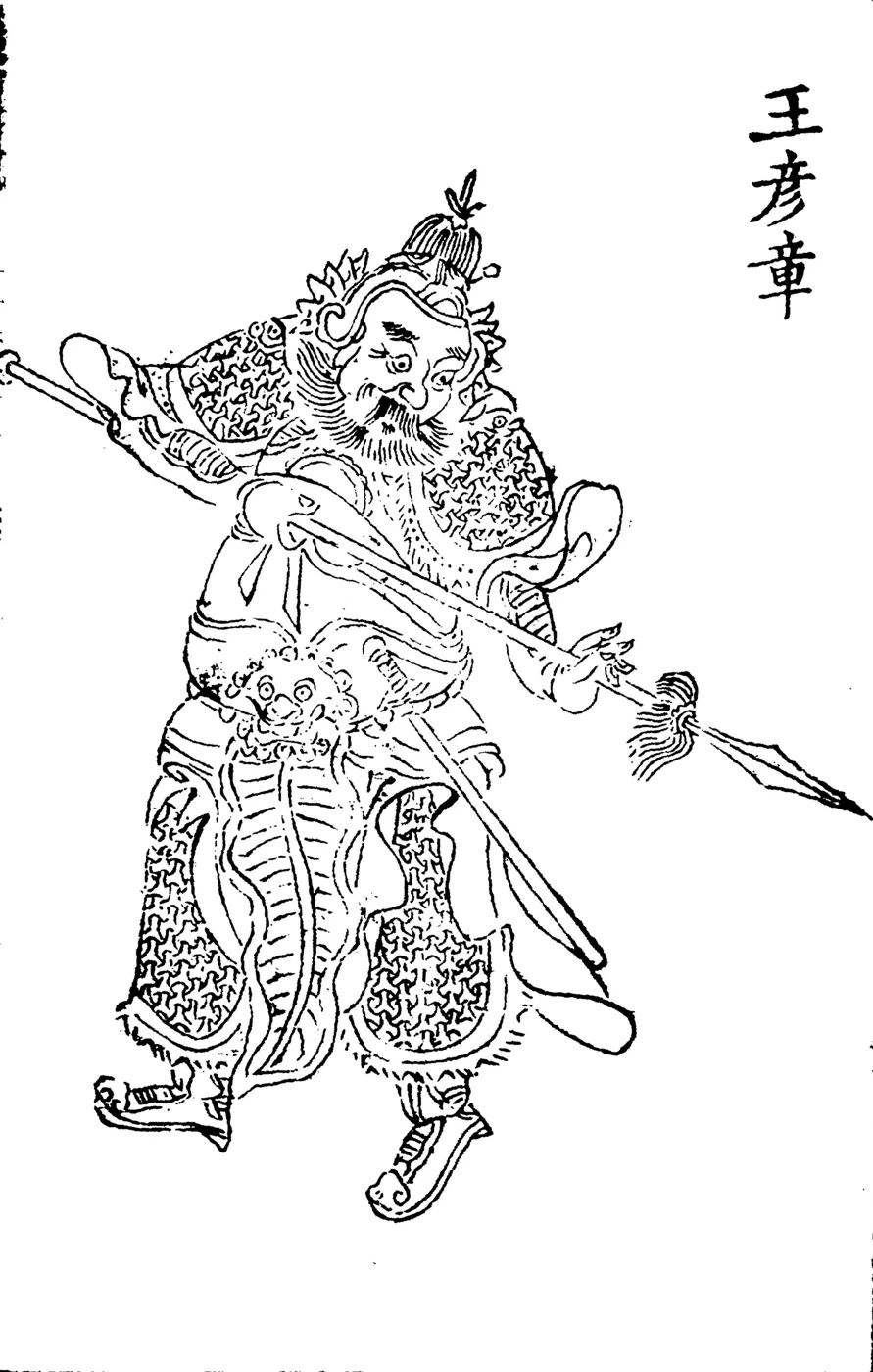
Wang Yanzhang
Wang Yanzhang (863 – 923), courtesy name Xianming (or Ziming), was a native of Shouzhang County in Yunzhou (northwest of modern Liangshan, Shandong Province). He was an illustrious commanding general of the Later Liang dynasty during the Five Dynasties period, celebrated for his peerless martial prowess, fierce loyalty, and mastery of a colossal hundred-pound iron lance, which earned him the fearsome battlefield moni
Later Liang
Regional Warlord
Dong Zhang
Dong Zhang (died May 932 AD), native place unrecorded, was a formidable military commander and warlord of the Later Liang and Later Tang dynasties during the Five Dynasties and Ten Kingdoms period. Born into indentured servitude alongside Gao Jixing and Kong Xun under merchant Li Rang (foster son of Zhu Wen), he enlisted in the Xuanwu army, rising through the ranks by combat valor to become Prefect of Zezhou. Followi
Tang Dynasty
Military Secretariat Advisor
Yang Dongqian
Yang Dongqian (died 935), courtesy name Zhaoyuan (also recorded as Zhaoxuan), was a native of Shixing, Shaozhou (modern Shixing County, Guangdong Province), and a celebrated founding statesman, grand strategist, and Chancellor of the Southern Han during the Five Dynasties and Ten Kingdoms period. Hailing from a distinguished scholarly lineage, Yang entered public administration late in the Tang Dynasty, serving in th
Related entries
Bibliography
- 《旧唐书》
- 《新唐书》
- 《旧五代史》
- 《新五代史》
- 《资治通鉴》