Birth at Eastern Palace
Born in the Xuanguang Hall of Luoyang Palace as the second son of Emperor Xuanwu; his mother was spared execution, breaking the traditional imperial succession rule.
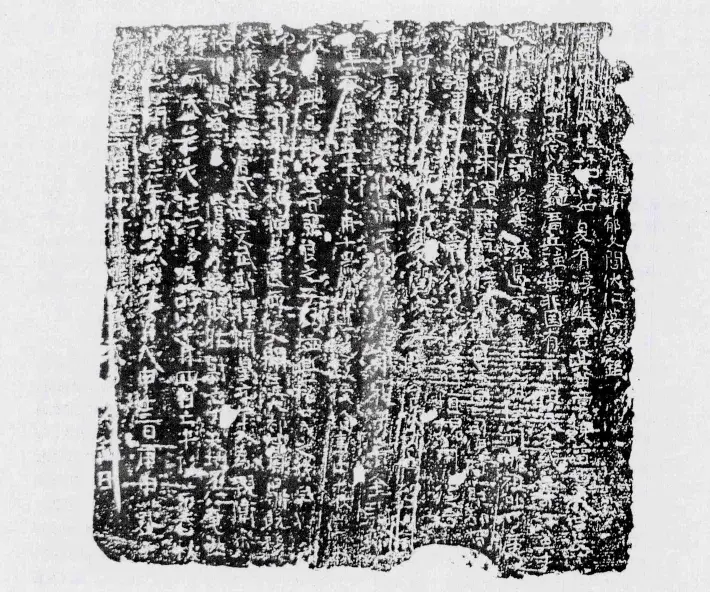
元诩
Yuan Xu (元诩), known historically as Emperor Xiaoming of Northern Wei, was the second son of Emperor Xuanwu (Yuan Ke) and Empress Ling (Consort Dowager Hu). In 512, he was formally created crown prince, and in 515, following the death of Emperor Xuanwu, he ascended the imperial throne at the age of six. During his early reign, his mother Empress Dowager Hu presided over court politics as regent, supported by senior imperial…
Yuan Xu (元诩), known historically as Emperor Xiaoming of Northern Wei, was the second son of Emperor Xuanwu (Yuan Ke) and Empress Ling (Consort Dowager Hu). In 512, he was formally created crown prince, and in 515, following the death of Emperor Xuanwu, he ascended the imperial throne at the age of six. During his early reign, his mother Empress Dowager Hu presided over court politics as regent, supported by senior imperial princes such as Yuan Yi, the Prince of Qinghe, though intense factional struggles soon erupted and threw the central administration into profound turmoil. During his reign, Northern Wei suffered the Xuanguang Hall coup, in which the powerful regent Yuan Cha and the eunuch official Liu Teng placed the Empress Dowager under house arrest and monopolized imperial authority for nearly five years. After Empress Dowager Hu regained power in 525, the imperial government became increasingly corrupt, sparking the widespread Rebellion of the Six Garrisons and regional agrarian uprisings. As Yuan Xu grew into adulthood, friction with his mother reached a breaking point, prompting him to secretly summon warlord Erzhu Rong to march on Luoyang. When the plot leaked, he was poisoned by the Empress Dowager and her inner circle in 528 at the age of nineteen. His assassination directly triggered the disastrous Heyin Incident, marking the irreversible turning point toward the collapse and partition of the Northern Wei Empire.
Born in the Xuanguang Hall of Luoyang Palace as the second son of Emperor Xuanwu; his mother was spared execution, breaking the traditional imperial succession rule.
Formally installed as crown prince at age three, marking the permanent abolishment of the brutal matrilineal execution policy.
Ascended the throne at age six following Emperor Xuanwu's death, changing the era name to Xiping with Empress Dowager Hu assuming regency.
Regent Yuan Cha and eunuch Liu Teng assassinated Prince Yuan Yi and placed Empress Dowager Hu under confinement; the era name was changed to Zhengguang.
Joined forces with the Empress Dowager to strip Yuan Cha of all ranks and execute him, restoring Empress Dowager Hu's regency.
Poisoned in Xianyang Hall at age nineteen after his secret edict summoning Erzhu Rong was exposed to the Empress Dowager's clique.
Yuan Xu was born on April 8, 510, in the northeastern wing of the Xuanguang Hall within the imperial palace at Luoyang. Because several elder sons of Emperor Xuanwu had died in infancy, the emperor took extraordinary precautions to protect the newborn infant, selecting virtuous nurses and wet nurses under tight security. Under the dynastic precedent established by Emperor Daowu, biological mothers of newly designated crown princes were routinely put to death to prevent maternal clan domination. Consequently, consorts across the imperial harem traditionally prayed to bear daughters. However, Yuan Xu's mother, Consort Hu, publicly declared that she was willing to sacrifice her own life for the continuity of the imperial lineage. Deeply touched by her devotion and courage, Emperor Xuanwu exempted her from execution. On the eighteenth day of the tenth month in 512, three-year-old Yuan Xu was officially created crown prince.
On February 12, 515, Emperor Xuanwu passed away in Luoyang. That very evening, six-year-old Crown Prince Yuan Xu was enthroned at the Xianyang Hall, altering the reign title to Xiping the following year. Due to the monarch's tender age, the imperial court appointed Grand Guardian Yuan Yong, Prince of Gaoyang, to oversee executive business in the Western Cypress Hall, while Yuan Cheng, Prince of Rencheng, served as director of the Department of State Affairs. In the third month, Empress Gao was compelled by Consort Hu to take Buddhist vows and retire to Jinyong Castle. In the eighth month, Consort Hu was elevated as Empress Dowager, and imperial ministers formally petitioned for her to assume regency. Initially, Empress Dowager Hu relied on the prudent statesmanship of Yuan Yi, Prince of Qinghe, implementing tax remissions, hearing civil lawsuits, and repelling Southern Liang incursions.
However, Empress Dowager Hu soon embarked on lavish Buddhist construction projects, spending vast amounts of national treasury funds to build the colossal nine-story pagoda of Yongning Temple beside the imperial palace. From 517 onward, her lavish lifestyle, arbitrary promotions, and reliance on sycophants alienated the scholar-official elite and intensified rivalry within the imperial clan.
On August 2, 520, General of the Army of the Right Yuan Cha formed a conspiracy with the influential eunuch Liu Teng to orchestrate the Xuanguang Hall coup. Yuan Cha fabricated charges accusing Prince Yuan Yi of treason and poisoning plots, using the palace eunuch Hu Ding, who managed the emperor's diet, to mislead the eleven-year-old emperor. Yuan Cha swiftly put Prince Yuan Yi to death and confined Empress Dowager Hu to the Xuanguang Hall, severing communication between mother and son. Following the coup, Yuan Xu celebrated his coming-of-age capping ceremony, altered the era name to Zhengguang, and addressed Yuan Cha as his maternal uncle.
Yuan Cha and Liu Teng monopolized civil and military authority. Yuan Cha resided armed within the inner precincts, manipulating appointments and punishments while placing his own partisans in vital provincial commands. Administrative discipline deteriorated rapidly. Driven by official neglect and severe economic mistreatment, soldiers stationed on the northern frontiers launched the Rebellion of the Six Garrisons in 523 under Po Liu Han Ba Ling. The uprising spread across the northern frontier commanderies, with multiple imperial expeditionary armies suffering humiliating defeats due to commander incompetence and troop discontent.
Following Liu Teng's death in 523, Yuan Cha's vigilance over the court gradually loosened. In the autumn of 524, Empress Dowager Hu seized an opportunity in the presence of Yuan Xu and top ministers to tearfully denounce Yuan Cha's abusive conduct, finding common cause with the growing displeasure of the young sovereign. Yuan Cha's reputation collapsed further when his appointee Yuan Faseng defected to Southern Liang from Xuzhou. In March 525, Consort Pan informed Yuan Xu of Yuan Cha's seditious inclinations, allowing the emperor to strip Yuan Cha of his imperial guard command during an overnight absence from the palace. In April, Empress Dowager Hu formally resumed regency, stripped Yuan Cha of his ranks, and forced him to commit suicide.
Upon returning to power, Empress Dowager Hu elevated favorites like Zheng Yan and Xu He. Rather than quelling the ongoing frontier revolts, she intensified surveillance over her adult son, executing several of Yuan Xu's closest aides. As rebel armies led by Du Luozhou and Ge Rong ravaged Hebei, the imperial armies continued to suffer catastrophic defeats. When Yuan Xu attempted to assume direct personal rule, his mother adamantly refused to relinquish power, causing mutual suspicion between the palace factions to escalate into open hostility.
In 527, Yuan Xu invested Lady Yuan, daughter of Yuan Baohui, as empress. In February 528, his consort Lady Pan gave birth to a daughter. Seeking to preserve her grip on regency indefinitely, Empress Dowager Hu falsely claimed that a male heir had been born and proclaimed a general amnesty. Realizing he was reduced to a powerless figurehead surrounded by hostile retainers, Yuan Xu secretly dispatched a handwritten imperial decree ordering warlord Erzhu Rong, Regional Inspector of Bingzhou, to lead troops south toward Luoyang. When Erzhu Rong advanced as far as Shangdang, imperial attendant Xu He detected the maneuver and alerted the Empress Dowager.
Recognizing the existential threat, Empress Dowager Hu and her inner circle resolved to eliminate the emperor. On March 31, 528, Yuan Xu died abruptly in Xianyang Hall at the age of nineteen, with historical sources attributing his demise to poison administered by the dowager's faction. Empress Dowager Hu briefly enthroned the newborn infant girl before quickly deposing her in favor of three-year-old Yuan Zhao. In May 528, Erzhu Rong used the murder of Emperor Xiaoming as a pretext to storm Luoyang, staging the infamous Heyin Incident during which Empress Dowager Hu and the child emperor were drowned in the Yellow River, alongside the slaughter of over a thousand imperial clan members and court dignitaries. Yuan Xu was granted the posthumous title Emperor Xiaoming with the temple name Suzong, and was interred at the Dingling Mausoleum.
In the early phase of his reign, Yuan Xu promulgated an imperial edict in February 517 dispatching senior envoys to inspect all four quarters of the realm. These imperial commissioners were tasked with surveying agrarian welfare, evaluating bureaucratic integrity, providing state support for widows and orphans, and enforcing rigorous merit ratings. At the same time, the emperor issued strict instructions to the Ministry of Personnel that appointments must be based on proven talent rather than hereditary family prestige, actively recruiting qualified scholars living in rural retirement. In addition, local circuit commands were instructed to fortify city bastions, suppress banditry along borders, and disband illicit religious gatherings to reassert centralized state authority.
In May 516, when Yingzhou suffered a severe drought and famine, Yuan Xu directed local authorities to open state granaries and provide free grain distribution. In December of the same year, he ordered an exhaustive demographic census across Luoyang, Heyin, and central administrative departments to identify elders aged seventy or older, destitute widows, and individuals incapacitated by chronic disease, ensuring that each household received regular allocations of grain and silk fabrics. In 518, the imperial court reiterated its relief distributions to impoverished populations in both metropolitan and regional jurisdictions while introducing a collective guarantee system for corvee laborers, requiring every five registered corvee households to vouch for each other, preventing fraudulent evasion of state taxes and labor quotas.
Throughout Yuan Xu's reign, the central status of the Northern Wei Empire was acknowledged by numerous Central Asian and frontier states. From 515 through the Shengui era, embassies from Wuji, Dangchang, Tuyuhun, Rouran, and Hephthalite territories regularly arrived in Luoyang bearing tribute. During the Shengui era, an official envoy from the Sasanian Persian Empire completed an arduous journey to Luoyang, presenting royal dispatches praising the Northern Wei sovereign and formalizing recurrent tributary ties. On the northern frontier, facing recurrent internal dynastic strife and cross-border raids by the Rouran Khaganate, Yuan Xu organized diplomatic appeasement missions and fortified military defenses at Huaishuo and Woye, maintaining strategic command until broader frontier inequities precipitated the garrisons' collapse.
In 519, the Northern Wei administration enacted significant reforms regarding state ritual institutions. Yuan Xu issued an imperial decree ordering the suppression and destruction of unauthorized private shrines and folk temples across metropolitan commanderies to maintain the purity of official religious protocol. In the twelfth month of that year, the court proclaimed an imperial pardon and overhauled reception ceremonies for foreign diplomatic envoys. Throughout his reign, Yuan Xu presided over seasonal state sacrifices, ancestral temple liturgies, and Confucian veneration rites, scrupulously upholding the Sinicized ceremonial framework instituted during the Luoyang relocation and consolidating the dynasty's legitimacy as an orthodox imperial regime.
FIGURES ASSOCIATED WITH THIS DYNASTY