Imperial Birth
Born in the Liao inner palace as eldest son of Prince Heluwo; raised by Grand Empress Dowager Xiao.
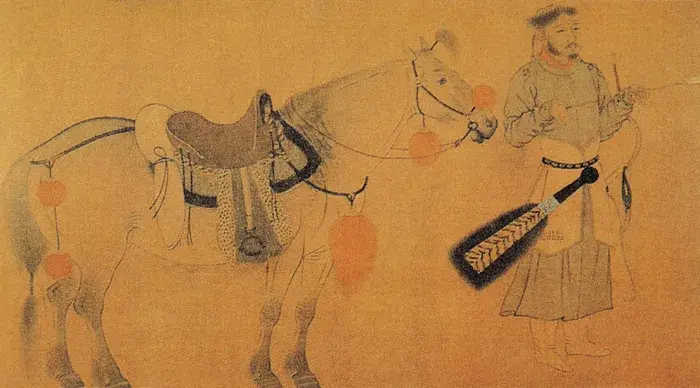
耶律淳
Yelu Chun (1063–1122), Khitan personal name Nieli, grandson of Emperor Xingzong of Liao and son of Prince of Song and Wei Yelu Heluwo, was a prominent imperial prince and the founding emperor of the Northern Liao dynasty. Cultured, dignified, and well-versed in Chinese classics and statecraft from youth, he was nearly designated heir apparent under Emperor Daozong in 1077 before political purges forced him into provincial…
Yelu Chun (1063–1122), Khitan personal name Nieli, grandson of Emperor Xingzong of Liao and son of Prince of Song and Wei Yelu Heluwo, was a prominent imperial prince and the founding emperor of the Northern Liao dynasty. Cultured, dignified, and well-versed in Chinese classics and statecraft from youth, he was nearly designated heir apparent under Emperor Daozong in 1077 before political purges forced him into provincial exile. Following the accession of Emperor Tianzuo in 1101, Yelu Chun was restored to high favor, successively governing as Regent of Dongjing, Chancellor of the Southern Ministry, and Regent of Nanjing (modern Beijing), accumulating the prestigious titles King of Zheng, King of Yue, King of Wei, and King of Qin and Jin. When Jurchen leader Wanyan Aguda founded the Jin dynasty in 1115 and shattered the main Liao field armies, dissident guards attempted a coup to enthrone Yelu Chun; demonstrating unswerving loyalty, Yelu Chun executed their emissary and reported the treason, winning appointment as Grand Marshal of All Armed Forces. In early 1122, following catastrophic defeats at Zhongjing and Xijing, Emperor Tianzuo fled into the Jiashan wilderness, severing all contact with the imperial government. Facing annihilation, Southern Chancellor Li Chuwen and Military Commissioner Yelu Dashi enthroned Yelu Chun in Nanjing Xijin Prefecture in March 1122, inaugurating the Jianfu era as Emperor Tianxi of Northern Liao and demoting the fugitive Tianzuo to Prince of Xiangyin. Yelu Chun fortified the Yanyun defense line and directed commanders Yelu Dashi and Xiao Gan to inflict crushing defeats upon Song invasion forces along the Baigou River. In June 1122, after a three-month reign, he died of illness at the age of sixty, receiving the posthumous title Emperor Xiaozhang and the temple name Xuanzong, interred at the Yongan Mausoleum in Xiangshan.
Born in the Liao inner palace as eldest son of Prince Heluwo; raised by Grand Empress Dowager Xiao.
Following Prince Zhaohuai's execution, considered for heir apparent before being exiled over court rivalries.
Created King of Zheng and elevated to Regent of Dongjing; promoted to King of Yue and Southern Chancellor.
Succeeded his late father as Regent of Nanjing (Xijin), governing the Yanyun region for decades.
Executed rebel conspirators seeking to enthrone him; granted golden credentials and made Grand Marshal.
Mobilized twenty-eight thousand Liaodong refugees into 'Resentful Armies' to combat expanding Jurchen armies.
Appointed King of Qin and Jin and supreme frontier commander as the northern frontiers collapsed before Jin.
Tianzuo fled into Jiashan; Li Chuwen and Yelu Dashi installed Yelu Chun as Emperor Tianxi of Northern Liao.
Repelled Northern Song invasion armies under Tong Guan and Zhong Shidao; died of illness on June 24.
Yelu Chun was born in 1063 (Qingning 9) in the imperial palace of the Liao dynasty, bearing the Khitan childhood name Nieli. His grandfather was Emperor Xingzong (Yelu Zongzhen), his father was Prince of Song and Wei Yelu Heluwo (Xingzong's second son and veteran Regent of Nanjing), and his paternal uncle was Emperor Daozong (Yelu Hongji). Raised in the inner palace by Grand Empress Dowager Renyi (Lady Xiao Tali), Yelu Chun received an extensive education in classical Confucian literature, displaying exceptional erudition, dignified demeanor, and a calm temperament that earned him deep affection among senior imperial clan members.
In 1077 (Dakang 3), powerful court chancellor Yelu Yixin framed and murdered Crown Prince Zhaohuai (Yelu Jun), provoking a severe dynastic crisis. Bereaved and uncertain, Emperor Daozong observed Yelu Chun's virtuous character and contemplated making him imperial heir, with Yelu Yixin's faction briefly supporting the proposal. However, Daozong subsequently took offense at official Yelu Baisibu and, discovering his close friendship with Yelu Chun, banished Yelu Chun to serve as military commissioner of Zhangsheng, shielding him from further treacherous palace purges.
In January 1101 (Shouchang 7), Emperor Daozong died, and Crown Prince Jun's son Yelu Yanxi ascended the throne as Emperor Tianzuo. Tianzuo held his venerable uncle in high regard, promptly elevating Yelu Chun to King of Zheng. In November 1102, Yelu Chun was appointed Regent of Dongjing and advanced to King of Yue. In 1106, he was recalled to court as Chancellor of the Southern Ministry, where he codified ceremonial court decorum between northern and southern administrations, winning great acclaim and promotion to King of Wei.
In 1110 (Qiantong 10), following the death of his father Yelu Heluwo, Emperor Tianzuo decreed that Yelu Chun succeed his father as Regent of Nanjing (Xijin Prefecture, modern Beijing), granting him executive civil and military authority over the Sixteen Prefectures of Yanyun. Over more than three decades of benevolent provincial rule, Yelu Chun lightened corvée burdens, fostered agriculture, and earned profound loyalty from both Khitan warriors and Chinese literati. During his biannual audiences with Emperor Tianzuo, he was accorded precedence above all imperial princes, receiving lavish honors that solidified his towering reputation across northern China.
In 1114 (Tianqing 4), Wanyan Aguda united the Jurchen tribes of northeastern Manchuria and launched an open rebellion against Liao authority, sweeping through Ningjiangzhou and defeating Liao armies on the Songhua River. Disregarding the crisis, Emperor Tianzuo continued hunting in Qingzhou. In January 1115, Aguda proclaimed the founding of the Jin dynasty. Tianzuo personally led an army of one hundred thousand troops to suppress the Jurchens, only to suffer a catastrophic rout at Hubudagang, losing more than fifty administrative prefectures across Liaodong.
The disastrous defeat shattered imperial authority. In October 1115, palace officer Yelu Zhangnu launched a mutiny during the imperial retreat, dispatching trusted couriers to Nanjing to urge Yelu Chun to depose the incompetent Tianzuo and ascend the imperial throne. Faced with this treasonous proposal, Yelu Chun displayed steadfast dynastic loyalty; he executed Zhangnu's emissaries on the spot and dispatched urgent couriers to inform Tianzuo. Deeply moved, Emperor Tianzuo appointed Yelu Chun Grand Marshal of All Armed Forces and bestowed upon him imperial golden credentials authorizing him to independently recruit troops for frontier defense.
In 1116 (Tianqing 6), Bohai rebel Gao Yongchang seized eastern Liaodong and declared himself emperor, allowing Jin armies to swiftly overrun southern Manchuria. As Khitan nobles and garrison troops fled westward, Shenzhou commander Zhang Lin lost his city and was demoted, while hundreds of thousands of destitute Liaodong refugees flooded into Yanyun. In August 1117 (Tianqing 7), Yelu Chun secured imperial permission to recruit twenty-eight thousand sturdy refugees in Yanyun, forming an elite shock corps known as the 'Resentful Armies' (Yuanjun), intended to channel their thirst for revenge against the Jurchens under Zhang Lin's reinstated command.
However, as severe winter gripped the region, the imperial court failed to deliver supplies and winter clothing. Suffering from hunger and neglect, the refugees harbored deep grievances against the Liao court, erupting into mutinies and plundering across Yizhou and Xianzhou. In January 1118 (Tianqing 8), after Jin garrisons seized Shenzhou, Yelu Chun led the Resentful Armies and Yanyun guards to invest the city, shooting surrender appeals into the fortress. When the defenders refused, Yelu Chun ordered an assault, but Jin relief forces under Wanyan Wolü and Wanyan Polu arrived with twenty thousand cavalry, crushing the Liao siege lines. Yelu Chun led surviving units to suppress revolts at Huizhou and Yizhou, but was repeatedly ambushed and forced to retreat to Nanjing with only five hundred cavalrymen.
In 1121 (Baoda 1), facing relentless Jurchen advances, Emperor Tianzuo conferred upon Yelu Chun the title King of Qin and Jin, placing the Supreme Grand Marshal Directorate in his hands to command the armies of Yan, Yun, and Ping. Nevertheless, Emperor Tianzuo remained entrenched in northern steppes, indulging in hunting and executing his virtuous consort Consort Wen (Lady Xiao Sese) and his popular eldest son Prince of Jin Yelu Aoluwo on groundless suspicions, alienating imperial kin and triggering tribal defections.
In January 1122 (Baoda 2), Jin founder Wanyan Aguda launched a massive offensive that breached the passes and captured the Liao central capital Zhongjing (Dading) and western capital Xijing (Datong). Panicked and defenseless, Emperor Tianzuo abandoned his armies and fled with five thousand horsemen into the desolate Jiashan wilderness of the Yin Mountains, cutting off all communication with the court for over two months. With the northern territories lost, the ancient Khitan empire stood on the precipice of absolute destruction.
By March 1122, Nanjing Xijin Prefecture was encircled by disaster, with victorious Jurchen armies massing along northern mountain passes. In Nanjing, Southern Chancellor Li Chuwen, Military Commissioner Yelu Dashi, and senior civil and military officials recognized that if the court remained paralyzed while Emperor Tianzuo was missing, the populace would face annihilation. Gathering over ten thousand metropolitan officials, garrison commanders, Buddhist and Daoist clergy, and civic elders outside Yelu Chun's palace, they wept and implored him to assume the imperial mantle.
On March 17, 1122, Yelu Chun bowed to the collective demand and ascended the imperial throne in Nanjing, adopting the reign title Jianfu and the regal designation Emperor Tianxi, establishing the Northern Liao dynasty. He elevated his primary consort Lady Xiao Puxiannü to Imperial Consort, appointed Li Chuwen as Grand Minister of Works, and made Yelu Dashi Grand Preceptor in command of military forces. To regularize imperial succession, Yelu Chun issued an imperial decree demoting the fugitive Emperor Tianzuo to Prince of Xiangyin, assuming command over the six remaining circuits of Yan, Yun, Ping, Shangjing, Zhongjing, and Liaoxi.
Upon his accession, Yelu Chun faced simultaneous threats from Jin in the north and the Northern Song in the south. Believing Liao was extinguished, Song Emperor Huizong and Chancellor Cai Jing dispatched an army of one hundred and fifty thousand troops under Tong Guan to seize Yanyun. In April 1122, Song envoys arrived in Nanjing demanding immediate surrender; Yelu Chun executed the envoys to steel civilian morale. In May, as Song forces under Zhong Shidao approached the frontier, Yelu Chun dispatched Yelu Dashi and Xiao Gan to mount an active defense. Fighting with desperate resolve, Liao forces routed Song armies twice along the Baigou River and Langoudian, inflicting tens of thousands of casualties and saving Nanjing from southern invasion.
Following this defensive triumph, Yelu Chun dispatched emissaries to Jin general Wanyan Zongwang, proposing to submit as a tributary vassal in the style of the Later Jin dynasty of the Five Dynasties, but the Jin court rejected any negotiated compromise. In June, surrounded by diplomatic isolation, Yelu Chun received alarming intelligence that Emperor Tianzuo had gathered fifty thousand cavalry in Jiashan and planned to march south against Nanjing. Overwhelmed by grief, exhaustion, and physical affliction, severe carbuncles erupted across his back. On June 24, 1122, Yelu Chun passed away in Nanjing after a three-month reign at the age of sixty. He was buried at the Yongan Mausoleum in Xiangshan and conferred the posthumous title Emperor Xiaozhang with the temple name Xuanzong.
When Emperor Tianzuo abandoned the state and fled into the northern wilderness, Yelu Chun accepted the imperial throne in Nanjing Xijin Prefecture to preserve the ancestral shrines and maintain civil order. Although Northern Liao endured for only a short period, his accession stabilized the Yanyun borderlands, rallied the fragmented Khitan military elite, and postponed the total Jurchen conquest of northern China, providing the organizational foundation that enabled commanders like Yelu Dashi to later lead remnants westward and establish the formidable Western Liao (Qara Khitai) empire.
Exploiting Liao's internal crisis, the Northern Song broke a century of peace to launch an unprovoked invasion aimed at seizing Yanyun. In the face of overwhelming numerical odds, Yelu Chun organized a resolute forward defense, entrusting military operations to Yelu Dashi and Xiao Gan. The decisive Khitan victories at the Baigou River crushed the Song expeditionary forces, thoroughly exposing the military bankruptcy of the late Northern Song and preserving the honor and borders of the Khitan state during its final hour.
| Relationship Type | Name | Identity and Historical Intersection |
|---|---|---|
| Cousin and Predecessor | Yelu Yanxi (Tianzuo) | Final Emperor of the unified Liao dynasty; fled to Jiashan; demoted to Prince of Xiangyin by Yelu Chun. |
| Kingmaker and Hero | Yelu Dashi | Imperial Linya and general; co-engineered Yelu Chun's accession, routed Song armies, and later founded Western Liao. |
| Co-Conspiring Chancellor | Li Chuwen | Southern Chancellor who orchestrated Yelu Chun's enthronement; later executed for secret treason with Jin. |
In the History of Liao (Liao Shi, Volume 30), imperial historians observed: 'Yelu Chun loved literature and decorum from his youth, possessing an imposing stature and a generous nature. Governing Youji for over thirty years, he won the deep affection of the people. When Emperor Tianzuo fled and the realm trembled in panic, Li Chuwen and others elevated him to prolong the dying dynasty. This act was compelled by circumstances rather than personal ambition.' Historians agree that Yelu Chun was an honorable, dutiful prince whose accession was driven by a noble desire to protect millions of subjects in Yanyun, with his victory at the Baigou River standing as a testament to Khitan martial dignity.
FIGURES ASSOCIATED WITH THIS DYNASTY