Tangut Heritage
Born into the prominent Yeli clan; dedicated himself to both Han and Tangut classical learning.
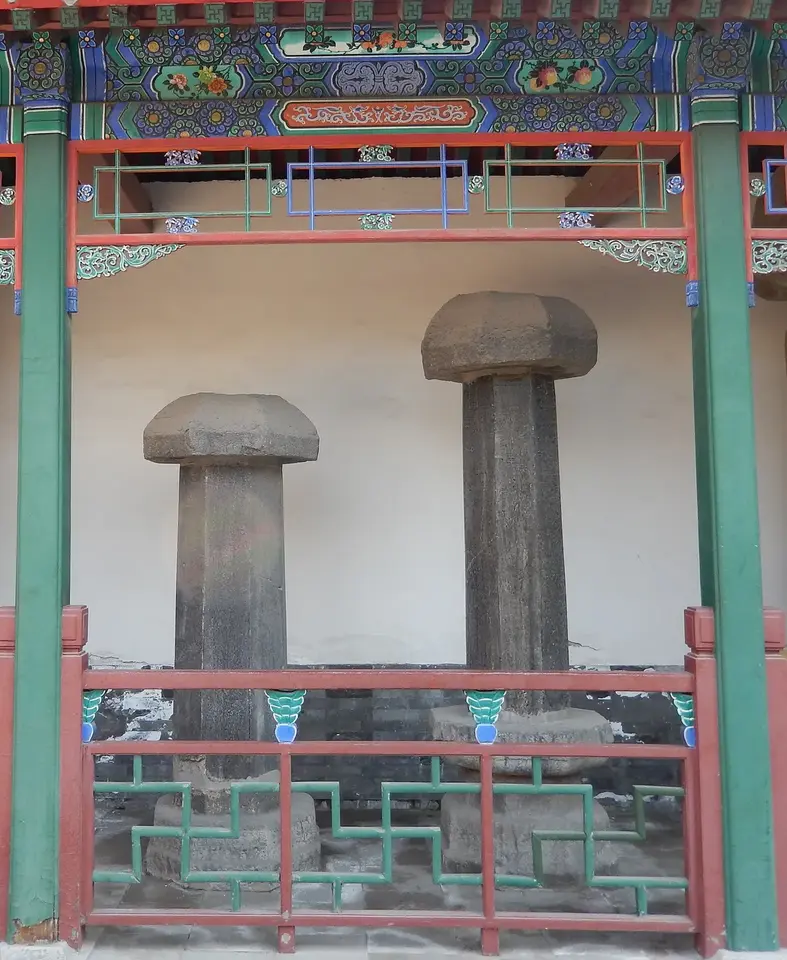
?–1042 CE
野利仁荣
Yeli Renrong (died 1042) was a founding statesman, prominent scholar, and linguist of the Western Xia (Tangut Empire). A senior member of the influential Tangut Yeli clan, he was a distant relative of Empress Yeli, the first consort of Emperor Jingzong (Li Yuanhao). Well-versed in Confucian classics and dynastic histories, Yeli Renrong understood both Han Chinese administrative statecraft and the nomadic-pastoral traditions…
Yeli Renrong (died 1042) was a founding statesman, prominent scholar, and linguist of the Western Xia (Tangut Empire). A senior member of the influential Tangut Yeli clan, he was a distant relative of Empress Yeli, the first consort of Emperor Jingzong (Li Yuanhao). Well-versed in Confucian classics and dynastic histories, Yeli Renrong understood both Han Chinese administrative statecraft and the nomadic-pastoral traditions of the Tangut people, serving as the preeminent intellectual architect of Western Xia independence. Possessing a strong commitment to cultural autonomy, Yeli Renrong rejected total Sinicization. He advised Li Yuanhao to govern according to native customs, instituting strict military discipline and merit-based rewards tailored to a martial society. In 1036, under imperial commission from Li Yuanhao, Yeli Renrong devised a comprehensive writing system for the Tangut language. Adapting the square block structure and stroke elements of Chinese regular script while capturing the polysyllabic phonology of the Tangut tongue, he produced the twelve-volume Tangut script, comprising over six thousand characters. Li Yuanhao proclaimed this the official National Script and established the Tangut and Chinese Script bureaus to manage internal and foreign diplomatic documents. When Li Yuanhao declared himself Emperor of Great Xia in 1038, Yeli Renrong served as principal strategist and was appointed Mo Ningling (Heavenly Grand King), presiding over central administrative governance. In 1039, he established the Grand Tangut Academy in Xingqing, directing the translation of Chinese classics—such as the Classic of Filial Piety, Erya, and Four-Character Miscellaneous Vocabulary—into Tangut woodblock prints to educate young aristocratic officials. Revered by the Tangut people as the Sagely Teacher, he died in 1042, mourned deeply by Li Yuanhao, who posthumously created him Marquis of Fuping. In 1162, Emperor Renzong of Western Xia (Li Renxiao) posthumously elevated him to Prince Guanghui, leaving an enduring cultural legacy that survived for centuries.
Born into the prominent Yeli clan; dedicated himself to both Han and Tangut classical learning.
Joined Li Yuanhao's court upon his accession, advocating institutional systems based on native customs.
Completed the creation of the twelve-volume Tangut script, which Yuanhao promulgated as the National Script.
Established the Tangut Script Bureau and Chinese Script Bureau, institutionalizing bilingual state administration.
Served as chief advisor in Yuanhao's imperial coronation, appointed Heavenly Grand King (Mo Ningling).
Founded the Grand Tangut Academy, translating Chinese classics into Tangut and training bilingual civil officials.
Passed away in Xingqing, created Marquis of Fuping by a weeping Li Yuanhao, and later posthumously elevated to Prince Guanghui in 1162.
Yeli Renrong was born into the Yeli clan, one of the most powerful aristocratic houses of the Tangut Qiang people. For generations, the Yeli chieftains controlled the fertile pasturelands of the Hengshan and Qilian mountains, commanding tens of thousands of pastoral horsemen. The clan achieved supreme court prestige when Lady Yeli became the principal consort of Li Yuanhao. Within this eminent clan, Yeli Renrong was widely revered for intellect and seniority.
Unlike many contemporary Tangut chieftains who focused solely on horsemanship and warfare, Yeli Renrong pursued classical scholarship. He read widely in Confucian historical chronicles, military strategy, and administrative law, acquiring deep knowledge of Chinese statecraft while retaining fierce pride in the pastoral identity and oral traditions of the Tangut people.
In 1032, upon the death of his father Li Deming, Li Yuanhao inherited the title Prince of Xiping, harboring ambitions to break tributary ties with the Song and Liao empires. In court debates regarding institutional development, several civil officials argued for complete Sinicization. Yeli Renrong firmly countered this proposal, submitting a famous memorial defining the ideological foundation of the Western Xia state.
Yeli Renrong argued: "Whenever an imperial ruler rises, he must establish an institutional system suitable to his own era; why blindly imitate foreign practices? In antiquity, Shang Yang implemented rigorous legalist codes to make Qin a hegemon, while King Wuling of Zhao adopted nomadic clothing and mounted archery to build military supremacy. Today, our Great Xia borders great mountains and rivers, where Tanguts and Han Chinese live intermingled. Our people are naturally courageous, fond of hunting, and dedicated to mounted combat; they do not possess the effete literary sentiments of Central Plains scholars. The path of true governance lies in conforming to popular character, educating through battlefield rewards, and maintaining strict justice. If our people delight in military campaigns and cultivate toughness, we can overawe the Central Plains and govern the western tribes. How could empty talk of classical ritual compare to this?" Li Yuanhao embraced this advice, designating Yeli Renrong as his chief intellectual guide and instituting a dual administrative framework that balanced native customs with bureaucratic rigor.
Yeli Renrong recognized that an independent empire required an autonomous writing system. Without a national script, all imperial decrees, administrative codes, and historical chronicles would remain dependent on Chinese characters, eroding the distinct identity of the Tangut state. In 1036, Li Yuanhao formally commissioned Yeli Renrong to design a national writing system.
Retiring to a quiet study in the capital Xingqing (modern Yinchuan, Ningxia), Yeli Renrong labored in seclusion for years. Devising an entirely new script from scratch was a monumental linguistic challenge. Rather than borrowing Chinese characters directly or adopting simple phonetic alphabets, Yeli Renrong adapted the visual principles of Chinese regular script—including horizontal, vertical, slanting, and angular strokes arranged within square frames—to match the complex phonetic structure and grammatical agglutination of the Tangut language.
The Tangut characters featured dense, angular strokes, possessing a majestic, square appearance where no single character was identical to a Chinese logogram. After years of labor, Yeli Renrong produced the twelve-volume Tangut script, comprising over six thousand characters classified systematically by phonetic rhyme and radical components. The script was capable of expressing abstract philosophical concepts and precise legal terminology.
When Yeli Renrong presented the twelve volumes at court, Li Yuanhao and the assembled ministers were astonished. Li Yuanhao declared a new reign era and promulgated the script across the realm as the official National Script. Imperial law decreed: "All official edicts, administrative ordinances, and historical records across the realm must be composed exclusively in the National Script." In foreign relations, diplomatic correspondence with the Song dynasty utilized dual Tangut-Chinese texts, while correspondence with Tibet, the Uyghurs, and the Liao dynasty employed parallel non-Chinese scripts. The creation of the Tangut script broke the linguistic monopoly of Chinese characters in the northwest and forged an enduring national consciousness.
To ensure the administrative integration of the new script, Yeli Renrong advised the creation of specialized central agencies within the Department of State Affairs. Li Yuanhao adopted his counsel, establishing the Tangut Script Bureau and the Chinese Script Bureau, placing both under Yeli Renrong's supervision.
The Tangut Script Bureau was responsible for drafting imperial edicts, military dispatch tallies, ritual liturgical chants, and recording dynastic battlefield chronicles in the native script. The Chinese Script Bureau managed diplomatic dispatches to the Song dynasty, translated Han administrative texts, and addressed correspondence to Chinese subjects in the border commanderies. Yeli Renrong established strict calligraphic and grammatical testing for clerks, ensuring bilingual proficiency throughout the bureaucracy.
On November 10, 1038, Li Yuanhao held a solemn ceremony outside Xingqing, ascending the imperial throne as Emperor of Great Xia, formalizing the independence of the Western Xia dynasty. Alongside senior minister Yang Shousu, Yeli Renrong served as chief architect of the imperial protocol, court vestments, and ceremonial music. Following his coronation, Yuanhao rewarded Yeli Renrong with the supreme office of Mo Ningling (Heavenly Grand King), placing him at the head of the civil administration and entrusting him with central statecraft.
Understanding that an official writing system would wither without educational infrastructure, Yeli Renrong focused upon cultivating a literate cadre of native scholars. In 1039, he petitioned Emperor Jingzong to establish the Grand Tangut Academy in Xingqing, with Yeli Renrong serving as Grand Chancellor and master tutor.
The Grand Tangut Academy was a national university accommodating thousands of youths from aristocratic Tangut families and prominent Han lineages. Yeli Renrong lectured regularly on linguistic structures, phonology, and statecraft, while overseeing the creation of regional academies across the provinces. Under his regulations, students who passed rigorous standardized examinations in Tangut literature and administration were directly appointed to government offices, generating an enthusiastic wave of scholarship that produced a literate bilingual civil service.
To provide canonical textbooks for the academies, Yeli Renrong dedicated himself to literary translation. Directing teams of scholar-translators, he translated core Chinese Confucian classics—including the Classic of Filial Piety, Erya, and Four-Character Miscellaneous Vocabulary—into Tangut woodblock editions. He also compiled early dictionaries and rhyme tables, introducing Confucian moral statecraft to the steppe while preserving Tangut cultural independence. The grateful people of Western Xia honored him with the title Sagely Teacher.
In a famous Tangut narrative poem titled Ode in Praise of the Teacher, composed around 1185, his achievements were commemorated: "Each people possesses their own speech, which they cherish; each people possesses their own script, which they revere; our land of Xia also welcomed an enlightened master sent from Heaven, none greater than the illustrious Lord Yeli; like a radiant literary star rising from the east, illuminating the western lands with the gift of characters; gathering three thousand seven hundred disciples, educating them to become pillars of the state!"
In 1042, following decisive Western Xia victories over Northern Song armies at the battles of Haoshuichuan and Dingchuanzhai, Yeli Renrong died of illness at his residence in Xingqing, exhausted by years of intellectual labor.
News of his death brought nationwide grief. Emperor Jingzong was inconsolable, visiting the funeral chambers three times to weep before the coffin, lamenting: "Why has Heaven robbed me of my primary minister so swiftly!" Yuanhao accorded him a state funeral, posthumously granting him the title Marquis of Fuping.
While Yeli Renrong died, the cultural foundations he built endured for centuries. The Tangut script survived the Mongol conquest of Western Xia in 1227, remaining in active use across the Hexi Corridor, Dunhuang caves, and northern China through the Ming dynasty, preserving vast canonical collections including the Tiansheng Laws, the Sea of Characters (Wenhai), and the Tangut Tripitaka. In 1162, Emperor Renzong of Western Xia (Li Renxiao), wishing to permanently commemorate his civilizational contribution, issued an imperial decree elevating Yeli Renrong to Prince Guanghui and establishing ancestral shrines for seasonal sacrifices, cementing his status as the only commoner-scholar in Western Xia history elevated to royal princehood.
FIGURES ASSOCIATED WITH THIS DYNASTY