Birth in Lingzhou
Born on the fifth day of the fifth month into the Tangut ruling house of the Dingnan military commission.
1003 CE–1048 CE
李元昊
Li Yuanhao (李元昊, June 7, 1003 – January 19, 1048), also known by his Tangut names Weili and Nangxiao, was the paramount leader of the Tangut people and the founding emperor of the Western Xia dynasty (reigned 1038–1048). Born into the hereditary ruling house of the Dingnan military commission in Lingzhou, he was renowned from his youth for his tactical genius, profound comprehension of Buddhist literature and military…
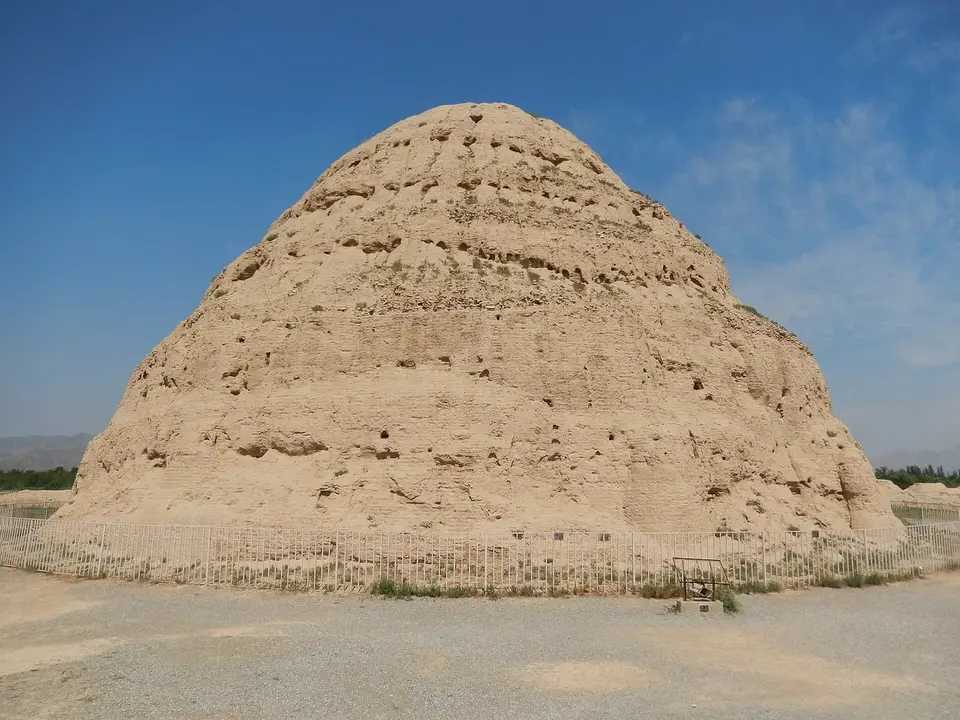
Li Yuanhao (李元昊, June 7, 1003 – January 19, 1048), also known by his Tangut names Weili and Nangxiao, was the paramount leader of the Tangut people and the founding emperor of the Western Xia dynasty (reigned 1038–1048). Born into the hereditary ruling house of the Dingnan military commission in Lingzhou, he was renowned from his youth for his tactical genius, profound comprehension of Buddhist literature and military treatises, and fluency in both Chinese and Tibetan scripts. Rejecting his father Li Deming's compliant foreign policy toward the Song empire, Yuanhao aggressively spearheaded western military expansions, conquering Ganzhou and Liangzhou to bring the strategic Hexi Corridor firmly under Tangut control. Following his father's death in 1032, Yuanhao initiated a bold program of state-building aimed at total independence. He discarded the imperial surnames Li and Zhao bestowed by the Tang and Song courts, adopting the native Tangut surname Weiming. He enforced the shaving of heads to revive nomadic customs, ordered Yeli Renrong to invent the unique Tangut script, and established a dual bureaucratic apparatus combining Central Plains administrative organs with Tangut tribal institutions. On November 10, 1038, he formally proclaimed himself emperor in Xingqing (modern Yinchuan), establishing the Great Xia dynasty. Between 1040 and 1042, Yuanhao inflicted catastrophic defeats upon Northern Song armies in the three monumental campaigns of Sanchuankou, Haoshuichuan, and Dingchuanzhai, utilizing deceptive ambushes and elite cavalry units such as the Iron Hawks. In 1044, he simultaneously repelled a massive invasion led by Emperor Xingzong of Liao. His military triumphs solidified the geopolitical tripartite balance between Song, Liao, and Western Xia. Under the Qingli Peace Accord of 1044, Yuanhao agreed to nominally acknowledge Song suzerainty in exchange for massive annual subsidies. In his later years, Yuanhao grew increasingly tyrannical and paranoid; his seizure of his crown prince's consort ignited a palace conspiracy, leading to his assassination by Crown Prince Ninglingge in early 1048. He was buried in Tailing Mausoleum and remembered as Emperor Jingzong.
Born on the fifth day of the fifth month into the Tangut ruling house of the Dingnan military commission.
Led Tangut armies to seize Ganzhou from the Uyghurs and Liangzhou from the Tibetans; appointed heir apparent.
Succeeded Li Deming as ruler, took the surname Weiming, and enforced the three-day hair-shaving decree.
Promulgated the national Tangut script designed by scholar Yeli Renrong and founded dual language academies.
Formally ascended the imperial throne at Xingqing on the eleventh day of the tenth month, creating Great Xia.
Besieged Yanzhou and annihilated elite Song armies led by Liu Ping and Shi Yuansun in an ambush.
Lured Song commander Ren Fu into a mountain valley ambush, inflicting over ten thousand casualties.
Surrounded and destroyed general Ge Huaimin's forces near Guyuan, threatening the central Guanzhong plains.
Concluded peace with Song; surrendered imperial title externally in exchange for 255,000 units of annual tribute.
Severely wounded during a palace assault by his disaffected heir Ninglingge and died shortly after at age forty-six.
Li Yuanhao was born in 1003 into the aristocratic Tangut clan that governed Xiazhou as the Dingnan military commissioners. The year after his birth, his grandfather Li Jiqian fell in battle against Tibetan tribes, leaving his father Li Deming to pursue a delicate strategy of peaceful accommodation with both the Song and Liao empires. Growing up in this environment, Yuanhao displayed a striking appearance, martial vigor, and an early disdain for submission. He famously criticized his father for exchanging valuable warhorses for trivial luxury goods from China, arguing that a nomadic martial culture should rely on cavalry prowess rather than tributary subordination.
Yuanhao studied Chinese military classics such as the Art of War alongside specialized treatises on tactical prognostication, while mastering Buddhist theology and Tibetan languages. In 1028, at the age of twenty-five, he led a daring western expedition that conquered Ganzhou from the Ganzhou Uyghurs and captured Liangzhou, extending Tangut sovereignty throughout the vital Hexi trade corridor. Impressed by his son's brilliant tactical success, Li Deming officially designated Yuanhao as his successor.
Upon his father's demise in 1032, Yuanhao assumed direct governance over the five central prefectures of the Ordos and Hexi regions. Viewing the tributary relationship with the Northern Song as an obstacle to imperial greatness, he initiated radical socio-political transformations. To reassert ethnic identity, he issued an ultimatum commanding all male subjects to adopt the traditional shaved hairstyle within three days under penalty of execution. He shed the Han surnames bestowed by imperial courts, styling himself with the native dynastic surname Weiming and taking the title of Wuzu, meaning Heavenly Son.
In administrative organization, Yuanhao synthesized Chinese bureaucratic structures with Tangut tribal governance, establishing a Central Secretariat, Bureau of Military Affairs, and Court of Censors alongside native military banners. In 1036, he promulgated a complete native writing system created by scholar Yeli Renrong, which was systematically utilized in state decrees, legal codes, and Buddhist translations. Finally, on November 10, 1038, he erected an imperial altar outside Xingqing, proclaimed the founding of the Great Xia empire, and dispatched envoys to Kaifeng demanding recognition as an equal sovereign.
The Song court rejected Yuanhao's imperial declaration as treasonous, stripped him of all noble titles, terminated border markets, and placed a massive bounty on his head. In response, Yuanhao unleashed a series of meticulously planned military campaigns. In 1040, he feigned an assault on Yanzhou, drawing Song generals Liu Ping and Shi Yuansun into a devastating ambush at Sanchuankou. The following year, at Haoshuichuan, he utilized fluttering decoy pigeons to trap general Ren Fu's army in a narrow gorge, obliterating their vanguard. In 1042, Yuanhao achieved another crushing triumph at Dingchuanzhai, trapping and killing general Ge Huaimin along with nine thousand troops.
Despite these dramatic field victories, the prolonged conflict exhausted Xia's economy. The cessation of cross-border trade deprived the Tanguts of essential commodities like tea and silk, while Northern Song finances suffered under unsustainable mobilization costs. Consequently, both empires initiated diplomatic negotiations. Under the Qingli Accord of 1044, Yuanhao nominally accepted the status of a vassal prince toward the Song emperor while preserving full imperial prerogatives within his own borders, securing annual imperial gifts of silver, silk, and tea totaling 255,000 units.
Li Yuanhao was unique among nomadic founders for his deliberate cultivation of a separate, institutionalized national culture designed to resist Han assimilation. His hair-shaving mandate created an immediate visual boundary between Tanguts and Chinese subjects, reinforcing communal solidarity across diverse clans.
Simultaneously, he elevated Tangut culture through institutionalized literacy and education. The Tangut script, consisting of over six thousand complex logographic characters, became the official administrative vehicle for imperial law codes and administrative registers. He established national academies to train elite youths in both Chinese and Tangut classics, while fostering massive translation projects of the Buddhist canon, ensuring that Western Xia developed an enduring spiritual and literate civilization.
Yuanhao completely overhauled the Tangut armed forces, creating specialized tactical units that dominated regional warfare for generations. He organized the legendary Iron Hawks, an elite vanguard of heavily armored cataphract cavalry capable of crushing standard infantry formations, supported by the agile Mountain Walkers recruited from mountainous tribes to execute rugged guerrilla warfare.
These military innovations were demonstrated conclusively in 1044 when Emperor Xingzong of Liao invaded Western Xia with a massive host. Employing scorched-earth tactics in the Helan Mountains, Yuanhao lured the Khitan armies deep into desolate terrain before launching a crushing counteroffensive that captured imperial Liao generals. By defeating both the Northern Song and the Khitan Liao empires, Yuanhao firmly anchored Western Xia as an indispensable sovereign power in East Asian history.
FIGURES ASSOCIATED WITH THIS DYNASTY