Flying Rope Feat
Displayed supernatural sprinting speed with a long rope tied to his topknot in Luoyang; appointed Army Commander by Li Chong.
?–?
杨大眼
Yang Dayan (杨大眼, ?–518), a native of Wudu Commandery (武都郡) and of Di ethnicity, was a renowned military general of the Northern Wei dynasty, celebrated throughout contemporary China for his peerless physical speed and combat valor. A grandson of Yang Nandang, ruler of the Post-Chouchi Kingdom, Yang Dayan was born to a secondary consort and suffered privation and neglect during his youth. When Emperor Xiaowen prepared for his…
Yang Dayan (杨大眼, ?–518), a native of Wudu Commandery (武都郡) and of Di ethnicity, was a renowned military general of the Northern Wei dynasty, celebrated throughout contemporary China for his peerless physical speed and combat valor. A grandson of Yang Nandang, ruler of the Post-Chouchi Kingdom, Yang Dayan was born to a secondary consort and suffered privation and neglect during his youth. When Emperor Xiaowen prepared for his southern campaigns in 493, Yang Dayan demonstrated his astonishing athletic speed in Luoyang by tying a three-zhang rope to his topknot and sprinting faster than a galloping horse. Astounded by his prowess, Minister Li Chong broke protocol to appoint him as an army commander, initiating his distinguished military career. Over a military career spanning more than three decades under emperors Xiaowen, Xuanwu, and Xiaoming, Yang Dayan consistently demonstrated unmatched battlefield bravery. He served as the advance vanguard during Emperor Xiaowen's southern offensives against Wan, Ye, Rang, and Deng; relieved the besieged fortress of Guoyang; and galloped first into Shouchun when Pei Shuye surrendered the city to Northern Wei, earning the noble rank of Founding Master of Ancheng County. During the reign of Emperor Xuanwu, he crushed the southern Liang army under Wang Mao along the Han and Mian rivers and recaptured Suyu. Following the catastrophic defeat of the Northern Wei siege at the Battle of Zhongli in 507, where he was wounded in the arm by a crossbow bolt and the bridge across the Huai River collapsed, he was demoted and exiled to Yingzhou. Later pardoned and recalled, he directed counter-engineering operations at Mount Jing to divert the Huai River and nullify the threat of the Liang dynasty's massive Fushan Weir. In his final years as Regional Inspector of Jingzhou, he enforced military discipline and wrestled a tiger with his bare hands, cowing southwestern tribal insurgents into lasting submission. Contemporaries compared his martial prowess to Guan Yu and Zhang Fei of the Three Kingdoms era, and the famous Yang Dayan Statue Inscription in the Longmen Grottoes remains one of the pinnacle masterpieces of northern calligraphy.
Displayed supernatural sprinting speed with a long rope tied to his topknot in Luoyang; appointed Army Commander by Li Chong.
Promoted to Corps Commander and accompanied Emperor Xiaowen on southern campaigns, repeatedly spearheading assaults on Wan and Ye.
Campaigned with Wang Su to relieve Guoyang, leading cavalry strikes that forced Southern Qi general Pei Shuye to retreat.
Spearheaded the entry into Shouchun following Pei Shuye's defection; enfeoffed as Founding Master of Ancheng County and appointed General of the Palace Gate.
Appointed Regional Inspector of East Jingzhou; coordinated with Li Chong to eradicate the uprising of chieftain Fan Xiuan.
Appointed General of Martial Might; decisively routed Liang general Wang Mao along the Han River, slaying key commanders and taking seven thousand heads.
Allied with Xing Luan to defeat Lan Huaigong and expelled Liang prince Zhang Huishao, recovering the strategic fortress of Suyu.
Besieged Zhongli alongside Yuan Ying; wounded by Wei Rui's crossbow volley and forced to burn his camp when the bridge fell, leading to exile in Yingzhou.
Emperor Xuanwu pardoned his past failures; reinstated as Probationary Governor of Zhongshan and Chief Clerk to the Grand Commandant.
Stationed at Mount Jing to counteract the Liang Fushan Weir, excavating an upstream diversion channel to safeguard Shouchun.
Appointed Regional Inspector of Jingzhou; disciplined tribal leaders with straw effigies and slew a man-eating tiger barehanded.
Passed away while serving in Jingzhou; eldest son Yang Zhengsheng fled south to the Liang Dynasty with his corpse following succession disputes.
Yang Dayan originated from the Di chieftain aristocracy of Wudu Commandery. His grandfather, Yang Nandang, ruled the Post-Chouchi Kingdom in southern Gansu, exercising regional hegemony and maneuvering between the Liu Song and Northern Wei dynasties. However, Yang Dayan's father was born of a concubine, and Yang Dayan was likewise born to a secondary consort. Consequently, he was marginalized within the Chouchi clan, receiving neither family patronage nor financial assistance, and frequently endured cold and hunger in his early years. Despite his humble domestic status, Yang Dayan possessed an extraordinarily bold spirit, robust physique, and an agile constitution that allowed him to leap and sprint with supernatural swiftness.
During the Taihe era, as Emperor Xiaowen undertook administrative reforms and prepared a grand southern expedition, Minister Li Chong was tasked with reviewing and commissioning military candidates in Luoyang. Yang Dayan presented himself at the office seeking enlistment. Judging him by his obscure origin and lack of prior rank, Li Chong initially intended to dismiss him. Undaunted, Yang Dayan stepped forward and requested an opportunity to display his personal capability. He produced a rope over thirty feet long, tied it securely to his topknot, and sprinted across the parade ground. The rope trailed straight as an arrow in the wind, and his foot speed outpaced galloping steeds. The watching officers and ministers were astonished. Li Chong proclaimed that such exceptional physical talent had not been witnessed in a thousand years, immediately commissioning him as an Army Commander. Yang Dayan turned to his peers and proudly declared that he had attained the opportunity of a dragon plunging into water, never again to be ranked among ordinary men.
Shortly after receiving his commission, Yang Dayan was promoted to Corps Commander due to his exceptional martial energy. He accompanied Emperor Xiaowen on the southern campaigns, seeing combat across the contested cities of Wan, Ye, Rang, Deng, Jiujiang, and Zhongli. In every assault, Yang Dayan charged at the front of his men, shattering enemy battle formations with undisputed personal bravery. In March 498, Southern Qi general Pei Shuye led a powerful force to invest the fortress of Guoyang. The Northern Wei court ordered Yang Dayan, alongside General of Pacifying the South Wang Su and Grand General Xi Kangsheng, to relieve the garrison. Leading an elite cavalry strike force, Yang Dayan launched repeated deep penetrations against the Qi encirclement, forcing Pei Shuye to abandon the siege and withdraw to Guokou under cover of darkness.
In 500, Southern Qi provincial inspector Pei Shuye surrendered the strategic stronghold of Shouchun to Northern Wei to escape political purges at Jiankang. Facing imminent Southern Qi counteroffensives, Northern Wei dispatched Yang Dayan and Xi Kangsheng to secure the territory. Yang Dayan led vanguard horsemen through rain and missile fire to enter Shouchun first, calming the populace and organizing local defenses. For this decisive service, he was enfeoffed as Founding Master of Ancheng County with a revenue of three hundred households, and appointed General of the Palace Gate, later augmented to General of Supporting the State and Guerrilla General. He subsequently served as General of Conquering Bandits and Regional Inspector of East Jingzhou, where he accompanied Commander Li Chong into rugged mountain terrain to eradicate the rebellion of tribal leader Fan Xiuan.
In 506, Emperor Wu of Liang mounted a substantial northern offensive. Liang general Wang Mao marched tens of thousands of troops into Fanyong, inciting indigenous populations to establish an outpost named Wanzhou, while his subordinate Lei Baolang seized the fortified city of Henan with twenty thousand soldiers. Emperor Xuanwu issued an imperial decree commissioning Yang Dayan as General of Martial Might and Acting General of Pacifying the South, granting him imperial talismans to command multiple divisional corps against Wang Mao.
Yang Dayan engaged the Liang forces along the Han and Mian rivers. Leading an all-out cavalry charge into the enemy center, he shattered Wang Mao's frontline formations, slew Liang generals Wang Hua and Shen Tianhua on the field, and took more than seven thousand heads and captives, thwarting the Liang advance toward Luoyang. Concurrently, Liang commander Zhang Huishao, maternal uncle of the Liang emperor, occupied the strategic border town of Suyu. Yang Dayan was appointed General of Pacifying the East and allied with Commander Xing Luan to launch a flanking assault. After destroying the fortified redoubts of Liang officer Lan Huaigong, Yang Dayan pursued the retreating Liang troops, forcing Zhang Huishao to flee toward Huaiyin by night and successfully reclaiming Suyu for Northern Wei.
Following the victory at Suyu, Yang Dayan joined Prince of Zhongshan Yuan Ying in commanding an army of several hundred thousand men to besiege the southern stronghold of Zhongli along the Huai River. The Northern Wei army constructed dual floating pontoon bridges across the Shaoyang Islet to link the riverbanks and maintain logistical transit. Yuan Ying directed assaults from the eastern bank against Zhongli's walls, while Yang Dayan fortified the western bank to secure communications. Despite devastating siege engines and continuous bombardment, Liang garrison commander Chang Yizhi resisted heroically with three thousand men.
Aware of deteriorating spring conditions, Emperor Xuanwu repeatedly ordered a withdrawal, but Yuan Ying insisted on maintaining the siege. Emperor Wu of Liang dispatched relief armies under Wei Rui and Cao Jingzong totaling two hundred thousand troops. Arriving overnight at Shaoyang Islet, Wei Rui erected deep entrenchments and palisades within a hundred paces of the Wei camp. Overconfident in his mounted troops, Yang Dayan charged the Liang fortifications with ten thousand elite horsemen. Wei Rui arrayed his wagons into an impenetrable square and ordered two thousand heavy crossbows to fire in coordinated volleys. Penetrating armor at close range, the crossbow bolts inflicted heavy casualties and struck Yang Dayan through the right arm, compelling him to retreat.
In April 507, torrential spring rains raised the Huai River by seven feet. Cao Jingzong and Wei Rui deployed towering fire-ships packed with dried reeds and combustibles, setting ablaze the Wei pontoon bridges under cover of favorable winds. The wooden bridges disintegrated in the surging river, cutting off escape routes. As Liang marines assaulted the islet, the Northern Wei divisions collapsed in panic, with over one hundred thousand soldiers perishing by drowning or the sword. Yuan Ying escaped on a single mount, while Yang Dayan, unable to prevent his subordinate commanders from routing over the burning bridges, was forced to incinerate his camp and retreat. The disaster at Zhongli stunned the Northern Wei court; in the subsequent trials, Yuan Ying and Yang Dayan were stripped of all offices and nobility, and Yang Dayan was exiled as an ordinary garrison soldier to distant Yingzhou in the northeast.
Yang Dayan remained in exile at Yingzhou for several years, distinguishing himself in frontier defense. During the Yongping era, Emperor Xuanwu recalled his former valor and pardoned his punishment, restoring him as Probationary Governor of Zhongshan. When general Gao Zhao led an expedition into Sichuan, Emperor Xuanwu grew anxious that southern forces might invade through the Huai River corridor. The emperor recalled Yang Dayan to the capital, naming him Chief Clerk to the Grand Commandant, Acting General of Pacifying the South, and Expeditionary Commander under Yu Yao. When Yang Dayan arrived in Luoyang, citizens and officials lined the avenues in massive crowds to celebrate the return of their hero. During this period, Wang Bing, nephew of Southern Qi statesman Wang Su who had recently defected north, met Yang Dayan and commented that southerners imagined his eyes to be as large as cartwheels. Yang Dayan humorously retorted that when two battle lines met under waving banners, the fierce glare of his eyes was enough to blind opponents without needing to be as large as wheels.
While his forces advanced toward Qiaonan, Emperor Xuanwu passed away. Seizing the opportunity, Emperor Wu of Liang directed general Kang Xuan to construct the colossal Fushan Weir across the Huai River, seeking to flood Shouchun. The Northern Wei court elevated Yang Dayan to Grandee of the Golden and Purple, restored his noble rank of Founding Master of Ancheng County, and dispatched him to fortify Mount Jing. Recognizing that the weir's stone fortifications were impervious to direct assault, Yang Dayan mobilized his troops and local laborers to excavate a broad drainage channel upstream, diverting the surging waters and neutralizing the catastrophic flood threat against Shouchun. For this achievement, he was promoted to General of Pacifying the East.
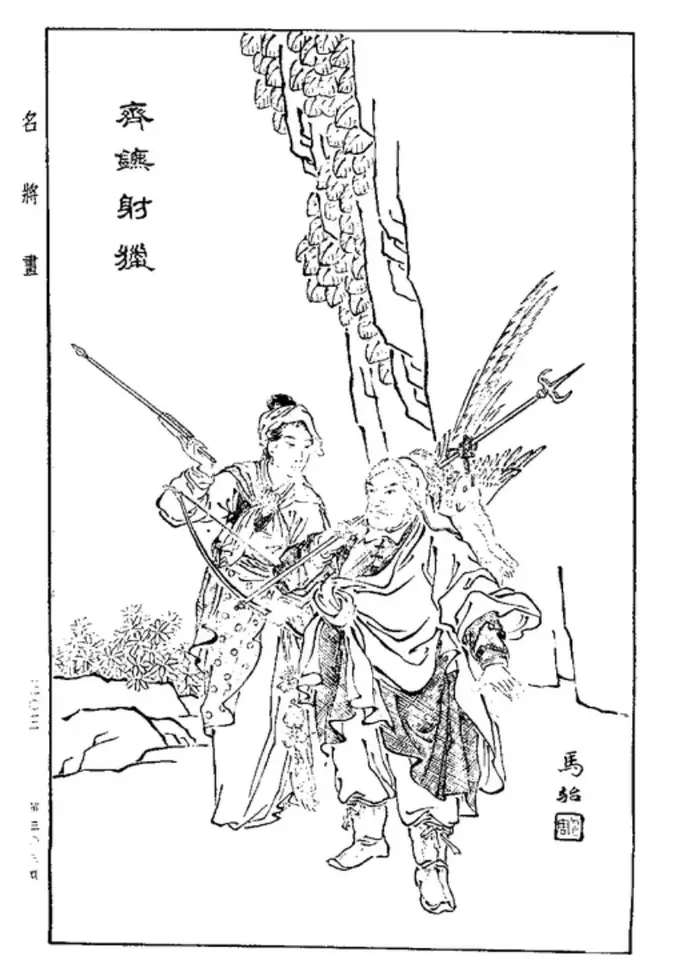
In his later years, Yang Dayan was appointed Regional Inspector of Jingzhou. He governed the frontier province with stern martial discipline. To intimidate unruly indigenous chieftains who frequently conducted raids, he bundled straw into human effigies, dressed them in blue tunics, and repeatedly shot them through the chest at long range during public drills, warning tribal leaders that insubordination would meet the same fate. When a ferocious tiger plagued Beiyu Commandery, Yang Dayan hunted the beast on foot, wrestled it barehanded, and severed its head to display in the Rang city marketplace. Terrified by his legendary strength, tribal chieftains submitted completely, bringing lasting peace to the borderlands.
Yang Dayan passed away while serving in Jingzhou in 518. Throughout his life, he excelled in mounted warfare, cutting an imposing figure in full armor and executing battlefield maneuvers with supreme agility. He loved his soldiers as sons, weeping openly when tending to their battle wounds. However, during the prolonged stalemate at the Huai Weir, stress led to erratic outbursts and excessive corporal punishment, which contemporary observers viewed as a tragic shift in his temperament caused by age and hardship. Though illiterate, he possessed an extraordinary memory, having attendants read histories aloud which he committed to memory, and dictating formal military dispatches with rhetorical elegance. His first wife, Lady Pan, had accompanied him on horseback into battle and was revered by soldiers as General Pan; she was later put to death for misconduct while he was in exile. Following Yang Dayan's death, his second wife, Lady Yuan of the imperial house, attempted to seize the family title for her unborn child. Angered by this slight, Yang Dayan's eldest son Yang Zhengsheng pried open his father's coffin by night, mounted his horse while clutching the corpse, and fled south to surrender to the Liang Dynasty.
Yang Dayan is universally recognized as the fiercest battlefield commander of the Northern Wei dynasty. Beginning with his legendary demonstration of sprinting speed with a thirty-foot rope tied to his topknot, he proved his exceptional athletic dynamism. Across campaigns in Wan, Ye, Guoyang, Shouchun, Hanmian, and Suyu, he led from the front, charging headlong into enemy ranks. Southern troops held him in such awe that commanders trembled before crossing the Yangtze, and southern parents quieted crying infants by invoking his name. Contemporary observers acclaimed his courage as matching or surpassing that of Guan Yu and Zhang Fei.
Yang Dayan played an indispensable role in maintaining Northern Wei's southern frontier. Aside from securing Shouchun and defeating Wang Mao's invasion force, his greatest strategic contribution occurred during the Fushan Weir crisis. By directing large-scale civil engineering to breach an upstream bypass channel around the Huai River dam, he averted the submergence of Shouchun and neutralized one of the largest hydrological siege operations in Chinese history.
As Regional Inspector in East Jingzhou, Zhongshan, and Jingzhou, Yang Dayan demonstrated effective frontier governance. Facing restive tribal societies, he combined psychological deterrence with raw martial prowess, utilizing archery demonstrations against straw figures and barehanded tiger-hunting to project absolute authority. His administration eliminated banditry, reconciled indigenous and Han populations, and secured imperial frontiers for several years.
Yang Dayan's command style balanced rigorous discipline with paternal care, winning the profound devotion of his rank-and-file troops. His domestic life also generated enduring cultural lore, including the martial deeds of his first wife, General Pan. In the realm of cultural heritage, the famous Yang Dayan Statue Inscription carved in the Guyang Cave of the Longmen Grottoes stands as one of the four supreme calligraphy models of Northern Wei stele art, memorializing his military legacy for posterity.
The official Book of Wei preserved contemporary acclaim of Yang Dayan's martial prowess, recording that contemporaries praised his courageous resolution and universally held that even Guan Yu and Zhang Fei could not surpass him.
Minister Li Chong marveled at his natural athleticism upon witnessing his flying rope demonstration, proclaiming that such rare talent had not appeared in a thousand years.
Empress Dowager Ling lauded his military valor, noting that he and his fellow commanders possessed heroic spirits and ranked among the nation's preeminent generals, bringing immense relief to the state through their battlefield victories.
Southern soldiers and civilians held profound fear of his name. Before southern expeditionary armies had crossed the Yangtze, commanders were already filled with dread, and parents across the Huai, Si, Jing, and Mian river valleys quieted crying children by warning that Yang Dayan was coming.
Historian Wei Shou wrote in the Book of Wei: When a sovereign hears the sounding of war drums, he longs for valiant generals. For suppressing rebellions, warding off invasions, and defending the nation are tasks that depend upon them. Commanders like Xi Kangsheng and Yang Dayan possessed the ferocity of bears and tigers, unleashing their martial vigor across battlefields; they achieved genuine glory as peerless champions of their age.
Tang historian Li Yanshou affirmed this judgment in the History of Northern Dynasties, emphasizing that Yang Dayan embodied the supreme martial spirit of the northern warrior class.
In the Zizhi Tongjian, Song historian Sima Guang documented Yang Dayan's frontline campaigns in detail, illustrating both his unmatched personal valor and the strategic catastrophe at Zhongli.
In the field of art history, the Yang Dayan Statue Inscription at the Longmen Grottoes in Luoyang is recognized as one of the Longmen Four Inscriptions, renowned for its vigorous and dynamic calligraphy that reflects the martial vitality of the Northern Wei dynasty.
FIGURES ASSOCIATED WITH THIS DYNASTY