Distinguished Birth
Born into a respected lineage in Anqiu, Mizhou, dedicating his youth to mastering classic military treatises and histories.
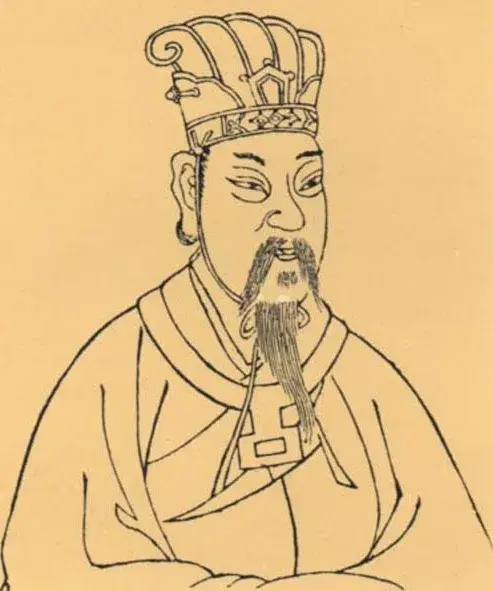
?–923 CE
刘鄩
Liu Xun (刘鄩, 858–921), originally named Liu Shan (刘掞), was a native of Anqiu, Mizhou (present-day Anqiu, Shandong). He was an outstanding military commander and founding general of the Later Liang dynasty during the late Tang and Five Dynasties and Ten Kingdoms period. In his early years, Liu Xun joined the military garrison of Pinglu under Military Commissioner Wang Jingwu and subsequently served his son Wang Shifan. During…
Liu Xun (刘鄩, 858–921), originally named Liu Shan (刘掞), was a native of Anqiu, Mizhou (present-day Anqiu, Shandong). He was an outstanding military commander and founding general of the Later Liang dynasty during the late Tang and Five Dynasties and Ten Kingdoms period. In his early years, Liu Xun joined the military garrison of Pinglu under Military Commissioner Wang Jingwu and subsequently served his son Wang Shifan. During a tense succession crisis, he decisively drew his sword at a banquet to slay the rebellious commander Lu Hong, subsequently suppressing the mutiny in Dizhou. In 901, Liu Xun staged a daring night raid with five hundred infantrymen through a subterranean drainage conduit to capture the strategic stronghold of Yanzhou. He extended generous protection and filial respect to the family of opposing general Ge Congzhou and held the isolated fortress without external aid for nearly three years, earning high praise from Zhu Quanzhong for embodying the steadfast loyalty and noble conduct of Tang founder Li Ji. Following his honorable submission to Later Liang, Liu Xun achieved numerous distinguished military feats. In 909, he executed a rapid advance to seize the mountain pass of Tongguan, crushed Liu Zhijun's rebellion, and reclaimed the western capital of Chang'an, subsequently governing the Yongping Circuit as Military Commissioner and assuming the chancellor rank of Joint Manager of Affairs with the Secretariat-Chancellery. Under Emperor Modi, he served as Mayor of Kaifeng and Military Commissioner of Taining, coordinating with Yang Shihou to repel Shatuo Jin incursions, annihilating rebel Jiang Yin in Xuzhou, ambushing and routing the Prince of Jin (Li Cunxu) at Weixian, and employing straw decoys mounted on mules to deceive enemy scouts while staging a surprise dash toward Taiyuan. In prolonged confrontations along the Yellow River, he constructed fortification corridors at Shenxian, repelled Jin crossing attempts at Liyang Ford, and routed Southern Wu invaders at Huoqiu. Later framed by jealous court factions led by Duan Ning, he was forced to consume poison at Luoyang in 921 at age sixty-four, posthumously honored as Secretariat Director.
Born into a respected lineage in Anqiu, Mizhou, dedicating his youth to mastering classic military treatises and histories.
Enlisted under Pinglu Military Commissioner Wang Jingwu as a junior officer, quickly distinguishing himself.
Following Wang Jingwu's death, assisted Wang Shifan and executed mutinous general Lu Hong at a banquet, capturing Dizhou.
Appointed Prefect of Dengzhou, later transferred to Zizhou and concurrent Army Supervisor, becoming the chief military pillar of Pinglu.
Led five hundred elite infantry through a water conduit to seize Yanzhou, treating Ge Congzhou's mother and household with utmost filial care.
Defended Yanzhou against siege for nearly three years, opening the gates only upon receiving Wang Shifan's order to submit to Zhu Quanzhong.
Appointed Grand General of the Right Jinwu Guards and Street Patrol Commissioner, guarding against western frontier incursions.
With the founding of Later Liang, appointed Senior General of Right Jinwu and Supreme Commander of Cavalry and Infantry, campaigning at Luzhou.
Seized Tongguan, suppressed Liu Zhijun's rebellion, and liberated Chang'an, appointed Military Commissioner of Yongping Circuit.
Promoted to Vice Grand Guardian and Joint Manager of Affairs with the Secretariat-Chancellery, consolidating western defenses.
Following Zhu Yougui's usurpation, conferred the title of Vice Grand Tutor.
Appointed Mayor of Kaifeng, coordinated with Yang Shihou to repel Jin armies, and eradicated rebel Jiang Yin in Xuzhou.
Ambushed and nearly captured Li Cunxu at Weixian, deployed straw decoys on mules to raid Taiyuan, and held the Shenxian corridors.
Compelled by court orders to engage in premature field battle, suffered defeat at Guyuancheng and retreated to defend Liyang.
Repelled the Jin army's grand river crossing at Liyang Ford with back-to-water defense, and crushed Southern Wu invaders at Huoqiu.
Appointed Military Commissioner of Taining, stormed Yanzhou to capture rebel Zhang Wanjin, and restored to chancellor rank.
Served as Supreme Commander against rebel Zhu Youqian, ambushed by Jin general Li Sizhao, and retreated to defend Luowen Camp.
Framed by envious courtiers, calmly consumed poisoned wine under secret imperial orders at Luoyang, posthumously awarded Secretariat Director.
Liu Xun was born into an established scholar-official family in Anqiu, Mizhou. His grandfather, Liu Shou, had served as an administrative officer in Mizhou and was posthumously honored as Left Cavalier Attendant-in-Ordinary; his father, Liu Rong, served as Magistrate of Anqiu and was posthumously elevated to Minister of Works; his elder brother, Liu Qi, attained the post of Director of the Court of Imperial Entertainments. Endowed with exceptional intellect and soaring ambition, Liu Xun possessed a deep fascination with strategic doctrine and historical literature from an early age, immersing himself in classic treatises such as the Six Secret Teachings of Taigong and the Art of War by Sun Wu. This extensive scholarship cultivated his lifelong battlefield doctrine centered on agility, deception, and psychological maneuvers. During the Zhonghe era of Emperor Xizong of Tang (881–885), as widespread insurgencies and brigandage tore the empire asunder, Liu Xun joined the provincial army under Pinglu Military Commissioner Wang Jingwu, serving as a junior officer. His resolute courage and analytical foresight quickly brought him distinction and the commissioner's deep trust.
In 891, Wang Jingwu passed away. The soldiers of Pinglu acclaimed his youthful son, Wang Shifan, as acting commissioner to inherit military leadership. Seeking to curb autonomous warlordism, the Tang imperial court dispatched Grand Councilor Cui Anqian to assume control of Qingzhou, prompting local troops and civilians to bar their gates in resistance. Taking advantage of the turmoil, Prefect Zhang Chan of Dizhou allied with the imperial court and prepared an armed strike against Qingzhou to assassinate Wang Shifan. Wang Shifan sent Army Commander Lu Hong with main forces to subdue Dizhou, but Lu Hong secretly conspired with Zhang Chan, planning to stage a feigned triumphal return to execute Wang Shifan by surprise. Uncovering the conspiracy, Wang Shifan prepared an ambush while hosting a lavish banquet to celebrate the returning troops, secretly instructing Liu Xun to act when opportune. As Lu Hong swaggered into the hall and took his seat, Liu Xun leaped forward with drawn sword, beheading the treacherous general on the spot while hidden guards rushed out to round up his confederates.
Liu Xun's lightning resolve swiftly dismantled the rebellion, securing Wang Shifan's hold over Qingzhou. Deeply appreciative of his loyalty, Wang Shifan promoted Liu Xun to Vice Commander of Infantry and Cavalry. Directing combined amphibious forces, Liu Xun marched directly upon Dizhou, storming the fortress, executing Zhang Chan, and compelling the Tang court to formally recognize Wang Shifan as Military Commissioner of Pinglu. In 898, Wang Shifan recommended Liu Xun as Prefect of Dengzhou, and within a year reassigned him as Prefect of Zizhou and concurrent Army Supervisor, cementing his position as the premier military commander of the circuit.
In 901, Emperor Zhaozong of Tang was coerced and detained in Fengxiang by warlord Li Maozhen and palace eunuch Han Quanhui. Xuanwu Military Commissioner Zhu Quanzhong mobilized armies from four circuits to lay siege to Fengxiang and rescue the emperor. In response, Li Maozhen forged imperial edicts commanding regional warlords to assault Zhu Quanzhong's home territories. Moved to tears by the imperial summons, Wang Shifan resolved to champion the Tang royal house, dispatching trusted generals on coordinated covert missions to seize Xuanwu commanderies on the same designated day. While several operations leaked and collapsed, Liu Xun engineered an extraordinary triumph. Disguising astute scouts as itinerant oil vendors, Liu Xun meticulously surveyed the fortifications and drainage systems of Yanzhou, locating a submerged stone water conduit that penetrated the outer walls. Selecting five hundred elite infantrymen, Liu Xun led his men under gagged silence through the drainage conduit in the dead of night, launching a sudden assault that secured the entire city before daybreak without disrupting commerce or harming civilians.
Stunned by the loss of this vital stronghold, Zhu Quanzhong rushed veteran commander Ge Congzhou with formidable forces to retake Yanzhou. Ge Congzhou was concurrently Military Commissioner of Taining, and his entire clan and immediate family resided within Yanzhou's walls. Rather than exploiting these hostages, Liu Xun demonstrated exemplary virtue. He relocated Ge Congzhou's relatives to a comfortable compound, provided abundant provisions with complete courtesy, and paid personal respects to Ge Congzhou's elderly mother as though she were his own. When Ge Congzhou prepared to storm the battlements, Liu Xun fashioned a comfortable palanquin and escorted Ge's mother to the parapets. Leaning over the ramparts, the elderly woman called down to her son, attesting that General Liu treated her with filial reverence, that his family was entirely unharmed, and that both commanders were merely fulfilling their duties to their respective lords and ought not shed unnecessary blood. Deeply moved and shamed by Liu Xun's righteous conduct, Ge Congzhou wept and halted the immediate assault.
Throughout the protracted siege that ensued, Liu Xun demonstrated masterful defensive strategy. He carefully surveyed grain reserves, escorting non-combatant elders, women, and children safely out of the city to eliminate unproductive food consumption; he shared meals and clothing with his frontline troops, maintaining immaculate military discipline that preserved social peace within the walls. As the siege stretched over nearly three years without outside relief, cracks in morale inevitably surfaced.
One evening, Vice Commissioner Wang Yanwen scaled the wall to defect to the besiegers, triggering anxiety among the garrison. Remaining entirely composed, Liu Xun dispatched an officer to the ramparts to call after Wang Yanwen, advising him not to take too many personal guards and warning that common soldiers were forbidden to follow; simultaneously, he issued orders that anyone attempting unauthorized flight would face summary execution. Overhearing these exchanges, the besiegers concluded that Wang Yanwen was a double agent sent to execute a deceptive counter-ambush, executing him outside the moat on the spot. Witnessing the defector's gruesome fate, all remaining garrison troops abandoned thoughts of flight, and the defensive line held firm. Rebuffing repeated summons to surrender, Liu Xun insisted he could only yield the fortress upon direct orders from Wang Shifan. In the winter of 903, when Wang Shifan finally exhausted his resources and submitted to Later Liang, sending formal letters into Yanzhou, Liu Xun threw open the gates and surrendered according to covenant.
Upon Liu Xun's submission, Zhu Quanzhong praised his steadfast loyalty, comparing his noble integrity to that of Tang founder Li Ji, who had remained faithful to his former master before yielding to the new dynasty. Ge Congzhou prepared lavish robes and fine steeds for Liu Xun's formal journey to Kaifeng, but Liu Xun declined, insisting that as a captured commander who had not yet received formal imperial pardon, he had no right to ride fine horses or dress in luxury. Instead, he donned coarse hemp robes and rode a humble donkey toward the capital. When Zhu Quanzhong dispatched attendants offering official regalia upon his arrival, Liu Xun again demurred, requesting to enter in bonds as a penitent captive. Zhu Quanzhong was profoundly impressed by this humility, summoned him for a warm personal audience, and hosted a celebratory banquet. When Liu Xun confessed to having a modest tolerance for wine, Zhu Quanzhong clapped his hands in laughter, remarking that a commander possessing the courage to seize Yanzhou must surely hold an unmatched capacity for boldness.
Zhu Quanzhong immediately appointed Liu Xun as Chief Protocol Officer of the Personal Retinue. Many of Zhu's veteran generals were founding officers from Xuanwu, and Liu Xun's sudden elevation as a newly surrendered commander placed him above long-serving veterans. Nevertheless, Liu Xun conducted himself with exquisite modesty, bowing with formal court etiquette whenever encountering senior commanders. His deference won universal admiration among the officer corps. Soon afterward, he was appointed Acting Governor of Fuzhou, maintaining vigilant frontier defenses against western warlords. In 905, he was made Grand General of the Right Jinwu Guards and Street Patrol Commissioner. When Zhu Quanzhong established the Later Liang dynasty in 907, he elevated Liu Xun to Senior General of the Right Jinwu Guards and Supreme Commander of Cavalry and Infantry Forces, dispatching him to participate in the Luzhou expedition. In 909, he transferred through senior guard commands while retaining overall command of the palace bodyguard, holding vital core military authority.
In the summer of 909, Military Commissioner Liu Zhijun of Tongzhou rebelled against Later Liang, inviting Li Maozhen's Fengxiang forces to seize the western capital of Chang'an and control Tongguan Pass. Emperor Taizu of Later Liang oversaw operations from Shanzhou and entrusted western command to Liu Xun. Moving with lightning speed, Liu Xun assaulted and recaptured Tongguan, captured Liu Zhijun's brother Liu Zhihuan, and swept forward to liberate Chang'an, forcing Liu Zhijun to flee to Fengxiang. Delighted by the swift triumph, Taizu appointed Liu Xun as Military Commissioner of Yongping Circuit and Governor of Da'an, overseeing the defense of the western frontier. Through rigorous military training and compassionate civil administration, Liu Xun restored order along the sensitive border. In 910, he was promoted to Vice Grand Guardian and Joint Manager of Affairs with the Secretariat-Chancellery, entering the ranks of prime ministers.
In 912, Zhu Yougui murdered his father to seize the throne, granting Liu Xun the title of Vice Grand Tutor. Following the passing of his mother in 913, Liu Xun was promptly recalled from mourning to manage pressing state affairs. When Emperor Modi (Zhu Youzhen) overthrew Zhu Yougui to assume the throne, he placed immense trust in Liu Xun. In 914, Liu Xun was appointed Mayor of Kaifeng. When Shatuo Jin forces under Li Cunxu invaded Hebei, Liu Xun coordinated with Yang Shihou to defeat the invaders. That autumn, Military Commissioner Jiang Yin of Xuzhou mutinied; Emperor Modi dispatched Liu Xun alongside Niu Cunjie to suppress the revolt. When Southern Wu sent general Zhu Jin to reinforce the rebels, Liu Xun struck the relief columns decisively, crushing the Wu army. In 915, Liu Xun stormed Xuzhou, where Jiang Yin's clan perished in self-immolation, and was promoted to Vice Grand Commandant.
In 915, following the death of powerful warlord Yang Shihou, the Liang court partitioned Weibo Circuit into two halves, stationing Liu Xun at Nanle to deter unrest. The rebellious Weibo garrison mutinied and surrendered to the Prince of Jin, Li Cunxu. In the sixth lunar month, Li Cunxu advanced into Weizhou, while Liu Xun moved ten thousand elite troops to Weixian. When Li Cunxu personally conducted a reconnaissance patrol, Liu Xun laid a concealed ambush in riverbank brushwood. As the Jin monarch approached, hidden Liang forces encircled him in heavy layers; Li Cunxu barely escaped on a solitary steed.
Later that month, Liu Xun conceived a brilliant strategic diversion, marching his army across Huangzeguan Pass in a covert dash toward the Jin home capital of Taiyuan. To prevent enemy scouts from discovering his departure, Liu Xun constructed straw effigies clad in military banners and lashed them to the backs of pack mules, driving them continuously along the low parapets of the camp. For several days, the Jin scouts believed the camp was fully manned. However, upon entering Leping, torrential mountain rains caused flash floods and cut off supply roads, compelling Liu Xun to abort the operation. Turning toward Beizhou, he intercepted Jin commander Zhou Yangwu at Tangyi, routing the enemy and pursuing them for fifty li before establishing an impregnable base at Shenxian. Here, Liu Xun dug deep moats and built an extensive fortified walled corridor connecting Shenxian directly to the Yellow River to guarantee supply convoys, creating a protracted strategic stalemate.
By autumn, Emperor Modi grew increasingly impatient, bombarding Liu Xun with edicts demanding immediate offensive action. Liu Xun submitted detailed memorials explaining that the Shatuo cavalry excelled in open maneuvers while the Liang forces held the advantage in static defensive attrition, arguing for patience until the enemy ran out of provisions. Liu Xun assembled his commanders before the camp gates, commanding each to drink a vessel of turbid Yellow River water. When the officers hesitated, Liu Xun pointed out that drinking a single jar of water was daunting enough; how could an entire army expect to swallow the boundless Yellow River? He emphasized that the enemy's momentum remained formidable and could only be exhausted through defensive resilience. Nonetheless, palace eunuchs relentlessly pressed for battle, with the emperor questioning whether storing grain was meant for hunger or for victory. Forced into action, Liu Xun launched a limited probe against enemy camps, withdrawing after initial skirmishes. In 916, under categorical imperial orders, Liu Xun marched from Shenxian to strike Weizhou, colliding with the full Jin host at Guyuancheng. Encircled by Shatuo horsemen, the Liang army suffered a catastrophic collapse with heavy casualties. Liu Xun escaped across the Yellow River at Liyang with remnant forces, where he was appointed Military Commissioner of Huazhou to guard against northern crossings.
In 917, Li Cunxu concentrated his entire army to assault Liyang Ford, attempting to force the Yellow River and threaten Kaifeng. Positioning his troops with their backs to the river, Liu Xun mounted a ferocious, ingenious defense that repulsed repeated enemy assaults and compelled the Jin army to withdraw. Reappointed Mayor of Kaifeng, Liu Xun nevertheless faced virulent criticism from court courtiers over the loss of Hebei; feeling increasingly vulnerable to slander, he resigned his chancellor status and was reassigned as Militia Commissioner of Bozhou. When Southern Wu forces invaded the border districts of Caizhou, Yingzhou, and Bozhou, Liu Xun led an expedition across the Huai River, ambushing and crushing the Wu army at Huoqui. In 919, when Military Commissioner Zhang Wanjin of Taining rebelled and sought Jin support, Liu Xun was appointed Pacification Commissioner of Yanzhou. Leveraging his intimate knowledge of Yanzhou's defenses, he blockaded the city for months until internal officers opened the gates. Liu Xun captured and executed Zhang Wanjin, earning reappointment as Military Commissioner of Taining and restoration to chancellor rank.
In 920, Military Commissioner Zhu Youqian of Hezhong defected to the Jin kingdom, dispatching his son to seize Tongzhou and triggering widespread panic along the western passes. Emperor Modi appointed Liu Xun as Supreme Commander of the Hedong Expedition, ordering him to coordinate with Liu Hao of Huazhou to recapture Tongzhou. Liu Xun had previously arranged a marriage alliance between his family and Zhu Youqian's. Hoping to reconcile the rift peacefully, he sent persuasive letters from Shanzhou urging Zhu to return to Liang allegiance, delaying active combat for over a month. Envious rivals at court, led by Palace Attendant Duan Ning and general Liu Hao, seized upon this hesitation to slander Liu Xun, alleging that he was deliberately dragging his feet to allow Jin reinforcements to arrive. Emperor Modi foolishly credited these fabrications and issued harsh reprimands demanding an immediate assault.
In the ninth lunar month, Liu Xun marched on Tongzhou, only to be struck by veteran Jin general Li Sizhao at the head of tens of thousands of elite cavalry. Arriving exhausted from the march, the Liang lines shattered under the cavalry onslaught and routed toward the Yellow River. The pontoon bridges collapsed under panic, resulting in tens of thousands of Liang troops drowning in the river. Liu Xun rallied remnant units and fortified Luowen Camp at Huazhou. Following this disaster, Duan Ning and his faction intensified their slander, and Emperor Modi resolved to eliminate his general. In 921, the emperor summoned Liu Xun to the capital. Upon arriving at Luoyang, Henan Mayor Zhang Zongshi presented a secret imperial edict ordering his suicide. Recognizing that the court was hopelessly corrupted, Liu Xun calmly consumed the poisoned wine without protest, dying at the age of sixty-four. The court subsequently issued a hypocritical decree granting him the posthumous title of Secretariat Director. Liu Xun's wrongful death stripped Later Liang of its final defensive shield, and within two years, the dynasty fell completely to Li Cunxu's conquering armies.
Throughout a military career spanning nearly half a century, Liu Xun engaged in over a hundred engagements without ever yielding to fear, earning recognition as the foremost strategic general of the early Five Dynasties period. Serving Pinglu, he executed the treacherous Lu Hong at a public feast and captured Dizhou to stabilize the circuit. During the siege of Yanzhou, he captured an imperial fortress with five hundred infantry through an underground conduit and withstood Ge Congzhou's besieging armies for nearly three years, establishing an extraordinary defensive record.
Following his entry into Later Liang service, he repeatedly commanded major field armies: capturing Tongguan and liberating Chang'an from Liu Zhijun in 909; coordinating the defense of Hebei against Jin armies and suppressing Jiang Yin in Xuzhou in 914; nearly capturing Li Cunxu in a riverbank ambush at Weixian in 915; deploying straw effigies on mules to stage a covert march toward Taiyuan; constructing fortified corridors and trenches at Shenxian to sustain a multi-month siege stalemate; holding Liyang Ford with back-to-water tactics against overwhelming numbers; routing Southern Wu expeditionary forces at Huoqiu; and recapturing Yanzhou to execute Zhang Wanjin in 919. His mastery of tactical deception and positional defense led Emperor Zhuangzong of Later Tang (Li Cunxu) to lament him as a formidable adversary endowed with a hundred stratagems at every step.
Liu Xun contributed pioneering concepts to ancient defensive warfare and fortification engineering. During the defense of Yanzhou, he established the humanitarian evacuation of non-combatants, reducing civilian starvation while preserving army cohesion; faced with internal defection, he artfully manipulated the enemy into executing the traitor Wang Yanwen, quenching internal panic without violence. At Shenxian, confronted by elite Shatuo cavalry, he not only dug concentric trenches and ramparts but also innovated a continuous, earthen-walled transport corridor stretching tens of li to the Yellow River, ensuring unassailable logistics under hostile cavalry surveillance and harmonizing field engineering with theater strategy.
Liu Xun was celebrated for profound modesty, personal dignity, and moral rectitude. In service to Wang Shifan, he demonstrated unyielding fidelity, choosing to enter Kaifeng in humble hemp attire atop a donkey rather than accepting triumphal carriages; elevated to supreme guard command as a former enemy general, he unfailingly greeted founding Xuanwu officers with formal deference. At Yanzhou, he treated opposing general Ge Congzhou's family with filial gentleness, prompting the enemy commander to withdraw in shame; facing military impetuosity, he drank turbid river water to caution his officers against rash bravado; and when confronted with wrongful execution by an ungrateful court, he calmly consumed the poison without undignified fury, standing as an enduring paragon of honor amidst the moral decline of the Five Dynasties.
Modern historians universally acclaim Liu Xun as an elite military commander combining profound strategic brilliance with unyielding moral integrity during the late Tang and Five Dynasties turmoil. In the realm of military doctrine, he fused ancient stratagems with innovative fortification engineering, demonstrated by his water-conduit raid on Yanzhou, the straw-mule diversion toward Taiyuan, the fortified supply corridors at Shenxian, and the back-to-water defense at Liyang Ford. In personal character, he demonstrated absolute fidelity to Wang Shifan, treated the family of his adversary with filial tenderness, exhibited supreme modesty as a surrendered commander, and calmly accepted unjust death rather than instigating destructive rebellion. Amidst the pervasive moral collapse of the Five Dynasties, Liu Xun shone as an enduring exemplar of chivalric virtue and strategic genius.
FIGURES ASSOCIATED WITH THIS DYNASTY