Joining Sun Ce
Joined Sun Ce with Zhou Tai, participating in the pacification of Jiangdong's four commanderies.
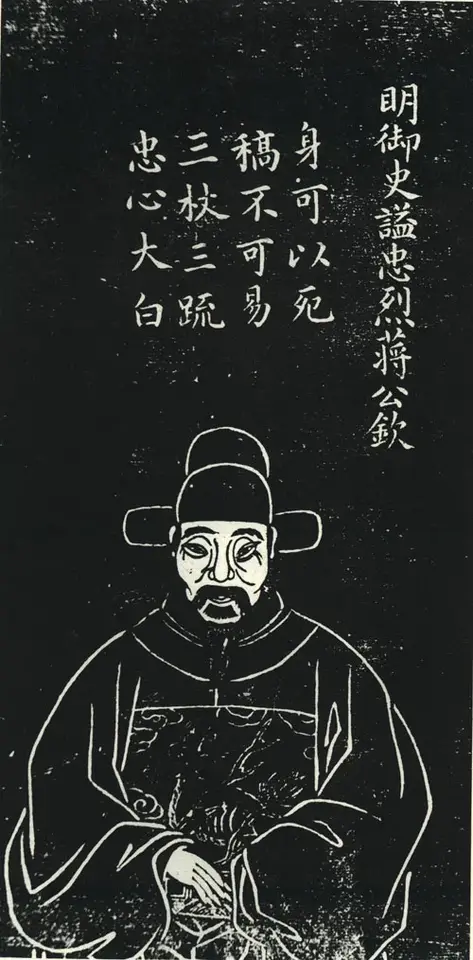
180 CE–220 CE
蒋钦
Jiang Qin (蒋钦, ?–219 AD), courtesy name Gongyi, was a native of Shouchun in Jiujiang Commandery and an eminent founding military commander of Eastern Wu during the late Eastern Han dynasty. In his youth, he joined Sun Ce alongside his fellow townsman Zhou Tai, crossing the Yangtze River to participate in the conquest of Danyang, Wu Commandery, Kuaiji, and Yuzhang. Serving as Major of a Separate Division, Western Commandant,…
Jiang Qin (蒋钦, ?–219 AD), courtesy name Gongyi, was a native of Shouchun in Jiujiang Commandery and an eminent founding military commander of Eastern Wu during the late Eastern Han dynasty. In his youth, he joined Sun Ce alongside his fellow townsman Zhou Tai, crossing the Yangtze River to participate in the conquest of Danyang, Wu Commandery, Kuaiji, and Yuzhang. Serving as Major of a Separate Division, Western Commandant, and magistrate across several districts, he established early renown for his aggressive frontline leadership and successful counterinsurgency operations. When regional bandits Lu He and Qin Lang raised over ten thousand rebels in Kuaiji, Jiang Qin plunged into mountainous strongholds, capturing both leaders and pacifying five counties of Dongye, subsequently cooperating with He Qi to suppress the Shanyue insurgents of Yi County. Demonstrating extraordinary magnanimity while stationed at Xuancheng, he strongly recommended magistrate Xu Sheng—who had previously arrested and sought to execute Jiang Qin's subordinate officer—praising Xu Sheng as an indispensable general capable of commanding ten thousand troops, a selfless act celebrated as the modern embodiment of the ancient statesman Qi Xi. In 215 AD, during the Battle of Hefei, Jiang Qin fought alongside Gan Ning and Ling Tong at Xiaoyaojin, braving heavy missile fire to hold off Zhang Liao's cavalry charge and protect Sun Quan. Promoted to General Who Subdues Bandits and Commander of Ruxu, he was later appointed Right Protective General. Renowned for his Spartan household and dedication to classical learning, he commanded the southern naval forces along the Mian River to encircle Guan Yu during the reconquest of Jing Province in 219 AD, passing away of illness on the return march. Chen Shou honored him as one of the celebrated "Tiger Generals of Jiangdong."
Joined Sun Ce with Zhou Tai, participating in the pacification of Jiangdong's four commanderies.
Served as Geyang Magistrate and Western Commandant, pacifying regional bandits.
Crushed rebel leaders Lu He and Qin Lang, pacifying five counties and rising to Colonel.
Cooperated with He Qi to eradicate Shanyue strongholds in Yi County, securing the southern interior.
Dismissed past personal friction to recommend Xu Sheng to Sun Quan as a paramount general.
Responded to Sun Quan's encouragement to study classical treatises, becoming an erudite commander.
Fought fiercely with bow and blade against Zhang Liao's sudden cavalry raid, escorting Sun Quan to safety.
Elevated to General Who Subdues Bandits and Commander of Ruxu, later recalled as Right Protective General.
Led the naval armada up the Mian River to sever Guan Yu's retreat; died of illness on the return march.
Jiang Qin was a native of Shouchun in Jiujiang Commandery. During the late Eastern Han dynasty, regional chaos engulfed the Huai River basin, prompting ambitious warriors to seek capable leaders. In 195 AD, the young Jiang Qin and his fellow townsman Zhou Tai pledged their allegiance to General Who Breaks the Charge Sun Ce, serving as trusted officers within his personal retinue. When Sun Ce crossed the Yangtze River to launch his sweeping conquest of the south, Jiang Qin served on the front lines through countless perilous engagements.
Throughout the campaigns that pacified Danyang, Wu Commandery, Kuaiji, and Yuzhang, Jiang Qin consistently spearheaded assault columns with reckless courage. Following the subjugation of the region, Sun Ce promoted him to Major of a Separate Division, placing thousands of soldiers under his command. He subsequently served as Commandant of Geyang and magistrate across three successive counties. In his local administrative roles, he enforced legal order while leading punitive expeditions into mountain ravines, eradicating outlaw bands and earning promotion to Western Commandant.
Around 203 AD, regional bandit chiefs Lu He and Qin Lang rallied over ten thousand outlaws in Kuaiji Commandery, exploiting mountain strongholds and narrow defiles to defy government forces and block grain shipments. Sun Quan dispatched Jiang Qin to conduct counterinsurgency operations. Marching deep into rugged terrain, Jiang Qin utilized multi-pronged encirclement tactics, storming dozens of fortified camps and capturing both Lu He and Qin Lang. His campaign pacified five counties in the Dongye sector, prompting Sun Quan to appoint him Colonel of Subduing the Yue. Shortly thereafter, when thousands of Shanyue clans rebelled in Yi County, Jiang Qin coordinated with General He Qi in a pincer maneuver that eliminated the insurgent strongholds, securing the southern interior of Eastern Wu.
While stationed at Xuancheng to suppress rebels in Yuzhang, an incident occurred that tested Jiang Qin's character. Xu Sheng, then serving as Magistrate of Wuhu, discovered that one of Jiang Qin's logistical officers had committed severe legal infractions within his district. Upholding statutory authority without compromise, Xu Sheng arrested the officer and submitted a formal memorial requesting his execution. Because Jiang Qin was conducting active combat operations in the field, Sun Quan withheld approval to avoid demoralizing the troops. However, Xu Sheng felt deeply apprehensive, fearing that Jiang Qin would eventually retaliate against him.
Later, Sun Quan sought exceptional military talent to lead his armies and specifically consulted Jiang Qin for recommendations. Without hesitation, Jiang Qin spoke warmly of Xu Sheng, urging that he be appointed to high independent command. Surprised by this choice, Sun Quan asked: "Xu Sheng previously prosecuted your subordinate and sought his execution; now you champion his promotion. Are you seeking to emulate the ancient minister Qi Xi, who recommended both kin and rivals without prejudice?"
Jiang Qin replied with dignified composure: "I have heard that in public service, one's duty is to advance talent without allowing private grievances to intrude. Xu Sheng is loyal, diligent, courageous, and blessed with strategic wisdom; he is truly a magnificent commander capable of directing ten thousand soldiers. Today, the empire remains unsettled and the state urgently needs foundational pillars; how could I allow private resentment to conceal a servant of the realm!" Sun Quan was deeply impressed and entrusted Xu Sheng with significant commands. Hearing of Jiang Qin's magnanimity, Xu Sheng was overwhelmed with gratitude and admiration, and the two commanders became lifelong sworn friends.
Jiang Qin was celebrated across the realm for his extraordinary personal frugality. Although he attained high ministerial and military rank, his domestic lifestyle resembled that of an impoverished commoner. On one occasion, Sun Quan paid an unannounced informal visit to Jiang Qin's private residence. Walking into the living quarters, Sun Quan observed that Jiang Qin's mother used ragged bed curtains and coarse straw mats, while his wife and concubines wore simple unadorned robes of rough homespun cloth.
Deeply moved by this scene, Sun Quan turned to his accompanying ministers and remarked with profound admiration: "General Jiang holds high office and enjoys the wealth of the realm, yet his household maintains such astonishing simplicity!" Sun Quan immediately ordered imperial treasurers to fashion fine silk quilts and patterned tapestries for Jiang Qin's mother, replace all household hangings, and provide lavish embroidered garments for his wives.
During this period, Sun Quan frequently urged both Lu Meng and Jiang Qin to broaden their minds through scholarship. Taking his lord's advice to heart, Jiang Qin devoted his spare hours in camp to studying classical literature, including The Art of War, the Six Secret Teachings, the Zuo Commentary, and ancient dynastic histories. His rigorous intellectual pursuits transformed him from a brave combat commander into an enlightened statesman possessing both martial vigor and administrative wisdom.
In the autumn of 215 AD, Sun Quan laid siege to Hefei with one hundred thousand troops. Failing to breach the walls and confronting an outbreak of disease, he ordered a general withdrawal. After the main army had departed, Sun Quan remained behind on the north bank of Xiaoyaojin with only Lu Meng, Jiang Qin, Gan Ning, Ling Tong, and approximately one thousand personal guards.
Cao Wei commander Zhang Liao seized the moment, leading eight hundred shock cavalry on a surprise assault against Sun Quan's perimeter. The escorting musicians dropped their drums in terror. Unfazed, Jiang Qin joined Gan Ning and Ling Tong in drawing his bow and charging into the enemy formation. Firing repeatedly and fighting in close-quarters combat, he formed an unshakeable defensive line that held off Zhang Liao's riders until Sun Quan jumped his mount across the broken bridge to safety. Following the battle, Sun Quan promoted Jiang Qin to General Who Subdues Bandits and Commander of Ruxu. He was subsequently summoned to the capital to serve as Right Protective General, supervising imperial judicial matters.
In 219 AD, Sun Quan decided to retake Jing Province from Guan Yu, launching Lu Meng's famous riverine assault. Sun Quan appointed the veteran naval commander Jiang Qin to direct the primary naval flotilla sailing up the Han and Mian rivers. Operating with mobility, Jiang Qin effectively severed Guan Yu's waterborne retreat corridors, collaborating with land forces to complete the strategic encirclement of the Shu army.
Following the reconquest of Jing Province, the army began its triumphant return march. However, having suffered from prolonged physical exhaustion across decades of campaigning, Jiang Qin succumbed to sudden illness on the road and passed away. Sun Quan was devastated by his death, donning white mourning robes to weep for his fallen general. He granted Jiang Qin's family two hundred households of Wuhu peasants and two hundred qing of fertile farmland in eternal recognition of his service. His eldest son Jiang Yi inherited the peerage as Marquis of Xuancheng.
Jiang Qin's recommendation of Xu Sheng stands as an immortal model of public rectitude in ancient Chinese statecraft. Following an incident in which Xu Sheng had legally prosecuted his subordinate, Jiang Qin placed national survival above personal resentment.
By identifying Xu Sheng's potential to command ten thousand warriors, Jiang Qin preserved an irreplaceable tactical genius who later played a pivotal role in defending Eastern Wu against northern invasions.
This magnanimous gesture eradicated factional divisions among southern generals, fostering an atmosphere of mutual trust and meritocracy that fortified the nascent dynasty during its formative decades.
Throughout his career as a high-ranking military commander, Jiang Qin maintained an uncompromising commitment to personal modesty. Refusing to accumulate luxurious estates or display wealth, his living quarters featured coarse straw mats and unadorned robes for his family.
His austere lifestyle was not a calculated political display, but a genuine expression of his moral detachment from material indulgence.
His personal conduct won the profound reverence of Sun Quan and served as an ethical standard that curbed the growing extravagance of regional gentry families across Jiangdong.
Jiang Qin demonstrated outstanding combat leadership during moments of supreme operational crisis. At Xiaoyaojin in 215 AD, when surprise assault threatened the life of Sun Quan, Jiang Qin stood his ground with exemplary courage, providing the vital rearguard defense that allowed his lord to escape.
During the Jing Province campaign of 219 AD, his operational control of the Mian River sealed the strategic net around Guan Yu's forces. His riverine command neutralized the aquatic advantages of the enemy, providing the decisive waterborne foundation for the recovery of the southern province.
FIGURES ASSOCIATED WITH THIS DYNASTY