Birth in Beihai
Born into the prominent Guan lineage in Zhuxu, tracing direct ancestry to Guan Zhong.
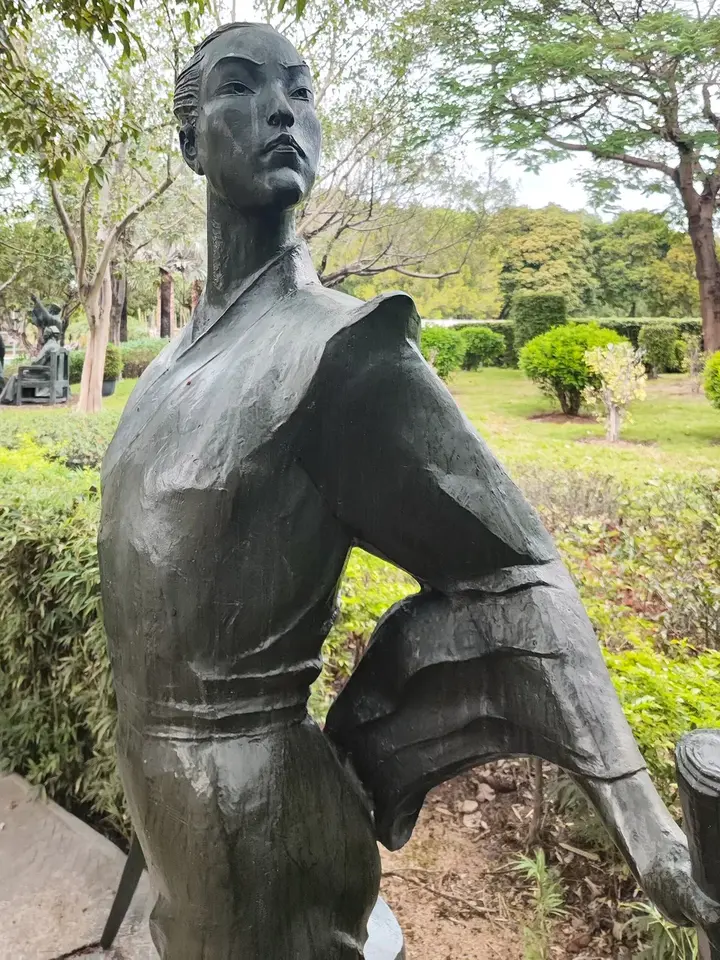
管宁
Guan Ning (158–241), courtesy name You'an, was a native of Zhuxu County, Beihai Commandery (modern east of Linqu, Shandong Province). A descendant of Guan Zhong, the renowned prime minister of Qi during the Spring and Autumn period, Guan Ning was one of the most celebrated Confucian hermits, scholars, and moral paragons of the late Eastern Han and Three Kingdoms periods. In his youth, he pursued classical studies alongside…
Guan Ning (158–241), courtesy name You'an, was a native of Zhuxu County, Beihai Commandery (modern east of Linqu, Shandong Province). A descendant of Guan Zhong, the renowned prime minister of Qi during the Spring and Autumn period, Guan Ning was one of the most celebrated Confucian hermits, scholars, and moral paragons of the late Eastern Han and Three Kingdoms periods. In his youth, he pursued classical studies alongside Bing Yuan and Hua Xin, their collective brilliance earning them the moniker "The One Dragon," with Hua Xin regarded as the dragon's head, Bing Yuan as its belly, and Guan Ning as its tail. Observing Hua Xin's secret covetousness for worldly riches and official vanity, Guan Ning famously severed their shared sitting mat with a blade, giving rise to the immortal idiom "Severing the Mat to Break Ties". During the chaotic collapse of the Eastern Han dynasty, Guan Ning fled across the sea to Liaodong, where he lived in mountain seclusion for thirty-seven years, expounding the Classic of Poetry and Book of Documents, establishing ritual propriety, and transforming local culture. Successive warlords of the Gongsun clan revered his virtue and dared not force him into office. Returning to northern China under Cao Wei, three generations of emperors repeatedly summoned him with highest state honors, and Defender-in-Chief Hua Xin offered to resign his post in Guan Ning's favor. Guan Ning steadfastly declined all imperial appointments, remaining an unbending symbol of reclusive integrity until his peaceful passing at age eighty-four.
Born into the prominent Guan lineage in Zhuxu, tracing direct ancestry to Guan Zhong.
Lost his father at age sixteen; declined all condolence gifts from relatives and conducted burial strictly within his humble means.
As the Yellow Turban Rebellion ravaged northern China, Guan Ning fled across the sea to Liaodong, constructing a mountain hermitage to teach the classics.
Cao Cao summoned Guan Ning to the imperial capital, but regional warlord Gongsun Kang intercepted and concealed the decree out of awe.
Foreseeing fatal succession conflicts under Gongsun Yuan, Guan Ning sailed back to Beihai, returning all accumulated gifts to the Gongsun clan; declined appointment as Grand Palace Grandee.
Following Emperor Ming's enthronement, Defender-in-Chief Hua Xin petitioned to yield his supreme post to Guan Ning; imperial summons as Minister of the Household was politely refused.
Emperor Ming directed Inspector Cheng Xi of Qing Province to verify Guan Ning's way of life, confirming his authentic humility and ascetic devotion.
Following the demise of Minister of Education Chen Jiao, Attendant Lu Yu recommended Guan Ning as supreme minister, but the emperor respected his hermetic resolve.
Emperor Cao Fang dispatched emissaries with the highest imperial carriage and royal seals to invite Guan Ning to court; Guan Ning passed away before the retinue arrived, aged eighty-four.
Guan Ning traced his lineage to Guan Zhong, the celebrated legalist-Confucian reformer and chancellor of the State of Qi. When Guan Ning was sixteen years old, his father passed away, leaving the household in deep poverty. Compassionate maternal relatives and neighbors gathered funds and supplies to assist with the funeral rites. Guan Ning bowed with deep gratitude but firmly declined every gift, insisting on conducting the mourning rites strictly within his personal financial means according to ancient ritual canons. His austere integrity and profound filial devotion earned universal praise throughout his home commandery.
Reaching adulthood, Guan Ning stood eight Chinese feet tall, possessing an imposing physical stature and dignified countenance. Seeking advanced mastery of the Confucian canon, he left Beihai to travel as an itinerant scholar alongside fellow countyman Bing Yuan and Hua Xin of Pingyuan. The trio developed a deep intellectual kinship, studying under revered masters such as Chen Shi. Their fame resounded throughout scholarly circles, with contemporaries likening them to a single celestial dragon: Hua Xin was celebrated as the dragon's head for his political eloquence, Bing Yuan as the torso for his steadfast administrative vigor, and Guan Ning as the tail for his quiet depth and pristine aloofness from worldly ambition.
Despite their close camaraderie, Guan Ning gradually discerned fundamental discrepancies in moral temperament. According to historical records, Guan Ning and Hua Xin were once seated upon the same straw mat perusing classical texts. Outside, a grand carriage belonging to a high dignitary rattled by, flanked by heralds and armored retinues. While Guan Ning remained motionless, wholly absorbed in his bamboo scrolls, Hua Xin cast aside his books and rushed to the gateway, gazing with undisguised envy at the lavish procession. On another occasion while hoeing weeds in a vegetable plot, Guan Ning struck a small chunk of gold. Guan Ning disregarded the precious metal as though it were common brick and continued his labor; Hua Xin, however, eagerly picked it up, marveling at its luster before reluctantly discarding it under Guan Ning's cool gaze.
Recognizing that Hua Xin harbored an insatiable longing for political power and material opulence, Guan Ning concluded that their core ethical values were irreconcilable. Drawing his belt dagger, Guan Ning sliced their shared sitting mat down the center and declared: "You are no friend of mine!" He never resumed intimate association with Hua Xin. The episode of "Severing the Mat to Break Ties" became an enduring cultural archetype of intellectual discernment and principled detachment in Chinese history.
During the closing decades of the Eastern Han dynasty, the Yellow Turban Rebellion and the violent dictatorship of Dong Zhuo reduced northern China to ashes. Hearing that Regional Governor Gongsun Du maintained peace and welcomed scholar refugees in the maritime frontier of Liaodong, Guan Ning, Bing Yuan, and Wang Lie decided to take their extended families across the Bohai Sea.
Upon their arrival, Gongsun Du cleared official state residences and prepared lavish banquets to recruit the illustrious scholars into his regime. In his audience with Gongsun Du, Guan Ning discoursed exclusively on pre-Qin classical governance, ritual propriety, and moral self-cultivation, utterly refusing to entertain questions concerning military logistics, regional rivalries, or dynastic usurpation. Declining Gongsun Du's offers of estates and stipends, Guan Ning led his dependents into a secluded mountain valley. There, he felled timber and excavated rock to build modest thatched dwellings.
While thousands of other refugees actively sought favor and office under the Gongsun clan, Guan Ning embraced deliberate simplicity. He cleared mountain terraces to cultivate crops with his own hands and opened a classical academy. Daily, he instructed refugee youths and indigenous border inhabitants in the Classic of Poetry, Book of Documents, and classical sacrificial rites, emphasizing moral restraint, mutual deference, and civic order. Under his gentle moral persuasion, the border community transformed, and the inhabitants revered him as their spiritual patriarch.
When Cao Cao served as Imperial Chancellor and sought to enlist renowned scholars, he sent imperial emissaries to summon Guan Ning. Gongsun Du's heir, Gongsun Kang, secretly intercepted the imperial edict and concealed it. Gongsun Kang harbored ambitions of establishing an independent kingdom and repeatedly contemplated bestowing supreme ministerial rank upon Guan Ning. Yet whenever Gongsun Kang stood before Guan Ning's serene, imposing presence, he was overwhelmed with reverence and dared not utter a single word about worldly appointments.
During his thirty-seven years in Liaodong, Guan Ning's daily conduct provided a living standard of civic virtue. In the mountain valley, local villagers frequently quarrelled and came to blows over access to a single freshwater spring. Instead of reprimanding them, Guan Ning quietly used his personal resources to purchase numerous ceramic jars and wooden buckets, filled them with fresh water before daybreak, and lined them along the well for anyone to take. Overcome with shame upon learning the source of the water, the villagers abandoned their disputes and practiced mutual courtesy. Similarly, when wandering draft oxen trampled neighborly grain fields, Guan Ning sheltered the beasts, fed them abundant forage, and personally returned them to their owners when sated, dissolving potential vendettas into tearful apologies.
Following Gongsun Kang's death, his younger brother Gongsun Gong assumed regional command because Gongsun Kang's heir, Gongsun Yuan, was still young. Gongsun Gong was physically frail and lacked strategic foresight, while Gongsun Yuan matured into a ruthless and aggressive schemer. Guan Ning astutely foresaw an inevitable, bloody dynastic purge within the Gongsun household. In 223, when Emperor Wen of Wei issued a decree seeking righteous hermits and Chancellor Hua Xin formally recommended him, Guan Ning seized the opportunity to return with his household to Beihai.
Gongsun Gong personally escorted Guan Ning's party to the southern outskirts of Liaodong, loading their baggage train with magnificent garments, raw silk, and golden treasures. Throughout his decades in Liaodong, Guan Ning had courteously accepted gifts from Gongsun Du, Gongsun Kang, and Gongsun Gong so as not to provoke suspicion or hostility, but he had systematically inventoried and sealed every treasure in storage. Prior to boarding his ship, Guan Ning returned every single gift, intact and unopened, along with Gongsun Gong's farewell offerings, departing with only his threadbare garments and books. Several years later, Gongsun Yuan overthrew his uncle, proclaimed himself King of Yan, and was obliterated by Sima Yi's northern expedition, resulting in the slaughter of over ten thousand soldiers and civilians—a catastrophe precisely predicted by Guan Ning.
Upon returning to his native soil, Emperor Wen appointed Guan Ning Grand Palace Grandee, but Guan Ning cited chronic illness and refused. In 226, Emperor Ming ascended the throne, and Hua Xin was promoted to Defender-in-Chief. Hua Xin submitted an extraordinary memorial petitioning to resign his supreme office so that it might be bestowed upon Guan Ning. Emperor Ming retained Hua Xin but elevated Guan Ning to Minister of the Household, dispatching special emissaries with imperial seals and royal carriages to escort him to Luoyang. Concurrently, Minister of Works Chen Qun submitted memorials extolling Guan Ning's unmatched moral stature.
Guan Ning submitted an eloquent memorial declining the honors, asserting that he was merely an untutored rustic who lacked the capacity to oversee central imperial affairs and begging permission to end his days as a commoner. Moved by his genuine humility, Emperor Ming declined to compel him by force. Annual imperial gifts of beef and wine were dispatched to his residence every autumn. Suspecting that Guan Ning might be feigning illness to burnish his reputation, Emperor Ming ordered Inspector Cheng Xi of Qing Province to conduct a discreet inquiry. Cheng Xi utilized Guan Ning's neighbor and relative, Guan Gong, to observe him, discovering that Guan Ning walked with a simple staff, wore homespun hemp robes, and meticulously offered sacrifices to his deceased mother with tearful remembrance. Cheng Xi concluded that Guan Ning's refusal of state honors was born of authentic modesty and reclusive virtue, completely devoid of calculated pretension.
Throughout his fifty years of reclusive life in Liaodong and Beihai, Guan Ning habitually sat upon a simple wooden couch, strictly maintaining a formal upright posture without ever sprawling. His knees wore two deep impressions through the wood and repeatedly wore out his sitting mats. In 241, during the reign of Cao Fang, prominent courtiers including Wang Ji and Meng Guan once again recommended him as the preeminent teacher of the realm. Cao Fang ordered the dispatch of imperial carriages with rushes around the wheels and imperial seals to summon him to court. However, before the imperial retinue reached his home, Guan Ning passed away peacefully at the age of eighty-four.
Guan Ning's severing of his mat with Hua Xin established a permanent philosophical precedent in Chinese intellectual culture. By recognizing that friendship must be anchored in shared moral values rather than casual affection or scholarly talent, Guan Ning demonstrated that a virtuous scholar must never compromise fundamental principles for expediency. The story remains one of the most widely cited moral anecdotes in East Asian ethical thought.
During thirty-seven years of self-imposed exile, Guan Ning served as a vital cultural beacon in the northern frontier. When classical learning in the Central Plains was devastated by warfare, Guan Ning preserved the rituals, commentaries, and ethical standards of Confucian antiquity in the valleys of Liaodong. Through daily pedagogical instruction and practical civic benevolence, he tamed frontier conflicts and instilled civil courtesy, ensuring the continuous survival and dissemination of traditional Chinese culture in the northeast.
Throughout the reigns of three Cao Wei emperors, Guan Ning repeatedly rejected the highest offices of state, including ministerial and ducal ranks offered by both the throne and peer statesmen. Unlike opportunistic figures who used hermit status to barter for higher political status, Guan Ning remained entirely untainted by state patronage. His physical discipline—reflected in the wooden couch worn through by his knees—and unblemished lifestyle earned him acclaim across dynastic histories as the greatest hermit-scholar of the Han and Wei eras.
Deeply concerned by the widespread fabrication of ancestral lineages by ambitious clans during the chaotic civil wars, Guan Ning composed the scholarly work Shi Xing Lun (Treatise on Surnames and Lineages). In this text, he traced classical lineages to pre-Qin origins, attempting to restore historical truth and genealogical rectitude to an era corrupted by fraudulent genealogies.
FIGURES ASSOCIATED WITH THIS DYNASTY