Royal Birth
Born into the ruling royal house of the Naiman confederation in the Altai range.
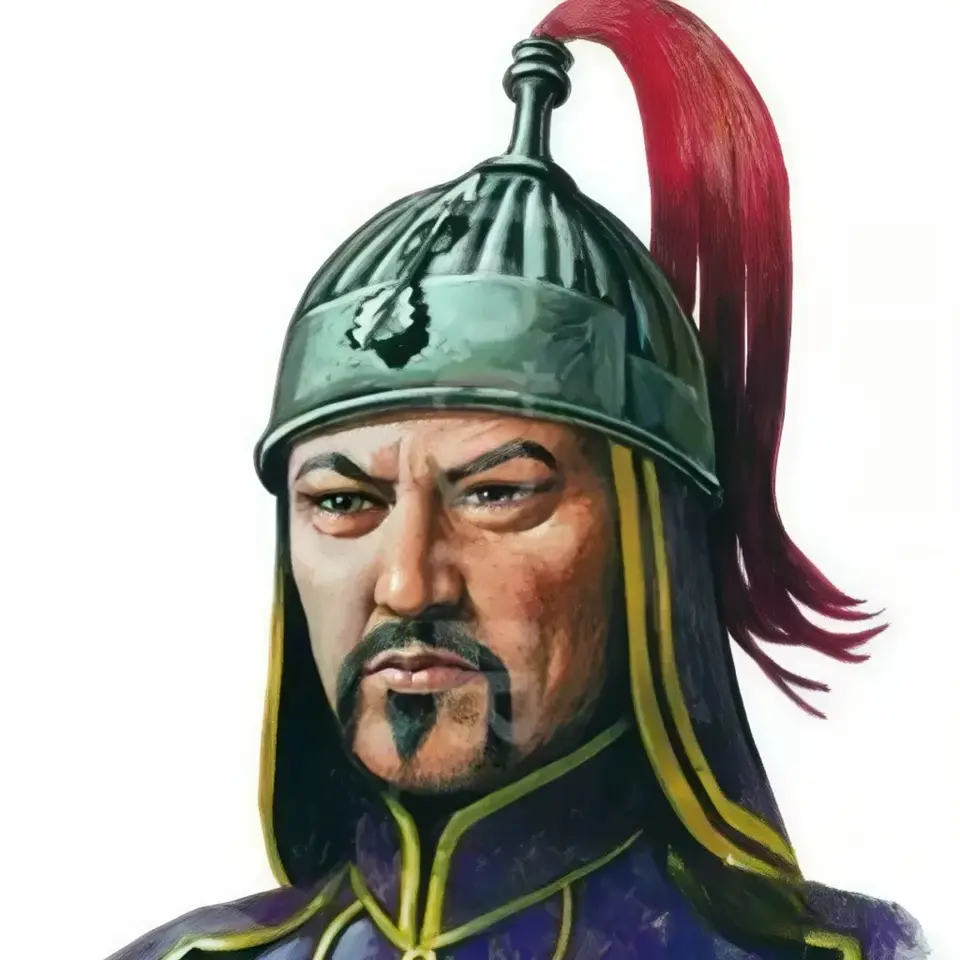
屈出律
Kuchlug (屈出律) (died 1218), alternatively spelled Guchuluk, was a prince of the Naiman confederation in the Altai Mountains and the final monarch of the Western Liao Dynasty. Following the total defeat of the Naiman tribal confederation by Genghis Khan in 1204, his father Tayang Khan was killed in battle, forcing Kuchlug to flee westward into the steppe hinterlands. After suffering another decisive defeat along the Irtysh…
Kuchlug (屈出律) (died 1218), alternatively spelled Guchuluk, was a prince of the Naiman confederation in the Altai Mountains and the final monarch of the Western Liao Dynasty. Following the total defeat of the Naiman tribal confederation by Genghis Khan in 1204, his father Tayang Khan was killed in battle, forcing Kuchlug to flee westward into the steppe hinterlands. After suffering another decisive defeat along the Irtysh River in 1208, he crossed the Tian Shan mountains to seek political asylum in Western Liao, where Emperor Yelü Zhilugu granted him generous protection, adopted him as a foster son, and gave him Princess Hunhu in marriage. Capitalizing on his newfound prestige at court, Kuchlug secretly rallied scattered Naiman nomad warriors and established covert alliances with Shah Muhammad of the Khwarazmian Empire. In 1211, exploiting Western Liao military setbacks and internal unrest, Kuchlug ambushed and captured Yelü Zhilugu during an imperial hunting expedition near Balasagun, usurping the title of Gurkhan and seizing sovereign authority over the empire. Following his coup, Kuchlug abandoned Church of the East Christianity in favor of Buddhism and initiated harsh religious persecution across his territories. He launched multiple devastating campaigns against Kashgar and Khotan, executed prominent Islamic religious leaders, and compelled Muslim populations to abandon their faith, provoking intense local hostility. In 1218, Genghis Khan dispatched his renowned general Jebe on a western expedition, promising complete religious freedom to the inhabitants. As local cities rebelled and welcomed the Mongol vanguard, Kuchlug fled into the rugged valleys of Badakhshan, where local mountaineers captured and executed him, bringing an abrupt end to the Western Liao Dynasty.
Born into the ruling royal house of the Naiman confederation in the Altai range.
Mongol forces destroyed the Naiman army; Tayang Khan died and Kuchlug fled west.
Routed at the Irtysh River, crossed the mountains to seek asylum under Yelü Zhilugu.
Conspired with Khwarazm, ambushed Yelü Zhilugu, and proclaimed himself Gurkhan.
Following the assassination of his ally Muhammad, initiated brutal assaults on Kashgar.
Forced Muslims in Khotan to apostatize and crucified Chief Imam Ala al-Din on the city gate.
Mongol forces arrived at Balasagun; oasis cities opened gates as Kuchlug fled.
Trapped in Badakhshan, captured by local mountaineers, and beheaded by Mongol commanders.
Kuchlug spent his youth in the Altai Mountains of the northwestern Mongolian plateau. As the eldest legitimate son of Tayang Khan, ruler of the powerful Naiman confederation, he was raised among the nomadic steppe aristocracy. In 1204, Genghis Khan mobilized the unified Mongol tribes for a decisive showdown against the Naimans at Naqu Cliff in the Khangai Mountains. The Naiman host collapsed under relentless Mongol cavalry charges, Tayang Khan suffered mortal wounds, and the royal consort Gurbesu was taken captive. Kuchlug gathered surviving cavalry units and fled northwest to seek refuge with his uncle Buyruk Khan in the northern Altai foothills.
During this era, the Naiman confederation dominated the vast pastures between the Altai and Khangai mountains, fielding over one hundred thousand armored riders and absorbing strong Nestorian Christian and Uighur cultural influences. However, Tayang Khan and his mother Gurbesu underestimated the rising power of the Mongols, regarding them with aristocratic condescension. On the eve of the Naqu Cliff battle, Genghis Khan ordered each warrior to light five separate campfires, confusing and demoralizing the Naiman scouts. Following the catastrophic defeat and the demise of his father, Kuchlug nurtured a burning desire for survival and ultimate vengeance against the Mongol leadership.
In 1206, Genghis Khan dispatched a punitive expedition across the Altai Mountains that routed and killed Buyruk Khan. Kuchlug was forced to retreat further west, linking forces with the remnants of the Merkit tribe led by Toqtoa. In 1208, Mongol vanguard divisions caught the allied tribal forces along the banks of the Irtysh River. Toqtoa was struck by a stray arrow and killed, causing the allied lines to unravel completely. Desperate and stripped of his tribal retinue, Kuchlug led a handful of personal retainers across freezing mountain passes through Beshbalik and into the wilderness near Kucha, where Western Liao border patrols intercepted him and escorted him to the imperial capital of Balasagun.
At that juncture, the Western Liao state was governed by its aging monarch, Yelü Zhilugu. The emperor had grown politically detached and engrossed in luxurious leisure, neglecting administrative oversight and imperial defense. Instead of treating the exiled nomad prince with caution, Yelü Zhilugu took pity on his destitute condition, formally adopted him as a foster son, and gave his daughter, Princess Hunhu, in marriage. This marriage elevated Kuchlug directly into the core circles of the Western Liao imperial court, providing him with extraordinary social stature and political freedom.
Having gained a secure foothold at the imperial court, Kuchlug moved quickly to advance his political ambitions. Under the pretext of reorganizing border defenses along the northwestern frontier on behalf of his father-in-law, he sent secret emissaries to locate and assemble scattered Naiman tribesmen living along the northern Tian Shan slopes and upper Yenisei basin. Within a short span, he formed a private retinue of several thousand hardened nomadic warriors. Simultaneously, Kuchlug used his royal son-in-law status to cultivate close ties with influential Liao ministers and garrison commanders, weaving an intricate conspiratorial network within the capital.
Following his imperial wedding in Balasagun, Kuchlug conducted inspection tours across the regions north and south of the Tian Shan range. At the time, the Western Liao maintained a decentralized system of urban autonomy and vassal khanates bound by annual tribute payments. Recognizing the fragility of local governance, Kuchlug traveled extensively throughout the Semirechye and Chu River valleys under the guise of an imperial commissioner. He courted regional governors and tribal chieftains, dangling promises of local autonomy and tax exemptions to lure them into abandoning their allegiance to Yelü Zhilugu.
Deepening financial distress had driven Yelü Zhilugu to impose exorbitant levies upon wealthy merchants and urban citizens in Balasagun, provoking widespread resentment among elites and commoners alike. Sensing an opportune moment, Kuchlug welcomed disaffected officials into his private residence and distributed lavish gifts of gold and silver to military officers. Guard units and palace sentries were gradually won over to his cause, enabling Kuchlug to establish an armed faction capable of directly challenging the ruling dynasty.
In 1210, the vassal state of Khwarazm under Shah Muhammad joined forces with the Western Qarakhanids in Samarkand to stage an open rebellion against Western Liao suzerainty. Yelü Zhilugu dispatched his senior commander Tayangu with tens of thousands of infantry and cavalry to crush the revolt. However, the Western Liao army suffered a crushing defeat at the Battle of Talas, where Tayangu was captured by Khwarazmian forces. This disastrous defeat on the frontier left the capital city of Balasagun vulnerable and plunged the court into panic, presenting Kuchlug with the perfect moment to execute his long-planned usurpation.
In 1211, Kuchlug dispatched confidential envoys to Shah Muhammad, coordinating a simultaneous pincer offensive to dismantle Western Liao authority. While Muhammad attacked Samarkand and Tashkent from the west, Kuchlug monitored Yelü Zhilugu's movements and ambushed the imperial retinue while the emperor was out hunting. Capturing his foster father and father-in-law, Kuchlug feigned filial piety by honoring Yelü Zhilugu as retired emperor, but stripped him of all military command and treasury control. Donning the imperial robes and adopting the title of Gurkhan, Kuchlug formally usurped the sovereign throne of Western Liao.
Following his successful coup, Kuchlug purged Khitan loyalists and veteran commanders who remained devoted to Yelü Zhilugu, replacing them with trusted Naiman lieutenants across key frontier fortresses. Confined to a secondary palace, Yelü Zhilugu spent his final days in deep sorrow and died two years later. Through this calculated betrayal, Kuchlug ended the direct dynastic succession established nearly a century earlier by Yelü Dashi, converting the Western Liao empire into a militarized regime dominated by displaced Naiman warlords.
Originally an adherent of Church of the East Christianity, Kuchlug converted to Mahayana Buddhism following his marriage to Princess Hunhu and his ascension to the throne. After the coup, both Samarkand and Khwarazm renounced Liao suzerainty, leaving only the Eastern Qarakhanid dynasty based in Kashgar nominally loyal to the empire. The Eastern Qarakhanid ruler Muhammad had previously been detained by Western Liao authorities. Kuchlug released Muhammad and sent him back to Kashgar to re-establish control, but resentful local Muslim elites assassinated him at the city gates to prevent an infidel takeover.
The murder of Muhammad incensed Kuchlug, prompting him to break openly with the regional Islamic hierarchy. Beginning in the autumn of 1211 and continuing for four consecutive years, Kuchlug mobilized massive armies during the annual autumn harvest to lay siege to Kashgar. His troops systematically torched unharvested grain fields, plundered livestock, and subjected the civilian population to starvation and warfare. After years of relentless blockades and destructive raids, Kashgar was forced to surrender due to severe famine, allowing Kuchlug to occupy this critical southern oasis hub.
Following his conversion to Buddhism, Kuchlug financed the construction of lavish temples and golden stupas in Balasagun, inviting prominent Buddhist masters from the Uighur realm and Western Xia to preach and administer vows at court. Princess Hunhu ardently supported this patronage, elevating Buddhist monks above imperial courtiers and civil administrators. However, this aggressive top-down religious pivot alienated rather than pacified regional populations, inciting profound anger among the Muslim inhabitants of the Central Asian oasis cities who had practiced their faith for centuries.
Upon occupying Kashgar, Kuchlug ordered a comprehensive purge of the city, executing surviving members of the Eastern Qarakhanid royal family and massacring local officials. The historic Eastern Qarakhanid dynasty, which had governed the western Tarim Basin for centuries, was completely eradicated. Kuchlug transformed Kashgar into a fortified regional command center, levying crushing war indemnities and billeting Naiman garrisons in civilian residences, turning the once-thriving Silk Road hub into a heavily militarized stronghold.
After garrisoning Kashgar, Kuchlug implemented severe retaliatory measures against the local Muslim population. In addition to executing prominent Qarakhanid aristocrats and venerable scholars, he permitted Naiman soldiers to commandeer private dwellings and seize civilian property. Subsequently, Kuchlug issued draconian decrees compelling Muslim citizens to convert to Buddhism or Nestorianism, or alternatively adopt Khitan attire and customs, while strictly prohibiting public calls to prayer, congregational worship, and Quranic recitation.
Following the fall of Khotan, Kuchlug convened a public theological assembly of urban imams. When the eminent Islamic scholar and Chief Imam Ala al-Din Muhammad vigorously defended his faith and openly denounced the ruler's tyranny, an enraged Kuchlug subjected him to brutal torture before ordering him crucified on the main gates of the city's grand mosque. This horrific act of religious violence sent shockwaves across Central Asian city-states, solidifying Kuchlug's reputation as a mortal enemy of the Islamic world.
To suppress mounting unrest, Kuchlug instituted an intrusive network of informants and punitive checkpoints across Yarkand, Aksu, and Kucha. Anyone caught concealing copies of the Quran or praying privately in their homes faced immediate execution alongside their entire household, while their property was confiscated by the state. Numerous historic mosques were shuttered, vandalized, or converted into Buddhist shrines. This tyrannical oppression fostered an atmosphere of perpetual dread, causing the populace to eagerly anticipate external intervention.
During his four years of military rule over Kashgar and Khotan, Kuchlug established mutual-surveillance neighborhood squads overseen by Naiman officers. Every ten households were assigned a secret monitor to watch all civilian interactions. Individuals discovered practicing ritual ablutions, observing the Ramadan fast, or gathering for religious instruction were arrested, branded, or subjected to mutilation, transforming the former cultural jewels of the Silk Road into an oppressive open-air prison.
In 1218, having subjugated the Mongolian steppe and inflicted devastating defeats upon the Jin Dynasty, Genghis Khan resolved to eliminate his enduring rival Kuchlug. The Mongol sovereign dispatched his brilliant general Jebe at the head of twenty thousand elite horsemen across the Altai Mountains directly into Western Liao territory. Jebe maintained iron discipline, forbidding pillaging and issuing imperial proclamations at every town declaring universal religious freedom and inviting Muslims to resume open worship.
Jebe's benevolent policy thrilled the oppressed peoples of Central Asia, and garrison commanders throughout Western Liao cities opened their gates to welcome the advancing Mongol army. When the Mongol cavalry reached Balasagun, the defending forces collapsed without offering resistance. Recognizing the hopelessness of his situation, Kuchlug refused to risk an open pitched battle against Jebe, abandoning his imperial household and fleeing southwest toward Kashgar and Yarkand with a small bodyguard of retainers.
Upon reaching Kashgar, Kuchlug discovered that the local Muslim population had already revolted, barring the city gates and cheering the approaching Mongol vanguard. Stripped of shelter and pursued relentlessly, Kuchlug led his remaining few hundred riders into the treacherous paths of the Pamir and Kunlun mountains. Along the way, bitter cold, hunger, and desertion depleted his retinue, reducing the once-dreaded Gurkhan to an exhausted fugitive wandering through frozen wilderness.
Jebe led his elite riders in relentless pursuit, tracking the fugitives from the Tian Shan across the high passes of the Pamir plateau. Following another sharp defeat near Yarkand, Kuchlug fled into the deep and inaccessible ravines of Badakhshan in present-day northeastern Afghanistan. Surrounded by glaciated peaks and cut off from all escape routes, he encountered local mountain tribesmen who, eager to rid their valley of foreign intruders and secure Mongol rewards, surrounded and apprehended the exhausted monarch.
The local mountaineers delivered the bound captive to the forward scouts of the pursuing Mongol cavalry. General Jebe verified Kuchlug's identity and immediately ordered his summary execution, severing his head and dispatching it for public display across the oasis towns of the Tarim Basin and Semirechye. With his death, the Western Liao state, which had endured for nearly a century, ceased to exist, and its vast territories were incorporated directly into the expanding Mongol Empire.
Following the execution of Kuchlug, Jebe adhered strictly to Genghis Khan's directives by pacifying local communities, preventing plunder, and restoring civil stability, allowing Silk Road commerce to revive swiftly. As the last surviving heir of the Naiman royal line, Kuchlug had spent over a decade wandering the frontier, orchestrating coups, and ruling through terror, yet ultimately failed to withstand the tide of Mongol expansion, concluding his turbulent and notorious career in utter defeat.
Following the complete destruction of his tribe at the Irtysh River, Kuchlug demonstrated remarkable resilience by escaping to Western Liao. Leveraging royal patronage and his status as imperial son-in-law, he rapidly rallied several thousand scattered Naiman horsemen, exhibiting exceptional survival skills and political resourcefulness in exile.
Upon entering the imperial court, Kuchlug used his royal pedigree and charisma to win the trust of the aging monarch Yelü Zhilugu. By exploiting his marriage to the imperial princess, he cultivated influential court ministers and bribed palace guard commanders, constructing an extensive power base within Balasagun that laid the groundwork for his subsequent coup.
During his residence at court, Kuchlug conducted calculating diplomatic maneuvers to dismantle Western Liao authority. Exploiting the ambition of Khwarazmian Shah Muhammad to shake off Liao suzerainty, he exchanged secret envoys and coordinated a joint revolt with Samarkand, effectively fragmenting the empire's vassal network and paving the way for his ascension.
Faced with shifting regional power balances, Kuchlug acted with decisive ruthlessness. Coordinating his offensive with the Khwarazmian rebellion, he ambushed Yelü Zhilugu during an imperial hunting trip, usurped the supreme title of Gurkhan, and seized command over the vast territories of the Western Liao empire.
Following his coup in Balasagun, Kuchlug carried out widespread purges of Khitan imperial loyalists to prevent dynastic restoration. He appointed trusted Naiman commanders to garrison strategic frontier passes, fundamentally altering the military leadership of the Central Asian empire.
Confronted with rebellions in the Tarim Basin and the collapse of tributary ties, Kuchlug employed sustained sieges and economic blockades, conducting annual harvest raids over four consecutive years to capture Kashgar and Khotan, establishing direct administrative control over southern oasis settlements.
To bolster his ideological authority after adopting Buddhism, Kuchlug initiated sweeping religious suppression against local Islamic institutions. He prohibited public calls to prayer, enforced dress codes, and executed prominent religious leaders, attempting to secure total political and cultural dominance over his diverse subjects.
Throughout his seven-year reign, Kuchlug enforced rigorous tax assessments and commandeered private resources to finance continuous military campaigns. While this policy sustained his standing army, it severely damaged urban commerce and agriculture, alienating urban merchant elites and rural laborers.
Confronted with the overwhelming advance of Jebe's Mongol vanguard, Kuchlug's hollowed regime disintegrated rapidly without public support. His capture and execution in the deep valleys of Badakhshan brought a definitive close to the royal Naiman dynasty, leaving an enduring historical lesson on the perils of violent usurpation.
| Relationship | Name | Identity and Historical Connection |
|---|---|---|
| Uncle | Buyruk Khan | Naiman chieftain; sheltered Kuchlug before being defeated and killed by Mongol forces. |
| Ally turned Adversary | Shah Muhammad | Khwarazmshah; initially coordinated with Kuchlug against Liao, later fought over territory. |
| Slain Vassal Ally | Muhammad | Khan of the Eastern Qarakhanids; supported by Kuchlug, slain by locals at Kashgar gates. |
| Primary Adversary | Genghis Khan | Founder of the Mongol Empire; crushed the Naimans and ordered the final conquest of Kuchlug. |
| Campaign Commander and Executioner | Jebe | Renowned Mongol general; led twenty thousand cavalry to conquer Liao and executed Kuchlug. |
| Martyred Religious Leader | Ala al-Din | Chief Imam of Khotan; tortured and crucified on the mosque gate for opposing religious decree. |
Persian historian Ata-Malik Juvayni recorded Kuchlug's brutal governance and ultimate downfall in his Tarikh-i Jahangushay: "In Kashgar and Khotan, Kuchlug instituted widespread terror, forbidding prayer and public recitation... When the Mongol armies arrived, the inhabitants welcomed them as rain after drought; Kuchlug fled in panic and was ultimately captured and slain." Official Chinese annals, including the History of Yuan, similarly document his flight westward and the demise of his usurped regime. Modern and classical historians assess Kuchlug as an exceptionally resilient and cunning opportunist who overcame devastating tribal defeats to seize the throne of an imperial dynasty. However, his ungrateful betrayal of his imperial benefactor and his disastrous enforcement of violent religious persecution fatally severed his ties with the Central Asian population, ensuring that his precarious realm was swiftly dismantled by the disciplined Mongol cavalry of Genghis Khan.
FIGURES ASSOCIATED WITH THIS DYNASTY