Birth on the Western March
Born to Yelu Dashi during the Khitan migration into Central Asia.
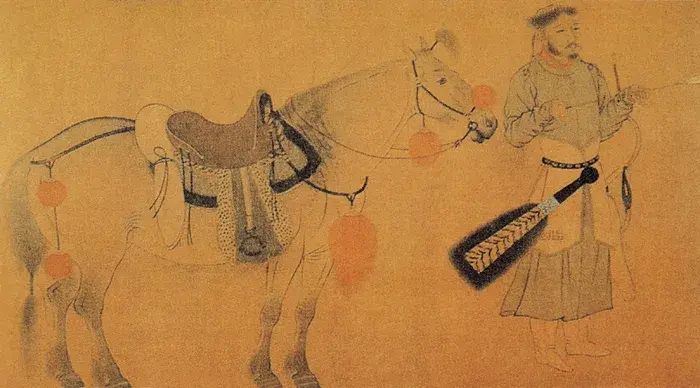
耶律夷列
Yelu Yilie (耶律夷列) (c. 1125–1163) was the second emperor of the Western Liao dynasty (historically known in Eurasian sources as the Qara Khitai), revered posthumously with the temple name Renzong. He was the son and legitimate successor of the legendary conqueror Yelu Dashi, who routed Seljuk armies and established Khitan hegemony across Central Asia. Following Yelu Dashi's death in 1143, Yelu Yilie's mother, Empress…
Yelu Yilie (耶律夷列) (c. 1125–1163) was the second emperor of the Western Liao dynasty (historically known in Eurasian sources as the Qara Khitai), revered posthumously with the temple name Renzong. He was the son and legitimate successor of the legendary conqueror Yelu Dashi, who routed Seljuk armies and established Khitan hegemony across Central Asia. Following Yelu Dashi's death in 1143, Yelu Yilie's mother, Empress Gantian (Xiao Tabuyan), ruled as regent for seven years until he reached majority. Assuming personal rule in 1150 under the reign era Shaoxing, Yelu Yilie proved an exceptionally capable and methodical statesman. In 1151, he conducted an empire-wide census and household registration across the Central Asian heartland, recording 84,500 adult male heads of households. He standardized taxation at one gold dinar per household and curtailed feudal exploitation. Militarily, he crushed rebellions by Karluk nomad chieftains, placed loyal rulers upon the Western Karakhanid throne in Samarkand, and enforced tributary compliance from the Khwarazmian Empire. His thirteen-year reign represented the zenith of Western Liao's political stability and cultural prosperity, linking East Asian imperial governance with Central Asian commerce.
Born to Yelu Dashi during the Khitan migration into Central Asia.
Yelu Dashi passed away; his mother Empress Xiao Tabuyan assumed regency.
Attained adulthood, assumed direct imperial rule as Gurkhan, and adopted the reign title Shaoxing.
Completed the famous census of adult male taxpayers, establishing equitable land taxation.
Dispatched Khitan cavalry to suppress the Karluk revolt, preserving vassal stability in Samarkand.
Passed away after a prosperous thirteen-year reign, succeeded by his sister Yelu Pusuwan as regent.
Yelu Yilie was born during the tumultuous migration of the Khitan imperial house. His father, Yelu Dashi, led royalist cavalry west following the fall of the Liao dynasty to the Jurchen Jin, traversing the Yenisei steppe and establishing a new capital at Balasagun in the Chu River valley. Following his decisive victory over Sultan Sanjar's Seljuk host at the Battle of Qatwan in 1141, Yelu Dashi established the Qara Khitai as the paramount superpower of Central Asia.
When Yelu Dashi died in 1143, Crown Prince Yelu Yilie was still an adolescent. In accordance with Khitan ancestral custom, his mother Empress Xiao Tabuyan assumed the regency under the reign title Xianqing. For seven years, Empress Xiao administered the realm with prudence, ensuring uninterrupted administrative continuity and allowing Yelu Yilie to receive rigorous training in Confucian classics and steppe horsemanship.
In 1150, Empress Xiao relinquished power, and Yelu Yilie ascended the throne with the title Gurkhan, adopting the Chinese reign title Shaoxing—mirroring that of Emperor Gaozong of Southern Song, a potent testament to the Khitan court's unbroken cultural affinity with Chinese dynastic identity.
Yelu Yilie immediately tackled the administrative consolidation of the vast empire. In 1151, he ordered an unprecedented census (kuohu) throughout the crown territories surrounding the Chu and Talas river basins. The imperial registers tallied 84,500 adult male household heads. Based on these precise figures, Yelu Yilie abolished predatory tribal levies, instituting a fixed direct tax of a single gold dinar per household while strictly forbidding local vassal lords from levying unauthorized corvée labor. This equitable fiscal regime stimulated rapid agricultural revitalization and flourishing Silk Road caravan commerce.
In external relations, Yelu Yilie maintained firm imperial suzerainty over tributary states, including the Western Karakhanid Khanate, Eastern Karakhanids, and the Khwarazmian Shahdom. When the fiercely martial Karluk nomadic tribes near Samarkand rose in armed revolt and killed the Karakhanid sovereign Chaghrï Khan, the region threatened to slide into widespread anarchy.
Yelu Yilie reacted with swift decisiveness, dispatching an elite expeditionary force of Khitan heavy cavalry to crush the Karluk coalition. After subduing the rebels and executing their ringleaders, Yelu Yilie brokered an enduring reconciliation, installing Ali b. Hasan as the new vassal Khan of Samarkand. Concurrently, he compelled the ambitious Khwarazmshah Il-Arslan to honor his vassal obligations, ensuring regular annual tribute. Through this calculated balance of military deterrence and administrative tolerance, Yelu Yilie secured an empire stretching from the Altai Mountains to the Aral Sea and the Amu Darya.
Yelu Yilie's reign represented the high watermark of Western Liao's golden age, marked by religious tolerance, flourishing cities, and unchallenged military prestige.
In 1163, Yelu Yilie passed away at Balasagun at approximately thirty-eight years of age. Because his surviving sons, including Yelu Zhilugu, were still minors, his testamentary decree designated his younger sister, Princess Yelu Pusuwan, to act as regent under the title Empress Dowager Chengtian. Yelu Yilie was posthumously honored with the Chinese temple name Renzong ("Benevolent Ancestor").
Yelu Yilie's 1151 census was an administrative masterpiece in medieval Central Asian history. By identifying 84,500 tax-paying households and formalizing uniform direct taxation, he dismantled arbitrary feudal extortion and anchored Western Liao's treasury on a stable institutional base.
Through military interventions against Karluk uprisings and the masterful oversight of Karakhanid and Khwarazmian vassal states, Yelu Yilie preserved peace and inter-religious harmony across Transoxiana and the Semirechye for over a decade.
FIGURES ASSOCIATED WITH THIS DYNASTY