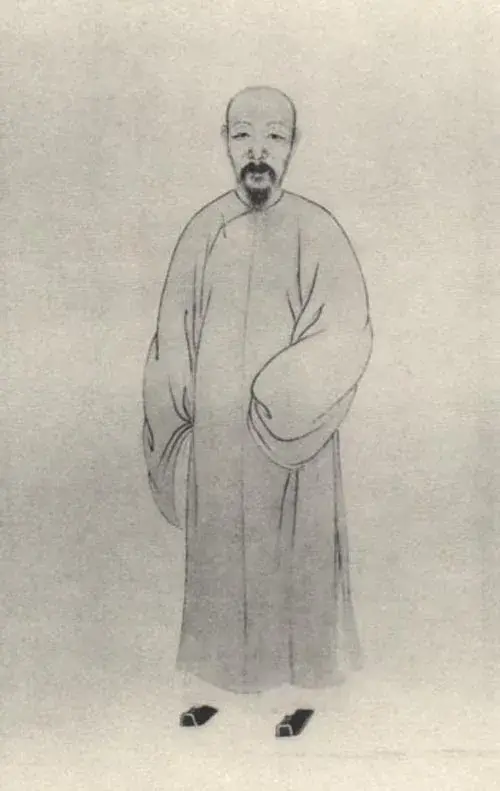
Life and Career
Prestigious Lineage and Early Flight from Turmoil
Chen Qun was born into the prominent Chen clan of Yingchuan, one of the foremost scholarly and aristocratic families of the late Han dynasty. His grandfather Chen Shi served as the magistrate of Taiqiu and was celebrated throughout the empire for his incorruptibility and judicial discernment, standing alongside Xun Shu as a moral exemplar. His father Chen Ji served as Chancellor of Pingyuan and Chamberlain for Ceremonials, attaining immense prestige at court. From childhood, Chen Qun exhibited quiet composure and penetrating intellect. Observing his potential, Chen Shi remarked to relatives: "This child will surely bring prosperity to our clan!" When Kong Rong, a celebrated cultural luminary considerably senior in age, visited Yingchuan, he was so impressed by Chen Qun's wisdom that he initiated a friendship that bridged their generations, spreading Chen Qun's fame across the realm.
In 194, Tao Qian, Governor of Xu Province, passed away, and Liu Bei assumed administration of the province with the support of local gentry. Recognizing Chen Qun's intellect, Liu Bei appointed him aide-de-camp. At the time, warlord Yuan Shu invaded from Huainan, while Lu Bu, defeated by Cao Cao, fled southward to seek asylum in Xu Province. Liu Bei resolved to lead an army southward to confront Yuan Shu, leaving Lu Bu stationed at Xiapi.
Chen Qun foresaw disaster and urgently remonstrated: "Yuan Shu's army remains potent and cannot be quickly overcome. If you march south on campaign, Lu Bu will certainly exploit the vacuum to seize Xiapi from the rear. Even if you achieve a minor victory against Yuan Shu, you will lose your territorial foundation in Xu Province and be left without refuge." Disregarding his advice, Liu Bei marched south to Xuyi. Predictably, Lu Bu launched a surprise assault on Xiapi, capturing Liu Bei's families and base. Stranded and defeated, Liu Bei openly expressed deep regret for ignoring Chen Qun's counsel. Chen Qun subsequently accompanied his father in refuge within Xu Province, temporarily coexisting with Lu Bu's remnants.
Service under Cao Cao and Principled Counsel
In the winter of 198, Cao Cao besieged Xiapi, flooding the walls and executing Lu Bu. Long aware of the Chen family's illustrious pedigree and Chen Qun's capabilities, Cao Cao received Chen Qun and his father with exceptional honors, commissioning Chen Qun as a clerk in the West Bureau of the Ministry of Works to oversee bureaucratic assessments and appointments. Cao Cao dispatched him to administer local counties such as Zhe and Huaiheng, where Chen Qun instituted strict auditing of land registers, rooted out bureaucratic malfeasance, and rectified local administration.
In handling personnel affairs, Chen Qun prioritized moral character, demonstrating fairness without regard to personal affinity or animosity. Chen Jiao, a fellow commandery scholar, had faced local criticism over past youthful indiscretions; Chen Qun recognized his genuine administrative talent and recommended him enthusiastically. He also recommended Dai Gan of Danyang. Both men later proved to be stalwart pillars of the Wei administration; Dai Gan perished heroically defending the state during rebellions in Wu, and Chen Jiao rose to Minister of Education. The scholar-official class widely lauded Chen Qun's discernment.
In 213, Cao Cao was created Duke of Wei, and Chen Qun was appointed Vice Censor-in-Chief. During this period, noting the excessive severity of capital punishment and the lack of intermediate deterrence during wartime chaos, Cao Cao contemplated reintroducing ancient bodily mutilation punishments (such as nose-cutting or foot-amputation) to replace the death penalty. Chen Qun strongly endorsed the revival of mutilation, submitting detailed memorials arguing that capital execution extinguished human life irrevocably, whereas ancient bodily penalties preserved life while inflicting enduring deterrence, conserving valuable demographic labor for the state. Zhong Yao shared Chen Qun's views, whereas Wang Lang argued that society was not yet settled enough for ancient physical penalties. Although Cao Cao concurred with Chen Qun's reasoning, ongoing military conflicts prompted him to defer the proposal. Chen Qun was subsequently transferred to Palace Attendant, concurrently managing executive secretariat matters.
When Cao Pi was designated heir apparent, Chen Qun was appointed Senior Companion to the Heir Apparent. With his scrupulous adherence to ritual and unyielding candor, Chen Qun, together with Sima Yi, Wu Zhi, and Zhu Shuo, became celebrated as the "Four Friends" of Cao Pi's inner circle, earning Cao Pi's enduring trust and reverence.
The Nine-Rank System and Assisting Emperor Wen
In the first month of 220, Cao Cao passed away in Luoyang, and Cao Pi succeeded to the position of Chancellor and King of Wei. At the time, the Han recruitment system of recommendation based on local reputation had disintegrated under decades of warfare, displacement, and destroyed census records. The gentry class urgently demanded institutionalized access to central offices. Seizing the historical moment, Chen Qun formulated and presented the Nine-Rank System (Nine-Rank Controller System) to Cao Pi.
The system established controllers in commanderies and grand controllers in provinces, selected from upright central officials native to those localities. These controllers appraised local candidates according to lineage, conduct, and ability, classifying them into nine descending tiers from "Upper-Upper" to "Lower-Lower", which served as the authoritative basis for appointments by the Ministry of Personnel. The reform restored stability to administrative recruitment and won broad allegiance from northern elite lineages, providing a crucial institutional foundation for the founding of Cao Wei. When Cao Pi formally ascended the imperial throne later that year, Chen Qun was appointed Prefect of the Masters of Writing and enfeoffed as Marquis of Yingyin.
Subsequently, Chen Qun was commissioned to collaborate with Hua Xin and Wang Lang in drafting the Code of Wei. Chen Qun radically streamlined the archaic Han legal statutes, condensing voluminous codes into eighteen coherent fascicles. Crucially, he placed the "Penal Classifications" (Xingming) section at the very head of the code to articulate general definitions, punitive scales, and principles of exemption, inaugurating a modern structural paradigm for Chinese codified jurisprudence.
Between 222 and 225, Emperor Wen launched successive campaigns against Eastern Wu. On each occasion, he entrusted Chen Qun with the defense of the primary capital at Xuchang, authorizing him to oversee all state affairs through the imperial secretariat. In 225, Chen Qun was appointed Senior General of the Pacifying Army and Supervisor of the Central Armies, commanding the central imperial palace guards. In the fifth month of 226, as Emperor Wen lay on his deathbed, he summoned Chen Qun, Sima Yi, Cao Zhen, and Cao Xiu to his private quarters to entrust them with the regency over the young heir.
Regent of the State and Admonishing Emperor Ming
In 226, Emperor Ming (Cao Rui) took the throne. Revering the veteran statesmen of his father's era, Emperor Ming elevated Chen Qun to Minister of Works and Overseeing the Masters of Writing, expanding his fief by five hundred households. Upon the commencement of the new reign, Chen Qun submitted a memorial urging the sovereign to emulate King Wen of Zhou by cultivating personal virtue, heeding wise counsel, and setting a moral standard for the realm.
In 230, Grand Marshal Cao Zhen proposed launching a massive multi-pronged offensive against Shu Han via the Ziwu Valley. Chen Qun stepped forward to oppose the venture, calculating the enormous logistical costs and highlighting the extreme hazards of traversing treacherous mountain ravines in autumn. When Cao Zhen pressed forward, torrential rains persisted for over a month, collapsing wooden plank paths and severing grain lines. Chen Qun promptly urged Emperor Ming to issue an immediate recall. Emperor Ming complied, ordering Cao Zhen to withdraw and sparing the army from catastrophe.
In 232, when the infant Princess of Pingyuan died prematurely, Emperor Ming was overwhelmed with grief and sought to wear deep mourning attire while commanding magnificent tomb construction. Chen Qun remonstrated forcefully, citing the Rites of Zhou and teachings of Confucius to demonstrate that ancient monarchs never accorded full adult state mourning to infants, successfully persuading the emperor to curb excessive ritual deviation.
In the ensuing years, Emperor Ming mobilized hundreds of thousands of conscripted laborers to construct magnificent palace complexes in Luoyang and Xuchang, causing widespread abandonment of agriculture. In 235, Chen Qun submitted candid remonstrances, arguing: "Even Great Yu, succeeding the golden age of Tang and Yu, dwelled in modest cottages; Han Gaozu rebuked Xiao He for building grand granaries and armories; Han Mingdi abandoned the Deyang Hall upon hearing Zhongli Yi's remonstrance. Since the fall of Han, the realm has suffered devastating depopulation. If Your Majesty neglects defense and the livelihood of farmers to pursue grand construction, internal unrest will arise before external rivals are subdued!" Though Emperor Ming could not halt all construction, he held Chen Qun's integrity in profound esteem.
In his later years, Chen Qun adhered strictly to ministerial discretion. Whenever he submitted confidential memorials critiquing state policy, he sealed them with his own hands; upon receiving imperial replies, he immediately burned his original drafts. Even his closest kin remained unaware of his specific admonitions. Historians celebrated him as embodying the consummate virtue of ancient confidential counselors.
Demise and Imperial Temple Enshrinement
On February 7, 237 (Guisi day of the 12th month, 4th year of Qinglong), Chen Qun passed away in office while serving as Minister of Works. Emperor Ming mourned him deeply, attending the funerary services and conferring the posthumous title of Marquis Jing.
His marquisate was inherited by his eldest son Chen Tai, who continued the family legacy of strategic intellect and integrity, repeatedly defending the western frontiers against Jiang Wei and rising to Senior Vice Director of the Masters of Writing. In recognition of Chen Qun's service, Emperor Ming granted an independent marquisate to Chen Qun's younger son.
In the autumn of 243, during the reign of Cao Fang, the imperial court reviewed the founding merits of early dynastic leaders and decreed that Chen Qun, alongside Cao Zhen, Cao Xiu, Xiahou Shang, Chen Jiao, and other illustrious commanders, be granted perpetual sacrificial honors in the ancestral temple of Cao Cao.
Major Achievements
Creation of the Nine-Rank System
The Nine-Rank System was Chen Qun's most profound institutional contribution to imperial Chinese statecraft. In the late Eastern Han, the traditional recommendation system collapsed entirely amidst civil war, leaving central authorities unable to evaluate local talent.
In 220, Chen Qun formulated and promulgated the Nine-Rank Controller System. By instituting commandery and provincial controllers drawn from respected central officials, the state systematically appraised local scholars on the basis of family pedigree, moral character, and demonstrated ability into nine hierarchical grades. The Ministry of Personnel utilized these ratings for civil appointments. This reform reclaimed personnel authority from warlords and regional cliques, consolidated central executive power, and provided an enduring structural framework that sustained Chinese bureaucratic administration across multiple dynasties.
Codification of the Code of Wei
The legal codes inherited from the Western and Eastern Han were notoriously fragmented, unwieldy, and contradictory, comprising tens of thousands of individual clauses that fostered judicial corruption.
During the transitional Yankang and Huangchu periods, Chen Qun presided over the compilation of the Code of Wei. He pruned redundant statutes, synthesizing the core legal corpus into eighteen streamlined volumes. Most significantly, he abstracted general legal concepts and sentencing definitions, placing the "Penal Classifications" chapter at the opening of the entire code. This structural innovation became the standard model for the Western Jin Code, Southern Dynasty statutes, and the celebrated Tang Code, signifying the institutional maturity of traditional Chinese jurisprudence.
Stern Admonition against Extravagance and War
As chief minister of state, Chen Qun consistently prioritized the demographic health and economic endurance of the empire, refusing to yield to imperial whims or reckless adventurism.
During the 230 Shu campaign, his acute understanding of logistical vulnerabilities prevented a catastrophic collapse in the Qinling Mountains. During Emperor Ming's extravagant palace expansions, Chen Qun repeatedly confronted the throne with classical precedents, warning against exhausting the populace in frivolous pursuits. Furthermore, he tirelessly championed upright Confucian scholars such as Guan Ning, instilling moral dignity into the court and demonstrating the ideal qualities of a principled Confucian statesman.