Birth in Langya
Born into a gentry lineage in Yangdu, Langya; studied classics in Luoyang during youth.
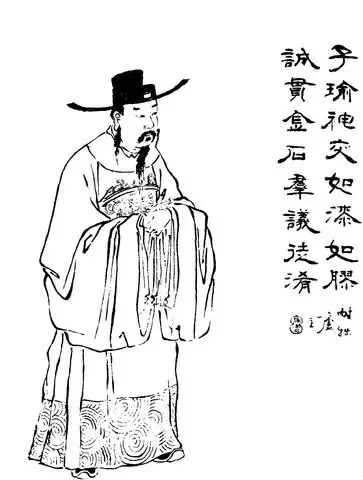
诸葛瑾
Zhuge Jin (诸葛瑾; 174–241), courtesy name Ziyu, was a native of Yangdu in Langya Commandery (modern Yinan County, Shandong Province) and a descendant of Western Han Colonel-Director of Retainers Zhuge Feng. He was an eminent founding statesman, military commander, and diplomat of Eastern Wu during the Three Kingdoms Period, the elder brother of Shu Han Chancellor Zhuge Liang, and the father of Eastern Wu regent Zhuge Ke,…
Zhuge Jin (诸葛瑾; 174–241), courtesy name Ziyu, was a native of Yangdu in Langya Commandery (modern Yinan County, Shandong Province) and a descendant of Western Han Colonel-Director of Retainers Zhuge Feng. He was an eminent founding statesman, military commander, and diplomat of Eastern Wu during the Three Kingdoms Period, the elder brother of Shu Han Chancellor Zhuge Liang, and the father of Eastern Wu regent Zhuge Ke, rising to the supreme offices of General-in-Chief, Left Protector-General, and Governor of Yu Province, with the noble title of Marquis of Wanling. In the chaotic closing years of the Eastern Han dynasty, Zhuge Jin fled the devastation of the Central Plains by crossing southward to Jiangdong. Recommended to Sun Quan by his brother-in-law Hong Zi, he was received with immense honor and admitted alongside Lu Su to the inner circle of retainers. Famed for his magnanimous character, dignified bearing, and deep moral integrity, Zhuge Jin excelled in the art of gentle, indirect remonstrance. When Sun Quan was seized by anger toward senior ministers, Zhuge Jin avoided abrasive confrontations, subtly dropping analogies to enlighten his lord. He mediated conflicts between Sun Quan and veteran leaders such as Zhang Zhao and Zhu Zhi, saving numerous innocent officials and earning Sun Quan's praise as a "soulmate of lifelong fidelity." In military and diplomatic affairs, Zhuge Jin stood as a pillar of Eastern Wu. In 215, he traveled as envoy to Chengdu to negotiate the restitution of southern Jing Province, maintaining strict separation between public duty and private affection with his brother Zhuge Liang. Following Lü Meng's death, Zhuge Jin succeeded him as Administrator of Nan Commandery, garrisoning Gong'an to fortify the Jingzhou border. Prior to the Battle of Yiling, he addressed a famous strategic letter to Liu Bei, urging the preservation of the anti-Cao alliance. During Cao Pi's subsequent invasion of Wu, Zhuge Jin helped relieve the siege of Jiangling against Cao Zhen and Xiahou Shang, and repulsed Cao Ren at Ruxu. Following Sun Quan's imperial accession, he was appointed General-in-Chief. He died in 241 at the age of sixty-eight, requesting a plain wooden coffin and unadorned burial shroud.
Born into a gentry lineage in Yangdu, Langya; studied classics in Luoyang during youth.
Fled southward across the Yangtze to escape northern warfare; recommended to Sun Quan by Hong Zi.
Dispatched to Chengdu to negotiate three southern commanderies of Jing Province; avoided private meetings with Zhuge Liang.
Succeeded the deceased Lü Meng as Administrator of Nan Commandery; enfeoffed as Marquis of Xuancheng.
Sent a diplomatic dispatch to Liu Bei before the Battle of Yiling, counseling against fratricidal conflict.
Rushed naval flotillas to reinforce Zhu Ran at Jiangling, repulsing the joint offensive of Cao Zhen and Xiahou Shang.
Commanded an eastern column against Xiangyang following Cao Pi's death, clashing with Sima Yi before withdrawing.
Sun Quan assumed the imperial title; Zhuge Jin was promoted to General-in-Chief, Left Protector-General, and Governor of Yu Province.
Campaigned against Xiangyang alongside Lu Xun; executed a calm, coordinated withdrawal after operational dispatches were intercepted.
Passed away in Jianye at age sixty-eight; commanded an austere burial in plain linen and an unadorned wooden coffin.
Zhuge Jin was born in 174, the third year of the Xiping reign of Emperor Ling of Han, in Yangdu County of Langya Commandery (modern Yinan County, Shandong Province). His lineage originated from the Ge clan of Zhu County; upon relocating to Yangdu, where a prominent Ge family already resided, local inhabitants referred to them as the "Zhuge" to denote their geographic origin, which was subsequently adopted as the hereditary family name. Zhuge Jin was a descendant of Zhuge Feng, who had served as Colonel-Director of Retainers during the reign of Emperor Yuan of the Western Han, noted for uncompromising integrity in impeaching influential aristocrats. His father, Zhuge Gui, served as Assistant Magistrate of Mount Tai in the late Han era and died prematurely. Zhuge Jin was the eldest son, while Shu Han Chancellor Zhuge Liang and Eastern Wu official Zhuge Jun were his younger brothers.
In his youth, Zhuge Jin journeyed to the imperial capital of Luoyang to pursue classical scholarship, acquiring deep expertise in the Mao Commentary on the Book of Songs, the Book of Documents, and the Zuo Tradition of the Spring and Autumn Annals. Endowed with natural filial devotion, he served his stepmother with exemplary care following his biological mother's early death. When his stepmother fell ill, he personally prepared her medicines and maintained vigil by her bedside, winning acclaim across his home commandery. In the late Jian'an era, central China was convulsed by warfare as Cao Cao launched campaigns against Tao Qian, devastating Xu Province. In 200, at twenty-seven years of age, Zhuge Jin escorted his stepmother and younger kin southward across the Yangtze River, finding refuge in the Qu'a region of Jiangdong.
At that time, Sun Ce had recently been assassinated, and his younger brother Sun Quan assumed control over the fledgling Jiangdong administration, welcoming refugee intellectuals from the north. Hong Zi, who was married to Sun Quan's elder sister, met Zhuge Jin and was struck by his gravitas and profound learning, immediately recommending him to Sun Quan. Sun Quan granted Zhuge Jin an audience, was deeply impressed by his character, and received him as an honored guest alongside Lu Su. Soon afterward, Sun Quan appointed him Chief Clerk and later transferred him to Major of the Center, initiating four decades of service to the Sun family.
Zhuge Jin possessed a commanding physical presence, an open countenance, and an affable, trustworthy disposition that won universal respect. Sun Quan, endowed with a fierce and impetuous temperament, was prone to explosive outbursts against his subordinates, often terrifying court officials. In this demanding environment, Zhuge Jin perfected the art of subtle, diplomatic remonstrance.
Whenever Sun Quan was enraged and poised to inflict severe punishments, Zhuge Jin avoided direct confrontation. Instead, observing his lord's expressions, he "subtly indicated general directions and broadly pointed to larger principles," using mild analogies and shared sympathies to guide Sun Quan's thoughts. Sun Quan frequently grasped his meaning and relented, sparing many faithful ministers from ruin. Sun Quan held Zhuge Jin in such esteem that he addressed him exclusively by his courtesy name Ziyu, referring to him as his "soulmate."
When senior statesman Zhang Zhao clashed with Sun Quan over military strategies and locked his doors in protest, Zhuge Jin shuttled between them, preserving the ruler's dignity while reassuring the veteran minister, successfully restoring their relationship. On another occasion, Administrator of Wu Commandery Zhu Zhi, the veteran who had originally recommended Sun Quan as Filial and Incorrupt, became the target of anonymous accusations that provoked Sun Quan's fury. While other courtiers shrank in fear, Zhuge Jin sat before Sun Quan and drafted a mock interrogation letter in Sun Quan's voice, analyzing the misunderstandings while recalling their decades of shared service. Sun Quan wept upon reading the letter, declaring: "My knot of grievance has been unraveled by you! Is this not what Confucius meant by the virtue of Yan Hui, which causes people to love one another?" Zhu Zhi was exonerated.
Similarly, when Colonel Yin Mo faced execution and courtiers pleaded in vain, only Zhuge Jin remained silent. Demanded by Sun Quan why he did not speak, Zhuge Jin stepped forward and bowed: "Yin Mo and I were displaced refugees from the north who cast ourselves upon your benevolence. Failing to supervise each other to repay your boundless grace, Yin Mo has committed an offense. I deserve condemnation myself and dare not plead." Moved by his sincerity, Sun Quan spared Yin Mo. Likewise, when outspoken scholar Yu Fan was exiled to Jiaozhou, only Zhuge Jin repeatedly submitted petitions to protect his family.
Social gatherings at court also celebrated the warm rapport between sovereign and minister. Because Zhuge Jin had an elongated face, Sun Quan once playfully ordered a donkey led into a banquet with a sign reading "Zhuge Ziyu" tied to its head. As courtiers watched in embarrassment, Zhuge Jin's young son Zhuge Ke calmly stepped forward, took a brush, and added the characters "’s Donkey." Delighted by the boy's wit, Sun Quan gifted the animal to him.
Because his younger brother Zhuge Liang wielded supreme authority in Shu Han, envious courtiers periodically accused Zhuge Jin of maintaining secret treasonous communications with Chengdu. Sun Quan dismissed these slurs, declaring before the assembled ministers: "I have sworn an oath of life and death with Ziyu. Ziyu will never betray Me, just as I will never betray him! When Kongming sent emissaries from Gong'an, I asked Ziyu why he did not summon his brother to Jiangdong. Ziyu replied: 'My brother Liang has pledged his life to the Liu house and cannot harbor two minds, just as I have committed my fate to Your Majesty and cannot alter my allegiance.' With such selfless loyalty, I trust Ziyu as My own hand!"
Amid the diplomatic maneuvering between Eastern Wu and Shu Han, Zhuge Jin served as the linchpin preserving the coalition. In 215, following Liu Bei's pacification of the Sichuan basin, Sun Quan dispatched Zhuge Jin to Chengdu to demand the restitution of Changsha, Lingling, and Guiyang commanderies in southern Jing Province.
Arriving in Chengdu, Zhuge Jin upheld official decorum. Despite his close fraternal bond with Zhuge Liang, the two brothers met exclusively during public state audiences to debate territorial rights, strictly refusing to meet privately or exchange correspondence outside formal court channels. The court of Shu and Sun Quan praised his integrity. Although negotiations initially stalled, leading to border mobilization before the Xiang River partition, Zhuge Jin's conduct earned mutual respect between the two courts.
In 219, following Guan Yu's defeat and the capture of Jing Province by Lü Meng, Lü Meng died of illness. Recognizing that Gong'an was the linchpin facing both Cao Wei and Shu Han, Sun Quan appointed Zhuge Jin Administrator of Nan Commandery, promoted him to General Who Pacifies the South, and enfeoffed him as Marquis of Xuancheng.
In the spring of 221, Liu Bei mobilized his armies to attack Eastern Wu in the Battle of Yiling to avenge Guan Yu. Zhuge Jin dispatched a letter to Liu Bei: "Your Majesty has marched all the way to Baidi to avenge Guan Yu. Yet between Emperor Xian of Han and Guan Yu, who is of greater importance? Between the whole empire and Jing Province, which is larger? Between the usurper Cao Pi and Eastern Wu, whose crime is graver? If you disregard the ancestral altars of Han to pursue personal vengeance, you discard great duty for private grievance. If Your Majesty reflects upon this, the choice is clear." Though Liu Bei rejected the appeal, the letter laid the ideological foundation for the swift restoration of the Wu-Shu alliance following the Battle of Yiling.
In 222, following Liu Bei's defeat at Yiling, Emperor Wen of Wei (Cao Pi) launched a three-pronged invasion of Eastern Wu. Wei commanders Cao Zhen, Xiahou Shang, and Zhang He besieged Zhu Ran at Jiangling with over one hundred thousand troops.
Jiangling was defended by fewer than five thousand soldiers under sustained bombardment. Sun Quan ordered Zhuge Jin to lead naval and ground detachments to relieve the fortress. When Xiahou Shang constructed a pontoon bridge across the Yangtze to isolate the city, Zhuge Jin recognized that the northern invaders were unskilled in riverine warfare. Constructing floating fire-rafts upstream, he launched fire ships downriver while coordinating sorties with Zhu Ran's garrison, burning the pontoon bridge and compelling the Wei army to lift the siege.
Concurrently, Wei general Cao Ren marched on Ruxu. Zhuge Jin deployed riverine flotillas in support of Zhu Huan, successfully repulsing the northern vanguard. In 227, in recognition of his service in securing Jingzhou, Zhuge Jin was promoted to General of the Left and enfeoffed as Marquis of Wanling. Stationed at Gong'an for twenty years, he maintained cordial relations with local tribes, turning the southern bank of the Yangtze into an impregnable defensive line.
In 229, Sun Quan proclaimed himself emperor at Wuchang, founding the Eastern Wu dynasty. Zhuge Jin was appointed General-in-Chief, Left Protector-General, and Governor of Yu Province. Holding the supreme military office in Eastern Wu, equivalent in dignity to the Three Excellencies, he remained humble, disciplined, and dedicated to state governance.
In 236, Sun Quan launched an offensive against Cao Wei, ordering Zhuge Jin and Chancellor Lu Xun to advance toward Xiangyang. Mid-campaign, an intercepted dispatch exposed the Wu army's operational plans to Wei garrisons, prompting enemy reinforcements to assemble. Informed that their rear was threatened, Zhuge Jin urged an immediate retreat.
Lu Xun remained composed, casually playing chess and planting beans in full view of his soldiers. Realizing that Lu Xun had a plan, Zhuge Jin maintained order among his naval divisions. Feigning an advance on Xiangyang, Lu Xun caused the Wei garrison to withdraw behind city walls. Zhuge Jin then deployed his flotillas downriver, covering the embarkation of the ground forces. The Wei command, suspecting an ambush, refused to pursue, allowing the Wu army to withdraw without casualties.
In 238, when the tyrannical inspector Lü Yi was executed for framing senior ministers, Sun Quan sent an imperial secretary to apologize to his senior generals—Zhuge Jin, Lü Dai, Zhu Ran, and Bu Zhi—for neglecting their counsel, seeking their advice on reforming governance. Zhuge Jin submitted recommendations urging administrative leniency and economic relief. Dedicated to family discipline, his second son Zhuge Qiao was adopted by Zhuge Liang to maintain the family line in Shu, serving as General Who Assists Martiality; his eldest son Zhuge Ke inherited his peerage and later rose to regent; and his youngest son Zhuge Rong succeeded to his military command.
In the summer of 241, seventy-eight-year-old Zhuge Jin fell critically ill in Jianye. Summoning his sons, he dictated an austere testament: "I have received dynastic favor without sufficient merit to repay it. After my death, bury me in a plain wooden coffin with simple garments of the season; construct no grand mound, and bury no gold or jade." He passed away peacefully shortly thereafter. His legacy as a wise, humane statesman of unimpeachable integrity remains honored in Three Kingdoms history.
Serving Sun Quan for four decades, Zhuge Jin utilized gentle remonstrance to restrain imperial wrath and preserve administrative unity.
He reconciled Sun Quan with senior ministers Zhang Zhao and Zhu Zhi, securing pardons for figures such as Yin Mo and Yu Fan.
During his 215 mission to Chengdu, Zhuge Jin maintained absolute separation between public duty and private affection with his brother Zhuge Liang.
His refusal to conduct private audiences won the admiration of both courts, establishing a high standard of diplomatic fidelity.
Succeeding Lü Meng as Administrator of Nan Commandery, Zhuge Jin defended the Jingzhou frontier for two decades.
He coordinated the relief of Zhu Ran during the siege of Jiangling, employed fire-rafts to destroy Wei pontoon bridges, and maintained peace with local communities.
Elevated to General-in-Chief and Left Protector-General upon Sun Quan's accession in 229, he directed the military administration of the realm.
During the 236 Xiangyang expedition, his operational coordination with Lu Xun secured an orderly withdrawal against superior northern forces.
FIGURES ASSOCIATED WITH THIS DYNASTY