PROFILE
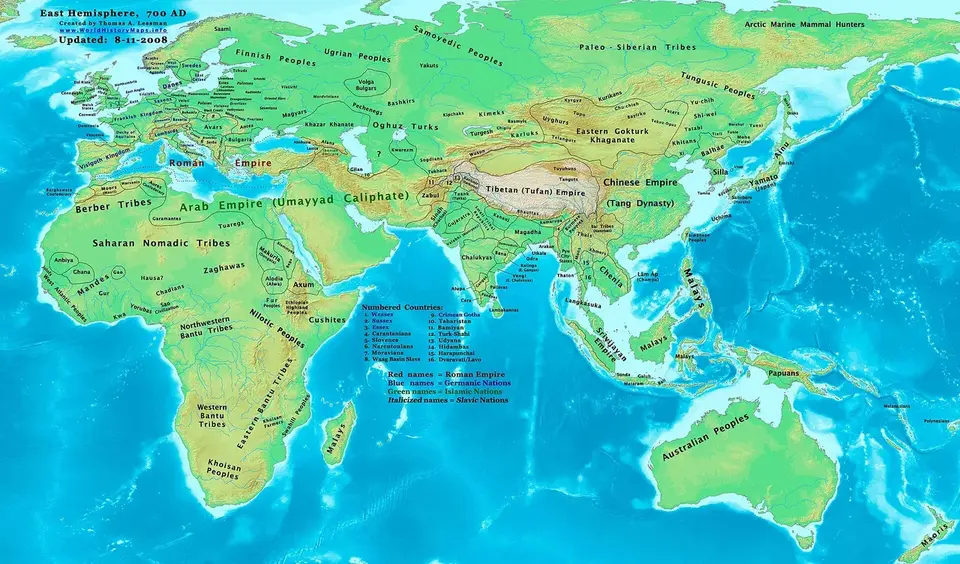
Dusong Mangpoje (杜松芒波杰) (676–704), commonly revered in Tibetan records as Tridu Songtsen and transcribed in Tang historical chronicles as Qinuxilong or Qilinuxilong, was an imperial sovereign and the thirty-sixth Tsenpo of the Tibetan Empire. He was the son of Mangsong Mangtsen and Empress Dowager Trimalo. Ascending the throne in infancy in 676, state governance was entirely monopolized by the Gar (mGar) clan led by Prime Minister Gar Trinring Tsendro (known in Chinese records as Lun Qinling) and his brothers, who commanded veteran armies in prolonged warfare against the Tang dynasty across Central Asia and the Hexi corridor. As the young sovereign came of age, he resented the overbearing hegemony of the Gar ministers and secretly coordinated with loyalist courtiers to dismantle their faction. In 698, under the pretext of organizing a massive royal hunt, Dusong Mangpoje staged a swift coup in Lhasa, executing more than two thousand Gar partisans before marching his royal army toward Qinghai. Trinring’s forces disintegrated without battle, and the prime minister committed suicide at Zongkha, ending nearly fifty years of ministerial usurpation and fully restoring monarchical authority to the royal house. In his subsequent personal reign, Dusong Mangpoje normalized diplomatic ties with Wu Zetian's court, presenting tribute in 703 to request an imperial marriage alliance. In 704, while personally commanding a military expedition against indigenous tribes in western Yunnan, he died of illness in camp at the age of twenty-eight, succeeded by his son Tride Tsuktsen.
- Dynasty
- Tibetan Empire (Tubo)
- Identity
- 36th Tsenpo of the Tibetan Empire (reigned 676–704)
- Ancestral Home
- Lhasa (modern Lhasa, Tibet Autonomous Region)
- Date of Birth
- 676 (Shangyuan 3 of Tang)
- Date of Death
- 704 (Chang'an 4 of Tang)
BIOGRAPHY
Chronology
- 676 (Shangyuan 3 of Tang) | Infant Accession | Succeeded to the throne following the death of Mangsong Mangtsen under Gar ministerial regency.
- 680 (Yonglong 1 of Tang) | Passing of Princess Wencheng | Princess Wencheng died in Lhasa; envoys were sent to the Tang court to report mourning.
- 685 (Chuigong 1 of Tang) | Imperial Title | Formally assumed the imperial honorific Tridu Songtsen at age nine, confirming Trinring as prime minister.
- 698 (Shengli 1 of Wu Zhou) | Suppression of the Gar Clan | Staged a royal coup executing Gar partisans in Lhasa; Trinring committed suicide at Zongkha.
- 703 (Chang'an 3 of Wu Zhou) | Tribute and Marriage Petition | Dispatched envoys bearing a thousand fine horses and gold to Chang'an, seeking dynastic marriage.
- 704 (Chang'an 4 of Wu Zhou) | Passing during Expedition | Succumbed to illness while commanding an expeditionary army in Yunnan, buried at Chongye.
Historical Life
Accession in Infancy
Dusong Mangpoje was born in 676 as the heir of Mangsong Mangtsen and Lady Trimalo of the Bro clan. His father died shortly after his birth, and the infant prince was proclaimed Tsenpo in Lhasa by council ministers. Throughout his minority, real power remained consolidated in the hands of the Gar clan, founded by Gar Tongtsen Yulsung (Lu Dongzan). His formidable second son Gar Trinring served as Great Minister (Da Lun), monopolizing command of veteran armies along the Silk Road, while his brothers governed internal regional administration.
The Purge of the Gar Oligarchy
As he reached adulthood, Dusong Mangpoje grew deeply resentful of being treated as a ceremonial figurehead while the Gar clan directed state affairs. In 698, exploiting Trinring's absence during military maneuvers in Qinghai, Dusong Mangpoje organized a covert loyalist force under the guise of an imperial hunting expedition. Striking swiftly in Lhasa, he arrested and executed over two thousand Gar relatives and retainers. Marching north toward Zongkha, royal heralds proclaimed imperial pardons for ordinary soldiers; Trinring's forces melted away, and the isolated minister took his own life.
Diplomatic Rapprochement with China
With the destruction of the Gar oligarchy, surviving clan leaders including Gar Tsenba and Gar Gongren defected to the Tang empire. Recognizing that domestic consolidation took precedence over foreign aggression, Dusong Mangpoje redirected state policy toward peaceful coexistence with China. In 703, he sent his chief minister Sinuoluo Gonglu to the court of Empress Wu Zetian in Chang'an, presenting two thousand ounces of gold and one thousand elite horses to request a renewal of the dynastic alliance and an imperial bride.
Southern Campaign and Demise
Having pacified the northern frontiers, Dusong Mangpoje turned his strategic ambition toward the southwestern highlands. In 704, determined to subjugate rebellious tribal confederations in the Erhai region of western Yunnan, the Tsenpo personally led an army across the rugged Hengduan mountains. However, tropical pestilence and fierce tribal resistance bogged down the Tibetan advance in the Yaozhou marshes. In the winter of 704, Dusong Mangpoje died of camp fever at the age of twenty-eight, succeeded by his son.
Major Accomplishments
Restoration of Royal Autocracy
Dusong Mangpoje's most consequential achievement was the decisive elimination of the Gar clan, which had reduced the royal house to puppet status for decades. Through boldness and tactical patience, he dismantled the entrenched ministerial regency, preventing the usurpation of the royal lineage by ambitious aristocratic generals. By centralizing command of provincial levies and royal finances, he restored undisputed sovereign supremacy to the Tsenpo.
Expansion toward the Southwest
The Tsenpo's personal march into western Yunnan inaugurated Tibet's active military penetration of the southwestern Yunnan-Guizhou plateau. His expedition demonstrated Tibet's capability to project military force across diverse geographical regions, compelling various indigenous tribes to submit to Lhasa's tributary sphere. This campaign laid the geopolitical groundwork for subsequent Tang-Tibetan rivalry over the Nanzhao kingdom.
Personal Relationships
- Father: Mangsong Mangtsen (35th Tsenpo of the Tibetan Empire)
- Mother: Empress Dowager Trimalo (Bro clan, powerful imperial regent)
- Son: Tride Tsuktsen (Me Agtsom, 37th Tsenpo, consort of Princess Jincheng)
- Ministerial Rivals: Gar Trinring Tsendro (Lun Qinling), Gar Tsenba, Gar Gongren
- Contemporary Sovereigns: Emperor Gaozong of Tang, Empress Wu Zetian
Historical Evaluation
- Old Book of Tang (Jiu Tang Shu): Qinuxilong possessed bold discernment and strategic talent; secretly plotting his strike, he eliminated Qinling's partisans and assumed personal command, returning supreme sovereignty to the Tsenpo.
- Feast for the Wise (Khaspa'i Gaton): Tridu Songtsen was endowed with heroic fortitude; biding his time in youth, he destroyed the mighty Gar ministers upon coming of age, governing with undisputed authority and spreading his fame across the four quarters.
- Modern Historians: Dusong Mangpoje was an energetic monarch who reclaimed sovereign authority from aristocratic oligarchy, securing the institutional foundations for Tibet's imperial resurgence in the eighth century.
Related Entries
- Mangsong Mangtsen
- Tride Tsuktsen
- Gar Trinring Tsendro
- Gar Gongren
- Tibetan Empire