Recognition by Xun Yu
Orphaned early, he mastered canonical texts and avenged his brother's murder; praised by Xun Yu as a rare northern genius, entering Cao Cao's civil staff.
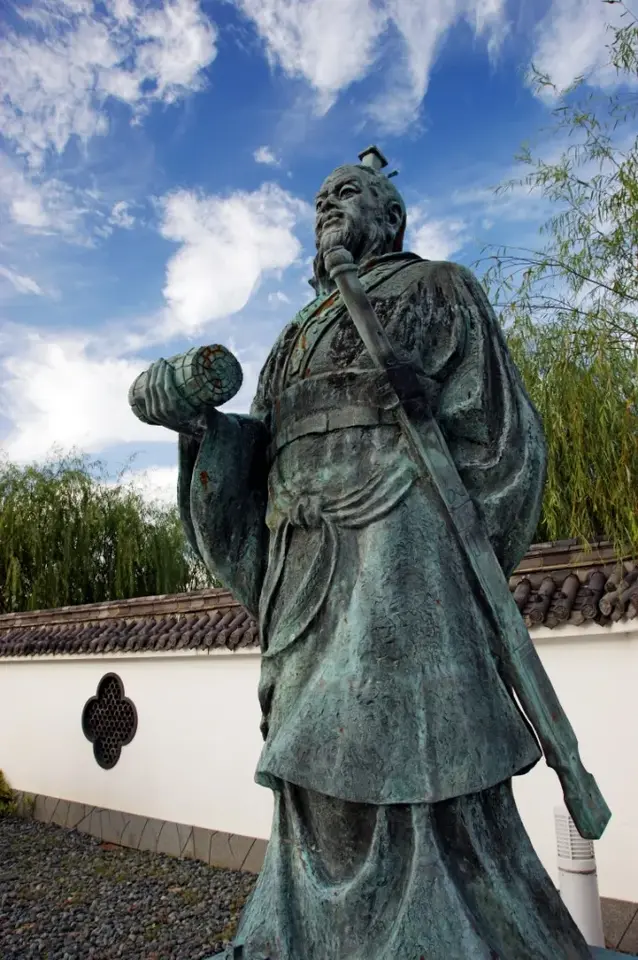
孙资
Sun Zi (孙资, c. 172–251 CE), courtesy name Yanlong, was a native of Zhongdu County in Taiyuan Commandery during the Three Kingdoms Period. A preeminent grand councilor, strategist, and confidential director of the Cao Wei imperial court, he directed metropolitan decision-making for over two decades alongside Liu Fang, collectively celebrated as the Liu-Sun partnership. Orphaned in early childhood and raised in poverty by his…
Sun Zi (孙资, c. 172–251 CE), courtesy name Yanlong, was a native of Zhongdu County in Taiyuan Commandery during the Three Kingdoms Period. A preeminent grand councilor, strategist, and confidential director of the Cao Wei imperial court, he directed metropolitan decision-making for over two decades alongside Liu Fang, collectively celebrated as the Liu-Sun partnership. Orphaned in early childhood and raised in poverty by his elder brother and sister-in-law, Sun Zi applied himself with unflagging devotion to classical texts and dynastic records. Appraised by Chancellor Xun Yu as an exceptional talent of northern China, he entered Cao Cao's chancellery bureau and was later appointed Clerk in the Palace Secretariat. Following Cao Pi's establishment of the Cao Wei dynasty in 220 CE, the new emperor reorganized the palace archives into the formal Secretariat to concentrate imperial policymaking, appointing Liu Fang Supervisor and Sun Zi Director of the Secretariat. Throughout the reign of Emperor Ming (Cao Rui), Sun Zi participated intimately in supreme strategic deliberations. He advocated strategic defense against Zhuge Liang's northern offensives, dispatched Yan Zhi on a lone mission that pacified the massive Xianbei cavalry confederation under Kebineng, and coordinated the naval ambush that destroyed Eastern Wu fleets off Liaodong. In 239 CE, as Emperor Ming lay dying, imperial clansmen Cao Yu, Xiahou Xian, and Cao Zhao sought to consolidate dynastic control while threatening the Secretariat directors. Sun Zi and Liu Fang intervened at the deathbed, persuading the dying monarch to dismiss the royal princes and draft a historic testamentary edict appointing Cao Shuang and Grand Commandant Sima Yi as co-regents, an intervention that fundamentally altered dynastic politics. Under the young Emperor Cao Fang, Sun Zi prudently relinquished executive office to avoid political retaliation, receiving top aristocratic honors before passing away in 251 CE with the posthumous title Marquis Zhen.
Orphaned early, he mastered canonical texts and avenged his brother's murder; praised by Xun Yu as a rare northern genius, entering Cao Cao's civil staff.
Appointed Clerk in the Palace Secretariat upon the founding of the Kingdom of Wei, drafting high-level state documents.
Elevated to Director of the Secretariat upon Cao Pi's accession, establishing the organ as the primary nerve center of dynastic governance.
Formulated frontier strategies against Shu Han expeditions, counseling patient attritional defense, while resolving the Xianbei siege of Tian Yu.
Advocated preemptive naval strikes against Eastern Wu emissary fleets, leading to the destruction of Zhou He and submission of Gongsun Yuan.
Convinced the dying Emperor Ming to oust Prince Cao Yu, securing the joint regency of Cao Shuang and Sima Yi.
Elevated to Palace Attendant and Grandee of the Right; perceiving factional volatility under Cao Shuang, he resigned executive office.
Passed away in Luoyang at approximately eighty years of age, posthumously honored as General of Agile Cavalry and Marquis Zhen.
Sun Zi was born into a prominent family in Zhongdu County of Taiyuan Commandery. When he was only three years old, both of his parents passed away, leaving his household destitute. He was nurtured to adulthood through the selfless sacrifices of his elder brother and sister-in-law. Possessing serious discipline from boyhood, Sun Zi dedicated himself to classical Confucian canons, philosophical treatises, and historical statutes. His razor-sharp analytical mind and impeccable personal conduct earned him recommendation as Filial and Incorrupt within Taiyuan.
During the civil wars of the late Han period, Sun Zi's elder brother was murdered by a local adversary. In an act of righteous retribution, Sun Zi took up a concealed blade, executed the perpetrator, and subsequently fled into exile with his sister-in-law and surviving relatives. Following Cao Cao's conquest of Jizhou, the chancellor sought out talented administrators across the northern provinces. Imperial Secretariat Prefect Xun Yu, who directed personnel evaluations, held extended interviews with Sun Zi. Deeply impressed by his strategic intellect, Xun Yu remarked with admiration that after decades of devastation in the north, he had feared wise counselors were extinct, yet Sun Zi proved to be a magnificent talent capable of ordering the realm. Sun Zi was immediately commissioned into Cao Cao's military chancellery, serving as county magistrate and assistant military clerk.
In 216 CE, Cao Cao was invested as King of Wei and instituted administrative bodies independent of the Han imperial court. Seeking scholars with refined literary skill to draft state communications, Cao Cao recruited Sun Zi alongside Liu Fang to serve as Clerks in the Palace Secretariat.
In 220 CE, following Cao Cao's demise, Cao Pi inherited the throne of Wei, appointing Liu Fang Director of the Palace Secretariat and Sun Zi Assistant Director. In the tenth month of that year, Cao Pi formally founded the Cao Wei dynasty as Emperor Wen. To prevent executive authority from monopolization by the Three Excellencies and the Department of State Affairs, Emperor Wen reformed the palace archives into the independent Secretariat. He appointed Liu Fang Supervisor and Sun Zi Director of the Secretariat, granting them concurrent titles as Regular Mounted Attendants and investing Sun Zi as Marquis Within the Passes. Charged with processing confidential memorials, drafting imperial decrees, and formulating foreign policy, Sun Zi and Liu Fang became the supreme confidential chancellors of the realm. When regional rebels in Poyang declared allegiance to Wei, urging a premature invasion of Wu, Sun Zi successfully counseled Emperor Wen to remain patient, correctly predicting the insurrection would collapse on its own.
Following the ascension of Emperor Ming (Cao Rui) in 226 CE, the imperial trust enjoyed by Liu Fang and Sun Zi expanded further. Both statesmen were promoted to Sanqi Attendants, and Sun Zi was ennobled as Pavilion Marquis of Leyang. For the next thirteen years, Emperor Ming consulted them daily on all matters of domestic legislation, administrative appointments, and grand military strategy. The authority of the Secretariat grew so pervasive that civil ministers across the bureaucracy deferred scrupulously to their decisions.
During this period, Sun Zi repeatedly demonstrated profound strategic acumen. When Zhuge Liang launched his northern expeditions into Guanzhong, hawkish ministers in Luoyang demanded the mobilization of hundreds of thousands of troops for a decisive assault into Shu territory. Sun Zi submitted detailed memorials reviewing Cao Cao's prior conquest of Zhang Lu, warning that the narrow mountain passes of Hanzhong made supply lines prohibitively vulnerable. He argued that Wei possessed overwhelming territorial depth and should deploy veteran commanders to fortified passes, denying the invaders battle until their rations expired. Emperor Ming adopted this attritional doctrine, ensuring the frustration of successive Shu Han invasions.
During the Taihe era, the powerful Xianbei chieftain Kebineng mobilized thirty thousand horsemen to encircle Wei frontier inspector Tian Yu at Mayi. Alarmed by the crisis, Emperor Ming convened court to plan an emergency northern expedition. Sun Zi stepped forward and stated that Kebineng held profound personal reverence for General Yan Rou and his younger brother Yan Zhi. He recommended dispatching an imperial edict ordering Yan Zhi to ride into the nomad camp to negotiate. Emperor Ming followed his counsel; upon Yan Zhi's arrival, Kebineng immediately bowed in deference, dismantled his siege, and withdrew into the northern steppes without cost to Wei.
In 233 CE, Sun Quan dispatched a naval fleet of more than one hundred vessels under Zhou He across the Bohai Sea to entice warlord Gongsun Yuan of Liaodong into a southern alliance. While most courtiers believed Liaodong was too remote to warrant military intervention, Sun Zi argued vigorously for preemptive naval strikes to eliminate the southern fleet and deter Gongsun Yuan. Emperor Ming authorized the operation, and General Tian Yu intercepted the Wu fleet off Mount Cheng, executing Zhou He. Terrified by the demonstration of Wei resolve, Gongsun Yuan executed the remaining Wu ambassadors and sent their heads to Luoyang. For this success, Sun Zi was elevated to Marquis of Zuoxiang.
In 238 CE, during Sima Yi's final campaign conquering Liaodong, Sun Zi assisted in strategic planning and was rewarded by having his fief elevated to Marquis of Zhongdu. However, the concentration of executive authority in the Secretariat provoked apprehension; Commander of the Central Guard Jiang Ji formally cautioned the throne against granting excessive power to the two directors, though Emperor Ming's reliance upon them remained unshaken.
In the first month of 239 CE, Emperor Ming fell critically ill, while his adopted heir Cao Fang was only eight years old. The dying sovereign initially designated Prince Cao Yu of Yan to serve as General-in-Chief and chief regent, assisted by Xiahou Xian, Cao Shuang, Cao Zhao, and Qin Lang. However, Xiahou Xian and Cao Zhao had long resented the power of Liu Fang and Sun Zi, openly vowing that once the new emperor ascended, the two directors would be purged. Fearing imminent destruction, Liu Fang and Sun Zi watched the court dynamics closely.
When Prince Cao Yu hesitated to accept the terrifying responsibilities of regency before the deathbed, Emperor Ming grew exasperated and summoned Liu Fang and Sun Zi into his private bedchamber, asking who could truly be entrusted with supreme command. Seizing the opening, Sun Zi and Liu Fang warned that placing royal princes in supreme military regency had historically precipitated civil war, forcefully arguing that Cao Shuang and Grand Commandant Sima Yi possessed the necessary loyalty and talent to safeguard the throne. Convinced by their arguments, the dying emperor commanded them to draft a new decree revoking the appointments of Cao Yu, Xiahou Xian, and Cao Zhao, officially designating Cao Shuang and Sima Yi as co-regents. When Cao Zhao rushed to the palace gates weeping to reverse the decree, Sun Zi and Liu Fang barred the inner doors, ensuring the decree was dispatched across the empire. This deathbed alteration fundamentally restructured the political landscape of Cao Wei, directly setting the stage for the Incident at Gaoping Tombs and the rise of the Sima family.
Following Cao Fang's enthronement, Sun Zi was elevated to Marquis of Zhongdu with an increased appanage of one thousand households, serving as Palace Attendant and Grandee of the Right with Gold Seal and Purple Ribbon. During the Zhengshi era, observing Cao Shuang's growing despotism and Sima Yi's feigned illness, Sun Zi prudently petitioned to resign his executive post as Director of the Secretariat due to old age. The court awarded him the rank of Specially Advanced and promoted him to General of the Imperial Guards. When Sima Yi wiped out the Cao Shuang faction in 249 CE, Sun Zi's family emerged entirely unscathed due to his early retirement and his historic role in empowering Sima Yi. At the end of 251 CE, Sun Zi passed away in Luoyang at approximately eighty years of age. He was honored with the posthumous title Marquis Zhen and granted the posthumous rank of General of Agile Cavalry. His son Sun Hong inherited the marquisate, and his grandson Sun Chu became an eminent literary master of the Western Jin.
Serving as Director of the Secretariat for more than twenty years alongside Liu Fang, Sun Zi helped transform the Secretariat into the paramount administrative engine of Cao Wei. His institutional stewardship shifted executive authority away from the ancient Three Excellencies, centralizing imperial command throughout the reigns of Emperor Wen and Emperor Ming.
Sun Zi's penetrating strategic insight repeatedly delivered major victories without costly bloodshed: orchestrating the attritional doctrine that checked Zhuge Liang, directing Yan Zhi's single-handed resolution of the Xianbei siege at Mayi, and coordinating the naval destruction of Eastern Wu fleets off Liaodong.
Facing imminent factional annihilation on Emperor Ming's deathbed, Sun Zi executed a decisive political maneuver, drafting the revised testamentary edict that ousted Prince Cao Yu and elevated Sima Yi and Cao Shuang to regency, fundamentally redirecting the historical trajectory of the Three Kingdoms.
FIGURES ASSOCIATED WITH THIS DYNASTY