Wang Shenzhi was enfeoffed as Prince of Min and the Min polity began.
909 CE–945 CE
Min
Regional polity闽
Min (909–945) was a polity of the Five Dynasties and Ten Kingdoms period ruled by the Wang family in Fujian. Its founder, Wang Shenzhi, was enfeoffed as Prince of Min in 909 (third year of Later Liang Kaiping) and made Fuzhou, also called Changle Prefecture, his capital. After 926 (first year of Tiancheng), its rulers used the title "King of Great Min", and in 933 (fourth year of Later Tang Changxing) Wang Yanjun formally proclaimed himself emperor and established the state name Great Min. Min…
909 CE–945 CECapital · See entry
ERA OVERVIEW
Min (909–945) was a polity of the Five Dynasties and Ten Kingdoms period ruled by the Wang family in Fujian. Its founder, Wang Shenzhi, was enfeoffed as Prince of Min in 909 (third year of Later Liang Kaiping) and made Fuzhou, also called Changle Prefecture, his capital. After 926 (first year of Tiancheng), its rulers used the title "King of Great Min", and in 933 (fourth year of Later Tang Changxing) Wang Yanjun formally proclaimed himself emperor and established the state name Great Min. Min controlled roughly present-day Fujian and had six rulers over more than thirty years. Internal conflict ultimately led to its partition by Southern Tang and Wuyue. The Wang family's control of Fujian, lasting about half a century in total, laid important foundations for the region's economic and cultural development.
Time span909 CE–945 CE
CapitalSee entry
ERA TIMELINE
After Wang Shenzhi died in 925, Wang Yanhan succeeded him and styled himself acting Military Commissioner of Weiwu Circuit.
Wang Yanhan styled himself "King of Great Min."
Wang Yanjun killed Wang Yanbing.
Wang Yanjun proclaimed himself emperor, adopted the state name Great Min, and made Changle the capital.
Originally enfeoffed as Prince of Fu, in 935 he and the Imperial City Commissioner Li Fang launched a coup and killed his father to seize the throne; in the following year he changed the era name to Tongwen.
Wang Yanzheng proclaimed himself emperor at Jianzhou (present-day Jian'ou), established the state of Great Yin, and adopted the Tiande era, opposing the Fuzhou court.
Southern Tang invaded during Min's internal disorder, captured Jianzhou in the tenth month, and received Wang Yanzheng's surrender; Min ended.
FULL ENTRY
Overview
Min (909–945) was a polity of the Five Dynasties and Ten Kingdoms period ruled by the Wang family in Fujian. Its founder, Wang Shenzhi, was enfeoffed as Prince of Min in 909 (third year of Later Liang Kaiping) and made Fuzhou, also called Changle Prefecture, his capital. After 926 (first year of Tiancheng), its rulers used the title "King of Great Min", and in 933 (fourth year of Later Tang Changxing) Wang Yanjun formally proclaimed himself emperor and established the state name Great Min. Min controlled roughly present-day Fujian and had six rulers over more than thirty years. Internal conflict ultimately led to its partition by Southern Tang and Wuyue. The Wang family's control of Fujian, lasting about half a century in total, laid important foundations for the region's economic and cultural development.
Historical Development
Establishment: In 885 (first year of Guangqi), Wang Xu led soldiers and civilians from Guangzhou and Shouzhou south into Fujian; the brothers Wang Chao and Wang Shenzhi of Gushi in Guangzhou followed him. In the next year, 886 (second year of Guangqi), Wang Chao rose against and overthrew Wang Xu and captured Quanzhou. In 893 (second year of Jingfu), Wang Chao took Fuzhou, became Fujian Surveillance Commissioner and later Military Commissioner of the Weiwu Circuit, and gradually controlled five prefectures in Fujian. Wang Chao died in 898 (fourth year of Qianning) and left instructions that his third brother Wang Shenzhi succeed him. In 904 (first year of Tianyou), Wang Shenzhi was enfeoffed as Prince of Langye Commandery. In the fourth month of 909 (third year of Later Liang Kaiping), Zhu Wen, Emperor Taizu of Later Liang, enfeoffed him as Prince of Min. Fuzhou became the capital and the Min polity was thereby founded. Wang Shenzhi ruled for nearly thirty years, consistently recognizing the Central Plains calendar and remaining a vassal of Later Liang rather than proclaiming himself emperor.
Height of power: Wang Shenzhi followed a policy of preserving the territory and resting the people. He submitted to the Central Plains dynasty, maintained good relations with neighboring states, promoted frugality, reduced taxes and labor service, established schools, and encouraged commerce. Fujian's economy and culture developed quickly, and maritime trade at Fuzhou and Quanzhou flourished. This period is presented here as Min's high point. The New History of the Five Dynasties records that he attracted people from afar and showed concern for popular hardships, while the state remained relatively stable.
Turning point: Wang Shenzhi died in 925. His eldest son Wang Yanhan succeeded him and in 926 (first year of Tiancheng) styled himself "King of Great Min," formally establishing a state title, but his harsh rule lost support and he was killed that same year by his brothers Wang Yanbing and Wang Yanjun. Wang Yanjun became Prince of Min in 927 and in 933 (fourth year of Later Tang Changxing) proclaimed himself emperor, made Changle (Fuzhou) the capital, adopted the state name Great Min and the Longqi era, and established a full bureaucracy. Thereafter internal struggles for the throne continued: in 935 Wang Yanjun was killed by his son Wang Jipeng, who changed his name to Wang Chang; in 939 Wang Chang was killed by Lian Chongyu, who installed Wang Yanxi (Wang Xi).
Decline: Wang Xi became suspicious of his younger brother Wang Yanzheng, Inspector of Jianzhou, and in 940 attacked Jianzhou, turning Min's internal conflict into open civil war. In 941 Wang Xi styled himself "Great Min Emperor". In 943, Wang Yanzheng proclaimed himself emperor at Jianzhou (present-day Jian'ou, Fujian), established the state of Great Yin, and adopted the Tiande era, opposing Wang Xi. In 944 Zhu Wenjin and Lian Chongyu killed Wang Xi in Fuzhou and Zhu Wenjin established himself as Prince of Min. Wang Yanzheng raised forces against them, and Quanzhou, Zhangzhou, and Tingzhou submitted to him. Early in 945, Zhu Wenjin and Lian Chongyu were killed by their own followers. Wang Yanzheng then changed his title to emperor of Min, but remained at Jianzhou and did not return the capital to Changle.
Fall: Southern Tang took advantage of the civil conflict and invaded Min in 945 (third year of Baoda). In the tenth month it captured Jianzhou and Wang Yanzheng surrendered, ending Min. In the same year, at the request of Liu Congxiao and others in Quanzhou, Wuyue took Fuzhou. Former Min territory was thus divided between Southern Tang and Wuyue. Liu Congxiao and others controlled Quanzhou and Zhangzhou while acknowledging Southern Tang and remained effectively autonomous until the early Song period.
Politics and Institutions
Min's institutions broadly continued Tang and Five Dynasties military-governor structures. Wang Shenzhi governed Fujian as Military Commissioner of the Weiwu Circuit, with subordinate prefectural and county administrations. After being made Prince of Min, he maintained civil and military officials on Tang models. After Wang Yanjun proclaimed himself emperor, he established a formal imperial state and full bureaucracy, broadly following Tang and Song-style institutions with central departments, a Bureau of Military Affairs, and other offices; Fuzhou was renamed Changle Prefecture as the capital. Later rulers, however, frequently favored eunuchs, imperial in-laws, and diviners, and palace assassinations and usurpations repeatedly destabilized government.
Military and Foreign Relations
Min relied on Fujian's mountains and coastline and generally emphasized territorial defense. Under Wang Shenzhi it submitted to Later Liang and Later Tang and maintained friendly relations with Wuyue and Southern Han, seeking to avoid war and preserve internal stability. Later fratricidal conflict and civil war severely weakened the state. Diplomatically Min at one point recognized Later Jin. During the Zhu Wenjin crisis of 944–945 it also sought aid from Wuyue and submitted to Later Jin. Internal collapse ultimately invited intervention by Southern Tang and Wuyue and resulted in Min's partition.
Economy and Commerce
Fujian's mountainous terrain and long coastline supported both agriculture and maritime trade. Wang Shenzhi encouraged farming, reduced taxes and labor burdens, and promoted water-control projects. Rice, tea, mulberry products, and hemp were important. Maritime commerce was especially significant: Fuzhou and Quanzhou were natural ports, and Min merchants traded in rhinoceros horn, ivory, pearls, tea, ceramics, aromatics, and other goods reaching states around the South China Sea. This helped lay foundations for Quanzhou's later prominence in Song maritime trade. Min also minted copper and iron coin, including issues such as Yonglong Tongbao, reflecting active commodity exchange. Long periods of relative stability under the Wang family attracted migrants and merchants from the war-torn Central Plains and supported prosperity in Fujian.
Culture and Society
The Wang rulers promoted Confucian learning and education. Wang Shenzhi established schools and encouraged commerce and culture. Many scholars displaced by late Tang warfare moved into Fujian and contributed to the region's literary development. Buddhism also flourished, and Wang Yanjun and other rulers patronized temples and monasteries; Gushan Yongquan Temple was among the notable religious centers. Min society combined the Wang imperial clan with established Fujian lineages. In the later period, repeated conflict within the Wang family and killings of imperial relatives progressively undermined social order.
Rulers and Governing Core
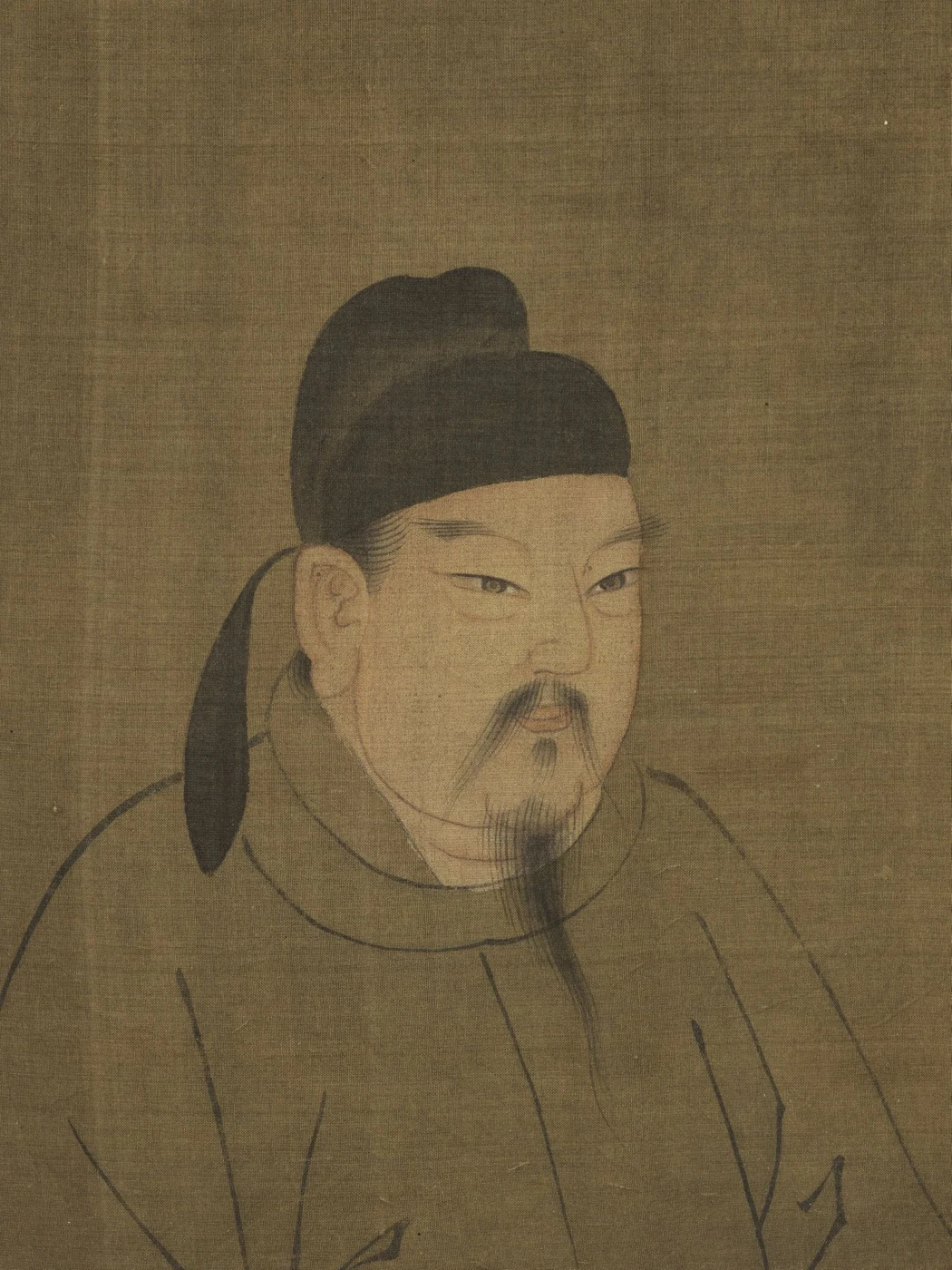
Wang Shenzhi, Wang Yanhan, Wang Yanjun, Wang Jipeng, Wang Yanxi, Wang Yanzheng.
> This section describes the position of rulers in the development of the polity; complete biographies are carried by the corresponding person entities.
Historical Assessment and Legacy
Contemporary assessments: People of the late Tang and Five Dynasties are described here as viewing Min as a relatively stable refuge in a period of war, and many displaced people moved there. Wang Shenzhi was praised for preserving the territory, protecting the people, and developing commerce, while later internal conflict within the royal family was condemned for fratricidal violence and weakening the state.
Later assessments: Later historians generally recognize Wang Shenzhi's achievements and praise his frugality, care for the people, and efforts to attract migrants, regarding him as important in the development of Fujian. Works such as the Spring and Autumn Annals of the Ten Kingdoms record his policies. Min was the second major independent state established in Fujian after Minyue and accelerated regional development. The cultural and maritime traditions of Fuzhou and Quanzhou continued thereafter, helping lay foundations for Quanzhou's later role as an important Maritime Silk Road port.
Rulers
Wang Shenzhi, Wang Yanhan, Wang Yanjun, Wang Jipeng, Wang Yanxi, Wang Yanzheng.
KEY PEOPLE
Related entries
No relation record available.
Bibliography
- 《新五代史》
- 《旧五代史》
- 《资治通鉴》
- 《十国春秋》