Birth in Eastern Zhejiang
Born into a scholarly farming family in Yiwu, studying classics and military strategy in his youth.
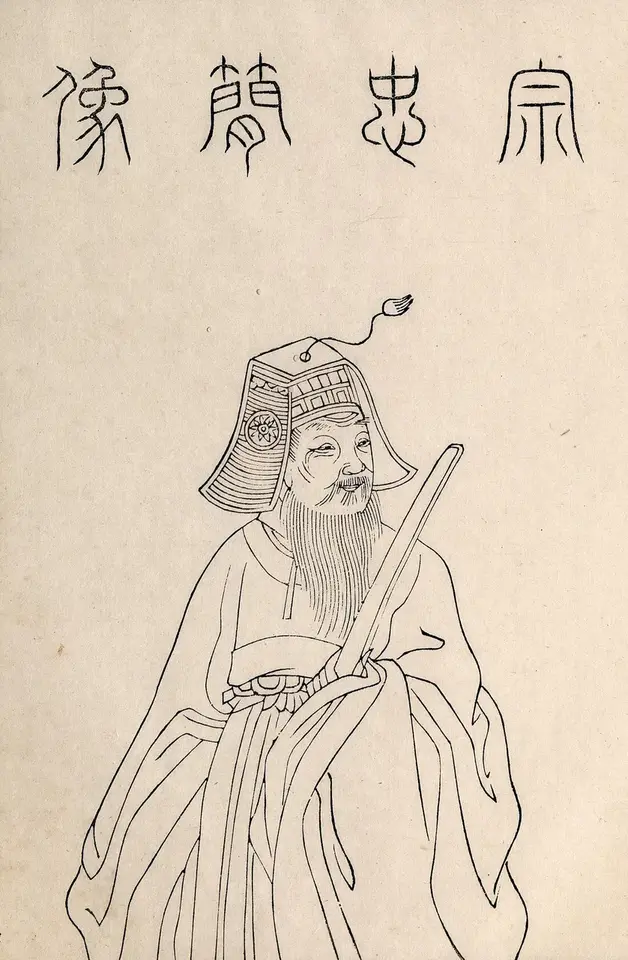
宗泽
Zong Ze (宗泽, 1060–1128), courtesy name Rulin, posthumously titled Zhongjian, was a native of Yiwu County in Wuzhou and one of the most illustrious anti-Jin commanders, military strategists, and national heroes during the transition between the Northern and Southern Song dynasties. Passing the imperial examinations as a jinshi in 1091, he served in multiple regional appointments including County Sheriff of Guantao, Magistrate…
Zong Ze (宗泽, 1060–1128), courtesy name Rulin, posthumously titled Zhongjian, was a native of Yiwu County in Wuzhou and one of the most illustrious anti-Jin commanders, military strategists, and national heroes during the transition between the Northern and Southern Song dynasties. Passing the imperial examinations as a jinshi in 1091, he served in multiple regional appointments including County Sheriff of Guantao, Magistrate of Zhaocheng, Magistrate of Yexian, and Prefect of Zhenzhou, earning widespread renown for upright incorruptibility and administrative benevolence. In 1126, when the Jurchen Jin armies launched a massive southern invasion threatening Bianjing, Zong was appointed Prefect of Cizhou on the perilous Hebei frontlines, where he repaired fortresses, organized local militias into the Loyal and Righteous Patrols, and resolutely resisted capitulationist court factions. In the winter of 1126, Zong Ze intercepted and dissuaded Prince Kang (Zhao Gou) at Cizhou, preventing him from falling into enemy hands as a hostage, subsequently escorting him to Xiangzhou to establish the Grand Marshal's Headquarters. Following Zhao Gou's accession as Emperor Gaozong of the Southern Song in 1127, Zong was appointed Tokyo Prefect and Governor of Kaifeng. Confronted by hundreds of thousands of invading Jin cavalry and widespread banditry, Zong applied moral integrity and tactical brilliance to pacify and recruit over one million irregular insurgent warriors, converting them into imperial defenders. He repeatedly defeated elite Jin forces led by Wanyan Zonghan and Wanyan Zongbi, maintaining Kaifeng as an impregnable stronghold. During his command, Zong recognized and promoted the young officer Yue Fei. In 1128, devastated by Chancellor Huang Qianshan's suppression of his twenty-four memorials pleading for the emperor to return north and launch a counter-offensive, Zong died of severe carbuncles, shouting "Cross the river!" three times on his deathbed at age sixty-nine.
Born into a scholarly farming family in Yiwu, studying classics and military strategy in his youth.
Passed the palace examinations and was appointed County Sheriff of Guantao, reforming judicial abuses.
Served as Magistrate of Yexian, resisting corrupt fiscal exactions and building seawalls to protect farmlands.
Appointed Prefect of Cizhou amidst the Jin invasion, establishing the Loyal and Righteous Patrols.
Dissuaded Prince Kang Zhao Gou from traveling to the Jin camp as a hostage, preserving royal continuity.
Escorted Zhao Gou to Xiangzhou to establish the Grand Marshal's Headquarters, launching tactical counter-strikes.
Appointed Tokyo Prefect and Governor of Kaifeng by Emperor Gaozong to restore order in the devastated capital.
Pacified and reorganized hundreds of thousands of Taihang Mountain irregulars under Wang Shan and Yang Jin.
Inflicted crushing defeats on Jin forces at Huatai, Fengqiu, and Zhengzhou, securing the defense of Kaifeng.
Died of illness after submitting twenty-four unheeded memorials, shouting "Cross the river!" three times.
Zong Ze was born on the fourteenth day of the twelfth lunar month in the fifth year of the Jiayou reign of Emperor Renzong (1060) in Yiwu County into a scholarly family. His grandfather Zong Chu was known for upright virtue, while his father Zong Shunqing was a versatile classical scholar, immersing young Zong Ze in Confucian loyalist teachings. Endowed with proud vigor and natural intellect, Zong mastered the classical Confucian scriptures while reading extensively in military treatises, irrigation hydraulics, and agricultural treatises. He traveled across the Huai River and Central Plains to inspect strategic mountain passes. In 1091, at over thirty years of age, Zong traveled to Bianjing to sit for the palace examinations, submitting a brilliant policy paper on frontier defense that won high acclaim from examiners, securing his jinshi degree.
His initial appointment was County Sheriff of Guantao in Daming Prefecture. Situated along volatile transport routes infested by bandits, Guantao suffered under corrupt magistrates and ruthless gentry. Zong established defensive patrols, eliminated illicit extortions, and set nocturnal ambushes, capturing notorious robber leaders within several months and pacifying the county. Later, he served as Magistrate of Zhaocheng in Jinzhou and Magistrate of Yexian in Laizhou. In Zhaocheng, he audited hidden lands, abolished illegal surcharges, reviewed decades of backlogged cases, overturned dozens of wrongful convictions, and prosecuted extortionate clerks, winning widespread popular veneration.
During severe drought in Jinzhou, Zong distributed relief grain, suppressed grain speculators, and diverted the Fen River to irrigate parched fields, saving tens of thousands of peasant households. In Yexian, when court ministers exploited fiscal reforms to levy extortionate taxes, Zong flatly refused to enforce them, declaring: "Government offices exist to nurture the people; how can we rob the poor to flatter the powerful?" He sealed and returned official directives, protecting local households from ruin. When tidal storms flooded coastal farmlands along Laizhou Bay, Zong personally labored with ditch diggers in the mud, constructing seawalls dozens of miles long that reclaimed thousands of fertile acres, prompting locals to honor him as their loving protector.
Later appointed Magistrate of Nanling, Zong addressed perpetual waterlogging by personally surveying the terrain and digging five massive drainage canals that diverted floodwaters into the Yangtze River, transforming marshlands into fertile grain fields. During the Zhenghe and Xuanhe reigns, when powerful eunuch Tong Guan and Chancellor Cai Jing dominated court politics, local officials competed to extract exotic stones for the emperor's pleasure. Zong maintained incorruptible disdain for court sycophants, strictly banning the extortion of rare items. While clients of Cai and Tong obtained rapid advancements, Zong remained in minor county posts for over a decade, his unbending virtue winning immense respect among scholars.
In the winter of 1125, the Jurchen Jin dynasty severed their maritime alliance with Song and launched a two-pronged invasion. Eastern armies under Wanyan Zongwang and western forces under Wanyan Zonghan drove southward, shattering Song defense lines and laying siege to Bianjing. Following Emperor Qinzong's accession, loyalist ministers briefly repelled the first siege, but power remained in the hands of capitulationist ministers such as Li Bangyan, Zhang Bangchang, and Geng Nanzhong, who advocated territorial concessions. In the eighth lunar month of 1126, Jin armies crossed the Yellow River again. Desperate to negotiate, the court recalled Zong Ze to govern Tongzhou.
En route, learning that the court intended to cede the vital defensive commanderies of Taiyuan, Zhongshan, and Hejian to Jin, Zong submitted a passionate remonstrance: "Our dynasty has nurtured armies for centuries; why do we act with such pathetic cowardice? The Hebei commanderies are the indispensable shields of the realm; if they are abandoned, how can the capital survive?" Enraged by his bluntness, capitulationist ministers accused him of rashly provoking war, deliberately reassigning him to the frontline command of Cizhou in modern Hebei, intending for him to perish at the hands of the Jin invaders.
Zong accepted the post without hesitation, riding alone to the frontline. Upon his arrival at Cizhou, more than half the local officials had fled, walls lay in ruins, and the population was paralyzed by terror. Zong immediately opened public granaries, recruited thousands of robust volunteers, personally directed fortification works, dug deep defensive moats, manufactured heavy crossbows, and established the Loyal and Righteous Patrols, organizing local militias into a coordinated anti-Jin defensive system. When Jin reconnaissance cavalry assaulted Cizhou, Zong donned armor and stood atop the ramparts amidst flying arrows, firing divine-arm crossbows to kill enemy vanguard commanders and repelling multiple assaults, transforming Cizhou into an unyielding bastion.
In the eleventh lunar month of 1126, Jin armies completely surrounded Bianjing. Dominated by peace advocates, Emperor Qinzong decided to dispatch his younger brother Prince Kang (Zhao Gou) to the Jin camp as a peace hostage, escorted by senior minister Geng Nanzhong. When Zhao Gou's retinue arrived at the Cizhou courier hostel, Zong Ze rushed to the station to seek an urgent audience.
Weeping bitterly, Zong remonstrated: "Prince Su was previously sent to the enemy camp and has vanished without a trace, remaining in northern captivity. The Jurchens are treacherous and wolfish; going there is simply stepping into a tiger's jaws! Your Highness is an imperial son of the abdicated emperor and brother to the reigning sovereign, upon whom dynastic survival rests. How can you throw yourself into death? Though Hebei is imperiled, tens of thousands of loyal troops under my command are ready to die for you; you must not go north!"
Hearing that the court intended to surrender Prince Kang, tens of thousands of Cizhou soldiers and citizens surrounded the hostel brandishing clubs, roaring their opposition to the journey. Geng Nanzhong attempted to force the prince's departure, prompting the crowd to thrash Geng's servants, forcing Geng to flee over a wall. Stirred by popular resolve, Zhao Gou followed Zong's advice and remained in Cizhou. Days later, Jin cavalry ambushed the outskirts. Having anticipated the strike, Zong sprang a trap, slaying dozens of Jin officers and capturing over a hundred horses. Zong subsequently escorted Zhao Gou south to Xiangzhou. In the twelfth month, Qinzong's secret decree arrived, appointing Zhao Gou Grand Marshal of All Forces, with Zong Ze and Wang Boyan as Vice Marshals.
Zong assisted Zhao Gou in establishing the Grand Marshal's Headquarters at Xiangzhou, issuing appeals for imperial relief across the realm. Zong mobilized ten thousand troops southward to Kaide Prefecture. Operating along Yellow River crossings, Zong fought thirteen engagements against Jin detachments around Huazhou and Weicheng, achieving victory in every battle by ambushing supply routes and disrupting the flanks of the armies besieging Bianjing.
In the fourth lunar month of 1127, Jin forces breached Bianjing, capturing emperors Huizong and Qinzong along with three thousand royal family members and ministers, destroying the Northern Song dynasty in the Jingkang Incident. In May, Zhao Gou ascended the throne at Yingtianfu in Shangqiu as Emperor Gaozong, establishing the Southern Song. Gaozong appointed peace advocates Huang Qianshan and Wang Boyan to head the government, abandoning northern territories and planning further retreat toward the southern riverlands. In June, Kaifeng lay in ruins; puppet ruler Zhang Bangchang had abdicated, but roving deserters and bandits plundered the populace without restraint. Recognizing that only a venerable commander could pacify the capital, Gaozong appointed Zong Ze as Tokyo Prefect and Governor of Kaifeng.
Arriving in Kaifeng with only three thousand demoralized troops, Zong acted with unshakable authority. He enforced iron military discipline, executing several rogue officers who plundered merchants, instantly restoring civilian confidence. Along both banks of the Yellow River, insurgent bandit armies had proliferated, the largest led by Wang Shan, Yang Jin, Ding Jin, and Li Gui from the Taihang Mountains, commanding hundreds of thousands of fighters. While court ministers urged sending punitive expeditions to exterminate them, Zong argued that these men were displaced northern subjects who took up arms to survive, advocating their peaceful pacification as defenders of the realm.
Discarding his bodyguards, Zong rode into rebel camps accompanied by only two elderly soldiers, addressing the insurgent chieftains with tears of genuine patriotism. Taking Wang Shan by the hand, Zong declared: "You are all sons of the dynasty driven to desperation by war. Now that the capital is broken and the two emperors are captives, if you unite with us to expel the invaders, the court will reward you with highest honors!" Overwhelmed by his courage and sincerity, Wang Shan, Yang Jin, Ding Jin, and Li Gui wept and surrendered their units. Zong integrated them into regular garrison corps and distributed grain and clothing, transforming hundreds of thousands of former outlaws into formidable frontier defenders within months. Kaifeng regained order, markets flourished, and military power revived dramatically.
From the winter of 1127 to the spring of 1128, Jin marshals Wanyan Zonghan and Wanyan Zongbi led tens of thousands of elite cavalry southward, intending to annihilate Kaifeng, cross the Huai River, and capture Emperor Gaozong. Jin commanders proclaimed that they would crush Zong Ze before advancing south. Unshaken by the threat, Zong coordinated defensive garrisons while planting ambushes along northeastern approaches at Fengqiu, Huatai, and river crossings.
In the first lunar month of 1128, Jin cavalry advanced on Huazhou. Zong dispatched vanguard commanders Yue Fei and Wang Gui to strike from concealed positions, routing the Jin forces and taking thousands of heads. When the main Jin army assaulted the northwestern walls of Kaifeng, Zong directed defense from the battlements, unleashing artillery, heavy ballistas, and flame siphon projectors to incinerate siege towers, inflicting massive casualties. Anticipating a nocturnal counter-strike at Banqiao, Zong laid traps in advance, slaughtering the attackers. In February, when Wanyan Zongbi attacked Zhengzhou, Zong surrounded the enemy on four sides, killing over ten thousand soldiers and forcing the survivors to flee across the Yellow River. Thenceforth, Jin troops spoke of Zong with dread, reverently styling him "Grandpa Zong" and warning one another: "While Grandpa Zong is there, none may dream of taking Tokyo!"
On the military front, Zong demonstrated unparalleled insight in discovering talent. When young officer Yue Fei faced execution for breaching orders during a reckless advance, Zong noted his imposing stature and questioned him on tactical warfare. Astonished by Yue Fei's brilliant grasp of strategy, Zong patted his back, saying: "Your bravery and intellect surpass ancient generals; yet relying solely on field skirmishes is not a complete strategy." Zong pardoned him, imparted classical tactical diagrams, and promoted him to unit commander, providing the historical launchpad for the greatest general of the Southern Song.
With Kaifeng secured and Taihang insurgent networks expanding rapidly, Zong believed the moment for a northern counter-offensive had arrived. He submitted detailed memorials to Emperor Gaozong, explaining that Kaifeng possessed ample grain reserves, fortified walls, four hundred thousand troops, and hundreds of thousands of northern partisans awaiting the imperial banner. Should the emperor return to Kaifeng, northern morale would surge, enabling a rapid crossing of the Yellow River to reclaim the lost territories and rescue the captive emperors.
However, Emperor Gaozong was terrified of the enemy and obsessed with retreating to southern sanctuaries. Chancellors Huang Qianshan and Wang Boyan, eager to maintain their factional monopoly, obstructed every northern offensive initiative, slandering Zong Ze as an ambitious warlord colluding with outlaws. Undeterred by their sabotage, Zong sat at his desk despite severe illness, submitting twenty-four consecutive memorials between July 1127 and June 1128, pouring out his heart in tears of blood to plead for the recovery of the realm.
Every memorial was suppressed by Huang Qianshan and Wang Boyan. Instead, Gaozong issued directives ordering Zong to abandon Kaifeng and retreat to the Huai River. In the sweltering heat of summer 1128, exhausted by continuous strain and devastated by the betrayal of his northern campaign, Zong developed malignant carbuncles on his back and became bedridden. Commanders and insurgent leaders wept around his bedside. Struggling to sit up, Zong clasped their hands: "Because I could not rescue the two emperors and recover the Central Plains, I cannot close my eyes in peace! If you carry on my will and recover the north, I shall have no regrets in death!"
On the first day of the seventh lunar month in 1128, Zong Ze lay dying as thunder and storms shook Kaifeng. Speaking not a word of private household matters, he recited Du Fu's famous lines mourning Zhuge Liang: "Before the expedition triumphed, he died; forever causing heroes to wet their robes with tears." Suddenly, he gazed toward the northern sky and mustered his final breath, shouting three times: "Cross the river! Cross the river! Cross the river!" He then passed away at sixty-nine. Throughout Kaifeng, soldiers and civilians wept as if they had lost their own parents. His son Zong Ying transported his coffin to Mount Jingxian in Dantu, Zhenjiang, where he was interred alongside his wife. During the Shaoxing reign, the court granted him the posthumous title of Zhongjian and erected shrines in his honor.
Amidst the collapse of the Northern Song, Zong Ze achieved a historic miracle of military pacification. Confronted by dozens of undisciplined peasant rebel bands across both banks of the Yellow River, he rejected court demands for their extermination. Venturing unarmed into rebel camps, he won the absolute devotion of chieftains such as Wang Shan, Yang Jin, and Ding Jin through sincere patriotism. Reorganizing over one million fighters into the Loyal and Righteous Patrols and regular defense units, he transformed dangerous outlaws into an unyielding frontline barrier, providing Southern Song with immense strategic defense in depth.
During the early Jianyan era, Tokyo Prefect Zong Ze defended Kaifeng against massive Jin onslaughts. Combining urban siege resistance with flanking ambushes at Huatai, Fengqiu, and Zhengzhou, he repeatedly shattered elite Jin armies and thwarted their plans to subjugate the south. His defense of Kaifeng bought invaluable time for Emperor Gaozong to stabilize the Southern Song court in Jiangnan.
Zong Ze was one of the most celebrated mentors in Chinese military history. While governing Kaifeng, he discovered and saved the young officer Yue Fei from military execution, recognizing his rare tactical brilliance. Zong pardoned him, imparted classical combat arrays, and promoted him to frontline command. Under Zong's protection and training, Yue Fei developed into the supreme general of the Southern Song, laying the foundation for the renowned Yue Family Army.
At the height of the Jingkang catastrophe, Zong Ze demonstrated extraordinary political foresight by forcefully preventing Prince Kang Zhao Gou from traveling to the Jin camp as a hostage, preserving the sole surviving imperial heir of the Song dynasty. He then helped establish the Grand Marshal's Headquarters in Xiangzhou, frustrating enemy attempts to dissolve the dynasty through the puppet Chu regime and securing the continuity of the Chinese imperial line.
Zong Ze was an accomplished military writer and poet whose memorials and verse were renowned for their passionate eloquence and profound patriotism. His twenty-four memorials pleading for the emperor's return to the north are celebrated as timeless masterpieces on par with Zhuge Liang's Memorial on the Expedition. His poems, composed on frontier battlefields, expressed both heroic valor and deep compassion for civilians displaced by war, embodying the noble spirit of an exemplary Confucian general.
FIGURES ASSOCIATED WITH THIS DYNASTY