Birth in Xinghua
Born into an esteemed scholar-gentry lineage in Xinghua, demonstrating photographic memory from infancy.
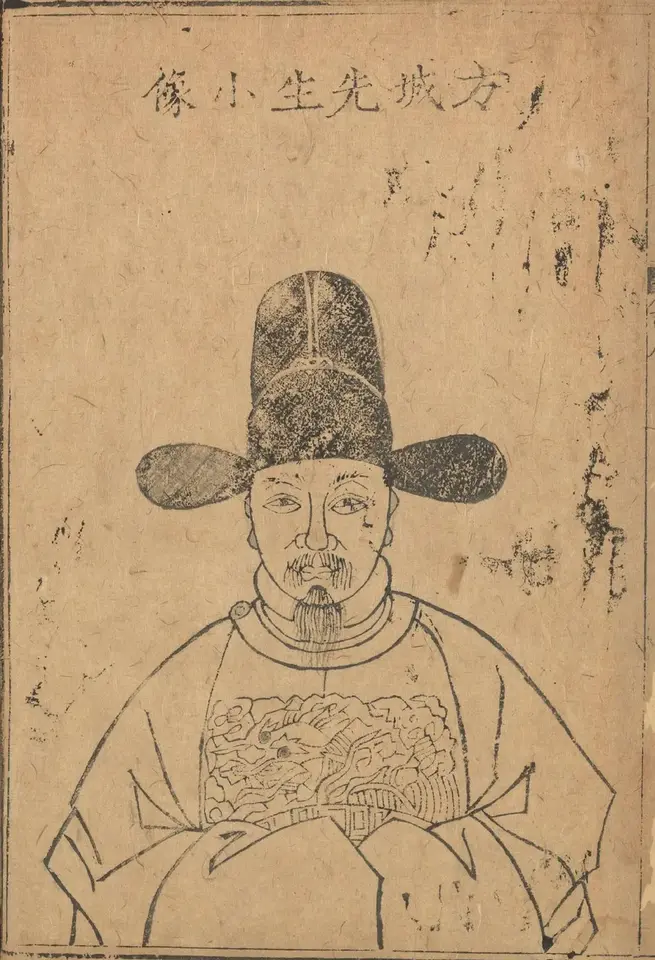
宗臣
Zong Chen (宗臣, 1525–1560), courtesy name Zixiang, art name Fangcheng, was a native of Xinghua County, Yangzhou Prefecture. He was an eminent essayist, poet, and key member of the "Latter Seven Masters" (Hou Qizi) literary group during the Ming dynasty. Passing the palace examination in 1550, he served as Secretary in the Ministry of Justice, Vice Director in the Bureau of Merit Titles in the Ministry of Personnel, and…
Zong Chen (宗臣, 1525–1560), courtesy name Zixiang, art name Fangcheng, was a native of Xinghua County, Yangzhou Prefecture. He was an eminent essayist, poet, and key member of the "Latter Seven Masters" (Hou Qizi) literary group during the Ming dynasty. Passing the palace examination in 1550, he served as Secretary in the Ministry of Justice, Vice Director in the Bureau of Merit Titles in the Ministry of Personnel, and Education Intendant of the Fujian Surveillance Commission. Characterized by upright candor and moral defiance, Zong refused to flatter Grand Secretary Yan Song when corrupt sycophancy permeated the imperial court. His celebrated satirical epistle, Letter in Reply to Elder Liu (Bao Liu Yizhang Shu), brilliantly exposed the degrading servility and flattery of court officials, standing as a timeless masterpiece of ancient Chinese satirical prose. During his tenure as Education Intendant in Fujian, confronting devastating raids by wokou pirates besieging Fuzhou, Zong personally directed military defenses, mounting city battlements amidst incoming projectiles to repel the invaders. Exhausted by wartime defense preparations, he died in office at the young age of thirty-six. His fifteen-volume Zong Zixiang Ji preserves his literary legacy.
Born into an esteemed scholar-gentry lineage in Xinghua, demonstrating photographic memory from infancy.
Passed the Yingtian provincial examination, displaying remarkable literary brilliance.
Passed the imperial metropolitan examination with high honors, appointed Secretary in the Ministry of Justice.
Formed the Latter Seven Masters poetry circle in Beijing alongside Li Panlong, Wang Shizhen, and peers.
Wrote the celebrated epistle Bao Liu Yizhang Shu, severely castigating political corruption and servile court flattery.
Promoted to Vice Director in the Bureau of Merit Titles, maintaining strict bureaucratic impartiality.
Appointed Education Intendant of the Fujian Surveillance Commission, crossing south to reform provincial education.
When wokou besieged Fuzhou, Zong took charge of urban defenses, successfully defending the provincial capital.
Passed away from exhaustion caused by coastal defenses at his post in Fuzhou at age thirty-six.
In 1525 (the fourth year of the Jiajing reign), Zong Chen was born into an eminent scholar-official lineage in Xinghua County, Yangzhou Prefecture. The Zong family maintained a tradition of upright Confucian discipline. Endowed with natural brilliance, Zong read classical texts voraciously from childhood, possessing an agile literary style that flowed like a rushing spring. In addition to canonical exegesis, he specialized in ancient-style poetry and the prose styles of the pre-Qin, Han, and Wei periods.
In 1549, at age twenty-four, Zong traveled to Nanjing to participate in the Yingtian provincial examination, graduating with distinction. The following year, in 1550, he passed the imperial metropolitan examination in Beijing, receiving the jinshi degree and an appointment as Secretary in the Ministry of Justice. In his initial judicial post, Zong adjudicated legal proceedings with fairness and precision, carefully reviewing capital cases to exonerate wrongfully convicted commoners, rapidly establishing a distinguished reputation.
During the middle Jiajing reign, Grand Secretary Yan Song monopolized imperial governance, fostering factional corruption as officials competed to offer sycophantic praise at his residence. Occupying an official post in the capital, Zong treated powerful courtiers with sovereign disdain, refusing ever to set foot inside Yan's residence. While in Beijing, Zong forged close literary friendships with Li Panlong, Wang Shizhen, Xie Zhen, Xu Zhongxing, Liang Youyu, and Wu Guolun. The seven literati united to advocate a revivalist transformation of Chinese literature, becoming celebrated as the "Latter Seven Masters" (Hou Qizi).
At that time, Yan Song's adopted son, Vice Minister of Works Zhao Wenhua, wielded immense influence, and corrupt regional officials groveled before his gates to obtain office. When an elder townsman, Elder Liu, wrote urging Zong to adapt to court ways and flatter powerful ministers, Zong composed his immortal masterpiece, Letter in Reply to Elder Liu (Bao Liu Yizhang Shu). With vivid satirical brushwork, Zong portrayed the grotesque subservience of office-seekers waiting outside ministerial gates before dawn and bowing servilely before door-attendants, delivering an unsparing indictment of institutional corruption that displayed the noble integrity of classical literati.
In 1558, Zong was elevated to Education Intendant of the Fujian Surveillance Commission, overseeing classical academies and scholar examinations across the province. In Fujian, Zong eliminated bureaucratic abuses, championing practical statecraft and moral rectitude, which revitalized regional scholarship.
Concurrently, southeastern coastal China experienced the peak of the Jiajing wokou incursions. Thousands of pirates landed from warships, pillaging coastal counties and advancing directly upon the provincial capital of Fuzhou. Panic-stricken provincial authorities debated abandoning the city. Zong stood firm, declaring to the governor: "The city represents imperial territory and protects civilian life; how could officials flee to preserve their own lives?" Clad in military armor, he personally inspected the four city gates, mobilizing thousands of local scholars and militia armed with firearms and rolling stones, maintaining a round-the-clock defense upon the battlements.
Braving incoming arrows and rocks, Zong led from the front lines, inspiring the defenders. Galvanized by his courage, the soldiers and citizens repelled pirate assaults, slaying several pirate chieftains until the besiegers broke camp and fled, preserving the isolated provincial capital.
Following the siege, Zong remained in military dress, supervising the reconstruction of Fuzhou's stone city walls and organizing coastal militia patrols day and night. The humid, tropical climate of Fujian aggravated his physical exhaustion, leading to severe fever.
In 1560, Zong passed away peacefully in his official quarters in Fuzhou at the premature age of thirty-six. When news spread, the citizens of Fuzhou closed markets in mourning and wept in the streets; elders in his native Xinghua mourned his loss deeply. Recognizing his military distinction in defending the provincial capital, the imperial court bestowed generous posthumous honors upon his family.
Zong Chen occupies an enduring place in Chinese literary history, preeminently through his masterpiece Letter in Reply to Elder Liu (Bao Liu Yizhang Shu). This text stands as an exceptionally rare work in classical Chinese prose that unites profound moral insight with razor-sharp artistic satire.
In the letter, Zong created two archetypal figures: the sycophantic office-seeker and the arrogant minister. Depicting the petitioner shivering in morning snow outside the chancellor's gates, fawning over gatekeepers, and crawling forward on bended knees when the grand secretary emerges, Zong captured the humiliating degradation of sycophants with vivid clarity. Serving as an unflinching mirror of bureaucratic corruption, the text became a permanent fixture in classical Chinese anthologies across subsequent dynasties.
As a core member of the Latter Seven Masters, Zong collaborated with Li Panlong and Wang Shizhen to champion the revival of classical prose and poetry. However, unlike certain contemporaries who leaned toward mechanical imitation of ancient diction, Zong emphasized authentic emotional vigor and structural integrity.
Zong maintained that studying antiquity required capturing its spiritual vigor rather than mimicking outward traces. His ancient-style prose was vigorous and solemn, while his poetry combined High Tang metrics with buoyant personal nobility. In Yiyuan Zhiyan, Wang Shizhen praised Zong as a transcendent genius whose sweeping vitality resembled torrential waves and flashing lightning.
In military administration, Zong demonstrated the extraordinary courage of a classical scholar-general. During the 1559 siege of Fuzhou, he voluntarily assumed command of the city defenses, leading from the front to defeat the attacking pirates and protecting hundreds of thousands of civilians from slaughter. His synthesis of literary refinement and martial valor established him as a shining exemplar among Ming officials during the southeastern coastal campaigns.
FIGURES ASSOCIATED WITH THIS DYNASTY