Birth in Suzhou
Born on June 13 into the Shen family in Wu County, Suzhou; possessed great physical strength and a chivalrous temperament.
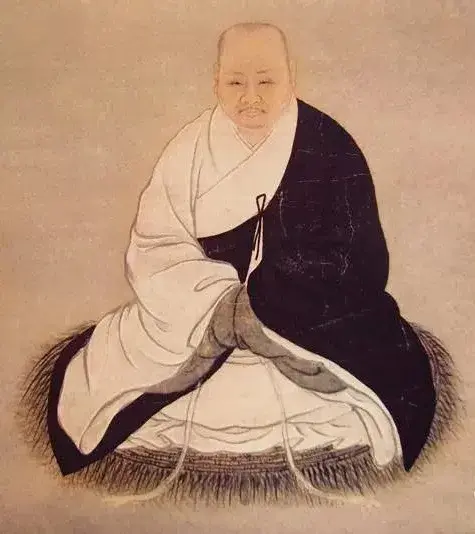
紫柏真可
Zibo Zhenke (紫柏真可, June 13, 1543 – December 17, 1603), lay surname Shen, monastic name Zhenke, courtesy name Daguan, and in his late years styled Zibo, was reverently addressed by contemporaries as Venerable Zibo. A native of Wu County, Suzhou Prefecture (modern Suzhou, Jiangsu Province), he was an eminent Chan Buddhist master, scriptural publisher, and fearless protector of the Dharma during the late Ming dynasty, serving as…
Zibo Zhenke (紫柏真可, June 13, 1543 – December 17, 1603), lay surname Shen, monastic name Zhenke, courtesy name Daguan, and in his late years styled Zibo, was reverently addressed by contemporaries as Venerable Zibo. A native of Wu County, Suzhou Prefecture (modern Suzhou, Jiangsu Province), he was an eminent Chan Buddhist master, scriptural publisher, and fearless protector of the Dharma during the late Ming dynasty, serving as the thirty-third generation lineage successor of the Linji school. Along with Yunqi Zhuhong (Master Lianchi), Hanshan Deqing, and Ouyi Zhixu, he was venerated as one of the Four Great Buddhist Masters of the Late Ming. In his youth, Zhenke was a martial wanderer; at seventeen, while staying at the Yunyan Temple on Tiger Hill in Suzhou, he experienced sudden spiritual awakening upon overhearing the chanting of the Avatamsaka Sutra (Huayan Jing), taking monastic vows under Chan Master Mingjue. He journeyed across northern and southern China, visiting celebrated monastic centers, advocating the synthesis of Chan, Huayan, and Yogacara philosophies while championing the harmony of Confucianism, Buddhism, and Daoism. In Buddhist publishing history, observing that ancient official Sanskrit-fold (accordion-style) editions of the Buddhist Canon were too colossal and expensive for ordinary scholars to consult, Zhenke initiated and supervised the carving of the Jiaxing Canon (also known as the Jingshan Canon), the first thread-bound book-format edition of the Tripitaka in East Asian history, revolutionizing the circulation of Buddhist literature. During the mid-Wanli reign, when the court dispatched corrupt eunuchs to levy oppressive mining and commercial taxes across the empire, Zhenke journeyed to Beijing to memorialize the throne, pleading for the abolition of mining taxes to relieve commoners, while courageously organizing rescue efforts for his exiled monastic comrade Hanshan Deqing. In 1603, amidst the political hysteria of the Second Treasonous Pamphlet Case, hostile court eunuchs fabricated treason charges against him. Imprisoned in the brutal dungeons of the Imperial Bodyguard's Northern Garrison, Zhenke endured severe torture with serene composure, refusing to incriminate innocent officials. On December 17, 1603, he passed away peacefully while seated in meditation within his cell at sixty-one.
Born on June 13 into the Shen family in Wu County, Suzhou; possessed great physical strength and a chivalrous temperament.
Traveled with a sword to Tiger Hill, Suzhou; awakened upon hearing the Avatamsaka Sutra and shaved his head under Master Mingjue.
Received the full Bhikshu precepts under Master Dajue at Jingde Temple in Wutang, immersing himself in Yogacara and Mahayana texts.
Met Chan master Hanshan Deqing in Beijing; the two formed a sacred lifelong pact to revive the Chan monastic tradition.
Realizing traditional accordion-style canons were inaccessible, initiated the carving of the Jiaxing Canon at Mount Wutai.
Moved the scriptural carving workshops to Mount Jing in Zhejiang to avoid northern cold and access Jiangnan engravers and paper.
Following Hanshan Deqing's arrest and military exile to Leizhou, journeyed south through perilous terrain to comfort and rescue him.
Resided in western Beijing, repeatedly petitioning the throne to abolish predatory eunuch mining taxes on behalf of commoners.
Falsely implicated by eunuch factions in the Second Treasonous Pamphlet Case; cast into the Imperial Bodyguard dungeon.
On December 17, bathed and sat cross-legged in his prison cell, passing away in tranquil meditation at sixty-one.
Zibo Zhenke was born on June 13, 1543, in Wu County, Suzhou Prefecture, Southern Direct-ruled Region. His secular family, the Shens, were ordinary commoners. Growing up with a muscular frame and bold temperament, Zhenke was drawn to martial wandering, spending his early teenage years roaming the streets, defending the vulnerable, and disdaining literary book-learning.
In the autumn of 1559, seventeen-year-old Zhenke strapped on a sword, intending to enlist in frontier military garrisons. Blocked by heavy storms near Tiger Hill outside Suzhou, he sought overnight shelter at Yunyan Temple. In the dead of night, hearing an elderly monk reciting the Stanza of the Precious Pagoda from the Avatamsaka Sutra, the profound Buddhist philosophy of universal interpenetration struck him like a thunderbolt, instantly shattering his secular ambitions. Dropping his sword, Zhenke fell to his knees before Master Mingjue, begging for monastic ordination.
Following ordination, Zhenke demonstrated extraordinary ascetic devotion. In 1563, at twenty, he received full monastic precepts under Master Dajue at Jingde Temple in Wutang. Over the following decade, he secluded himself in the scriptural archives, studying the Surangama Sutra, the Lotus Sutra, the Diamond Sutra, and Buddhist logic. For years he slept sitting upright without his back ever touching a mat. He traveled across Mount Tiantai, Mount Lu, and Hangzhou, consulting revered masters, purifying his spiritual insight, and establishing a formidable reputation as a fearless monastic reformer.
In 1576, thirty-four-year-old Zhenke visited the imperial capital of Beijing. There, at a prominent Buddhist monastery, he met Hanshan Deqing. Recognizing each other as kindred spiritual titans, they spent days discussing the decline of Chan monastic disciplines. Pained by the moral decay and political sycophancy of contemporary clergy, they formed a sacred covenant to restore the ancient Huineng Chan lineage and rescue Buddhist scriptures, establishing a bond of brotherhood that withstood the greatest dynastic upheavals of their age.
During the Wanli era, Zhenke's spiritual authority commanded national reverence. Senior Grand Secretary Shen Shixing, Minister of Personnel Lu Guangzu, Right Censor-in-chief Feng Mengzhen, and literati giants such as Yuan Hongdao and Dong Qichang sought his spiritual instruction as formal lay disciples. Zhenke taught with uncompromising directness, deploying sudden shouts and sharp dialectical queries that shattered intellectual pretense. In his later years, he presided over prominent historic temples, including the Guizong Temple on Mount Lu and Minzhong Temple (modern Fayuan Temple) in Beijing, purging corrupt elements and infusing the late Ming Buddhist community with moral discipline.
After receiving full ordination, Zhenke resolved to embark on extensive walking pilgrimages across China to discipline body and mind. During his cloistered study at Jingde Temple in Wutang, Jiaxing, he sat cross-legged through freezing winters without laying his back to a mat; despite severe frostbite that ulcerated his toes, he maintained unbroken meditation, penetrating the deepest doctrines of Yogacara epistemology.
Subsequently, Zhenke visited sacred mountain centers, including Huading Peak on Mount Tiantai, Mount Tianmu, Mount Lu, and the ancestral Shaolin Temple on Mount Song. Observing that Shaolin had grown undisciplined, with monks indulging in martial arts and political maneuvering, Zhenke ascended the monastic hall, roaring strict admonitions, enforcing classical rules, and expelling corrupt clerics, reviving the ancient dignity of the Bodhidharma lineage. Arriving in Beijing in 1576, he took up residence at Minzhong Temple, where ministers and scholars regularly gathered to listen to his lectures on the non-duality of Confucianism and Buddhism.
In 1595, Hanshan Deqing was falsely accused over temple construction on Mount Lao in Shandong, stripped of monastic status, and banished to military servitude in Leizhou, Guangdong. While contemporary literati fled in panic to avoid guilt by association, Zhenke stepped forward, declaring that he would shoulder the Dharma alone to ensure the survival of their lineage.
Despite declining health and vast distances, Zhenke undertook an arduous journey of thousands of li to Guangdong. He first visited Nanhua Temple at Caoxi in Qujiang to pay homage to the intact mummified body of the Sixth Patriarch Huineng. Seeing the ancestral monastery in ruins, Zhenke donated funds and rallied Jiangnan patrons to reconstruct the main hall, restoring communal labor and meditation practices. He then journeyed to Leizhou to visit Hanshan. Meeting aboard a river boat in Jiangmen, the two venerable masters wept together. Zhenke comforted Hanshan, pledging: Fear not, brother; I shall labor in the capital on your behalf and secure your full rehabilitation! Handing over his travel provisions, Zhenke renewed his solemn vow to revive the Buddhist canon.
During his extensive travels, Zhenke recognized a structural obstacle to Buddhist learning. Previous official printings of the Tripitaka—such as the Hongwu Southern Canon and the Yongle Northern Canon—had been issued exclusively in oversized, cumbersome accordion-folded (Sanskrit-fold) sheets. Requiring dozens of heavy carts to transport and prohibitive sums to purchase, these imperial canons were confined to royal palaces or wealthy metropolitan monasteries, where they sat locked away as sacred talismans inaccessible to ordinary scholars.
In 1589, Zhenke and Hanshan Deqing gathered at Mount Wutai, formally launching a campaign to carve the first thread-bound book-format edition of the complete Buddhist Canon. Their initiative received enthusiastic financial backing from prominent lay Buddhist statesmen, including Shen Shixing, Lu Guangzu, and Feng Mengzhen. In 1593, to escape northern winters that cracked printing blocks and to access Jiangnan's superior woodcut carvers and Xuan paper, Zhenke relocated the carving headquarters to Jizhao Hermitage and Huacheng Temple on Mount Jing in Yuhang, Zhejiang.
At Mount Jing, Zhenke instituted rigorous editorial standards. Organizing lay donation societies across Jiangnan, he gathered rare variant texts from across China for minute comparison. The Jiaxing Canon (also known as the Jingshan Canon) was revolutionary: it replaced bulky accordion folios with light, affordable thread-bound volumes, while expanding its scope to include the collected sayings, commentaries, and historical treatises of Chinese masters. It became the most influential privately published Buddhist canon in East Asian history.
When the Wanli Emperor imposed predatory mining and commercial taxes through palace eunuchs, triggering economic distress and violent riots, Zhenke refused to remain silent in monastic seclusion. In 1600, he took up residence in western Beijing, submitting direct memorials calling for the immediate abolition of mining taxes and pleading for the pardon of Hanshan Deqing. His courageous advocacy infuriated powerful palace eunuchs led by Eastern Depot Director Chen Ju.
In the winter of 1603, an anonymous political flyer titled Continued Discussion on Alleviating Crises appeared in Beijing, alleging that Noble Consort Zheng was plotting to displace the Crown Prince. Palace eunuchs seized upon the hysteria to destroy their outspoken monastic critic, arresting Zhenke and casting him into the dungeons of the Northern Garrison of the Imperial Bodyguard.
Subjected to severe torture with thirty different implements, sixty-one-year-old Zhenke remained calm, declaring: Under this monastic robe dwells only the Dharma and compassion for living beings; these false accusations are but demonic illusions! He refused to confess or incriminate any upright court officials. In his cell, he continued preaching the Diamond Sutra to jailers and fellow prisoners. Learning that authorities intended to subject him to further public humiliation, Zhenke sighed: Such is the secular world; what purpose is served by lingering? On December 17, 1603, he requested water to bathe, sat upright on his wooden bench, and chanted his final gatha: A laugh directed at my lifelong path; that lifelong path has ended. Closing his eyes, he entered parinirvana. Disciples transported his body south to Mount Jing, cementing his immortal legacy as a martyr of Chinese Buddhism.
Zhenke's supreme cultural contribution was his visionary initiation and leadership of the Jiaxing Canon. For five centuries since the Song dynasty, Chinese Buddhist canons had been printed exclusively in royal accordion-folded sheets, inaccessible to commoners and scholars.
Zhenke shattered this aristocratic monopoly, converting the massive canon into accessible, portable thread-bound volumes. Dividing the colossal undertaking into individual texts, he mobilized the general public, allowing single individuals or villages to sponsor the carving of a single sutra, assembling an ocean of merit from individual drops. Comprising 3,400 works across 21,000 volumes, the Jiaxing Canon not only preserved the orthodox Tripitaka, but also rescued thousands of lost Chan ancestral dialogues and historical chronicles, transforming East Asian scriptural publishing.
In Buddhist philosophy, Zhenke was a leading exponent of the late Ming synthesis of Confucianism, Buddhism, and Daoism. Confronting contemporary spiritual lethargy, he proposed using Yogacara epistemology to dispel wild Chan intellectualism, Huayan cosmology to harmonize all phenomena, and Confucian ethics to cultivate compassionate action.
Zhenke insisted that authentic Buddhist practice must begin with secular filial piety and moral integrity before progressing to transcendent meditation. Throughout decades of teaching, he wielded the traditional Linji shout and staff with cutting directness, urging disciples to discard superficial wordplay and test their enlightenment in the crucible of worldly adversity. His collected works, including Collected Works of Master Zibo and Supplementary Works of Master Zibo, are characterized by fierce intellectual power that revitalized the declining Linji tradition.
Zhenke's moral character stands as a peak of spiritual heroism in Chinese intellectual history. Rejecting passive monastic escapism, he lived the Bodhisattva ideal by engaging directly with the sufferings of society.
During the darkest period of Wanli misrule, when civil officials cowered before eunuch terror, Zibo Zhenke stood alone at the center of political danger, speaking truth to power on behalf of oppressed taxpayers. Even in the depths of the Imperial Bodyguard dungeon, broken by horrific torture, his moral poise subdued his torturers. Sacrificing his life to shield upright scholars, his martyrdom inspired the deep reverence of later masters and historians like Huang Zongxi, Qian Qianyi, and Quan Zuwang.
In managing the Jiaxing Canon, Zhenke demonstrated exceptional organizational and textual rigor. Appointing his senior disciples Mizang Daokai and Huanyu to oversee daily operations on Mount Jing, he established a strict quality control system governing pear-wood block selection, fine lampblack ink, and durable mulberry paper.
In graphic layout, Zhenke replaced the sprawling characters of ancient folios with a standardized grid of ten vertical columns per half-leaf, each column holding twenty characters in clear, legible Song-style typeface, maximizing paper conservation and readability. Furthermore, he systematically collected previously uncompiled commentaries, monastic codes, and transmission lamps from throughout the Tang, Song, and Ming dynasties, organizing them into the monumental Supplementary Canon and Secondary Supplementary Canon, preserving hundreds of invaluable Chan texts for world scholarship.
The second seditious pamphlet scandal in the winter of 1603 (Wanli 31) was a political catastrophe born of bitter factional struggles and the succession dispute of the late Ming court. Anxious to score political merit, Minister of Justice Xiao Daheng and Palace Eunuch Chen Ju harbored deep resentment against Zhenke for his repeated remonstrances against mining taxes and intervention in state affairs; they conspired to frame Zhenke as the author behind the treasonous pamphlets. Cast into the dreaded dungeon of the Northern Embroidered Uniform Guard, Zhenke remained completely serene despite enduring more than thirty gruesome tortures that lacerated his flesh.
In the interrogation court under merciless duress, Zhenke declared to his chief interrogator Xiao Daheng: 'Beneath this monk's robe lies nothing but the Dharma and the common people. Framing me with seditious tracts is the contemptible trick of petty schemers!' Refusing to confess to false charges, he steadfastly protected innocent officials by refusing to utter the name of a single upright scholar who had sought his spiritual guidance. On the morning of the seventeenth day of the twelfth month, learning that the court intended to subject him to even more humiliating punishments, Zhenke bathed, sat cross-legged on a corded seat, recited his farewell gatha—'Smiling back upon my whole life, this life has now run its course'—and passed away peacefully in meditative composure. Guards and fellow prisoners wept and bowed before him; through this heroic parinirvana, the great bodhisattva brought a magnificent and resolute close to his mortal presence in late Ming history.
FIGURES ASSOCIATED WITH THIS DYNASTY