Birth in Wujin
Born into the prominent scholarly Zhuang lineage of Wujin, Changzhou; read widely across the Six Classics, specializing in the Book of Documents.
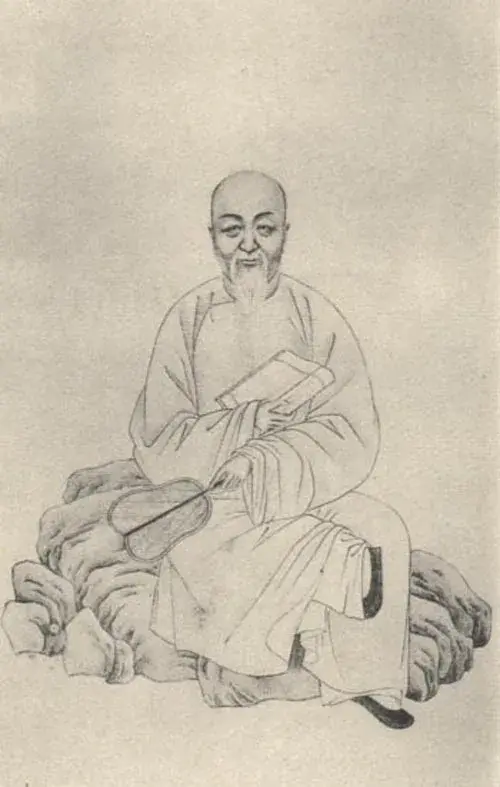
庄存与
Zhuang Cunyu (1719–1788), courtesy name Fanggeng and art name Yangtian, was a native of Wujin (modern Changzhou), Jiangsu Province, hailing from the eminent Piling Zhuang lineage. He was an outstanding mid-Qing classical scholar, philosophical pioneer, and founding patriarch of the Changzhou School of New Text Confucianism. In 1745, he placed second overall (bangyan) in the palace examinations, receiving appointment as…
Zhuang Cunyu (1719–1788), courtesy name Fanggeng and art name Yangtian, was a native of Wujin (modern Changzhou), Jiangsu Province, hailing from the eminent Piling Zhuang lineage. He was an outstanding mid-Qing classical scholar, philosophical pioneer, and founding patriarch of the Changzhou School of New Text Confucianism. In 1745, he placed second overall (bangyan) in the palace examinations, receiving appointment as compiler in the Hanlin Academy. He subsequently served as Provincial Education Commissioner of Zhili, Senior Sub-Chancellor of the Grand Secretariat, and Senior Vice Minister of Rites, while serving concurrently in the Southern Study and the Palace School for Princes, highly trusted by the Qianlong Emperor. Upright and uncorrupted, he enforced rigorous examination discipline and delivered candid, unvarnished classical lectures before the throne. Amidst the prevailing Qianlong-Jiaqing evidential movement that dogmatically elevated trivial philology and fragmented textual collation, Zhuang blazed a new trail in his later years by turning to the Spring and Autumn Annals and its Gongyang Commentary, founding the Changzhou New Text School. Through seminal treatises including Chunqiu Zhengci, he challenged the fragmented pedantry of Old Text exegesis to resurrect the esoteric principles and profound meaning of the Gongyang tradition, directly linking classical learning to statecraft and contemporary politics. His New Text doctrines, expanded by his grandsons Liu Fenglu and Song Xiangfeng, directly inspired the statecraft thought of Gong Zizhen and Wei Yuan as well as the Hundred Days' Reform led by Kang Youwei and Liang Qichao, establishing Zhuang as an indispensable intellectual architect of late Qing political modernization.
Born into the prominent scholarly Zhuang lineage of Wujin, Changzhou; read widely across the Six Classics, specializing in the Book of Documents.
Passed the metropolitan and palace examinations as bangyan (second on the first-class list), entering official service as Hanlin compiler.
Appointed Provincial Education Commissioner of Zhili, strictly curbing cheating among Banner candidates and retained by imperial decree for his rectitude.
Elevated to Senior Sub-Chancellor of the Grand Secretariat, serving in the Southern Study and tutoring imperial princes in classical exegesis.
Promoted to Senior Vice Minister of Rites, maintaining strict impartiality as chief examiner in Zhejiang and rejecting lavish official gifts.
Retired due to advanced age and illness, returning to Changzhou to dedicate his final years to explicating the Gongyang Commentary.
Passed away at his ancestral home in Wujin at age seventy; his lifelong scholarship was preserved in Weijingzhai Yishu.
Zhuang Cunyu was born in 1719 into the celebrated Piling Zhuang clan of Wujin, Changzhou Prefecture, Jiangsu Province, an illustrious family whose members had attained civil examination honors for generations. Possessing rare intellectual gifts from early childhood, Zhuang mastered the Four Books and Five Classics at an early age, exhibiting exceptional depth in the Book of Documents and the Classic of Poetry. His prose was noted for robust classical resonance and profound comprehension of canonical philosophy.
In 1745, at age twenty-seven, Zhuang traveled to Beijing to sit for the yichou metropolitan examination, outshining his peers and qualifying for the palace trials in the Baohe Palace. Demonstrating brilliant policy analysis, he attained the supreme distinction of bangyan (second place overall on the first-class jinshi list) and was appointed compiler in the Hanlin Academy. Nine years later, his younger brother Zhuang Peiyin achieved the first-ranked zhuangyuan title in the 1754 metropolitan examinations. The extraordinary achievement of two biological brothers securing both zhuangyuan and bangyan honors astonished the court, becoming an enduring legend in Qing examination annals.
In 1756, Zhuang was appointed Provincial Education Commissioner of Zhili. At that time, examination halls in the metropolitan province were rife with irregularities. Manchu and Mongol Banner candidates, relying on aristocratic privilege, routinely violated examination protocols by smuggling pre-written draft essays and passing cheat sheets. Upon arriving at his post, Zhuang instituted unbending discipline, establishing rigorous body searches and strict surveillance for Banner candidates without exception.
Resentful of his enforcement, several disobedient Banner students instigated a riot in the examination compound and coordinated with Censor Tang Shichang to impeach Zhuang for oppressive harassment. The Qianlong Emperor initially suspended Zhuang and personally re-examined the students in Beijing. During the imperial review, dozens of concealed cheat sheets were discovered on the candidates, and a student named Haicheng brazenly shouted insolent remarks before the throne. Incensed, the emperor ordered Haicheng executed on the spot, banished his accomplices to frontier servitude, and permanently barred them from civil exams. Fully recognizing Zhuang's incorruptible integrity, the emperor immediately restored his office and ordered him to remain as Education Commissioner of Zhili, establishing Zhuang's fame for unbending rectitude nationwide.
Over the subsequent decades, Zhuang was repeatedly promoted, serving as expositor, Senior Sub-Chancellor of the Grand Secretariat, and imperial tutor in both the Southern Study and the Palace School for Princes, lecturing imperial princes on the Confucian canons and serving repeatedly as chief examiner. In 1784, he rose to Senior Vice Minister of Rites, attaining the senior second rank.
Throughout his official tenure, Zhuang maintained unyielding ministerial integrity. While serving as imperial lecturer in the Wenhua Palace before the Qianlong Emperor and assembled ministers, all officials bowed and exited at the conclusion of the formal rites. Zhuang, however, remained kneeling before the throne, declaring candidly that the lecture drafts compiled by the Grand Secretariat contained profound doctrinal errors with which he respectfully disagreed. As courtiers looked on in astonishment, Zhuang calmly produced his own exegetical exposition from his robes and delivered an extemporaneous lecture, elucidating the core moral intentions of the early sages. Deeply impressed by his courage and intellectual mastery, the emperor lingered to listen and nodded in warm approbation. While presiding over the provincial examinations in Zhejiang, the provincial governor dispatched an emissary with a substantial silver bribe, which Zhuang rejected immediately. When the governor subsequently sent an official coral cap insignia under the guise of traveling supplies, Zhuang discovered upon departure that it was worth a thousand taels of silver; he immediately ordered a courier to ride a thousand li back to return the jewel, winning universal veneration across literati circles.
In 1786, approaching age seventy and suffering from chronic ailments, Zhuang submitted a formal petition for retirement. The Qianlong Emperor granted his request, allowing him to retire with full ministerial rank. Returning to his ancestral estate in Wujin, Zhuang closed his doors to worldly affairs, dedicating his final years to writing and canonical research.
At that time, Qianlong-Jiaqing evidential scholarship dominated the intellectual landscape. Scholars obsessed over isolated phonetic glosses and fragmented artifact collation, citing Xu Shen and Zheng Xuan while discarding the broader moral principles governing dynastic fortunes. Deeply alarmed, Zhuang warned that such scholastic triviality paralyzed the moral agency of intellectuals and fostered political inertia. In his retirement, he channeled all his energy into the Spring and Autumn Annals and its Gongyang Commentary, unearthing Confucius's hidden institutional reforms and moral praise and blame. He produced groundbreaking treatises such as Chunqiu Zhengci, laying the theoretical foundation of the Changzhou School. In 1788, the master passed away at his home in Wujin at the age of seventy.
Zhuang Cunyu's most momentous contribution to Chinese intellectual history was breaking the thousand-year dominance of Old Text Confucianism to revive Western Han New Text learning, establishing the Changzhou New Text School.
Following Dong Zhongshu's Han dynasty expositions, the Gongyang tradition had declined after the Han-Tang transition, with subsequent scholars following Liu Xiang and Du Yu's Zuo Zhuan traditions. Zhuang recognized that the Old Text school suffered from a fatal weakness: prioritizing mechanical textual collation over vital political philosophy. Turning to the Gongyang Commentary—the sole surviving commentary transmitted orally from the immediate disciples of Confucius—Zhuang composed his twelve-volume masterpiece Chunqiu Zhengci. He asserted that Confucius compiled the Annals not as a sterile chronology of Lu state history, but as an active political vehicle utilizing subtle phrasing to articulate institutional models for governing the realm. By elevating the Gongyang Commentary into a comprehensive philosophy of political statecraft, Zhuang revitalized New Text Confucianism amidst the high Qing.
In methodology and canonical exegesis, Zhuang refused to be constrained by the rigid factionalism dividing Han evidential philology from Song moral philosophy, synthesizing all Six Classics with sweeping vision.
Zhuang's canonical writings were prolific. Beyond Chunqiu Zhengci, his output included Shangshu Jijian, Shangshu Shuo, Maoshi Shuo, Zhouguan Shuo, Zhouguan Siyi, and Yue Shuo, which were later collected and printed as Weijingzhai Yishu. The eminent evidential master Ruan Yuan praised him, observing that Zhuang illuminated the profound essence across all Six Classics without confining himself to narrow Han or Song annotations, uniquely grasping the subtle words and profound meaning of the sages beyond mere words. Rather than remaining trapped within philological glosses, Zhuang penetrated textual exteriors to uncover underlying political institutions and ethical realities, constructing an integrated statecraft system linking the Changes, Documents, Poetry, Rites, and Annals.
The Gongyang intellectual lineage founded by Zhuang was far more than an academic renaissance; it served as the primary ideological wellspring for the late Qing statecraft movement and modern political reform.
Zhuang transmitted his teachings directly to his grandsons Liu Fenglu and Song Xiangfeng. Liu deepened the methodology in Chunqiu Gongyang Jing He Shi Shili, formalizing the theoretical architecture of the Changzhou School. From this foundation, the school's doctrines of institutional adaptation spread nationwide, shaping the reformist treatises of Gong Zizhen and Wei Yuan. Gong drew upon Gongyang theories of historical decay to attack late imperial corruption, while Wei utilized Gongyang concepts of evolutionary change to advocate learning foreign technologies to repel Western imperialism. At the close of the nineteenth century, Kang Youwei adopted Zhuang's Gongyang doctrines of institutional reform and the Three Ages Theory as the foundational ideological justification for the 1898 Hundred Days' Reform. In his Intellectual Trends in the Qing Period, Liang Qichao concluded that the epic political and intellectual transformations of late Qing China traced their ultimate origin back to Zhuang Cunyu's rediscovery of the Gongyang Commentary.
FIGURES ASSOCIATED WITH THIS DYNASTY