Birth in Zhejiang
Born in Shangqiangcun Village, Daixi, Gui'an County, Huzhou Prefecture.
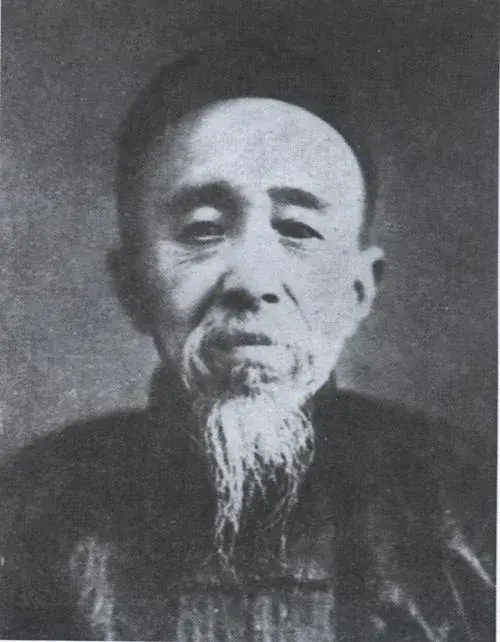
朱祖谋
Zhu Zumou (朱祖谋, September 9, 1857 – December 30, 1931), originally named Zhu Xiaocang, courtesy name Guwei, art name Qiangcun and later known as the Old Man of Qiangcun, was a paramount master of classical Ci poetry, scholar, textual critic, and calligrapher of the late Qing and early Republican periods. Born in Gui'an, Huzhou, Zhejiang, he passed the imperial examination with highest honors in 1883 and served in prestigious…
Zhu Zumou (朱祖谋, September 9, 1857 – December 30, 1931), originally named Zhu Xiaocang, courtesy name Guwei, art name Qiangcun and later known as the Old Man of Qiangcun, was a paramount master of classical Ci poetry, scholar, textual critic, and calligrapher of the late Qing and early Republican periods. Born in Gui'an, Huzhou, Zhejiang, he passed the imperial examination with highest honors in 1883 and served in prestigious positions, including Reader of the Hanlin Academy, Chief Compiler of the Collected Statutes Commission, and Right Vice Minister of Rites. During his tenure as Commissioner of Education of Guangdong in 1602, he enforced academic integrity before resigning over policy clashes with Governor-General Cen Chunxuan. In an era shaken by foreign invasions and domestic upheavals, Zhu Zumou joined Wang Pengyun in reviving Ci poetry societies in Beijing, using song lyrics to channel patriotic grief. Universally hailed alongside Wang Pengyun, Zheng Wenchuo, and Kuang Zhouyi as the Four Great Ci Poets of the Late Qing, he bridged the factional divide between the Changzhou and Western Zhejiang schools to establish an austere, tragic, and profound poetic style. Following the 1911 Revolution, he withdrew to Shanghai as a Qing loyalist, dedicating his final decades to editing ancient texts. His monumental Qiangcun Congshu, which gathered and critically collated over one hundred and sixty individual song lyric collections from the Tang through Yuan dynasties, stands as the crowning achievement of modern Chinese textual criticism, while his Three Hundred Song Ci Poems remains the definitive popular anthology of classical Chinese verse.
Born in Shangqiangcun Village, Daixi, Gui'an County, Huzhou Prefecture.
Passed the provincial examination in Henan with literary distinction.
Placed first in the second class of the metropolitan examination, appointed Hanlin compiler.
Rejoined the capital bureaucracy, entering the poetic circle organized by Wang Pengyun.
Opposed court belligerence against foreign legations; trapped in Beijing composing mournful lyrics.
Promoted to Right Vice Minister of Rites concurrently acting in the Ministry of Personnel.
Appointed Commissioner of Education of Guangdong, inspecting schools and visiting Hong Kong.
Resigned in protest against bureaucratic autocracy, retiring to private life in Suzhou.
Settled in Shanghai as a Qing loyalist, refusing public office to concentrate on textual scholarship.
Formally engraved and published the monumental collection Qiangcun Congshu.
Compiled Three Hundred Song Ci Poems, collaborating with Wu Changshuo and Mei Lanfang.
Died peacefully at age seventy-five; his manuscripts were collated into Qiangcun Yishu.
Zhu Zumou was born on September 9, 1857, in Shangqiangcun Village, Daixi, located in the southern countryside of Huzhou Prefecture, Zhejiang. His father, Zhu Guangdi, served as an expectant prefectural magistrate in Henan. In early 1860, the Taiping Rebellion swept across northern Zhejiang; Daixi was devastated by warfare, with its population decimated and villages burned. Fleeing the violence, his family journeyed northward to join his father in Henan and northern Anhui. Experiencing flight and displacement during his impressionable childhood infused Zhu Zumou with a deep melancholy that later echoed through his literary creations.
In 1864, his name was changed from Zhu Xiaocang to Zhu Zumou. Residing in his father official headquarters across Henan, he immersed himself in the Confucian classics, historical records, and the rugged verse of Meng Jiao and Huang Tingjian. In 1882, he attained his provincial graduate degree in Henan. In 1883, he traveled to the capital to participate in the imperial examinations, graduating first in the second rank of the metropolitan examination. Selected as a Hanlin bachelor, he was subsequently promoted to compiler. For thirteen years, he served in scholarly capital offices, directing the editorial collation of the Collected Statutes of the Great Qing and acting as provincial examiner in Jiangxi.
In 1896, Zhu Zumou returned to Beijing to serve in the Collected Statutes Commission. Censor Wang Pengyun had recently established a literary society in the capital to revitalize song lyric poetry, inviting Zhu Zumou to participate. Inspired by Wang Pengyun, Zhu Zumou channeled his scholarship into classical Ci verse. China defeat in the First Sino-Japanese War and the looming scramble for concessions by imperialist powers filled him with grief, prompting him to compose haunting works such as Slow Lament at the Long Pavilion.
When the Hundred Days of Reform collapsed in 1898 and the Six Gentlemen were executed, Zhu Zumou, who was an intimate friend of martyr Liu Guangdi, defied imperial taboos to author Partridge Sky to mourn his fallen comrade. In 1899, he partnered with Wang Pengyun to collate the song lyrics of Southern Song master Wu Wenying, embarking upon his lifelong vocation in textual criticism. During the Boxer Rebellion of 1900, when imperial factions incited attacks on foreign legations, Zhu Zumou submitted memorials warning against rash military conflict. Following the capture of Beijing by the Eight-Nation Alliance, he endured the siege inside Wang Pengyun Four Seals Studio, channeling dynastic collapse into heartbreaking song verses.
Recognizing his administrative rectitude, the Qing court elevated Zhu Zumou in 1901 to Right Vice Minister of Rites, soon assigning him concurrent duties in the Ministry of Personnel. In these high ministerial offices, he strictly enforced bureaucratic merit, resisting nepotism. In the autumn of 1902, the throne appointed him Commissioner of Education of Guangdong. Traveling to Guangzhou, he overhauled civil examinations, eliminated examination fraud, and fostered scholarly societies across Lingnan. While inspecting schools in Meizhou, he met and consulted extensively with the retired reformist diplomat and poet Huang Zunxian.
However, Zhu Zumou principled incorruptibility clashed with the authoritarian style of Governor-General Cen Chunxuan. Refusing to compromise his conscience, Zhu Zumou submitted his resignation on grounds of illness in 1905, departing Guangdong via Hong Kong. His maritime return to the north marked the permanent conclusion of his bureaucratic career. Settling in Suzhou, he lived in the Crane Garden, enjoying the friendship of local artists and poets.
Following the collapse of the Qing dynasty in the Revolution of 1911, Zhu Zumou adopted the posture of a dynastic loyalist, refusing to recognize the new Republican administration. When President Yuan Shikai offered him appointment as senior advisor with generous remuneration, he politely declined; similar invitations from provincial governors in Jiangsu and Zhejiang to oversee legal colleges or civil councils were met with firm refusals. Relocating to the international settlement in Shanghai, he adopted the sobriquet the Old Man of Qiangcun, earning his living through calligraphy while dedicating his remaining years to editing Song dynasty song lyrics.
In Shanghai, Zhu Zumou became the spiritual center of cultural loyalists, maintaining daily fellowship with Wang Guowei, Kuang Zhouyi, Zheng Wenchuo, Wu Changshuo, and Chen Sanli. In 1916, when Wang Guowei returned from Japan, he visited Zhu Zumou, penning an admiring preface for his portrait. On winter nights, Zhu Zumou braved snowfall to visit Kuang Zhouyi thatched retreat, sharing bowls of hot congee while chanting Song lyrics until dawn. Between 1917 and 1921, he published his magnum opus, Qiangcun Congshu, rescuing over one hundred and sixty individual classical lyric anthologies from oblivion. In 1924, he curated the celebrated anthology Three Hundred Song Ci Poems. He passed away peacefully on December 30, 1931, at the age of seventy-five, leaving his unprinted manuscripts to his disciple Long Yusheng.
Zhu Zumou stands as the supreme master of the song lyric in modern Chinese literary history, celebrated by contemporaries as the Grand Master of Verse and the Ultimate Rearguard of Classical Poetry. Before his emergence, nineteenth-century Ci poetry was divided between the Western Zhejiang School, which prized airy elegance, and the Changzhou School, which emphasized moral allegory. Zhu Zumou synthesized both traditions, combining profound structural depth with allegorical resonance.
Beginning with Tang masters Wen Tingyun and Wei Zhuang, he penetrated the intricate craftsmanship of Southern Song master Wu Wenying and the harmonic balance of Northern Song master Zhou Bangyan. His verses were celebrated for profound melancholy, architectural density, and strict metrical precision, earning him the title Doctor of Metrical Rules. Infusing the historical crises of the late Qing into the lyric medium, he elevated song lyrics into profound historical poetry that rivaled the verses of Du Fu.
Zhu Zumou achieved unmatched renown as an editor and textual critic. Prior to his endeavors, classical song lyric texts from the Song, Jin, and Yuan dynasties were riddled with copyist errors, omissions, and spurious attributions. Zhu Zumou undertook the monumental task of salvaging and restoring the entire corpus of classical song lyrics. Across three decades, he exhausted his personal financial resources to inspect imperial manuscripts, Dunhuang scrolls, Song woodblock editions, and rare Ming copies held in private libraries throughout Jiangnan.
In editing the works of Su Shi and Wu Wenying, he formulated seven strict textual rules, mandating that editors preserve variants without altering original texts arbitrarily. Published between 1917 and 1921, his Qiangcun Congshu encompassed one hundred and sixty-three individual poet collections across hundreds of volumes. Characterized by unmatched philological precision and pristine collation, the compilation established the definitive scholarly canon of Chinese Ci literature. Additionally, he edited the Thirty Volumes of Huzhou Ci Poetry and Six Volumes of Dynastic Huzhou Ci Poetry to preserve regional Jiangnan literature.
Zhu Zumou most enduring cultural contribution to world readers was his compilation of Three Hundred Song Ci Poems, published in 1924. While Hengtang Tuishi eighteenth-century Three Hundred Tang Poems had popularized classical shi verse across all levels of Chinese society, classical Ci lyrics lacked an equivalent standard primer. Working in seclusion in Shanghai, Zhu Zumou reviewed thousands of Song dynasty song lyrics, selecting two hundred and eighty-three exemplary poems representing eighty-eight distinct poets.
His selection avoided aesthetic dogmatism, balancing the heroic vigor of Su Shi and Xin Qiji with the delicate refinement of Zhou Bangyan, Jiang Kui, and Wu Wenying, alongside the lyrical grace of Li Qingzhao and Qin Guan. Featuring rigorous metrical standards, emotional resonance, and accessible language, Three Hundred Song Ci Poems became the definitive primer of Chinese song lyrics for generations of students and scholars globally.
In fine arts, Zhu Zumou forged an unmistakable calligraphic style that earned him high praise among late Qing masters. Starting with the broad, muscular framework of Yan Zhenqing, he later incorporated the flowing grace of Chu Suiliang and the restrained brush tension of He Shaoji, ultimately distilling these disparate influences into his unique Qiangcun Style.
The hallmark of his late calligraphic works was an inverted spatial balance: in contrast to the conventional left-low, right-high orientation of Chinese characters, Zhu Zumou deliberately tilted his characters with a left-high, right-low inclination. His horizontal strokes were broad and deliberate while his vertical strokes were taut and slender, conveying the steadfast weight of an armored general standing before battle lines. Connoisseurs Wu Changshuo and Chen Sanli celebrated his calligraphy as an authentic mirror of his scholarly discipline and unbending moral integrity.
FIGURES ASSOCIATED WITH THIS DYNASTY