Birth in Yuyao
Born on December 17 in Guanpei Village, Yuyao, Zhejiang; exhibited precocious intellect and an early ambition for statecraft.
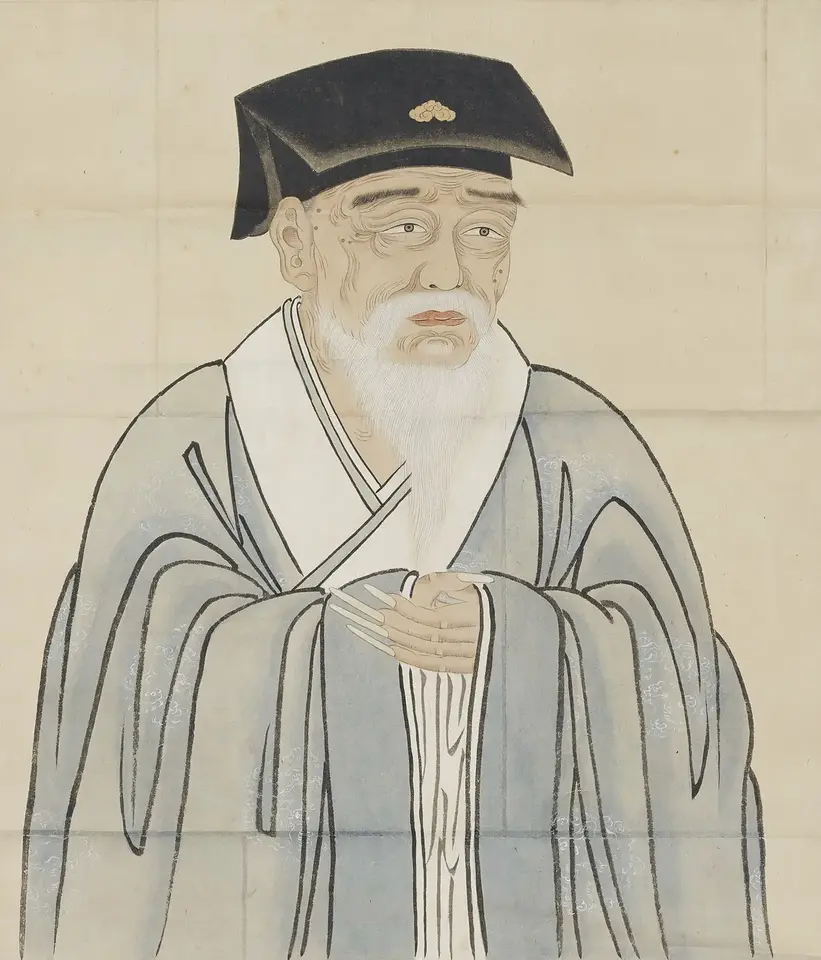
朱之瑜
Zhu Zhiyu (朱之瑜, December 17, 1600 – May 23, 1682), courtesy names Chuyu and Luyu, art name Shunshui (derived from the ancient name of the Yao River in his native place) and reverently addressed by scholars as Master Shunshui, was a native of Yuyao, Zhejiang. He was an eminent Confucian philosopher, educator, and pioneer of East Asian cross-cultural intellectual exchange in the late Ming and early Qing dynasties, celebrated as…
Zhu Zhiyu (朱之瑜, December 17, 1600 – May 23, 1682), courtesy names Chuyu and Luyu, art name Shunshui (derived from the ancient name of the Yao River in his native place) and reverently addressed by scholars as Master Shunshui, was a native of Yuyao, Zhejiang. He was an eminent Confucian philosopher, educator, and pioneer of East Asian cross-cultural intellectual exchange in the late Ming and early Qing dynasties, celebrated as the primary ideological founder of the Mito School in Japan. During the Chongzhen era, observing political decadence and eunuch tyranny, Zhu maintained uncompromising integrity, repeatedly declining civil appointments and imperial summonses from provincial governors and the court to immerse himself in classical and practical scholarship. Following the fall of Beijing in 1644 and the subsequent collapse of the Southern Ming Hongwu regime, Zhu devoted himself wholeheartedly to the anti-Qing resistance, serving as a vital strategic advisor to the Prince of Lu (Zhu Yihai) across Zhoushan and coastal Zhejiang, and undertaking perilous maritime voyages to Annam and Japan to seek military alliances and provisions. In 1659, he participated in the Yangtze River offensive led by Zheng Chenggong and Zhang Huangyan; following its catastrophic defeat, he chose to preserve his moral integrity rather than submit to the Qing, sailing into permanent exile in Nagasaki. In 1665, Tokugawa Mitsukuni, the second daimyo of the Mito Domain and grandson of Tokugawa Ieyasu, welcomed him to Edo with the supreme honors of an Honored Guest-Master. Over more than two decades in Japan, Zhu vigorously propagated practical Confucianism, championing the unity of knowledge and action, repudiating abstract Song-Ming metaphysics, designing authentic Confucian sacrificial rites and Ming ceremonial attire, supervising the construction of the Koishikawa Korakuen garden and the Shokokan academy, and establishing the historiographical and ideological framework for the Dai Nihonshi (Great History of Japan), leaving an indelible imprint on Edo-period intellectual life and the Meiji Restoration thinkers.
Born on December 17 in Guanpei Village, Yuyao, Zhejiang; exhibited precocious intellect and an early ambition for statecraft.
Accompanied his elder brother to Songjiang, studying the Six Classics and Mao Poetry under renowned scholars Zhu Yongyou and Wu Zhongluan.
Recommended under the imperial category of Nine Classics Pure Talents for a Ministry of Revenue post; vehemently declined out of distaste for court eunuchs.
Following the fall of Nanjing, allied with Wang Yi and Qian Sule to support the Prince of Lu's regency in eastern Zhejiang.
Sailed to Annam (Vietnam) to raise provisions; was detained for refusing to kowtow before the Annam king and released after demonstrating moral defiance.
Joined the naval campaign of Zheng Chenggong and Zhang Huangyan against Nanjing; upon total collapse, resolved to sail to Japan to preserve moral integrity.
Invited by the Mito daimyo Tokugawa Mitsukuni with elaborate honors to Edo, serving as Honored Guest-Master and inaugurating the Mito School.
Supervised the casting of Confucian bronze vessels and tailored Ming ceremonial attire, conducting Japan's first authentic classical Sekiten ceremonies.
Fell ill in Osaka and Edo, imparting final instructions to disciples; passed away peacefully at his Edo residence on May 23 at eighty-three.
Interred according to ancient Ming scholarly rites in the Mito Tokugawa burial grounds on Mount Zuiryu, conferred the posthumous name Wengong.
Zhu Zhiyu was born on December 17, 1600, in Guanpei Village, Shuangyan Township, Yuyao County, Shaoxing Prefecture, Zhejiang Province. His ancestor, Zhu Tingbi, served as Minister of War during the Northern Song dynasty before his lineage settled in Yuyao. From childhood, Zhu demonstrated extraordinary memory and intellectual maturity, earning early praise from kinsmen as an advisor fit for governance. As a youth, he moved with his elder brother Zhu Qiming to Songjiang Prefecture in the Southern Direct-ruled region. There he studied under eminent local scholars, including Zhu Yongyou, Zhang Kengtang, and Wu Zhongluan, mastering the Six Classics, the Mao Commentary on the Book of Songs, the Zuo Zhuan, and practical arts like astronomy, calendar mathematics, and military strategy.
During the late Wanli and Tianqi reigns, eunuch tyranny led by Wei Zhongxian corrupted imperial governance through secret police terror. Witnessing factional persecution and the humiliation of upright scholars, Zhu developed a deep aversion to civil careers. In 1638, provincial authorities recommended Zhu to the court under the special category of Nine Classics Pure Talents, proposing an appointment as a director in the Ministry of Revenue. The Chongzhen Emperor issued a special summons, but Zhu vigorously declined, feigning chronic illness. In 1642, imperial commanders again recommended him for extraordinary talent, prompting Zhu to flee in disguise into rural obscurity. He maintained that a Confucian scholar must never sacrifice moral integrity for bureaucratic status, preferring poverty to moral degradation.
In the third month of 1644, peasant rebels captured Beijing, driving the Chongzhen Emperor to suicide; in the fifth month, the Qing army crossed the pass and occupied the capital. In 1645, Qing armies swept south and conquered Nanjing, dissolving the Hongguang court. In this grave crisis, the Prince of Lu (Zhu Yihai) established a regency in Shaoxing, while Prince Tang proclaimed himself emperor in Fuzhou. Operating in eastern Zhejiang, Zhu dedicated his energy and personal fortunes to the resistance. He coordinated closely with local loyalists Wang Yi and Qian Sule to raise troops and funds. The Prince of Lu offered Zhu prestigious posts, including Director in the Ministry of War and Assistant Surveillance Commissioner, but Zhu declined formal office, choosing to advise military affairs as a commoner across Zhoushan and Dinghai.
To overcome severe shortages of food, arms, and external support, Zhu undertook multiple perilous maritime voyages between 1645 and 1654, sailing between Zhoushan, Nagasaki, and Annam to negotiate alliances and procure financial backing for the southern resistance.
Between 1645 and 1654, Zhu repeatedly risked his life crossing the South China Sea. In 1651, he took a merchant vessel to the kingdom of Annam (central Vietnam) to procure provisions. Hearing that a celebrated Chinese scholar had arrived, the king of Annam requested an audience. However, court protocol in Annam required foreign visitors to perform full prostrations before the monarch.
Zhu, dressed in classical Ming robes, flatly refused to kneel before a regional king, maintaining that an imperial scholar could not demean his dynastic dignity. Enraged court officials detained him at an official lodge, subjected him to severe threats, and deprived him of food for over fifty days. Zhu remained completely serene, composing eloquent letters that criticized their ignorance of the Confucian Spring and Autumn Annals. Stunned by his unyielding poise and flawless moral arguments, the king relented, received him with honors, and facilitated his safe departure. Zhu subsequently authored the Account of Service in Annam, meticulously documenting this harrowing ordeal.
In eastern Zhejiang, Zhu remained a central strategist for the Prince of Lu's government based in the Zhoushan archipelago. The Prince of Lu repeatedly issued decrees appointing Zhu to vice-ministerial and censorate posts, but Zhu declined all titles to maintain strategic independence. In 1651, Qing forces launched a massive offensive, overrunning Mount Siming and executing Zhu's close friend Wang Yi. Shortly thereafter, Zhoushan fell, forcing loyalist commanders Zhang Mingzhen and Zhang Huangyan to escort the prince south to Kinmen to join Zheng Chenggong.
In 1659, Zheng Chenggong and Zhang Huangyan combined naval forces for a massive campaign up the Yangtze River, seizing Zhenjiang and advancing upon Nanjing. Despite being sixty years old, Zhu boarded the fleet at Dinghai to assist strategic planning. However, outside the walls of Nanjing, the expeditionary forces fell victim to deception and counteroffensives, suffering a disastrous defeat. Realizing that military restoration had become impossible and refusing to shave his head in submission, Zhu resolved to emulate Lu Zhonglian of the Warring States period, who vowed never to submit to Qin, and sailed across the sea into permanent exile in Japan.
In the winter of 1659, the sixty-year-old Zhu arrived amidst winter gales in Nagasaki. Under Tokugawa sakoku isolationist policies, foreign nationals were forbidden from residing permanently, requiring merchants to return home by the following summer. Completely destitute, Zhu lived among transient merchants and made a precarious living as a tutor.
Hearing of his presence, the Yanagawa scholar Ando Seian (Ando Moriyoshi) visited Zhu. Reading Zhu's manuscripts and conversing with him, Ando was astonished by his moral integrity and deep Confucian scholarship, immediately adopting the role of a devoted disciple. To prevent Zhu's deportation, Ando campaigned tirelessly among shogunate officials and secured the backing of Nagasaki Magistrate Kurokawa Masanao, obtaining an unprecedented residency exemption from the shogunate. Ando allocated half of his modest samurai stipend to support Zhu, revering him as a lifelong mentor. In Nagasaki, Zhu opened a school where Japanese scholars from across the country gathered to study orthodox Confucian classics and practical statecraft.
In 1665, Tokugawa Mitsukuni, the second daimyo of the Mito Domain, dispatched emissaries with luxurious gifts to invite Zhu to Edo. Mitsukuni, deeply committed to statecraft and classical literature, sought to establish a comprehensive academy. After Zhu initially declined, Mitsukuni wrote personal letters demonstrating profound respect for his wisdom. Moved by this sincerity, Zhu relocated to Edo.
Tokugawa Mitsukuni treated Zhu with the supreme etiquette of an Honored Guest-Master, addressing him as Master and constructing a dedicated residence for him. Citing grief over his fallen homeland, Zhu declined luxurious quarters, choosing an austere dwelling. Whenever important domain matters, institutional reforms, educational plans, or family rituals arose, Mitsukuni consulted Zhu personally. Encouraged by Mitsukuni, prominent lords like Maeda Tsunanori of the Kaga Domain sent their retainers to study under Zhu. Zhu became celebrated throughout Japan as the paramount continental scholar, initiating a glorious chapter in Sino-Japanese intellectual exchange.
Throughout two decades of teaching in Edo and Mito, Zhu devoted his remaining strength to mentoring scholars and compiling historical texts. In his old age, aggravated by lifelong travels and unfamiliar climate, he suffered from severe skin conditions and chronic exhaustion. Yet whenever disciples came to inquire about classical texts, he leaned against his pillow to explain philosophical subtleties with tireless clarity.
In the spring of 1682, the eighty-three-year-old Zhu realized his end was near. In March, he hosted a farewell banquet at his Komagome residence in Edo, imparting his final moral and scholarly instructions to his disciples. On May 23, 1682, surrounded by his students, Zhu passed away peacefully at eighty-three. Deeply grieved, Tokugawa Mitsukuni led his heir Tokugawa Tsunaeda and domain ministers in funeral rites conducted in strict accordance with Ming dynasty classical scholarly ritual. Mitsukuni broke domain precedent by interring Zhu within the private burial grounds of the Mito Tokugawa family on Mount Zuiryu in Hitachi (modern Hitachiota, Ibaraki Prefecture), conferring the private posthumous title Wengong and inscribing on his stele: Tomb of Zhu, the Summoned Gentleman of the Ming.
Zhu Zhiyu's most significant historical contribution in Japan was serving as the intellectual mentor and supreme advisor for the establishment of the Mito School and the compilation of Japan's monumental official chronicle, the Dai Nihonshi (Great History of Japan). Tokugawa Mitsukuni founded the Shokokan academy to compile Japanese history, but early scholars struggled with organizational format and historiographical standards.
Zhu introduced the historiographical methods of Sima Qian's Records of the Grand Historian, Ban Gu's Book of Han, and Sima Guang's Comprehensive Mirror for Aid in Government, establishing the annal-biography format centered on the imperial lineage, with vassal biographies, emphasizing moral legitimacy and factual accuracy. Under Zhu's guidance, Mito scholars discarded supernatural myths and military feudal biases, adopting a Confucian ethical paradigm centered on the doctrine of revering the sovereign and repelling barbarians. This framework evolved into the Mito School, which two centuries later became the intellectual catalyst for the Meiji Restoration, praised by Liang Qichao as the spiritual wellspring of Japan's modernization.
In philosophy and education, Zhu was a prominent champion of practical learning and statecraft. In the late Ming, degenerated branches of the School of Mind indulged in abstract meditation while ignoring concrete governance, contributing directly to imperial collapse. Zhu subjected this idle intellectualism to severe critique. He argued that principle resides within material force, insisting on the unity of knowledge and action and asserting that scholarship without utility to society was barren vanity.
In works such as Summary of the Calamities of the Central Plains (Yangjiu Shulüe), he analyzed the systemic causes of the Ming fall, cautioning Japanese scholars against abstract metaphysics. He introduced practical Chinese knowledge in agriculture, flood control, pharmacology, bridge construction, and manufacture. He personally drafted blueprints for irrigation channels, dikes, and ritual implements in the Mito Domain, transforming Confucian benevolence into practical public works and earning acclaim as a founding father of modern East Asian practical learning.
Observing that Japanese Confucian ceremonies often mixed Shinto and Buddhist practices, Zhu undertook a systematic restoration of ancient Chinese rites with Tokugawa Mitsukuni's sponsorship. Drawing upon Ming dynastic codes, he designed wooden ancestral tablets, bronze ritual vessels, and ceremonial altars for the Confucian Temple, while transcribing classical liturgical music scores from the Book of Songs. He also supervised the tailoring of authentic Ming robes, caps, and formal garments. In 1670, Zhu presided over the first orthodox classical Sekiten ceremony in Japanese history, with Tokugawa Mitsukuni and domain ministers performing ancient bows clad in Ming robes, preserving classical Chinese ritual forms in Japan after their suppression in Qing-ruled China.
The celebrated daimyo garden Koishikawa Korakuen in modern Tokyo stands as a masterwork of Zhu Zhiyu's architectural and landscape genius. When Tokugawa Mitsukuni laid out the Mito domain residence in Edo, he commissioned Zhu to direct the aesthetic conception of the grounds. Zhu incorporated the borrowed scenery techniques of Jiangnan gardens, naming the garden Korakuen after Fan Zhongyan's famous dictum: Be the first to worry about the world's worries, and the last to enjoy its joys. He designed features including the Engetsu Bridge (Full Moon Bridge), the Tokujindo shrine, the West Lake Dyke, and Mount Xiao Lu, creating a scenic masterpiece that blended natural beauty with Confucian moral symbolism.
Teaching in Japan for over two decades, Zhu Shunshui nurtured a distinguished generation of scholars and statesmen whose influence shaped the intellectual landscape of early modern Japan. Beyond his celebrated bond with his first Japanese disciple Ando Seian, leading Mito scholars such as Asaka Tanpaku, Imai Kojai, and Ozu Seijun attended his lectures over many years, meticulously recording his discourses into seminal collections including Zhu Shi Tanqi (Talks of Master Zhu) and Shunshui Xiansheng Yulu. These disciples subsequently assumed leadership of the Shokokan historiographical institute, directing the compilation of the Dai Nihonshi and establishing practical learning as an enduring pillar of Japanese intellectual culture.
In Mito, Zhu extended his practical learning to technological modernization. Recognizing that administrative neglect of engineering had weakened China, he actively taught Chinese masonry, civil engineering, and river management to Japanese craftsmen, supervising the digging of irrigation canals that significantly boosted rice yields across the domain. He introduced Chinese techniques in ink making, inkstone carving, fabric dyeing, textile weaving, brewing, and pharmacology. He shared classical herbal remedies with Japanese court physicians and designed daily utensils, scholarly implements, and carriage structures, serving as an essential catalyst for Edo-period technological development.
Throughout his prolonged tenure in Mito, Zhu demonstrated profound pedagogical compassion and methodological precision, adapting his instruction to the specific character and aptitude of each student. In addition to instructing Mito retainers, he guided scholars dispatched from Kaga Domain by Daimyo Maeda Tsunanori and maintained extensive pedagogical correspondence across regional domains. In daily tutorials, he nurtured the gentle Shimokawa Sansei with maternal encouragement, while sternly disciplining the impetuous Igarashi Gohaku to cultivate patient evidential rigor rather than superficial speed, establishing an exemplary pedagogical model revered by generations of Japanese educators.
Deeply grieving the forced adoption of Manchu hairstyles and clothing across China, Zhu meticulously recorded Ming sartorial regulations from memory and family texts. He tailored physical sample garments and instructed Japanese scholars on the exact measurements and cutting methods for scholarly gowns, caps, and court dress. With Tokugawa Mitsukuni's patronage, Mito scholars proudly wore Ming robes and published illustrated guides to classical attire. In his historical treatise Yangjiu Shulüe, written at sixty-two, Zhu analyzed the four fatal flaws that destroyed the Ming dynasty: eunuch dictatorship, factional paralysis among ministers, military miscalculations on the frontier, and the empty metaphysics of contemporary scholars. The text provided profound political lessons for Tokugawa Mitsukuni and remains an invaluable historical record of the late Ming collapse.
FIGURES ASSOCIATED WITH THIS DYNASTY