Inheriting Peerage
Succeeded to the peerage as the second Prince of Anhua, residing in the Ningxia princely estate.
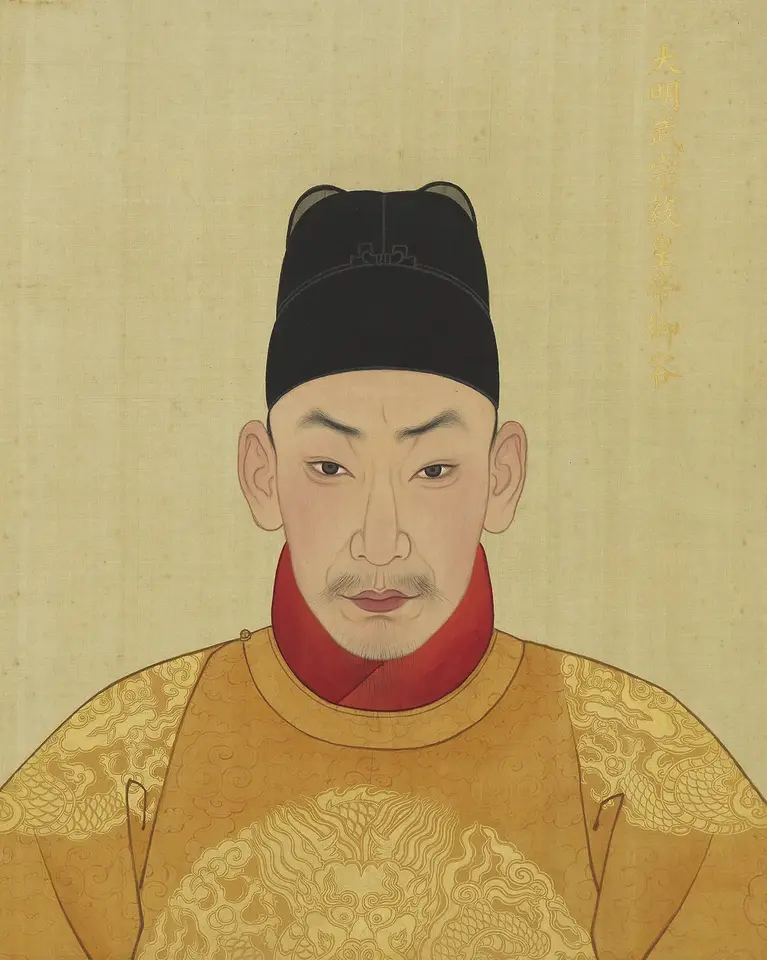
朱寘鐇
Zhu Zhifan (朱寘鐇, ?–1510) was an imperial prince of the Ming Dynasty, a great-grandson of Zhu Zhan (Prince Jing of Qing, the sixteenth son of the Hongwu Emperor). His princely estate was located in Ningxia Garrison, one of the strategic Nine Garrisons along the northwestern frontier. In 1492 (fifth year of the Hongzhi reign), he inherited the princely peerage as the second Prince of Anhua. During the early reign of the…
Zhu Zhifan (朱寘鐇, ?–1510) was an imperial prince of the Ming Dynasty, a great-grandson of Zhu Zhan (Prince Jing of Qing, the sixteenth son of the Hongwu Emperor). His princely estate was located in Ningxia Garrison, one of the strategic Nine Garrisons along the northwestern frontier. In 1492 (fifth year of the Hongzhi reign), he inherited the princely peerage as the second Prince of Anhua. During the early reign of the Zhengde Emperor, Liu Jin, Director of Ceremonial, wielded monopolistic control over imperial affairs. In 1510, Liu dispatched trusted subordinate Zhou Dong to audit military agricultural colonies (tuntian) in Ningxia. Zhou's aggressive extortion, abuse of corporal punishment, and compulsory commutation of grain payments into silver sparked fierce outrage among garrison troops and junior commanders. Zhu Zhifan had long harbored political ambitions. Exploiting widespread garrison fury, he conspired with commanders He Jin, Zhou Ang, Ding Guang, and local scholar Sun Jingwen, launching an armed mutiny on April 5, 1510. The rebels killed Grand Coordinator An Weixue and colony auditor Zhou Dong, released prison inmates, burned tax ledgers, and circulated manifestos denouncing Liu Jin's tyranny, an event known in history as the Prince of Anhua Rebellion. Shortly after the outbreak, Guerrilla General Qiu Yue feigned submission, lulled the rebels into complacency, and coordinated with loyalist officers to launch a surprise strike. Within eighteen days, Qiu captured Zhu Zhifan and dismantled the revolt. Emperor Zhengde appointed Right Censor-in-Chief Yang Yiqing as Supreme Commander and eunuch Zhang Yong as military supervisor to oversee the pacification. Zhu Zhifan was transported to Beijing, stripped of his noble title, and ordered to commit suicide. Although the rebellion was swiftly suppressed, Yang Yiqing and Zhang Yong utilized the incident upon returning to the capital to expose Liu Jin's treasonous conspiracies, directly precipitating Liu Jin's execution and profoundly reshaping the political landscape of the Zhengde reign.
Succeeded to the peerage as the second Prince of Anhua, residing in the Ningxia princely estate.
Secretly patronized frontier officers, local scholars, and outlaws, seeking opportunities to grasp power.
Liu Jin's henchman Zhou Dong audited Ningxia garrison farmlands, provoking deep resentment through harsh extortions.
United with He Jin and Zhou Ang to execute Grand Coordinator An Weixue and Zhou Dong, initiating armed rebellion.
Incinerated fiscal registries and distributed manifestos listing fourteen major crimes of eunuch dictator Liu Jin.
Guerrilla General Qiu Yue feigned surrender, launched a pre-dawn raid on the princely palace, and captured Zhu Zhifan.
Eunuch Zhang Yong and Supreme Commander Yang Yiqing escorted Zhu Zhifan to Beijing; princely titles stripped.
Zhengde Emperor ordered Zhu Zhifan to commit suicide and his corpse cremated; the Prince of Anhua princedom was permanently abolished.
Zhu Zhifan was born into the Ming imperial clan, being the great-grandson of Zhu Zhan (Prince Jing of Qing, the sixteenth son of the dynastic founder Zhu Yuanzhang). His grandfather Zhu Suiman had been created the first Prince of Anhua. In 1492, Zhu Zhifan formally inherited the title as the second Prince of Anhua, maintaining his residence in Ningxia Town, the headquarters of the northwestern border defense command.
Ningxia Garrison guarded the strategic Ordos Loop and held immense defensive value. Its troops were seasoned veterans accustomed to repelling Mongol incursions. Zhu Zhifan possessed an ambitious and restless disposition, feeling resentful of ancestral dynastic statutes that strictly prohibited regional princes from participating in military and civil governance. Within his walled compound, he accumulated private wealth, retained fortune-tellers, and cultivated close ties with mid-level garrison officers, including Assistant Regional Commanders He Jin, Zhou Ang, and Ding Guang. Local literati such as Sun Jingwen and Meng Bin frequently frequented his estate, advising him on strategies to establish an independent regional power base.
In the early years of the Zhengde Emperor, eunuch dictator Liu Jin seized supreme power within the inner palace, persecuting upright officials and enacting destabilizing administrative reforms. The most incendiary policy was the nationwide reassessment of military colonies (tuntian).
The frontier defense garrison at Ningxia relied heavily on colony agriculture to supply grain rations. In spring 1510, Liu Jin dispatched Zhou Dong, Junior Minister of the Court of Judicature and Revision, as imperial commissioner to Ningxia. Zhou was notoriously greedy and cruel. Upon arrival, he colluded with Grand Coordinator An Weixue, arbitrarily manipulating land assessment standards and demanding taxes on barren gravel and saline flats. Crucially, Zhou abolished traditional grain payments, mandating that soldiers commute their grain dues into silver, and imposed additional surcharges. Because silver was exceedingly scarce on the remote frontier, imperial inspectors subjected soldiers to flogging and torture, driving countless families to destitution.
Furthermore, Regional Commander Jiang Han enforced discipline with excessive severity. The entire garrison seethed with outrage. Facing public humiliation and physical threats from Zhou Dong, officers He Jin and Zhou Ang sought sanctuary at the Prince of Anhua's estate, urging Zhu Zhifan to lead a revolt: "We are willing to honor Your Highness as lord, to execute Zhou Dong and An Weixue, and to march on the capital to eliminate Liu Jin." Zhu Zhifan embraced the proposition, opened the princely treasuries to distribute bounties, and resolved to strike immediately.
On the night of April 5, 1510, Zhu Zhifan hosted a feast for military conspirators, sealing an oath of blood brotherhood. He Jin and Zhou Ang led armed commandos to assault the Grand Coordinator's yamen and the imperial commissioner's lodge.
The insurrectionists acted swiftly, beheading Grand Coordinator An Weixue, Imperial Commissioner Zhou Dong, Regional Commander Jiang Han, and eunuch superintendent Li Rong. Taking full control of the garrison city gates and armories, Zhu Zhifan opened imperial storehouses to distribute grain, ignited a massive bonfire in the central square to burn all land registries and fiscal rolls, and liberated all incarcerated prisoners.
The following day, Zhu assumed the title of Grand Field Marshal of the Northwest, appointing He Jin as Grand General, Zhou Ang as Vice General, and Sun Jingwen as Chief of Staff. Zhu instructed Sun to draft a formal call to arms, detailing fourteen grievous crimes committed by Liu Jin, including subverting ancestral laws, persecuting loyal ministers, extorting bribes, and devastating border livelihoods. Hundreds of copies were dispatched across Shaanxi, Gansu, Guyuan, and Yansui to solicit wider alliances. However, loyalist governors and commanders across the Yellow River refused to join, promptly arresting messengers and dispatching emergency memorials to Beijing.
At the time of the mutiny, Ningxia Guerrilla General Qiu Yue was convalescing at home. Aware of Qiu's military prowess and high standing among frontier soldiers, Zhu Zhifan made repeated overtures to recruit him. Assessing the chaotic nature of the rebel force, Qiu recognized that the insurrection was doomed. He feigned compliance, outwardly accepting Zhu's command while secretly gathering trusted subordinates, including Yang Zhen and Gu Yong, inside his residence to prepare a counter-coup.
Qiu advised Zhu Zhifan: "Generals He Jin and Zhou Ang should lead the elite troops across the Yellow River to occupy Lingzhou and guard the river crossings against approaching imperial armies, while Your Highness remains to command the headquarters in Ningxia Town." Unaware of the trap, Zhu adopted the plan and ordered He Jin's primary combat forces to cross the river.
In the early morning of April 23, with town defenses stripped bare, Qiu Yue led over a hundred heavily armored warriors in a lightning assault against the Prince of Anhua's residence. Cutting down gate guards, Qiu stormed into the inner hall and subdued Zhu Zhifan by hand. Ascending the city battlements, Qiu announced that the prince had been arrested and promised amnesty to all coerced soldiers. When news reached Lingzhou, rebel morale evaporated, and He Jin and Zhou Ang were soon captured and executed. The rebellion was completely dismantled in just eighteen days.
In May 1510, news of the uprising reached Beijing, shocking the imperial court. Emperor Zhengde appointed Right Censor-in-Chief Yang Yiqing as Supreme Commander of the Three Frontiers and eunuch Zhang Yong as military supervisor, dispatching tens of thousands of imperial guards westward. En route, they received news of Qiu Yue's triumph.
Arriving in Ningxia, Yang and Zhang restored order and relieved impoverished border soldiers. Astutely recognizing that Liu Jin posed an existential threat to the dynasty, Yang Yiqing used the campaign to persuade Zhang Yong to align against Liu. In August 1510, Zhang and Yang escorted Zhu Zhifan in a barred prison carriage to Beijing. During the victory audience, Zhang Yong presented Zhu Zhifan's rebel manifestos to Emperor Zhengde, disclosing irrefutable evidence of Liu Jin's treason, including hidden weapons and unauthorized seals. The enraged emperor ordered Liu Jin arrested that night and subsequently executed by slow slicing. Zhu Zhifan was stripped of his princely rank and confined; in December 1510, the emperor ordered him to commit suicide, his remains were incinerated, and the Prince of Anhua fief was abolished forever.
The Prince of Anhua Rebellion led by Zhu Zhifan was a landmark armed uprising by a regional prince during the mid-Ming Dynasty, shattering decades of internal dynastic peace.
The History of Ming recorded in the Biographies of Princes: "Zhifan was mediocre and devoid of foresight; exploiting the unrest caused by the treacherous Jin, he harbored reckless delusions. Though crushed in ten days, his rising made the empire aware that Liu Jin's villainy could no longer be tolerated."
Ming historian He Qiaoyuan remarked in Mingshancang: "The Ningxia crisis originated in Zhou Dong's land audit, but was fundamentally rooted in Liu Jin's rapacity. Though Zhifan's act constituted dynastic rebellion, his manifesto denouncing corruption delighted the entire realm. Yang Yiqing utilized this opportunity to achieve thunderous results; Liu Jin was executed, and while Anhua perished, it served as a turning point for the nation."
Modern historians widely agree that while Zhu Zhifan lacked strategic genius, his short-lived rebellion played a pivotal role in mid-Ming history: it shattered the invincibility of Liu Jin's eunuch faction and created the crucial political opening that enabled loyalist officials to eliminate the eunuch regime.
FIGURES ASSOCIATED WITH THIS DYNASTY