Palace Birth
Born in the Yan princely residence in Beijing as the seventh son of the future Hongxi Emperor by Consort Li.
朱瞻墺
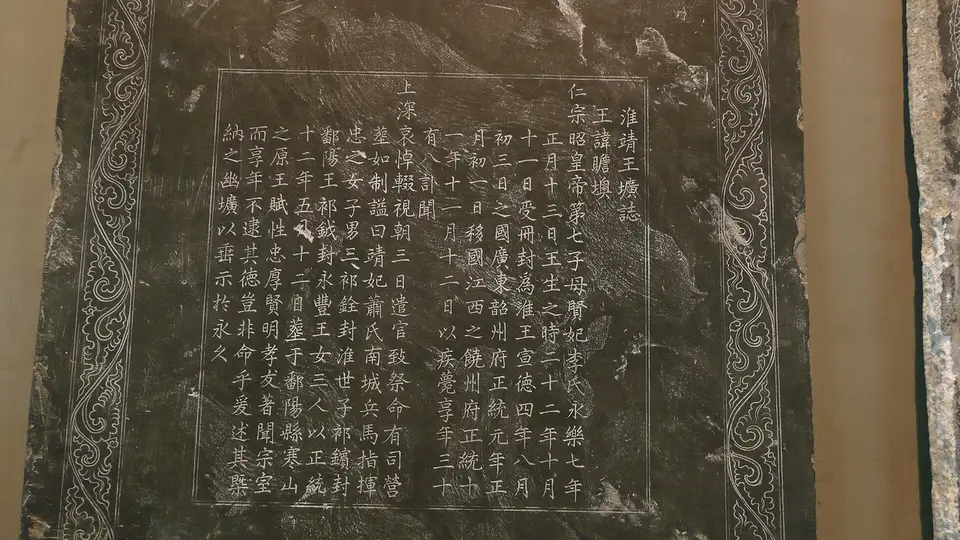
Zhu Zhanao (朱瞻墺, 1409–1446) was an imperial prince of the Ming Dynasty, the seventh son of Emperor Renzong (Zhu Gaochi) by Consort Li (Li Xianfei). Initially created Prince of Huai, he received the posthumous title "Jing," being historically known as Prince Jing of Huai, the founding ancestor of the Huai princely lineage in Raozhou, Jiangxi. In October 1424, upon the accession of the Hongxi Emperor, the sixteen-year-old Zhu…
Zhu Zhanao (朱瞻墺, 1409–1446) was an imperial prince of the Ming Dynasty, the seventh son of Emperor Renzong (Zhu Gaochi) by Consort Li (Li Xianfei). Initially created Prince of Huai, he received the posthumous title "Jing," being historically known as Prince Jing of Huai, the founding ancestor of the Huai princely lineage in Raozhou, Jiangxi. In October 1424, upon the accession of the Hongxi Emperor, the sixteen-year-old Zhu Zhanao was invested as Prince of Huai. In 1429 (fourth year of the Xuande reign), he completed his capping ceremony and departed Beijing to take up residence at his designated princely seat in Shaozhou Prefecture, Guangdong (modern Shaoguan, Guangdong Province). However, Shaozhou lay in the rugged subtropical borderlands of northern Guangdong, characterized by oppressive heat, endemic malaria, and recurring insurgencies by indigenous Yao and Zhuang tribesmen. Many of Zhu Zhanao's northern retainers and guard soldiers succumbed to illness. Experiencing chronic health problems and anxiety, Zhu Zhanao repeatedly submitted memorials to the imperial court pleading for an inland transfer. In 1436 (first year of the Zhengtong reign), Emperor Yingzong granted his request, ordering the relocation of the Huai princely establishment to Raozhou Prefecture in Jiangxi (modern Poyang County, Shangrao, Jiangxi Province). Situated on the eastern shores of fertile Poyang Lake, Raozhou provided an ideal commercial and cultural environment. In Raozhou, Zhu Zhanao lived an upright, quiet, and modest life for a decade, scrupulously adhering to ancestral dynastic statutes and coexisting harmoniously with regional civil administrators and local subjects. On November 30, 1446, Zhu Zhanao died of illness in Raozhou at the age of thirty-eight. Emperor Yingzong suspended court audiences for three days and conferred the posthumous title "Jing." His eldest son Zhu Qiquan succeeded him, inaugurating a regional princely house that endured in northeastern Jiangxi for ten generations over two centuries.
Born in the Yan princely residence in Beijing as the seventh son of the future Hongxi Emperor by Consort Li.
Formally created Prince of Huai following the accession of the Hongxi Emperor.
Departed Beijing to establish his princely seat in Shaozhou Prefecture, Guangdong.
Suffered from endemic malaria and border tribal unrest in Shaozhou; repeatedly petitioned for relocation.
Emperor Yingzong approved his petition, relocating the princely seat to Raozhou, Jiangxi.
Governed his household with prudence and frugality, fostering local agrarian peace.
Passed away in Raozhou at age thirty-eight; Emperor Yingzong granted the posthumous title Prince Jing.
Zhu Zhanao was born on January 28, 1409, in Beijing, the seventh son of Zhu Gaochi (the future Hongxi Emperor) by Consort Li. From early youth, he was known for his calm, respectful disposition and steady application to classical Confucian studies under palace scholars.
In August 1424, the Hongxi Emperor ascended the imperial throne. In October, the court held general investiture ceremonies, creating sixteen-year-old Zhu Zhanao as Prince of Huai. In 1429, Emperor Xuanzong conducted the capping ceremony for his younger brother, dispatching him to his designated provincial seat at Shaozhou Prefecture in Guangdong.
Shaozhou was situated in the rugged northern highlands of Guangdong, commanding Meiguan Pass across the Dayu Mountains. The Hongwu and Yongle administrations had envisioned stationing an imperial prince in northern Guangdong to oversee the frontier communications between the Lingnan region and central China. However, the region's humid, subtropical climate proved hostile to northern immigrants. Severe malarial epidemics swept through the princely retinue, causing dozens of guard soldiers and household officers to die of disease. Concurrently, local indigenous mountain tribes frequently launched raids against outlying settlements. Deeply troubled by personal illness and chronic insecurity, Zhu Zhanao sent multiple petitions to Beijing describing his hardships and requesting relocation to the interior.
In 1435, Emperor Xuanzong died, and nine-year-old Emperor Yingzong ascended the throne under the regency of Grand Empress Dowager Zhang. In 1436, Zhu Zhanao renewed his petition, writing: "The terrain of Shaozhou is damp and low, plagued by toxic vapors. I have long suffered from paralysis and fever, and my attendants have died in succession. I beg to move inland to preserve my remaining years."
Emperor Yingzong and Grand Empress Dowager Zhang sympathized with his plight. Following court deliberations by high ministers, the court selected Raozhou Prefecture in Jiangxi (modern Poyang County, Shangrao, Jiangxi Province) as the new seat for the Huai principality. Located on the eastern shores of Poyang Lake along the Chang River, Raozhou was a prosperous agricultural and commercial river port known for its mild climate and abundant produce.
In autumn 1436, Zhu Zhanao relocated his entire household to Raozhou, where he oversaw the construction of the stately Raozhou Prince of Huai Palace in the prefectural center.
In Raozhou, Zhu Zhanao expressed deep gratitude for imperial favor by maintaining strict personal and administrative discipline. During his decade in Raozhou, he adhered faithfully to dynastic injunctions against royal interference in local administration. He treated prefects and magistrates with dignified courtesy, strictly prohibiting his escort guards from seizing peasant lands or meddling in civil litigation. During flood and drought seasons, he proactively opened granaries to relieve destitute fishermen and farmers along Poyang Lake, winning wide acclaim from regional gentry and commoners.
On November 30, 1446, Zhu Zhanao died of illness in his Raozhou palace at the age of thirty-eight. Emperor Yingzong mourned his uncle, declaring three days of court mourning and conferring the posthumous title "Jing" (signifying gentleness, tranquility, and uprightness). He was interred at Mount Wanshou northeast of Raozhou city.
Zhu Zhanao fathered three sons: his heir Zhu Qiquan (Prince Kang of Huai), Zhu Qigao (Prince Huaixi of Poyang), and Zhu Qihuo (Prince Kangxian of Yongshou). In 1448, Zhu Qiquan inherited the princely throne as the second Prince of Huai. The Huai princely lineage flourished in Raozhou for ten generations across two centuries, establishing cadet branches in Jinxian, Yichun, and Nanfeng, and standing as the most culturally distinguished imperial house in northeastern Jiangxi until the fall of the dynasty.
As the only imperial son of Emperor Renzong initially stationed in the far south, Zhu Zhanao's relocation to Raozhou highlights the practical evolution of the early Ming princely system from remote frontier stations to stable inland settlements.
The History of Ming recorded: "Zhu Zhanao, Prince Jing of Huai, was the seventh son of Renzong. Enfeoffed in the 22nd year of Yongle. Relocated to Shaozhou in the 4th year of Xuande. In the 1st year of Zhengtong, citing Shaozhou's damp and malarial climate, he petitioned to move. The Emperor ordered him moved to Raozhou. He died in the 11th year. His son, Prince Kang Qiquan, succeeded him."
Ming historian He Qiaoyuan noted in Mingshancang: "Shaozhou was plagued by toxic vapors, leaving the Prince of Huai unsettled. Seeking departure from the southern frontier, he was granted relocation to the shores of Poyang Lake. In Raozhou for ten years, he lived in peace and modest tranquility without contention; the posthumous name 'Jing' truly matches his deeds."
Modern historians emphasize that Zhu Zhanao's reassignment from Guangdong to Jiangxi demonstrates the Ming central court's flexibility in adjusting princely domains to geographical and humanitarian realities. His peaceful administration in Raozhou laid an enduring foundation for the two-hundred-year prosperity of the Huai princely lineage in Jiangxi.
FIGURES ASSOCIATED WITH THIS DYNASTY