Birth in the Imperial Palace
Born in the palace in Nanjing as the sixteenth son of Emperor Taizu and Consort Lady Yu.
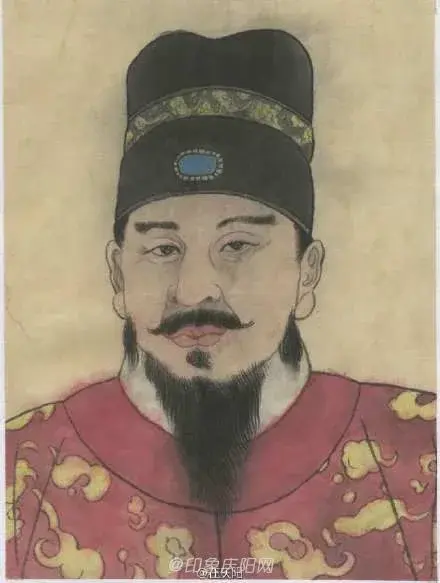
朱栴
Zhu Zhan (朱栴, 1378–1438) was a native of Zhongli, Haozhou (modern Fengyang, Anhui). He was the sixteenth son of Emperor Taizu (Zhu Yuanzhang) and Consort Lady Yu. He was the inaugural Prince of Qing, historically titled Prince Jing of Qing, and one of the pivotal "Nine Frontier Princes" (Jiu Saiwang) of the early Ming dynasty. In 1391 (24th year of Hongwu), Zhu Zhan was enfeoffed as the Prince of Qing. In 1393, he was…
Zhu Zhan (朱栴, 1378–1438) was a native of Zhongli, Haozhou (modern Fengyang, Anhui). He was the sixteenth son of Emperor Taizu (Zhu Yuanzhang) and Consort Lady Yu. He was the inaugural Prince of Qing, historically titled Prince Jing of Qing, and one of the pivotal "Nine Frontier Princes" (Jiu Saiwang) of the early Ming dynasty. In 1391 (24th year of Hongwu), Zhu Zhan was enfeoffed as the Prince of Qing. In 1393, he was commanded to take up his domain in Ningxia; because governmental headquarters were incomplete, he temporarily garrisoned Qingyang, Gansu, before formally entering Weizhou, Ningxia (modern Weizhou Town, Tongxin County) in 1397, eventually transferring the princely seat to Ningxia Middle Guard (modern Yinchuan) during the Yongle reign. Zhu Zhan was composed, benevolent, and dedicated to scholarship, mastering historical canons and classical poetry. Throughout more than four decades guarding the northern frontier, he commanded three regional guard divisions, defending strategic passes against Mongol tribal incursions to secure Ningxia and the Hexi Corridor. Prioritizing border livelihoods, he resettled displaced refugees, cleared wastelands, dredged ancient Qin and Han canals, and developed military agricultural colonies. He established the earliest Confucian academies in Ningxia and supervised the compilation of the first official local gazetteer in regional history, Ningxia Zhi. In 1438, he passed away in his princely residence at age sixty-one, receiving the posthumous title "Jing."
Born in the palace in Nanjing as the sixteenth son of Emperor Taizu and Consort Lady Yu.
Created Prince of Qing by Emperor Taizu, receiving golden seals and designated the Ningxia domain.
Dispatched to the frontier, temporarily stationing his forces in Qingyang, Gansu, pending Ningxia's fortifications.
Upon completion of the Weizhou princely citadel, led his guard divisions to formally inaugurate the princely seat.
Following the Jingnan Campaign, Emperor Chengzu ordered the Qing princely estate relocated to Ningxia Guard (modern Yinchuan).
Reinforced western defenses in coordination with Chengzu's northern expeditions, constructing watchtowers and repelling raiders.
Promoted frontier culture, collecting epigraphic documents to complete Ningxia's inaugural gazetteer Ningxia Zhi.
Passed away peacefully in his princely residence at age sixty-one; awarded the posthumous name Jing.
Zhu Zhan was born in 1378 in the imperial palace in Nanjing. To secure the long northern defense line of the Ming empire, Emperor Taizu implemented the strategic doctrine of "princes guarding the frontier with armed divisions," stationing adult imperial sons at nine critical garrison posts along the northern perimeter. In 1391, fourteen-year-old Zhu Zhan was formally enfeoffed as the Prince of Qing.
In 1393, Emperor Taizu commanded Zhu Zhan to march northwest to establish his princely seat. Because the fortress walls of Ningxia Guard were undergoing massive expansion and defensive ramparts remained unready, Taizu instructed Zhu Zhan to stage his troops temporarily in Qingyang Prefecture, Gansu. In 1397, upon the completion of the citadel of Weizhou (modern Tongxin County, Ningxia), Zhu Zhan led his three princely escort guard units across Xiaoguan Pass, entering Weizhou to open his government, serving as an indispensable royal bulwark shielding the northwest marches.
During the early Jianwen reign, the court implemented centralization policies reducing princely garrisons, yet because Ningxia was located on the extreme frontier and faced ongoing warfare, Emperor Jianwen continued to rely on Zhu Zhan to repel Mongol incursions. Zhu Zhan maintained strict integrity in Weizhou, steering clear of palace factionalism. In 1402, following his enthronement, Emperor Chengzu recognized that the Ningxia Plain occupied a superior strategic position for commanding the Ordos Loop defense and ordered the Qing princely residence relocated from Weizhou north to Ningxia Guard (modern Yinchuan), assigning Zhu Zhan oversight over regional military logistics.
The Ningxia Plain lay in an arid frontier basin traversed by the surging Yellow River. Knowing that the region's prosperity depended entirely upon canal irrigation, Zhu Zhan conducted field surveys along the Helan Mountains and both banks of the river immediately upon arriving in Yinchuan. He mobilized soldiers and local farmers to dredge and reconstruct ancient irrigation networks, including the Qin Canal, Han Canal, and Tanglai Canal, while directing the excavation of the famous "Qingwang Canal." His efforts converted vast tracts of saline-alkali wasteland into fertile wheat fields, ending the garrison's reliance on food convoys transported across inland passes. Simultaneously, he maintained iron military discipline, repeatedly mounting city bastions to direct defensive counterattacks against Tatar raids, winning deep veneration from regional multi-ethnic populations.
Zhu Zhan was not merely a vigilant commander but an erudite scholar and accomplished frontier poet. Amidst the desert winds and dust of the northern frontier, he continued nightly studies of classical philosophical canons and histories after discharging military duties.
Observing that cultural institutions in the northwest borderlands were languishing, he actively championed Confucian education. He established lineage and community schools in Ningxia Guard, recruited learned scholars to lecture, and funded the printing of classical texts in Jiangnan to distribute among local students. To record the geographical layout, ethnic history, and frontier military evolution of the region, Zhu Zhan spent years gathering stone steles and army archives, presiding over the compilation of the famous Ningxia Zhi, which became the first officially sponsored local gazetteer in Ningxia history.
On the third day of the eighth lunar month in 1438, Zhu Zhan passed away naturally in his Ningxia princely residence at sixty-one years of age. Saddened by the news, Emperor Yingzong suspended court audiences for three days, dispatched imperial emissaries with sacrificial offerings, conferred the posthumous title "Jing," and ordered an honorable mausoleum constructed at the base of Mount Luoshan in Tongxin Weizhou.
Governing Ningxia for nearly half a century, Zhu Zhan made indelible contributions to the economic reclamation of the Ningxia Plain.
He systematically expanded military farming settlements (tuntian), reformed grain transport, and dredged ancient Yellow River canals, directing the construction and clearance of major irrigation arteries including the Huinong, Hanyan, and Haowang Canals, alongside the canal bearing his title, the Qingwang Canal. Under his stewardship, the Ningxia Plain harvested bountiful grain crops annually, achieving regional food self-sufficiency and earning the enduring folk saying: "The Yellow River enriches Ningxia, and the green gardens of the frontier owe their fertility to the Prince of Qing."
Zhu Zhan's crowning achievement in frontier cultural history was directing the compilation of Ningxia's first comprehensive local gazetteer, Ningxia Zhi.
The work provided thorough epigraphic documentation of administrative evolution, mountain passes, Yellow River waterways, beacon fortifications, agricultural colonies, local products, customs, and garrison dispositions from the pre-Qin period down to the early Ming. Preserving priceless firsthand northwest historical sources, it served as the foundational blueprint for the later Hongzhi and Jiajing editions of the Ningxia gazetteers.
As an outstanding representative among Ming royal poets, Zhu Zhan left behind two celebrated poetry anthologies: Wenji (Collected Writings) and Ningxiang Gao (Drafts of Concentrated Fragrance).
His verses transcended the ornate flattery characteristic of early Ming court poets, displaying a rugged, melancholic, and heroic tenor. Engaging directly with desert sands, freezing watchtowers, northern winds, and nomadic reed pipes, masterpieces like Song of Weizhou, Recollections of Antiquity in Ningxia, and Marching to the Frontier expressed profound patriotic sentiment and sympathy for garrison troops. Qing compilers of the Complete Imperial Library (Siku Quanshu) praised his verse for embodying "the heroic bone structure of the Han and Wei dynasties, establishing a grand peak in frontier poetry."
History of Ming (Ming Shi, Volume 117, Biographies of Imperial Princes, Princes of Qing) states: "Prince Jing of Qing, Zhan, was the sixteenth son of Taizu. Enfeoffed in the twenty-fourth year of Hongwu. In the twenty-sixth year, commanded to take seat in Ningxia... Zhan was fond of learning and benevolent deeds, reading broadly in classics and histories. Ningxia, where he resided, was vast and sparsely populated; Zhan supervised farming and developed extensive waterworks, making the frontier prosperous. Skilled in composition, he wrote Wenji. In the third year of Zhengtong he passed away, posthumously named Jing."
Qing compilers noted in Annotated Catalog of the Complete Imperial Library (Siku Quanshu Zongmu Tiyao): "The Prince of Qing resided along the northern frontier for decades, commanding the Nine Garrisons. His poetry is profound, sweeping, and vigorous, possessing the spirit of Jian'an, far surpassing the soft verses of ordinary palace princes."
Modern hydraulic engineers and regional historians uniformly regard Zhu Zhan as the primary architect of Ningxia's development under the Ming dynasty, whose irrigation works and educational endeavors benefited local communities for centuries.
FIGURES ASSOCIATED WITH THIS DYNASTY