Palace Birth
Born in the Forbidden City in Beijing as the fourth son of the Jiajing Emperor by Consort Lu.
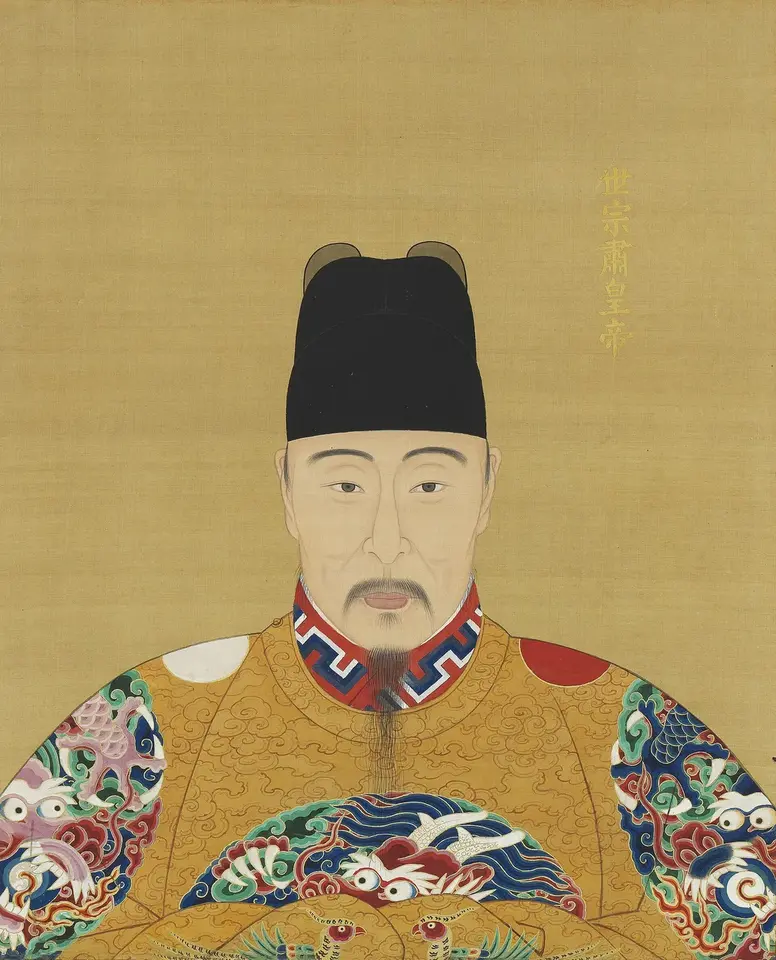
朱载圳
Zhu Zaizhen (朱载圳, 1537–1565) was an imperial prince of the Ming Dynasty, the fourth son of the Jiajing Emperor (Zhu Houcong) by Consort Lu (Jingfei). Initially created Prince of Jing, he received the posthumous title "Gong," being historically known as Prince Gong of Jing, the sole bearer of this princely title in Ming history. In January 1539 (18th year of the Jiajing reign), Zhu Zaizhen was created Prince of Jing.…
Zhu Zaizhen (朱载圳, 1537–1565) was an imperial prince of the Ming Dynasty, the fourth son of the Jiajing Emperor (Zhu Houcong) by Consort Lu (Jingfei). Initially created Prince of Jing, he received the posthumous title "Gong," being historically known as Prince Gong of Jing, the sole bearer of this princely title in Ming history. In January 1539 (18th year of the Jiajing reign), Zhu Zaizhen was created Prince of Jing. Following the early deaths of his elder brothers, Crown Prince Zhu Zaiji and Crown Prince Zhu Zairui, only two grown imperial sons remained: the third son, Zhu Zaiji (Prince of Yu, later the Longqing Emperor), and the fourth son, Zhu Zaizhen. The superstitious Jiajing Emperor, captivated by the Daoist prophecy that "two dragons must not meet" (erlong buxiangjian), adamantly refused to designate a formal crown prince for over fifteen years and delayed dispatching either prince to a provincial fiefdom. This dangerous succession vacuum ignited an intense succession struggle. Corrupt Grand Secretary Yan Song and his son Yan Shifan aligned themselves with the charismatic Zhu Zaizhen, attempting to displace the senior prince, while upright Confucian ministers led by Xu Jie, Gao Gong, and Zhang Juzheng strived to uphold the traditional principle of primogeniture. In February 1561 (40th year of the Jiajing reign), yielding to persistent ministerial remonstrances, the Jiajing Emperor finally ordered the twenty-five-year-old Prince of Jing to take up residence in De'an Prefecture, Huguang (modern Anlu, Hubei Province). In De'an, Zhu Zaizhen acted with rapacious greed, forcibly expropriating tens of thousands of acres of civilian farmland, establishing private tax barriers along the Han River, and burdening regional subjects with heavy levies. On October 25, 1565, Zhu Zaizhen died of illness in De'an at the age of twenty-nine without male issue, leading to the permanent revocation of the Prince of Jing peerage. Upon hearing of his death, the Jiajing Emperor remarked: "This child took medicines for over twenty years, eventually contracting an incurable sickness; it is heaven's mandate." His death completely extinguished the succession dispute, ensuring the peaceful accession of the Longqing Emperor in 1566 and clearing the path for the Longqing Reforms.
Born in the Forbidden City in Beijing as the fourth son of the Jiajing Emperor by Consort Lu.
Formally created Prince of Jing during the simultaneous enfeoffment of imperial sons.
Crown Prince Zhu Zairui died; Zhu Zaizhen and the Prince of Yu became rival claimants to the throne.
Jiajing Emperor refused to name an heir; the Yan Song faction covertly aligned with the Prince of Jing.
Ministers forced the issue; Zhu Zaizhen was dispatched to his provincial seat in De'an, Huguang.
Unlawfully annexed vast farmlands and imposed commercial transit taxes, sparking intense public resentment.
Passed away in De'an at age twenty-nine without sons; principality abolished, posthumously named Prince Gong.
Zhu Zaizhen was born on March 29, 1537, in the Forbidden City in Beijing, the fourth son of Emperor Shizong (the Jiajing Emperor) by Consort Lu. He was born barely a month after his elder half-brother, Zhu Zaiji (the future Longqing Emperor).
In January 1539, Emperor Shizong created his second son Zhu Zairui as Crown Prince, while investing Zhu Zaiji as Prince of Yu and Zhu Zaizhen as Prince of Jing. However, in March 1549, the thirteen-year-old Crown Prince Zhu Zairui died of sudden illness shortly after his capping ceremony. The tragic loss exacerbated the emperor's psychological instability and deep obsession with Daoist longevity arts. His principal Daoist master Tao Zhongwen cautioned the emperor: "There are two suns in heaven and two dragons in the state; two dragons must not meet, lest harm befall them." Believing that direct contact with an heir apparent invited mortal danger, the emperor adamantly refused to appoint another crown prince, confining both surviving sons within the palace compound while refusing to grant them audience for years.
This protracted succession void created a dangerous rift in the Ming court.
The elder brother, Zhu Zaiji (Prince of Yu), was reserved, modest, and reticent; his mother Consort Du was disliked by the emperor and died early. In contrast, Zhu Zaizhen was articulate, handsome, and adept at observing the emperor's moods, frequently currying favor with his father's Daoist interests. His mother Consort Lu actively lobbied for him within the palace. The Jiajing Emperor consistently displayed preferential treatment toward the Prince of Jing, providing his household with more generous allowances than those granted to the Prince of Yu.
This power imbalance encouraged dangerous political maneuvering. Grand Secretary Yan Song, who had held paramount power for two decades, recognized the emperor's favoritism and knew that the Prince of Yu despised the Yan faction's rampant corruption. Yan Song and his son Yan Shifan covertly cultivated close ties with Zhu Zaizhen, maneuvering to engineer the displacement of the elder brother in favor of the younger. Conversely, righteous ministers—including Junior Grand Secretary Xu Jie, Vice Minister of Revenue Gao Gong, and Hanlin academician Zhang Juzheng—recognized that violating primogeniture would invite dynastic civil war. They formed a protective perimeter around the Prince of Yu, instructing him in moral rectitude and filial restraint while working tirelessly to protect his legitimate claim.
By 1560, with the Jiajing Emperor entering his sixties, bureaucratic alarm reached a crisis point. Officials such as Supervising Secretary He Weibai and Censor Xu Shi submitted memorials warning: "Seniority must not be disordered; the two princes have long reached adulthood and the Prince of Jing must be sent to his provincial domain to close the door to opportunism." Constrained by ancestral statutes and widespread literati outrage, the emperor finally relented.
In February 1561, the Jiajing Emperor issued an imperial decree ordering Zhu Zaizhen to take up residence at his princely seat in De'an Prefecture, Huguang (modern Anlu, Hubei Province). This decision delivered a decisive political blow to the Yan Song faction, permanently confirming Zhu Zaiji's status as the undisputed heir apparent.
Before his departure, the emperor bestowed lavish gifts upon Zhu Zaizhen. Resentful over his political defeat, the Prince of Jing departed Beijing with his household officers and escort troops, establishing his palace in De'an.
Upon settling in De'an, Zhu Zaizhen channeled his political bitterness into ruthless financial extortion. Presuming upon his royal status, he forcibly seized over forty thousand qing of fertile farmland from local peasants and military colonies. He unilaterally appropriated regional lakes and marshes across Anlu, Yunmeng, and Yingcheng counties, banning impoverished fishermen from collecting reeds or catching fish. Furthermore, he erected private customs barriers along major Han River crossings, extorting extortionate transit tariffs from passing merchants. Regional officials feared his imperial connection, while commoners lived in misery.
However, Zhu Zaizhen had suffered from frail health since childhood, exacerbated by excessive indulgence in wine and Daoist mineral elixirs. After residing in De'an for barely three years, he collapsed from chronic illness. On October 25, 1565, Zhu Zaizhen died in his De'an palace at the age of twenty-nine.
When news reached Beijing, the Jiajing Emperor remarked calmly: "This child took medicines for over twenty years; I long knew he suffered from an incurable illness. It is heaven's decree!" Because Zhu Zaizhen died without male heirs, the court abolished the Prince of Jing peerage, returning all unlawfully confiscated farmlands to local peasants and repossessing the palace for public use. The court bestowed the posthumous title "Gong" (signifying respect, compliance, and modesty), making him Prince Gong of Jing.
Zhu Zaizhen's premature demise eliminated the final obstacle to imperial succession. When the Jiajing Emperor died the following year in late 1566, Zhu Zaiji ascended the throne without opposition as the Longqing Emperor. The new monarch purged the Yan Song faction and appointed Xu Jie, Gao Gong, and Zhang Juzheng to initiate the celebrated Longqing Reforms.
As an imperial prince whose succession ambitions nearly plunged the late Ming Dynasty into civil crisis, Zhu Zaizhen's life reflects the toxic intersection of imperial favoritism, bureaucratic factionalism, and dynastic succession ethics.
The History of Ming recorded: "Zhu Zaizhen, Prince Gong of Jing, was the fourth son of Shizong. Enfeoffed in the 18th year of Jiajing. Relocated to De'an in the 40th year. Zaizhen greedily sought vast estates and requested taxes on regional marshes, netting thousands of silver taels annually. He died in the 44th year without sons; the principality was abolished. Initially, Shizong did not appoint a crown prince, allowing the Princes of Yu and Jing to reside in the capital. The realm suspected the Prince of Jing harbored illicit ambitions. When he died, Shizong remarked: 'This child took medicines for over twenty years, eventually contracting an incurable sickness; it is fate.' The Prince of Yu subsequently ascended the imperial throne."
Early Qing historian Tan Qian noted in State Deliberations: "The Prince of Jing was arrogant and presumptuous, while Yan Shifan sought to exploit him for private gain, placing the court in extreme danger. Had it not been for Xu Jie and others who firmly insisted on his relocation, the empire's fate would have been unpredictable. His death in De'an was heaven's blessing for the Ming, allowing Muzong to take the throne in peace and eradicating the Yan faction, truly a great fortune for the nation."
Modern historians view the succession struggle surrounding Zhu Zaizhen as a primary driver of mid-sixteenth-century Ming court factionalism. His departure for De'an and subsequent premature demise permanently resolved the dynastic succession, creating the political stability necessary for the implementation of the Longqing Reforms and Zhang Juzheng's revitalizing administration.
FIGURES ASSOCIATED WITH THIS DYNASTY