Birth in Huaiqing
Born in the Zheng princely mansion in Henei County, the legitimate eldest son of Prince Gong of Zheng, Zhu Houwan.
朱载堉
Zhu Zaiyu (朱载堉, 1536 – May 17, 1611), courtesy name Boqin, art names Juju Shanren and Jiufeng Shanren, a native of Henei County, Huaiqing Prefecture, Henan (modern-day Qinyang, Jiaozuo, Henan Province), was an illustrious imperial clan scholar and encyclopedic polymath of the Ming Dynasty, revered in Chinese history as the "Sage of Musicology." He was a ninth-generation descendant of the Hongwu Emperor (Zhu Yuanzhang), a…
Zhu Zaiyu (朱载堉, 1536 – May 17, 1611), courtesy name Boqin, art names Juju Shanren and Jiufeng Shanren, a native of Henei County, Huaiqing Prefecture, Henan (modern-day Qinyang, Jiaozuo, Henan Province), was an illustrious imperial clan scholar and encyclopedic polymath of the Ming Dynasty, revered in Chinese history as the "Sage of Musicology." He was a ninth-generation descendant of the Hongwu Emperor (Zhu Yuanzhang), a sixth-generation descendant of the Renzong Emperor (Zhu Gaochi), and the legitimate eldest son of Zhu Houwan, Prince Gong of Zheng. Frugal and studious from youth, Zhu Zaiyu studied mathematics, astronomy, and musical acoustics under his grand-uncle He Tang. At age fifteen, his father was stripped of his princely rank and confined at Fengyang for remonstrating against the Jiajing Emperor's Daoist obsessions. Grieved by his father's unjust imprisonment, Zhu Zaiyu erected a humble mud hut outside the palace gates, living in austere ascetic seclusion for nineteen years while immersing himself in mathematics and acoustical theory. Following his father's rehabilitation in 1567, Zhu Zaiyu returned to the palace. Upon his father's death in 1591, he persistently declined to inherit the royal title, submitting seven memorials over fifteen years until the Wanli Emperor permitted the title to pass to his kinsman Zhu Zaixi, honoring Zhu Zaiyu with an imperial memorial arch inscribed "Supreme Virtue of Relinquishing the Fief." He then retired beneath Mount Jiufeng as a Daoist recluse, passing away in 1611 with the posthumous title Duanqing. Zhu Zaiyu achieved monumental scientific and artistic breakthroughs. In 1584, he formulated the mathematical theory of Twelve-Tone Equal Temperament (which he termed the New Mathematical Ratio), resolving the ancient acoustical dilemma of circular pitch return that had troubled music theorists since antiquity and laying the scientific foundation for modern keyboard instruments (such as the piano) decades ahead of European developments. He pioneered the extraction of square and cube roots on large abacuses to solve geometric progressions, constructed the world's first pitch-standard instrument (the Xianzhun), and formulated the "Variable Diameter Theory" to correct air-column edge effects in pipes. In astronomy, he calculated the precise length of the tropical year, identified the coordinates of Beijing, and measured geomagnetic declination. In arts, he founded systematic Chinese dance theory and composed biting vernacular ballads collected in the Xingshi Ci. His masterworks, including the Complete Compendium on Music and Temperament (Yuelü Quanshu), stand as monuments of Ming science, leading British historian of science Joseph Needham to praise him as "a true Renaissance man of China."
Born in the Zheng princely mansion in Henei County, the legitimate eldest son of Prince Gong of Zheng, Zhu Houwan.
Formally invested as Heir Apparent of Zheng at age ten, studying under scholar He Tang.
His father was imprisoned at Fengyang for remonstrating against Daoist rituals; Zhu Zaiyu built a mud hut outside the palace and lived in solitary study for nineteen years.
Completed the Se Pu (Manual of the Zither), examining ancient musical systems during his ascetic seclusion.
The Longqing Emperor exonerated Prince Zhu Houwan; Zhu Zaiyu concluded his nineteen-year ascetic retreat and returned to the princely palace.
Authored Lüli Rongtong (Integration of Temperament and Calendrics), linking celestial movements with musical harmonics.
Completed his landmark treatise Lüxue Xinshuo (New Treatise on Musicology), discovering twelve-tone equal temperament.
Following his father's death, submitted memorials declining the Zheng princely peerage in favor of his cousin's branch.
Presented his scientific manuscripts on equal temperament and calendrical astronomy to the Wanli Emperor.
Authored and submitted Lülü Jingyi (Essential Meaning of Pitch and Temperament), outlining comprehensive acoustical calculations.
Completed the Suanxue Xinshu (New Mathematical Treatise), detailing root extraction and geometric progression algorithms on abacuses.
After fifteen years and seven petitions, the emperor approved his renunciation of the throne, conferring an imperial memorial arch honoring his virtue.
Passed away on the 6th day of the 4th month at age seventy-six; bestowed the posthumous name Duanqing.
Zhu Zaiyu was born in 1536 (the 15th year of the Jiajing reign) in the Zheng princely estate at Henei County, Huaiqing Prefecture (modern-day Qinyang, Henan Province). His ancestor was Zhu Zhanjun, Prince Jing of Zheng (sixth son of the Renzong Emperor), and his father was Zhu Houwan, Prince Gong of Zheng. The Zheng princely lineage was renowned among Ming royal houses for frugality, scholarship, and moral discipline. Zhu Houwan led an austere life, disdained extravagance, and possessed profound erudition in classical literature, musical notation, and poetry.
In 1545, at age ten, Zhu Zaiyu was officially invested as Heir Apparent of Zheng. During his youth, he received formal instruction from his grand-uncle He Tang, a distinguished Neo-Confucian scholar and former Minister of Rites in Nanjing. He Tang was an accomplished mathematician, astronomer, and music theorist who identified deep mathematical shortcomings in the ancient "up-and-down division method" of musical pitch calculation. Under He Tang's rigorous tutelage, Zhu Zaiyu gained mastery over classical arithmetic, astronomical observation, and musical ratios, cultivating a life-long scientific methodology grounded in quantitative precision and empirical experimentation.
At age fifteen, a political disaster struck the princely household. In 1550, the Jiajing Emperor fell deeply under the sway of Daoist rituals and longevity elixirs. While other regional princes competed to send lavish donations and auspicious tributes to win imperial favor, Prince Zhu Houwan submitted a courageous remonstrance urging the emperor to focus on Confucian moral governance, dismiss Daoist charlatans, and halt wasteful construction. Enraged by the candid rebuke, the Jiajing Emperor stripped the prince of his royal rank and banished him under armed house arrest to Fengyang for nearly two decades.
Deeply shaken by his father's unjust suffering, the young Zhu Zaiyu took an extraordinary vow of filial protest. Refusing the luxuries of the princely palace, he constructed a small mud hut outside the palace gates, sleeping on coarse straw mats and living as an ascetic hermit. He resolved never to re-enter the princely palace until his father was exonerated. During nineteen years of solitary confinement in his mud hut, Zhu Zaiyu shunned secular pleasures and poured his boundless energy into mathematical calculations, astronomical instruments, and musical acoustics. Manipulating counting rods and large abacuses, he analyzed ancient musical texts, completing his Se Pu (Manual of the Zither) in 1560 and laying the mathematical foundation for his future scientific discoveries.
In 1567, the Longqing Emperor ascended the throne, proclaimed a general amnesty, and fully exonerated Zhu Houwan, restoring his princely title and revenues. After nineteen years of ascetic endurance, Zhu Zaiyu welcomed his elderly father home and resumed his formal robes as Heir Apparent. Reunited in the palace, father and son collaborated closely on musical research, jointly editing Caoman Gu Yuepu (Ancient Music Scores) and Xuangong Pu.
In 1581, Zhu Zaiyu completed Lüli Rongtong (Integration of Temperament and Calendrics), unifying the mathematical laws of musical acoustics and astronomical cycles. In 1584, he achieved a monumental breakthrough in world acoustics by completing Lüxue Xinshuo (New Treatise on Musicology), in which he formulated the exact mathematical ratio of Twelve-Tone Equal Temperament. In 1595, Zhu Zaiyu dispatched emissaries to Beijing to present his core scientific manuscripts—including Lüxue Xinshuo, Lüli Rongtong, and Shengshou Wannianli—to the Wanli Emperor, proposing reforms to the official calendar and state ritual music. The emperor praised his extraordinary scholarship and deposited the volumes in the imperial archives. The following year, Zhu Zaiyu submitted his comprehensive theoretical synthesis, Lülü Jingyi (Essential Meaning of Pitch and Temperament).
In December 1591, Prince Zhu Houwan passed away. Under Ming imperial law, Zhu Zaiyu, as legitimate eldest son, was entitled to inherit the royal throne of Zheng. However, Zhu Zaiyu reflected upon an earlier succession dispute during his ancestors' time involving Prince Duanhui of Dongyuan, concluding that justice required returning the princely title to the senior Dongyuan branch.
Zhu Zaiyu submitted a formal petition to the throne requesting permission to renounce the princely succession in favor of his cousin Zhu Zaixi. The Ministry of Rites and provincial authorities repeatedly rejected his plea, citing ancestral precedent that titles held across three generations could not be transferred, and proposed investing Zhu Zaiyu's son Zhu Yixi instead. Unwavering in his moral resolve, Zhu Zaiyu submitted seven consecutive petitions over fifteen years (1591–1606). Deeply moved by his unyielding virtue, the Wanli Emperor finally granted his request in 1606, installing Zhu Zaixi as Prince of Zheng while preserving royal stipends for Zhu Zaiyu and his son. The emperor ordered the construction of an imperial stone arch inscribed "Supreme Virtue of Relinquishing the Fief" in Huaiqing to honor his exemplary conduct.
Freed from dynastic duties, Zhu Zaiyu moved to a rustic cottage beside the Dan River at the foot of Mount Jiufeng, dedicating his final years to writing and teaching. He passed away peacefully on May 17, 1611, at age seventy-six, and was buried beneath Mount Jiufeng with the imperial posthumous title Duanqing.
Zhu Zaiyu's most celebrated scientific achievement was his formulation of Twelve-Tone Equal Temperament (the New Mathematical Ratio) in 1584. Since antiquity, both Chinese musicology and Western Pythagorean theory relied on the "cycle of fifths" (the up-and-down division method). Because twelve fifths do not equal seven octaves, the cycle generates an acoustical discrepancy (the Pythagorean comma), preventing perfect circular pitch modulation.
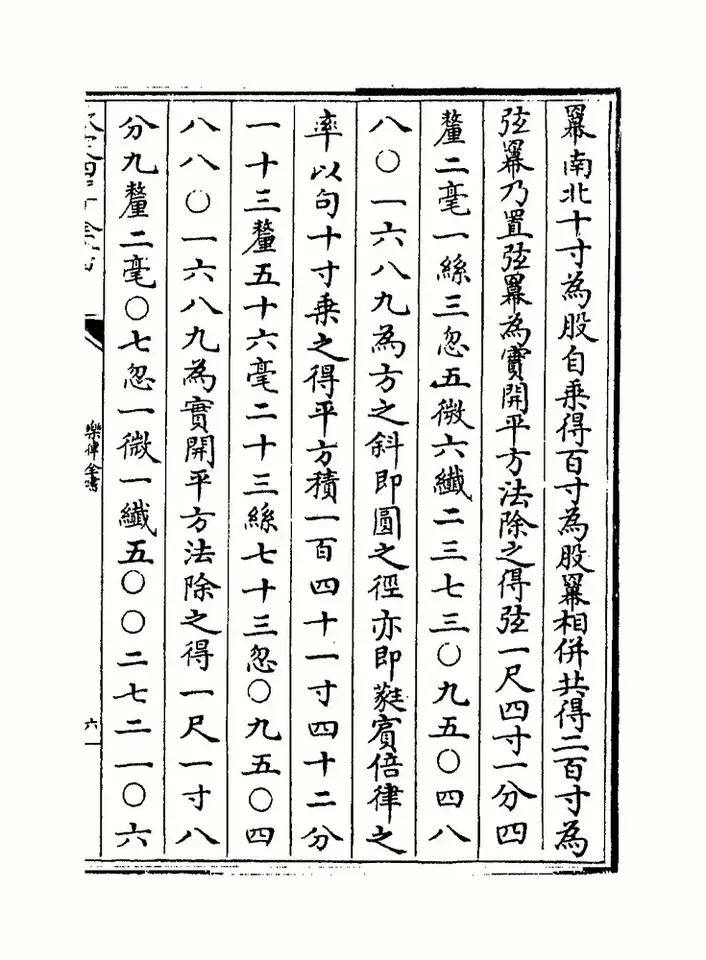
Transcending traditional integer ratios, Zhu Zaiyu recognized that musical intervals represent a continuous geometric progression. He proved mathematically that dividing an octave into twelve semitones requires each semitone ratio to equal the twelfth root of two ($\sqrt[12]{2} \approx 1.059463094$). Employing innovative root extraction methods on large abacuses, he calculated the precise tube and string lengths to twenty-five decimal places. This breakthrough resolved the centuries-old problem of pitch modulation, providing the foundational acoustic system for modern Western keyboard instruments such as the piano, anticipating European mathematicians Simon Stevin and Marin Mersenne by decades.
To test and demonstrate his theoretical calculations, Zhu Zaiyu engaged in rigorous physical experimentation. He invented the world's first pitch-standard instrument, the Xianzhun, which featured twenty-four tuned strings and adjustable movable bridges, providing an empirical standard for acoustic verification.
Furthermore, observing that vibrating air columns in open pipes expand beyond the pipe rim, Zhu Zaiyu formulated his famous "Variable Diameter Theory" (pipe-mouth correction). Overturning ancient assumptions that all pitch pipes should share identical diameters, he demonstrated that pipe diameters must decrease proportionally with length to maintain exact equal temperament. His pipe-correction formulas represented a foundational milestone in physical acoustics.
To carry out the immense calculations required for equal temperament, Zhu Zaiyu pioneered advanced calculating techniques. Utilizing eighty-one-position double-row abacuses, he developed systematic algorithms for computing high-precision square and cube roots. He was the first mathematician in the world to solve the common ratio of a geometric progression given its first term, last term, and number of terms, publishing his procedures in Suanxue Xinshu (New Mathematical Treatise).
In metrology, Zhu Zaiyu conducted thorough archaeological and experimental investigations to reconstruct ancient measurement standards. He established the "Millet Grain Standard" to calibrate ancient rulers, tracing the historical evolution of Zhou, Han, Tang, and Ming foot measures. In his laboratory, he determined the precise physical density of mercury, proposing mercury weight as an absolute volumetric standard in his Jialiang Suanjing, making landmark contributions to historical metrology.
In astronomy, Zhu Zaiyu identified progressive errors in the official Datong Calendar. Operating astronomical instruments atop Mount Jiufeng over decades, he tracked solar shadows and winter solstice times, formulating a mathematical regression formula for calculating tropical year lengths. Modern scientific verification conducted in 1986 revealed that his calculations for 1554 and 1581 differed from modern atomic calculations by only seconds, surpassing contemporary European astronomy.
Additionally, Zhu Zaiyu was the first scientist in Chinese history to determine the precise astronomical coordinates of Beijing (39 degrees 56 minutes North, 116 degrees 20 minutes East) and systematically measured local geomagnetic declination, advancing traditional geophysics into quantitative observation.
In performing arts, Zhu Zaiyu single-handedly established the academic discipline of Chinese dance theory. Observing that ceremonial court rituals had abandoned expressive dance, he authored Liudai Xiao Wupu and Lingxing Xiao Wupu, illustrating hundreds of dance postures and devising the earliest comprehensive dance notation system in China.
In popular literature, Zhu Zaiyu sympathized deeply with the plight of ordinary people. Adopting northern folk tunes, he authored the renowned vernacular ballad collection Xingshi Ci (Songs to Awaken the World), featuring satirical masterpieces such as Cursing Money. His vivid, humorous language critiqued commercial greed and official corruption, cementing his status as an influential vernacular poet.
FIGURES ASSOCIATED WITH THIS DYNASTY