Palace Birth
Born in the Forbidden City in Beijing as the second son of the Jiajing Emperor by Consort Wang.
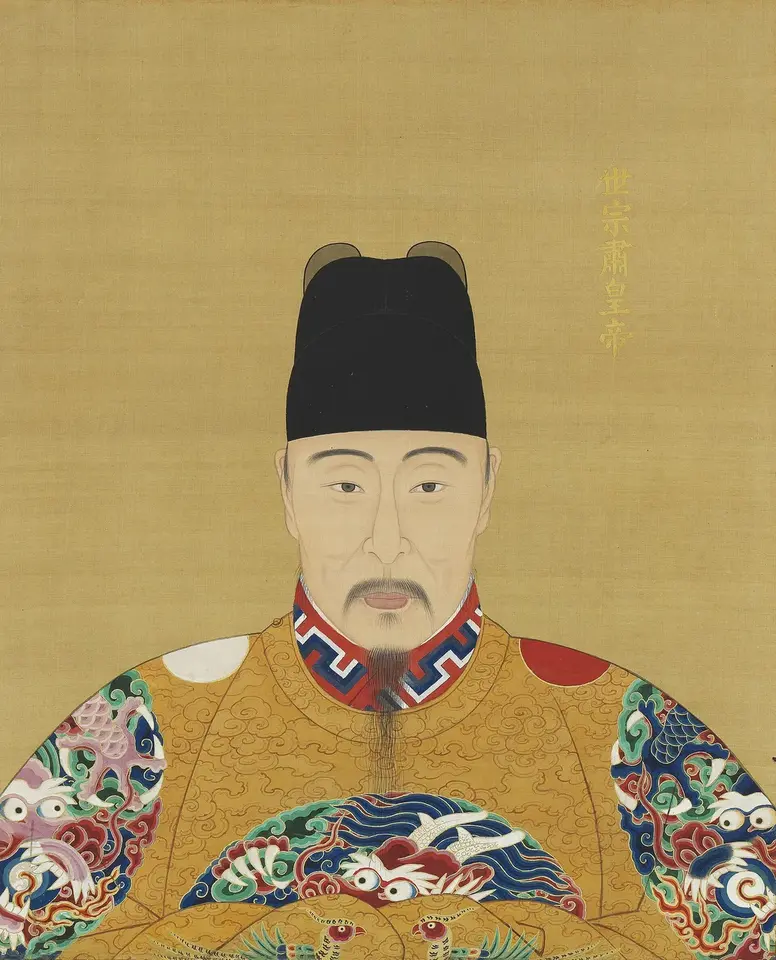
朱载壡
Zhu Zairui (朱载壡, 1536–1549) was the Crown Prince of the Ming Dynasty, the second son of the Jiajing Emperor (Zhu Houcong) by Consort Wang (Duanshun Shufei, posthumously Noble Consort Wang). In January 1539 (18th year of the Jiajing reign), he was formally invested as Crown Prince and received the posthumous title "Zhuangjing," being historically known as Crown Prince Zhuangjing. On October 20, 1536, Zhu Zairui was born in…
Zhu Zairui (朱载壡, 1536–1549) was the Crown Prince of the Ming Dynasty, the second son of the Jiajing Emperor (Zhu Houcong) by Consort Wang (Duanshun Shufei, posthumously Noble Consort Wang). In January 1539 (18th year of the Jiajing reign), he was formally invested as Crown Prince and received the posthumous title "Zhuangjing," being historically known as Crown Prince Zhuangjing. On October 20, 1536, Zhu Zairui was born in the Forbidden City in Beijing. Because the emperor's firstborn son Zhu Zaiji died two months after birth, Zhu Zairui was effectively the eldest surviving imperial son. In January 1539, the four-year-old prince was officially invested as Crown Prince. He was celebrated for his serious demeanor, modest conduct, and rapid intellectual maturity, receiving formal Confucian schooling from Hanlin academicians in the Wenhua Palace, where his poise and classical comprehension won the warm praise of cabinet ministers and court tutors. In April 1549, when Zhu Zairui reached fourteen years of age, the Jiajing Emperor staged a grand capping ceremony (guanli) in the Forbidden City. The following day, the crown prince was commanded to conduct ancestral veneration rites at the Fengxian Palace on the emperor's behalf. Due to freezing spring winds and the prolonged outdoor ceremonies, Zhu Zairui fell gravely ill with a high fever upon returning to his palace. On April 14, 1549, Zhu Zairui died in the Yuqing Palace at the age of fourteen. The grief-stricken Jiajing Emperor conferred the posthumous title Crown Prince Zhuangjing and interred him at Mount Jin in Haidian, Beijing. His sudden death profoundly destabilized late Ming politics: the emperor became thoroughly convinced of the Daoist prophecy that "two dragons must not meet," refusing to name another crown prince for the next sixteen years and directly precipitating the bitter succession rivalry between the Prince of Yu and the Prince of Jing.
Born in the Forbidden City in Beijing as the second son of the Jiajing Emperor by Consort Wang.
Formally created Crown Prince at age four, taking up residence in the Yuqing Palace.
Commenced formal classical instruction in the Wenhua Palace under Hanlin grand secretaries.
Underwent the imperial capping ceremony in the Fengtian Palace, receiving court congratulations.
Sacrificed at the Fengxian Palace in freezing weather, contracting an acute febrile infection.
Died in the Yuqing Palace at age fourteen; Jiajing Emperor granted the posthumous title Crown Prince Zhuangjing.
Interred with imperial honors in the Crown Prince Zhuangjing Mausoleum at Mount Jin, Haidian.
Zhu Zairui was born on October 20, 1536, in the Forbidden City in Beijing, the second son of the Jiajing Emperor by Consort Wang. Emperor Shizong had long lamented his lack of surviving male offspring, as his eldest son Zhu Zaiji had died in infancy in 1533. Consequently, Zhu Zairui's birth brought immense relief to the thirty-year-old emperor and the imperial court.
In January 1539, the Jiajing Emperor conducted an investiture ceremony in the Fengtian Palace. While creating his third son Zhu Zaiji as Prince of Yu and fourth son Zhu Zaizhen as Prince of Jing, the emperor invested four-year-old Zhu Zairui with golden patents and jade seals as Crown Prince. The young prince took up residence in the Yuqing Palace (the Eastern Palace), staffed with senior Confucian mentors and experienced palace tutors.
From early childhood, Zhu Zairui showed unusual dignity, composure, and intellectual diligence. Unlike typical pampered imperial scions, he conducted himself with natural solemnity.
In 1545, upon turning ten years old, the young heir formally began his curriculum in the Wenhua Palace. The emperor appointed Grand Secretaries Yan Song, Zhang Bi, and Xu Zan alongside senior Hanlin academicians to serve as imperial tutors. Daily lectures covered the Great Learning, the Doctrine of the Mean, the Analects, and the Comprehensive Mirror in Aid of Governance. Zhu Zairui arrived at the lecture hall punctually every morning in full formal attire, listening attentively regardless of bitter winter cold or summer heat. Contemporary court records note that when grand secretaries tested his understanding of classical statecraft, his replies were poised and insightful. Tutors and courtiers widely anticipated that the realm had secured an enlightened, benevolent future monarch.
In spring 1549, Zhu Zairui reached fourteen years of age, the traditional age for imperial adulthood under Ming ritual statutes. Emperor Shizong instructed the Ministry of Rites to arrange a grand capping ceremony.
On March 15, the ceremony was celebrated with full solemnity in the Fengtian Palace, with Grand Secretary Yan Song serving as ritual sponsor. The following day, March 16, protocol required the crown prince to represent the emperor in offering sacrificial reports to ancestral spirits at the Fengxian Palace. Beijing was experiencing an intense early spring cold snap, with freezing winds sweeping across the stone courtyards. Dressed in heavy, ceremonial robes, the fourteen-year-old prince spent hours performing repeated prostrations on icy marble terraces. Upon returning to the Yuqing Palace, he was seized by severe chills and a sudden, violent fever.
Imperial physicians administered intensive treatments, but the infection rapidly overwhelmed his delicate constitution. On April 14, 1549, barely two days after completing his majority rites, Crown Prince Zhu Zairui died in his palace at the age of fourteen.
The crown prince's sudden death devastated the Jiajing Emperor, who suspended court audiences for ten days and wept uncontrollably in the West Park. The emperor conferred the posthumous title Crown Prince Zhuangjing (signifying dignity, reverence, and virtue) and constructed an expansive royal mausoleum on the southern slopes of Mount Jin in Haidian, Beijing.
Beyond personal sorrow, Zhu Zairui's death profoundly deformed the political atmosphere of late Ming China. Deeply steeped in Daoist mysticism, the emperor became fanatically convinced that the tragedy was divine punishment for violating the Daoist taboo that "two dragons must not meet" (erlong buxiangjian). The emperor concluded that holding the capping ceremony and allowing the heir to receive court homage in proximity to the monarch had invited fatal cosmic retribution. For the remainder of his reign—over sixteen years—the Jiajing Emperor adamantly refused to appoint another crown prince or even see his surviving sons, leaving the succession ambiguous and directly provoking the destructive rivalry between the Prince of Yu and the Prince of Jing.
As the primary designated heir of the Jiajing reign, Zhu Zairui was a promising, virtuous young prince whose untimely death derailed dynastic succession and left a lasting wound on the mid-Ming monarchy.
The History of Ming recorded: "Crown Prince Zhuangjing Zairui was the second son of Shizong. In the 18th year of Jiajing, he was created Crown Prince. In the 28th year, he began his public majority. The capping ceremony was completed, and the following day he sacrificed at the Fengxian Palace. Returning to the palace, he died at age fourteen. Shizong grieved and conferred the title Zhuangjing, burying him at Mount Jin. Thereafter, Shizong believed the Daoist saying that 'two dragons must not meet,' refusing to name another crown prince, leaving the Princes of Yu and Jing to reside in the capital for over a decade."
Early Qing historian Tan Qian lamented in State Deliberations: "Crown Prince Zhuangjing was pure and gentle, solemn in comportment, winning the universal praise of Confucian ministers. His capping was barely finished when his years were severed. Had the prince lived, the bitter succession struggle of the late Jiajing era could never have arisen, and how could the Yan faction have acted so rampant? Dynastic fortunes suffered a grievous blow."
Modern historians view Zhu Zairui as an innocent casualty of archaic court rituals and infectious disease whose sudden passing triggered severe psychological trauma in the Jiajing Emperor, paralyzing the formal succession mechanism and accelerating the institutional decay of late Ming imperial governance.
FIGURES ASSOCIATED WITH THIS DYNASTY