Birth in Taiyuan
Born on the sixth day of the twelfth lunar month in Taiyuan, Shanxi, where his grandfather Zhu Hao served as Right Administration Vice Commissioner.
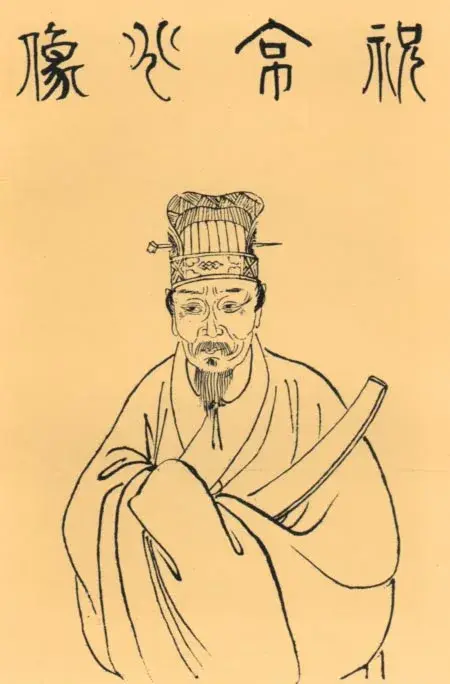
祝允明
Zhu Yunming (1461–1527), styled Xizhe and literary name Zhishan, was an eminent calligrapher, essayist, and cultural titan of the mid-Ming dynasty, hailing from Changzhou, Suzhou Prefecture. Born with an extra thumb on his right hand, he adopted the sobriquets Zhizhisheng ("Branch-Fingered Scholar") and Zhishan Daoren, becoming popularly known to posterity as Zhu Zhishan. Alongside Tang Yin, Wen Zhengming, and Xu Zhenqing, he…
Zhu Yunming (1461–1527), styled Xizhe and literary name Zhishan, was an eminent calligrapher, essayist, and cultural titan of the mid-Ming dynasty, hailing from Changzhou, Suzhou Prefecture. Born with an extra thumb on his right hand, he adopted the sobriquets Zhizhisheng ("Branch-Fingered Scholar") and Zhishan Daoren, becoming popularly known to posterity as Zhu Zhishan. Alongside Tang Yin, Wen Zhengming, and Xu Zhenqing, he was celebrated as one of the Four Talents of Wu (popularly known as the Four Great Talents of Jiangnan), and served as the preeminent leader of the Wu School of Calligraphy alongside Wen Zhengming, Wang Chong, and Chen Chun. Zhu Yunming was descended from an illustrious lineage of bureaucratic scholars; his grandfather Zhu Hao attained the rank of Right Administration Vice Commissioner of Shanxi, his maternal grandfather was Senior Grand Secretary Xu Youzhen, and his father-in-law was the calligraphic master Li Yingzhen. Recognized as an infant prodigy who could write large characters at four and compose regulated verse at nine, his civil service examination journey was fraught with repeated adversity. After passing the provincial examination as a Juren in 1492, he failed the metropolitan examinations in Beijing seven consecutive times. In 1514, at the age of fifty-four, he was appointed Magistrate of Xingning County in Huizhou Prefecture, Guangdong, where he became renowned as a benevolent official who pacified mountain brigands, undertook extensive irrigation works, restored academies, and compiled the county gazetteer. In 1522, he was promoted to Controller of Yingtian Prefecture (Nanjing Tongpan), widely addressed as Zhu Jingzhao, before retiring due to ill health the following year. Celebrated for his vast erudition and literary genius, Zhu Yunming achieved his highest historical renown in calligraphy. His small regular script adhered strictly to the profound classical elegance of the Wei and Jin dynasties, while his wild cursive script achieved peerless virtuosity, characterized by dynamic vigor, cascading momentum, and dramatic spatial rhythms. Synthesizing the stylistic virtues of Zhang Xu, Huaisu, and Huang Tingjian, he was universally acclaimed by later generations as the Foremost Master of Cursive Script in the Ming Dynasty. He ardently championed an aesthetic theory of cultivating elegance and dispelling vulgarity, rejecting mechanical imitation and the rigid Guange examination style. Authoring extensive literary collections such as Huaixingtang Ji, Zhuzi Zuizhi, Yeqi, and Qianwen Ji, his artistic innovations and writings left an enduring imprint on Jiangnan culture and traditional Chinese art.
Born on the sixth day of the twelfth lunar month in Taiyuan, Shanxi, where his grandfather Zhu Hao served as Right Administration Vice Commissioner.
Accompanied his retired grandfather Zhu Hao from Shanxi back to their ancestral home in Changzhou, Suzhou, studying classics and calligraphy.
Married the daughter of Secretariat Drafter Li Yingzhen, receiving rigorous guidance in standard script from his father-in-law.
Passed the county examination to become a Licentiate (Xiucai), celebrated the birth of his eldest son Zhu Xu, and was promoted to Stipendiary Student (Linsheng).
Failed the provincial examination; lost his father Zhu Huan in the seventh month and his grandfather Zhu Hao in the twelfth month, observing mourning at home.
Inscribed verse at the invitation of senior literatus Wu Kuan, forging intimate artistic ties with Shen Zhou, Tang Yin, and Wen Zhengming.
Passed the provincial examination in Shuntian Prefecture as a Juren, gaining widespread fame alongside Du Mu as the Two Talents of Wu.
Failed the metropolitan examination for the third time; comforted his close friend Tang Yin after Tang was unjustly implicated in the examination scandal.
Studied authentic Tang dynasty cursive scrolls by monk Huaisu at the Gu family residence in Suzhou, marking a transformative leap in his cursive artistry.
Failed the metropolitan examination for the seventh time while his son Zhu Xu passed as Jinshi and Hanlin Bachelor; formally abandoned further examination attempts.
Selected for official appointment and dispatched to Lingnan as Magistrate of Xingning County in Huizhou Prefecture, Guangdong.
Presided over the compilation of the four-volume Zhengde Xingning Xianzhi, the earliest extant local gazetteer of the Hakka region.
Mobilized local gentry to construct stone weirs and ten kilometers of irrigation channels, irrigating over fifteen hundred mu of farmland.
Promoted to Controller of Yingtian Prefecture in Nanjing after eight years of exemplary administration in Guangdong.
Resigned his office due to eye disease and physical fatigue, sailing eastward to settle in Danxiawu on Mount Heng in Suzhou.
Passed away at his Suzhou residence on the twenty-seventh day of the twelfth lunar month at age sixty-seven; was buried through the assistance of Wen Zhengming and Wang Chong.
Zhu Yunming was born on January 17, 1461, in the official residence of Taiyuan, Shanxi. His grandfather, Zhu Hao, earned the Jinshi degree in 1439 and served successively as Supervising Censor in the Office of Scrutiny for Punishments and Right Administration Vice Commissioner of Shanxi, renowned for his administrative mastery over provincial grain transport and his deep expertise in the Book of Changes. His maternal grandfather was Xu Youzhen, Minister of War, Grand Secretary of the Huagai Palace, and Senior Grand Secretary of the Grand Secretariat. Born with a polydactyl sixth thumb on his right hand, he later adopted the art names Zhishan and Zhizhisheng, and was popularly called Zhu Zhishan by contemporaries.
In 1464, at the age of four, Zhu began copying calligraphy copybooks under his grandfather's supervision in Taiyuan, displaying such extraordinary wrist power that he could wield brushes to execute large characters within months. In 1465, following his grandfather's retirement, the five-year-old Zhu returned south to his ancestral home in Changzhou, Suzhou. When afflicted with serious skin ailments in 1468, he discovered verse inscribed on his bedstead wall, which ignited an enduring passion for poetic metrics. Tutored by prominent scholars, he exhibited photographic memory, reciting the Six Classics by age five and composing regulated poems by nine, acclaimed throughout the region as an intellectual prodigy.
His maternal grandfather Xu Youzhen passed away in 1472, followed by the untimely death of his mother, Lady Xu, in 1475. These personal losses inclined the young scholar toward serious inward contemplation and immersed him deeper into classical art and literature. In 1478, eighteen-year-old Zhu married the daughter of Li Yingzhen, Secretariat Drafter in the Central Drafting Office. Li Yingzhen was one of the foremost calligraphic masters of the Chenghua and Hongzhi eras, deeply versed in the structural secrets of Ouyang Xun, Yan Zhenqing, and ancient Wei-Jin masters. Under his father-in-law's guidance, Zhu mastered foundational brush mechanics and internal balance.
In 1479, Zhu Yunming passed the county licensing examination to become a Licentiate, and his eldest son Zhu Xu was born in the seventh lunar month. His essays in ancient classical prose won high acclaim from Education Commissioner Sima Yin, who granted him status as a government-subsidized Stipendiary Student. In 1480, twenty-year-old Zhu traveled to the provincial examinations in Yingtian Prefecture with high hopes, but failed to secure a place on the pass list. In 1483, he sat for the provincial examinations a second time and was once again disappointed.
Misfortune multiplied in the autumn of 1483 when his father Zhu Huan died prematurely in the seventh month, followed in the twelfth month by the demise of his grandfather Zhu Hao. Devastated by the simultaneous loss of his father and grandfather, Zhu Yunming observed strict mourning for three years, secluding himself from public life to read day and night, synthesizing the Hundred Schools of Thought with historic calligraphy treatises into his multi-volume Dushu Biji (Reading Notes). Following the conclusion of his mourning, he took the brilliant young talent Zhang Ling as his disciple and began to establish a prominent artistic reputation in Suzhou.
In the cultural circles of Suzhou, Zhu Yunming formed close intellectual societies with Du Mu, Yang Xunji, Shi Jing, and Zhu Kai. Grand Secretary Wang Ao, living in retirement in Suzhou, held Zhu in immense esteem and frequently invited him to evaluate fine art at his lakeside villa. In February 1491, Zhu joined Li Xun at Chengtian Temple, spontaneously inscribing verse upon the temple walls, before composing a vibrant thousands-word poetic composition during an evening feast. That same year, he composed epitaphs for his stepmother's father Chen Shen and his deceased friend Qian Kai, earning widespread renown across the region. In 1492, thirty-two-year-old Zhu sat for the provincial examination in Shuntian Prefecture and triumphed as a Juren, celebrated across Jiangnan as a late-blooming master.
Following his provincial success, Zhu Yunming aspired to enter the imperial bureaucracy through the metropolitan examination in Beijing. In the spring of 1493, he sat for the national exam for the first time, but his sweeping prose style conflicted with the narrow conventions of the examiners, leading to his rejection. In 1495, he spent months in Suzhou copying Zhao Mengfu's Luoshen Fu and exploring esoteric Yijing hexagram transitions, authoring Mengyi Wen. He sat for the metropolitan examinations a second time in 1496, but was once again passed over.
In 1499, Zhu traveled to Beijing alongside his intimate companions Tang Yin and Xu Zhenqing. That examination cycle became notorious when a major bribery scandal erupted, resulting in Tang Yin being stripped of his degrees and cast into prison. Though Zhu was cleared of complicity, he suffered his third failure. Distressed by the venality and hazards of bureaucratic politics, he returned south to console the devastated Tang Yin. In 1501, Zhu inspected genuine Tang dynasty cursive works by the monk Huaisu at the Gu family estate in Suzhou, an encounter that catalyzed a major breakthrough in his cursive technique.
Zhu made subsequent attempts at the metropolitan examinations in 1502, 1505, and 1508, remaining relegated to auxiliary lists each time. During these intervals, he contributed to the initial draft of the Gusu Zhi gazetteer and traveled along the Qinhai River in Nanjing, exchanging verse with prominent southern literati including Wang Wei and Gu Lin. In 1511, over fifty years of age, Zhu sat for his seventh metropolitan examination and failed yet again; concurrently, his eldest son Zhu Xu achieved highest honors as a Jinshi and was inducted into the Hanlin Academy as a Bachelor. Witnessing his son attain imperial honors, Zhu released his bureaucratic ambitions and permanently abandoned the examination halls.
In 1514, at the age of fifty-four, Zhu Yunming utilized his senior Juren qualifications to receive an official post through the Ministry of Personnel, which appointed him Magistrate of Xingning County in Huizhou Prefecture, Guangdong. Situated deep within the rugged mountains of eastern Guangdong along the borders of Jiangxi and Fujian, Xingning was an isolated and impoverished frontier county known for frequent clan feuds and endemic banditry. Previous magistrates had uniformly viewed the post with dread, either neglecting their duties out of fear or levying oppressive taxes that sparked local rebellions.
Upon arriving in Xingning, Zhu avoided comfortable isolation inside the yamen and instead embarked on extensive undercover tours of rural villages dressed in simple civilian robes. He deliberately sought out the most dilapidated peasant huts, discovering that remote mountain dwellers subsisted on wild herbs and sweet potatoes while lacking basic clothing. Recognizing that local lawlessness and tax evasion were direct consequences of extortionate burdens imposed by corrupt underlings, he convened an assembly of county elders, pledging to reduce corvee labor and eradicate predatory fees.
Because Zhu prioritized the economic survival of his impoverished populace and refused to torture peasants to collect autumn grain quotas, official tax deliveries lagged behind imperial schedules. At the year-end assessment, superior authorities disciplined him for sluggish collection, decreeing the forfeiture of his magisterial salary. Facing this penalty, Zhu remained cheerful and unperturbed, composing his celebrated verse lines: "They falsely say official grain provides for tilling fields, / Yet donning robes amidst damp mists I heed the dawn cock crow." His steadfast commitment to safeguarding local lives won the profound gratitude of the Xingning populace.
Confronting the entrenched brigandage in Xingning, Zhu Yunming displayed extraordinary martial and civil resolve. Wang Chong recorded in his biography of Zhu that armed outlaws frequently descended from the mountain gorges to raid villages, but Zhu devised clever stratagems to apprehend over thirty bandit chieftains at once without sounding war drums. In 1515, when remnants of the notorious Damaoshan bandit gang resurfaced after previously ravaging Ninghua and Shicheng counties, Zhu personally led militias into combat, slaying the bandit leader and eliminating forty henchmen, thereby pacifying the turbulent county borders.
For impoverished peasants coerced into joining the bandit ranks, Zhu refused collective punishment, issuing blanket amnesties, food rations, and seeds to help them reclaim abandoned fields. Addressing the chronic local addiction to endless litigation, he devised an enlightened conciliation process that summoned clan elders to arbitrate disputes under moral suasion rather than punitive flogging, rendering litigious intriguers powerless.
To permanently secure the unstable border junction between Guangdong, Jiangxi, and Fujian, Zhu surveyed the mountainous terrain and submitted detailed memorials to provincial authorities urging the formal division of the jurisdiction and the establishment of Pingyuan County. His proposal was approved by the throne, establishing a permanent defensive barrier that brought durable peace to the eastern frontier for generations.
Alongside establishing security, Zhu Yunming dedicated substantial resources to public infrastructure and cultural revival. In 1515, he restored the Guandi Temple within the county seat, and subsequently repaired public structures including the Yingen Pavilion, Hushan Shenglan Pavilion, and the City God Temple. When public construction funds were exhausted during the repairs of the City God Temple, Zhu contributed his personal stipend to complete the project.
In 1519, Zhu founded the Heshan Rock Monastery and mobilized gentry leader Wu Faqian of Yetang Village to undertake a vital water conservancy project. By building a stone weir at the boundary between Wuchi and Zhukeng villages and excavating an irrigation channel spanning more than ten kilometers, the project irrigated over fifteen hundred mu of arable fields, remaining functional centuries later. In gratitude, local residents established the Zhu-Wang Memorial Hall at Mount He, displaying painted portraits of Zhu Yunming for generational veneration.
Zhu placed tremendous emphasis on regional education, frequently visiting the county academy to lecture on classical statecraft. Under his tutelage, local assistant Zhang Tianfu was selected as an imperial tribute student, and native scholar Wang Tianyu rose to become a Jinshi and Investigating Censor. In 1516, Zhu completed the four-volume Zhengde Xingning Xianzhi, the earliest extant gazetteer in the Hakka region, which was later praised by prominent scholar Huang Zuo for its rigorous historiography. Tradition also attributes the creation of the celebrated regional confection Xingning Liaohua to culinary techniques introduced by Zhu from Jiangnan.
As a result of his outstanding administrative achievements in Guangdong, Zhu Yunming earned top marks in the national magistrate evaluations of 1521, receiving commendations from provincial governors. In 1522, at the age of sixty-two, he was promoted to Controller of Yingtian Prefecture in Nanjing, the secondary capital of the empire. As this was a prestigious position overseeing water transport, engineering, and judicial appeals, contemporaries respectfully addressed him as Zhu Jingzhao.
In Nanjing, Zhu applied his sharp judicial intellect to clear backlogged dockets within months. However, the political environment of the southern capital was dominated by entrenched eunuchs, corrupt nobles, and bitter factional intrigue. Unwilling to flatter powerful courtiers, and suffering from acute rheumatism and failing vision brought on by years in the malarial south, Zhu submitted a formal memorial requesting retirement due to ill health in the spring of 1523. Sailing eastward along the Yangtze River, he returned to Suzhou, welcomed warmly by lifelong companions Wen Zhengming, Wang Chong, and Tang Yin.
Living in retirement at Danxiawu on Mount Heng west of Suzhou, Zhu spent his remaining years immersed in artistic freedom amidst bamboo groves and flowing springs. His lifestyle was famously unconventional: he indulged heavily in wine, played chess, and composed humorous verse with Tang Yin and Wen Zhengming. Disregarding material wealth, he freely distributed his earnings from calligraphy commissions to taverns and impoverished acquaintances, living in modest circumstances where he frequently wrote commemorative inscriptions to purchase basic provisions.
Anecdotes recall that when Tang Yin and Wen Zhengming once gathered to drink secretly without him, Zhu unexpectedly burst through the door, laughing and improvising witty lines that sent the room into joyous uproar. Even as his physical health deteriorated, admirers and collectors from across the empire crowded outside his gate seeking his ink works.
In the autumn of 1525, following the death of his stepmother Lady Chen, Zhu exhausted his frail strength overseeing her funeral arrangements. Thereafter, severe numbness crippled his right arm and his eyesight dimmed toward blindness, yet he continued to wield his brush whenever paper was placed before him. On January 28, 1527, Zhu Yunming passed away peacefully in his Suzhou residence at the age of sixty-seven. Lacking personal wealth at his death, his burial beside his grandfather at Danxiawu was financed by his loyal student Wang Chong and close friend Wen Zhengming.
Zhu Yunming occupies a transcendent position in Chinese calligraphic history, particularly through his mastery of wild cursive script, which established him as the undisputed titan of cursive writing in the Ming dynasty. During the early Ming era, the calligraphic arena was stifled by the soft, overly refined mannerisms of Zhao Mengfu and the rigid geometric uniformity of the courtly Guange examination script, which had drained the art of its dynamic vitality.
Zhu shattered these confining conventions, revitalizing the expressive power of brushwork. Drawing deep nourishment from the ancient cursive traditions of Zhang Zhi, Zhang Xu, and Huaisu, while absorbing the daring structural balance and angular cadence of Song master Huang Tingjian, he created a transformative new aesthetic. Executed with long flexible bristles and extraordinary wrist agility, his cursive works unfolded with electric speed and explosive spatial complexity, resembling rushing dragons and soaring tigers. Wang Shizhen praised him, stating that his untrammeled freedom had not been equaled since Huaisu and Huang Tingjian.
Alongside his thunderous cursive works, Zhu achieved equal perfection in the intimate art of small regular script. While contemporary literati produced sterile, mechanically aligned regular script, Zhu drew upon the profound instruction of his father-in-law Li Yingzhen to revive the archaic majesty of the Three Kingdoms and Wei-Jin masters.
His regular script drew inspiration from Zhong You's Xuanshi Biao and Wang Xizhi's Huangting Jing and Yueyi Lun, combined with the structural severity of Ouyang Xun and the poise of Yu Shinan. Zhu's small regular characters were broad, grounded, and dignified, possessing internal muscular tension while eschewing petty ornamentation. Later connoisseurs celebrated his regular script as the finest since the Wei and Jin eras, regarding his transcriptions of the Chu Shi Biao and Luoshen Fu as unassailable models of classical calligraphic virtue.
A profound technological innovation championed by Zhu Yunming was the creative synthesis of ancient stele inscriptions with fluid cursive running scripts. In a period dominated by paper copybook traditions (Tie Xue), Zhu was among the first to recognize the monumental grandeur, rough texture, and archaic power embedded within Han and Wei stone stelae.
He deliberately injected the blunt angular turns, square brush entries, and dry textured strokes of stone epigraphy into the continuous rhythms of cursive writing. This pioneering technique endowed his cursive strokes with immense structural weight, described by contemporaries as possessing "iron strokes and silver hooks." This visionary synthesis paved the way for late-Ming nonconformists such as Xu Wei, Huang Daozhou, Ni Yuanlu, and early-Qing masters like Wang Duo.
In the realm of running and semi-cursive scripts, Zhu displayed consummate spatial mastery. Rather than copying the predictable forms of Tang master Li Yong or Song masters Su Shi and Mi Fu, he distilled the ethereal elegance of Wang Xizhi's Lanting Xu, weaving varying character dimensions into irregular flowing passages.
Across monumental hanging scrolls and sprawling horizontal handscrolls, Zhu manipulated contrasts between concentrated dark ink, parched dry brushwork, and watery bleeds. By deliberately disrupting conventional alignment and allowing columns to interlock dynamically, he turned calligraphic composition into a multi-dimensional rhythmic performance akin to orchestral music.
Within the literary world, Zhu stood alongside Tang Yin, Wen Zhengming, and Xu Zhenqing as one of the Four Talents of Wu, occupying an acknowledged position of leadership by virtue of his seniority and encyclopedic learning. During an era when the Earlier Seven Masters dogmatically proclaimed that all prose must imitate the Qin and Han while all poetry must mirror the High Tang, Zhu maintained fierce intellectual independence.
He argued that authentic literature must flow directly from genuine human emotion and individual spiritual intuition rather than mechanical mimicry of ancient vocabulary. His own classical prose was expansive, incisive, and philosophical, while his poetry captured poignant political anxieties and personal humor with effortless grace, serving as an important precursor to the late-Ming School of Mind and individualist literary trends.
Zhu Yunming's eight-year tenure as Magistrate of Xingning County provided incontrovertible proof that he was an exceptionally capable civil administrator rather than an impractical scholar. Confronted with a remote mountain territory rife with violent brigandage and impoverished villages, he instituted comprehensive defense rosters, mediated civil lawsuits, and personally directed militia operations that eliminated predatory gangs.
He defended the livelihoods of his citizens by reducing exorbitant tax burdens even at the cost of having his personal salary forfeited by the imperial court. He rebuilt the Confucian academy, promoted regional irrigation systems that reclaimed over fifteen hundred mu of arable land, authored the four-volume county gazetteer, and successfully petitioned for the creation of Pingyuan County to secure permanent border stability, earning an immortal place in regional gazetteers as a model civil servant.
Beyond art and civil governance, Zhu was an extraordinary historian and anecdotal essayist whose vast literary output preserved invaluable firsthand historical evidence. His major poetic and literary works were assembled in the thirty-volume Huaixingtang Ji, supplemented by distinctive analytical notebooks including Zhuzi Zuizhi, Yeqi, Qianwen Ji, and Zhiguai Lu.
Zhu's historical sketches were celebrated for their candid accuracy, biting wit, and uncompromising truthfulness. In Yeqi, he fearlessly recorded confidential court deliberations, palace secrets, bureaucratic intrigues, and examination realities spanning the Xuande, Zhengtong, and Zhengde eras. His records served as essential primary sources for subsequent dynastic chroniclers compiling the official History of Ming and the Qing Siku Quanshu.
Zhu Yunming demonstrated profound original insight in classical Confucian philology. Deeply versed in the ancient meanings of the Book of Changes and the Book of Documents, he rejected rigid reliance on Han and Tang commentaries or the subjective metaphysical speculations of Song Neo-Confucians.
In works such as Mengyi Wen and Zhuzi Tong, he urged scholars to recover the practical, statecraft-oriented core of original Confucian texts. He warned that contemporary intellectual circles were succumbing to empty philosophical quietism that detached educated elites from practical administration, establishing an empirical ethos that presaged later evidential research movements.
In calligraphic aesthetics, Zhu established a comprehensive theoretical framework centered on the doctrine of "Qi Ya Qu Su" (cultivating elegance and eliminating vulgarity). He asserted that the quality of calligraphic art depended directly on the scholar's inner intellectual cultivation, moral dignity, and aesthetic purity; superficial technical dexterity devoid of classical learning inevitably resulted in vulgar, commercial work.
He codified the five essential physiological and spiritual components of masterly calligraphy: Spirit (Shen), Vital Breath (Qi), Bone Structure (Gu), Fleshy Fullness (Rou), and Vital Moisture (Xue). Defining Spirit as sovereign and Vital Breath as its conduit, supported by structural Bone and nurtured by fleshy ink vitality, his holistic aesthetic theory became a cornerstone of Ming and Qing calligraphic criticism.
Zhu Yunming's generous spirit and intellectual charisma exercised a unifying influence across the Jiangnan cultural world. When Tang Yin was ruined by the examination scandal, Zhu provided unwavering emotional and practical support, helping him rebuild his creative spirit. Toward promising younger artists such as Wang Chong, Chen Chun, and Zhang Ling, Zhu acted as a generous mentor, imparting technical secrets of brushwork and aesthetic critique.
Under his leadership, the Suzhou artistic community rejected petty rivalries, creating a collaborative, multi-generational cultural circle centered around Shen Zhou, Wen Zhengming, Tang Yin, and Zhu himself, transforming Suzhou into the creative epicenter of sixteenth-century Chinese arts.
Zhu Yunming's calligraphic legacy resonated across China and reached neighboring East Asian cultures during his lifetime. Emissaries from Joseon Korea and merchant scholars from Japan actively acquired his scrolls at immense cost during their visits to Beijing and Jiangnan.
Numerous monumental works executed by Zhu are preserved today in premier international collections, including the Palace Museum in Beijing, the Shanghai Museum, the Liaoning Provincial Museum, the Suzhou Museum, and the Tokyo National Museum. His vibrant and profound brushwork continues to inspire modern art scholars and practicing calligraphers worldwide.
Zhu Yunming was universally regarded as the premier connoisseur and colophon writer of his era. During the peak of Jiangnan private art collecting, collectors considered an inscription or postscript by Zhu to be the ultimate authentication of a masterpiece. He provided detailed historical appraisals for dozens of ancient national treasures, including Ni Zan's Jiangnan Chun, Zhao Mengfu's Guoqin Lun, and Huaisu's Zixu Tie.
His everyday correspondence and personal letters were equally prized as artistic marvels. Uninhibited, witty, and executed with spontaneous mastery, these epistolary remnants were cherished by contemporaries as precious jewels, offering intimate windows into the social and artistic life of late-Ming literati.
Zhu's eight years in Xingning left a transformative cultural legacy across Guangdong. Prior to his administration, the mountainous interior of eastern Guangdong was often dismissed by northern elites as an uncivilized hinterland. Zhu brought the refined literati traditions of Jiangnan into direct dialogue with local Hakka society.
By tutoring local scholars, promoting civil service examinations, compiling regional histories, and exchanging verse with prominent southern intellectuals including the Lun brothers of Nanhai, Zhu fostered an unprecedented intellectual awakening. His efforts helped elevate Xingning into a recognized center of classical scholarship, contributing significantly to the historical rise of Lingnan culture during the Ming and Qing eras.
FIGURES ASSOCIATED WITH THIS DYNASTY